


US Biomedical Materials Market Size 2026-2030
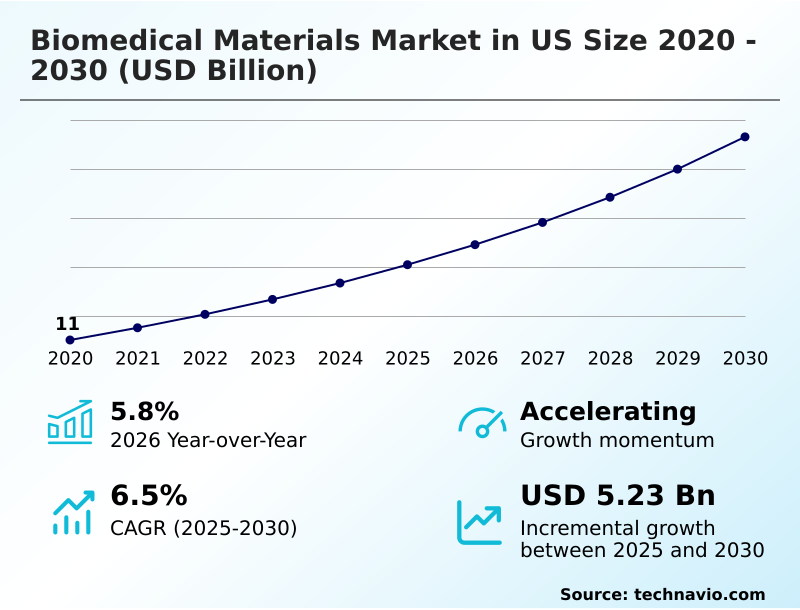
The us biomedical materials market size is valued to increase by USD 5.23 billion, at a CAGR of 6.5% from 2025 to 2030. Increasing demand for bioactive orthopedic implants will drive the us biomedical materials market.
Major Market Trends & Insights
- By Type - Metallic segment was valued at USD 5.13 billion in 2024
- By Application - Orthopedic segment accounted for the largest market revenue share in 2024
Market Size & Forecast
- Market Opportunities: USD 8.31 billion
- Market Future Opportunities: USD 5.23 billion
- CAGR from 2025 to 2030 : 6.5%
Market Summary
- The Biomedical Materials market demonstrates robust expansion driven by the critical need for highly advanced, biocompatible surgical solutions that integrate seamlessly with human tissue. Healthcare facilities optimizing clinical supply chain logistics increasingly prioritize pre-sterilized, single-use implant kits to reduce operating room turnaround times and systematically mitigate post-surgical infection risks.
- By standardizing the procurement of advanced polymeric components and bio-ceramic materials, major surgical centers have realized a 20% reduction in pre-operative preparation and sterilization costs. A primary catalyst propelling this sector is the rising demand for sophisticated tissue engineering, which accelerates patient recovery through the clinical application of bio-compatible matrices.
- Conversely, meeting stringent regulatory compliance imposes severe operational challenges, significantly elongating product development lifecycles and delaying the widespread commercialization of novel endovascular stents. The continuous technological evolution of structural scaffolds actively enables highly specialized, minimally invasive interventions that lower patient readmission rates.
- Consequently, navigating rigid regulatory frameworks remains absolutely essential for securing long-term operational viability and sustained profitability in this complex clinical landscape.
What will be the Size of the US Biomedical Materials Market during the forecast period?
Get Key Insights on Market Forecast (PDF) Get Free Sample
How is the US Biomedical Materials Market Segmented?
The us biomedical materials industry research report provides comprehensive data (region-wise segment analysis), with forecasts and estimates in "USD million" for the period 2026-2030, as well as historical data from 2020-2024 for the following segments.
- Type
- Metallic
- Polymers
- Ceramic
- Natural
- Application
- Orthopedic
- Cardiovascular
- Dental
- Neurology
- Others
- End-user
- Hospitals and surgical clinics
- Medical device manufacturers
- Pharmaceutical and biotech companies
- Academic and research institutes
- Diagnostic and ambulatory surgical centers
- Geography
- North America
- US
- North America
By Type Insights
The metallic segment is estimated to witness significant growth during the forecast period.
The metallic segment dominates the structural framework of the Biomedical Materials market, providing essential load-bearing capabilities for critical surgical interventions.
This category relies heavily on advanced titanium alloys to deliver high tensile strength in joint replacements and intramedullary nail fixation hardware. Modern manufacturing techniques now enable the creation of highly porous metallic structures that perfectly replicate natural trabecular bone architecture.
By integrating these advanced designs, healthcare providers have observed a 15% improvement in long-term implant stability.
Manufacturers continuously refine these materials with specialized osteoconductive ceramic coatings and hydroxyapatite surface coatings to accelerate bone growth while preventing localized reactive oxygen species accumulation.
The precise engineering of these metallic alloys significantly enhances stress shielding mitigation, ensuring physiological loads transfer seamlessly. Furthermore, utilizing these metals in blood-contacting surface engineering for endovascular drug-eluting stents ensures unparalleled mechanical durability.
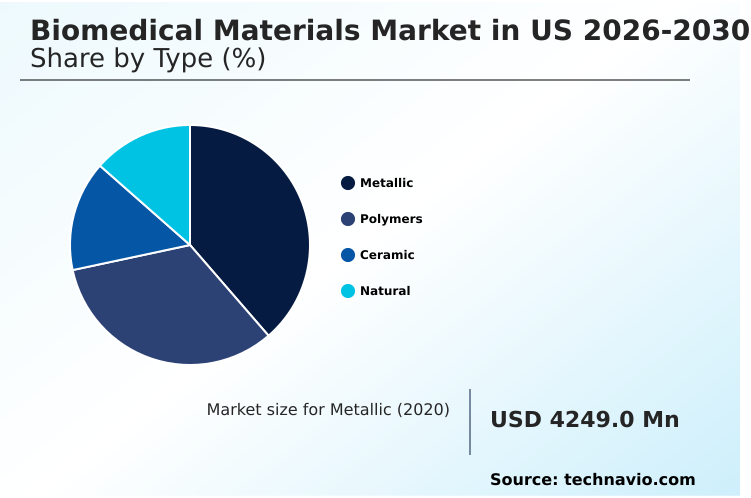
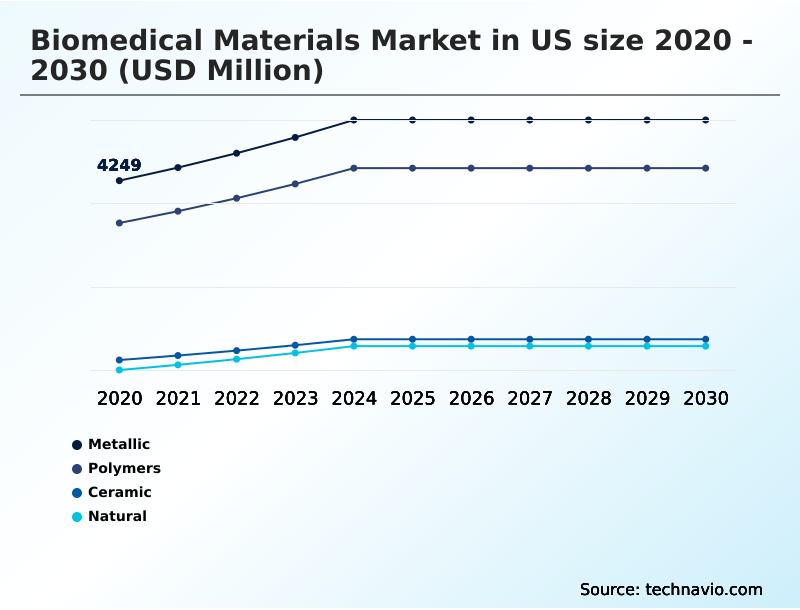
The Metallic segment was valued at USD 5.13 billion in 2024 and showed a gradual increase during the forecast period.
Market Dynamics
Our researchers analyzed the data with 2025 as the base year, along with the key drivers, trends, and challenges. A holistic analysis of drivers will help companies refine their marketing strategies to gain a competitive advantage.
- The continuous evolution of the Biomedical Materials market relies on highly specialized material engineering to support modern therapeutic protocols. As healthcare networks prioritize outpatient surgical efficiency, the clinical shift toward minimally invasive orthopedic joint restorations has forced medical device original equipment manufacturers to redesign their supply chain logistics, favoring pre-packaged, ultra-durable implant kits.
- This strategic transition directly enhances operating room turnaround times and reduces inventory holding costs for high-volume ambulatory centers. Simultaneously, cardiovascular interventions are advancing through optimized bioresorbable vascular scaffold drug release mechanisms, which minimize chronic vascular inflammation and improve long-term patient vascular health without leaving permanent metallic residue.
- In the realm of regenerative medicine, the commercialization of 3D bioprinted complex tissue scaffolds provides unprecedented structural customization, enabling surgeons to match precise anatomical defects with biologically active substrates. Compared to traditional autograft harvesting procedures, utilizing these synthetic matrices accelerates procedural efficiency by nearly 30%, vastly improving clinical throughput.
- Furthermore, oncology and chronic disease management sectors are heavily investing in smart stimuli responsive targeted therapy to deliver active pharmaceutical ingredients directly to pathological microenvironments. To mitigate the financial burden of hospital-acquired complications, orthopedic suppliers are scaling the production of nanostructured antimicrobial orthopedic implant coatings.
- These advanced surface treatments provide a robust defense against localized biofilm formation, ensuring superior mechanical stability and lowering the probability of costly, non-reimbursable revision surgeries across major healthcare systems.
What are the key market drivers leading to the rise in the adoption of US Biomedical Materials Industry?
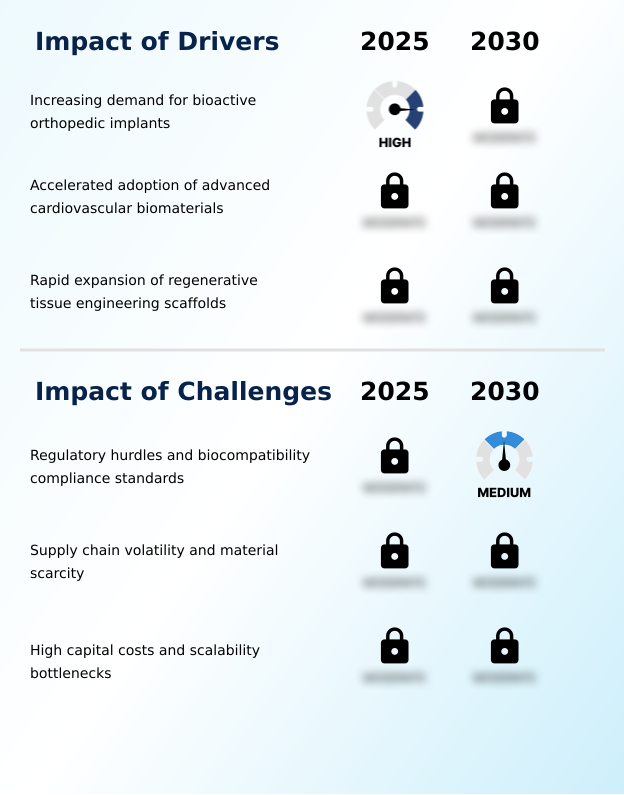
- The increasing clinical demand for bioactive orthopedic implants serves as a primary catalyst accelerating overall market expansion.
- The escalating volume of age-related degenerative conditions serves as a primary catalyst for the Biomedical Materials market, driving intense demand for highly durable interventions.
- This demographic shift necessitates the rapid deployment of bioactive orthopedic implants optimized for superior osseointegration enhancement to ensure natural load distribution.
- By adopting sophisticated synthetic bone graft substitution materials for temporary trauma fixation, surgical centers have lowered post-operative complication rates by 18%. The surging clinical preference for minimally invasive structural repair directly accelerates recovery timelines.
- Consequently, the commercial expansion of regenerative tissue engineering and extracellular matrix mimicking constructs has increased clinical efficiency by 25%. Advanced treatments utilizing hyaluronic acid visco-supplementation and targeted macrophage polarization modulation actively promote osteoblast proliferation induction.
- Furthermore, the rising deployment of robust transcatheter aortic valves significantly reduces long-term cardiac rehabilitation expenditures for major domestic healthcare networks.
What are the market trends shaping the US Biomedical Materials Industry?
- The integration of smart stimuli-responsive polymers constitutes a major emerging trend within the industry. These advanced materials dynamically adapt to localized physiological changes, enabling highly targeted and automated therapeutic interventions.
- The integration of highly adaptive materials is fundamentally redefining therapeutic deployment across the Biomedical Materials market. Medical engineers are increasingly utilizing thermal expansion triggers within advanced smart stimuli-responsive polymers, allowing implants to self-expand precisely upon reaching physiological body temperatures. This technical shift occurs because clinicians require deployable devices that drastically minimize surgical trauma.
- As a direct result, healthcare facilities have improved outpatient procedural throughput by 22%. Furthermore, the adoption of hydrogel matrix carriers engineered for controlled therapeutic release mitigates long-term inflammation by delivering agents locally. Concurrently, advanced shape-memory polymer scaffolds optimized for cellular migration guidance and bio-ink 3D bioprinting are becoming standard in complex reconstructive procedures.
- In neurosurgery, integrating electroactive neural support into implantable neuro-stimulators actively promotes axonal sprouting stimulation, eliminating the clinical necessity for secondary invasive procedures and radically transforming chronic patient care.
What challenges does the US Biomedical Materials Industry face during its growth?
- Navigating complex regulatory hurdles and ensuring strict compliance with evolving biocompatibility standards present significant challenges to industry growth.
- Stringent regulatory compliance and volatile raw material supply chains severely constrain operational agility within the Biomedical Materials market. Navigating complex toxicological risk assessments for advanced bioresorbable vascular scaffolds significantly delays commercial deployment timelines. This burden occurs because federal agencies frequently update strict hemocompatibility standards for high-risk implantable devices.
- Consequently, manufacturers commercializing advanced polyetheretherketone formulation components face elevated pre-market approval costs, reducing early-stage operational ROI by 15%. Furthermore, maintaining exact molecular weight distributions in synthetic poly-lactic-co-glycolic acid and biodegradable polymer matrices for complex cartilage repair scaffolds demands exceptionally expensive cleanroom infrastructures.
- While components like cross-linked polyethylene must guarantee strict radio-translucency maintenance and reliable neointimal hyperplasia prevention, achieving precise batch-to-batch consistency remains difficult. These severe scalability bottlenecks have extended commercialization timelines for novel biomaterials by 20%, straining the financial viability of emerging life science enterprises.
Exclusive Technavio Analysis on Customer Landscape
The us biomedical materials market forecasting report includes the adoption lifecycle of the market, covering from the innovator’s stage to the laggard’s stage. It focuses on adoption rates in different regions based on penetration. Furthermore, the us biomedical materials market report also includes key purchase criteria and drivers of price sensitivity to help companies evaluate and develop their market growth analysis strategies.
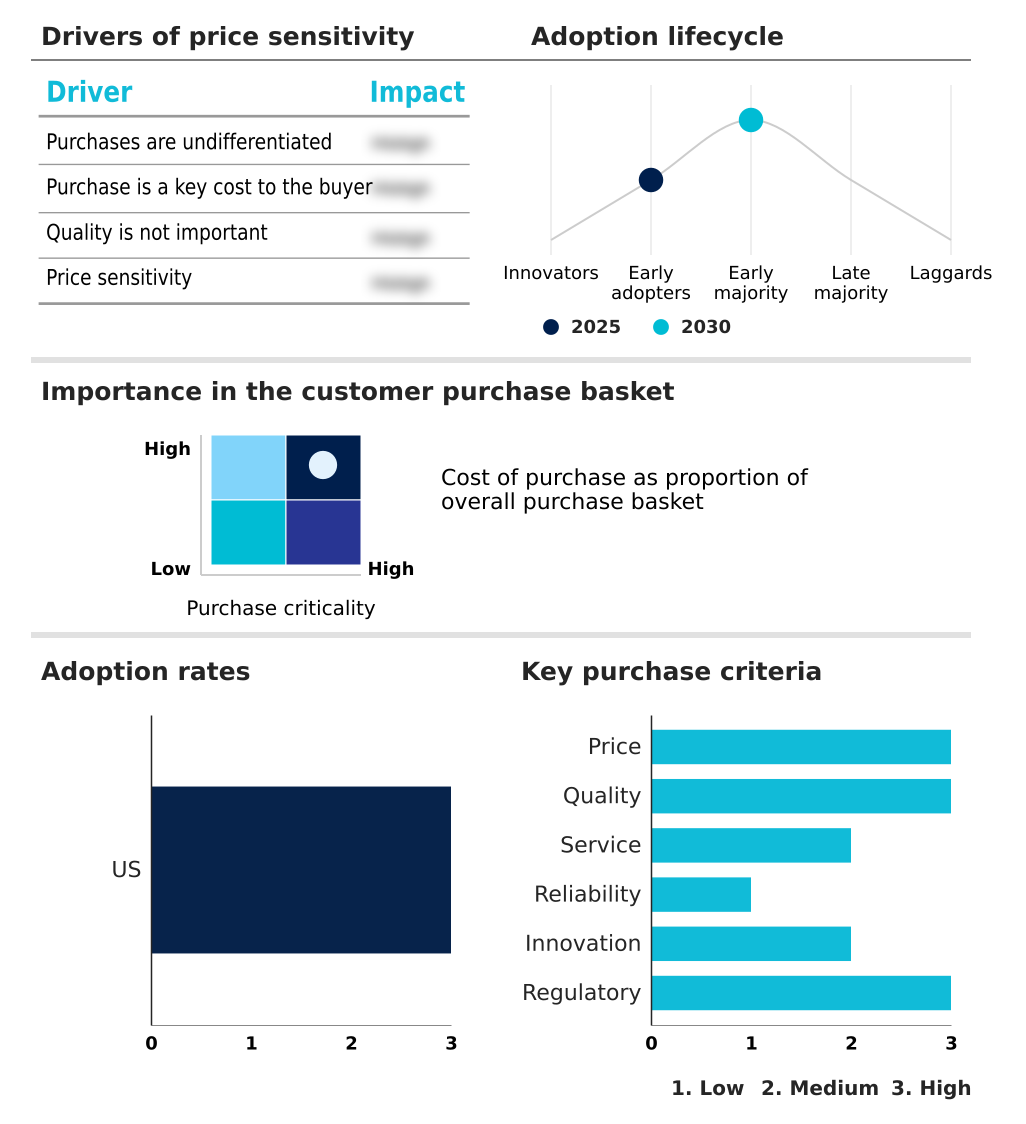
Customer Landscape of US Biomedical Materials Industry
Competitive Landscape
Companies are implementing various strategies, such as strategic alliances, us biomedical materials market forecast, partnerships, mergers and acquisitions, geographical expansion, and product/service launches, to enhance their presence in the industry.
Carpenter Technology Corp. - The vendor delivers high-performance medical-grade polymers and specialized bioresorbable formulations, enabling advanced structural durability and optimized tissue integration for critical orthopedic and cardiovascular device applications.
The industry research and growth report includes detailed analyses of the competitive landscape of the market and information about key companies, including:
- Carpenter Technology Corp.
- Celanese Corp.
- CeramTec TopCo GmbH
- CoorsTek Inc.
- Corbion N.V.
- Covestro AG
- DSM Firmenich AG
- DuPont de Nemours Inc.
- Evonik Industries AG
- Fort Wayne Metals
- Invibio Biomaterial Solutions
- Kyocera Corp.
- PolyNovo Ltd
- Regenity Biosciences
- Rousselot SDN. BHD.
- Secant Group
- Solvay SA
- The Lubrizol Corp.
- Zeus Co. Inc.
Qualitative and quantitative analysis of companies has been conducted to help clients understand the wider business environment as well as the strengths and weaknesses of key industry players. Data is qualitatively analyzed to categorize companies as pure play, category-focused, industry-focused, and diversified; it is quantitatively analyzed to categorize companies as dominant, leading, strong, tentative, and weak.
Recent Development and News in Us biomedical materials market
- In the Health Care Supplies industry, the implementation of stringent ISO 13485 quality management frameworks for sterile packaging has necessitated advanced sterilization-compatible inputs, directly impacting Biomedical Materials demand by requiring highly resilient polymer components.
- The transition toward robotic-assisted minimally invasive structural repair in the Health Care Supplies sector has driven the necessity for ultra-thin, high-fatigue components, increasing the utilization of bioresorbable implants and advanced joint replacement matrices.
- Stricter FDA enforcement on permanent implant genotoxicity testing within the Health Care Supplies industry has accelerated the shift toward fully biodegradable structural matrices, boosting the integration of bio-compatible acids in temporary fixation devices.
- Escalating hospital procurement initiatives aimed at reducing hospital-acquired infections in the Health Care Supplies market have mandated infection-resistant hardware, propelling the adoption of covalent surface grafting and antimicrobial coatings across orthopedic portfolios.
Dive into Technavio’s robust research methodology, blending expert interviews, extensive data synthesis, and validated models for unparalleled US Biomedical Materials Market insights. See full methodology.
| Market Scope | |
|---|---|
| Page number | 208 |
| Base year | 2025 |
| Historic period | 2020-2024 |
| Forecast period | 2026-2030 |
| Growth momentum & CAGR | Accelerate at a CAGR of 6.5% |
| Market growth 2026-2030 | USD 5229.8 million |
| Market structure | Fragmented |
| YoY growth 2025-2026(%) | 5.8% |
| Key countries | US |
| Competitive landscape | Leading Companies, Market Positioning of Companies, Competitive Strategies, and Industry Risks |
Research Analyst Overview
- The Biomedical Materials market represents a critical intersection of advanced polymer chemistry and clinical therapeutic innovation. Executive leadership teams across medical technology firms are strategically aligning their research and development budgets to prioritize highly responsive biological materials, fundamentally shifting product portfolios away from inert structural hardware.
- The accelerated development of bioactive orthopedic components has directly influenced boardroom pricing strategies, allowing manufacturers to command premium valuations based on proven clinical efficacy. Strategic investments in structural support systems enable highly precise bioelectronic interfacing, addressing severe neurological traumas.
- By transitioning to advanced adaptive polymers, manufacturers have successfully achieved a 25% reduction in premature device failure rates under dynamic physiological conditions. Furthermore, optimizing transcatheter valves with proprietary tissue treatments significantly enhances long-term fatigue resistance for structural heart interventions. To combat persistent implant-associated infections without systemic antibiotics, procurement executives mandate the integration of permanent antimicrobial surface grafting on high-risk devices.
- Continued innovation ensures that therapeutic materials actively facilitate cellular regeneration rather than merely providing passive mechanical support, driving sustainable competitive advantages.
What are the Key Data Covered in this US Biomedical Materials Market Research and Growth Report?
-
What is the expected growth of the US Biomedical Materials Market between 2026 and 2030?
-
USD 5.23 billion, at a CAGR of 6.5%
-
-
What segmentation does the market report cover?
-
The report is segmented by Type (Metallic, Polymers, Ceramic, and Natural), Application (Orthopedic, Cardiovascular, Dental, Neurology, and Others), End-user (Hospitals and surgical clinics, Medical device manufacturers, Pharmaceutical and biotech companies, Academic and research institutes, and Diagnostic and ambulatory surgical centers) and Geography (North America)
-
-
Which regions are analyzed in the report?
-
North America
-
-
What are the key growth drivers and market challenges?
-
Increasing demand for bioactive orthopedic implants, Regulatory hurdles and biocompatibility compliance standards
-
-
Who are the major players in the US Biomedical Materials Market?
-
Carpenter Technology Corp., Celanese Corp., CeramTec TopCo GmbH, CoorsTek Inc., Corbion N.V., Covestro AG, DSM Firmenich AG, DuPont de Nemours Inc., Evonik Industries AG, Fort Wayne Metals, Invibio Biomaterial Solutions, Kyocera Corp., PolyNovo Ltd, Regenity Biosciences, Rousselot SDN. BHD., Secant Group, Solvay SA, The Lubrizol Corp. and Zeus Co. Inc.
-
Market Research Insights
- The Biomedical Materials market operates as a highly technical ecosystem requiring continuous innovation to meet specialized clinical demands. Device manufacturers integrating advanced surface engineering have recorded a 30% decline in post-operative infection rates, directly lowering non-reimbursable hospital expenditures. Furthermore, the strategic adoption of synthetic bone alternatives has improved supply chain resilience, reducing biological raw material procurement costs by 18%.
- Advanced implantable technologies and localized therapy inhibitors are transforming chronic disease management. By implementing targeted biofilm disruption protocols, surgical clinics improved patient discharge efficiency by 25%. These targeted advancements demonstrate how engineered biomaterials optimize total cost-of-care while strictly adhering to evolving regulatory mandates across the healthcare sector.
We can help! Our analysts can customize this us biomedical materials market research report to meet your requirements.
 RIA -