



Sports App Market Size 2026-2030
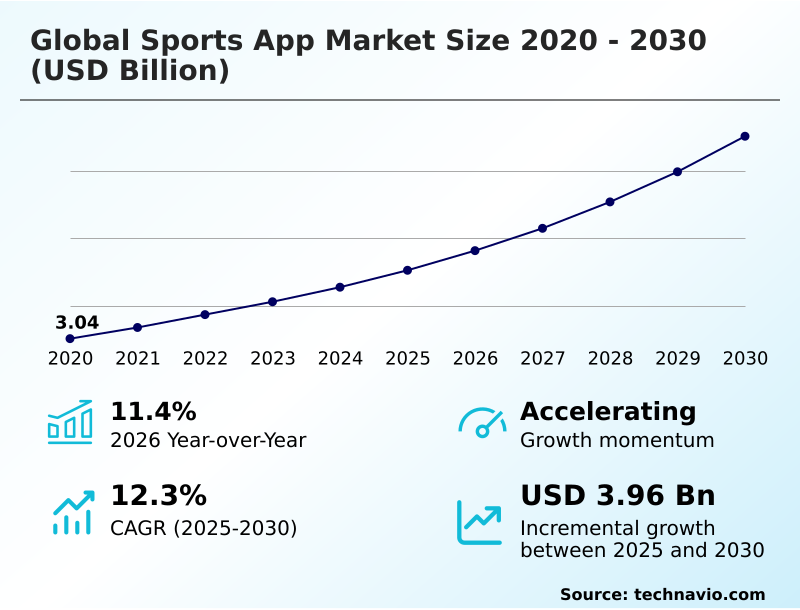
The sports app market size is valued to increase by USD 3.96 billion, at a CAGR of 12.3% from 2025 to 2030. Proliferation of low cost smartphones will drive the sports app market.
Major Market Trends & Insights
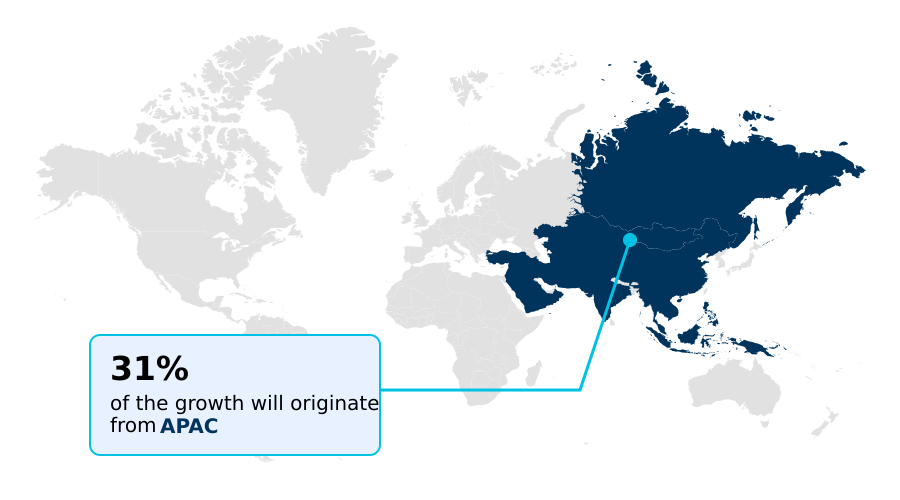
- APAC dominated the market and accounted for a 30.9% growth during the forecast period.
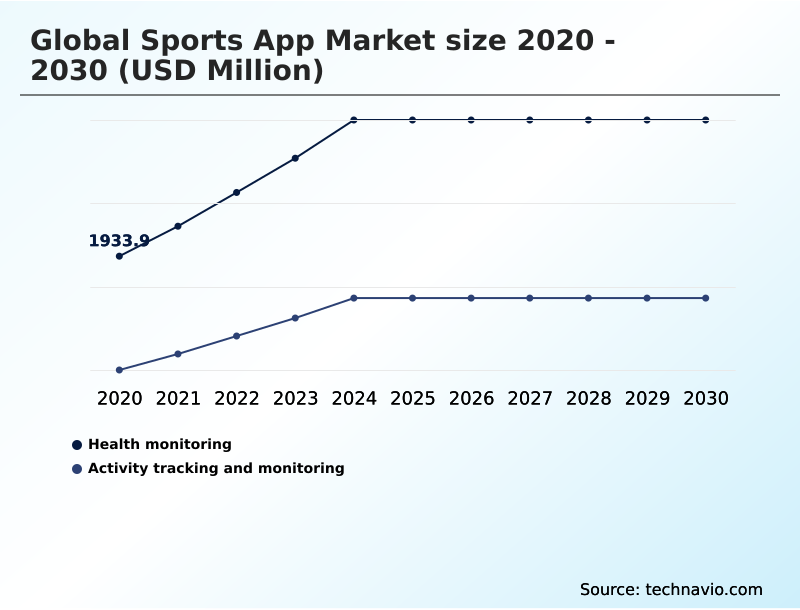
- By Application - Health monitoring segment was valued at USD 2.93 billion in 2024
- By Gender - Male segment accounted for the largest market revenue share in 2024
Market Size & Forecast
- Market Opportunities: USD 5.99 billion
- Market Future Opportunities: USD 3.96 billion
- CAGR from 2025 to 2030 : 12.3%
Market Summary
- The sports app market is undergoing a significant digital transformation, moving beyond simple score tracking to become sophisticated entertainment and wellness hubs. The increasing accessibility of high-speed mobile networks enables the seamless delivery of live streaming and on-demand video content, which are key drivers of user engagement.
- A prominent trend is the integration of advanced technologies like augmented reality visuals, offering fans immersive experiences with features like real-time velocity metrics and tactical overlays. Concurrently, fitness-focused applications are leveraging wearable integration and mobile sensors to provide personalized athlete performance analytics and gamified fitness community platforms.
- However, the industry faces challenges related to the complex and fragmented landscape of sports broadcasting rights. For instance, a media company must navigate numerous exclusive deals to build a comprehensive offering, using data from their apps to determine which content rights will yield the highest user acquisition and retention, thereby optimizing their significant investment in a competitive landscape.
What will be the Size of the Sports App Market during the forecast period?
Get Key Insights on Market Forecast (PDF) Request Free Sample
How is the Sports App Market Segmented?
The sports app industry research report provides comprehensive data (region-wise segment analysis), with forecasts and estimates in "USD million" for the period 2026-2030, as well as historical data from 2020-2024 for the following segments.
- Application
- Health monitoring
- Activity tracking and monitoring
- Gender
- Male
- Female
- Platform
- Google play store
- Apple iOS store
- Geography
- North America
- US
- Canada
- Mexico
- APAC
- China
- India
- Japan
- Europe
- UK
- Germany
- France
- South America
- Brazil
- Argentina
- Colombia
- Middle East and Africa
- UAE
- Saudi Arabia
- South Africa
- Rest of World (ROW)
- North America
By Application Insights
The health monitoring segment is estimated to witness significant growth during the forecast period.
The health monitoring segment is evolving toward providing users with data of clinical-grade accuracy. This shift is driven by advancements in wearable technology ecosystems that capture biometric sensor data, including heart rate variability monitoring and blood oxygen saturation levels.
Platforms now leverage AI-driven fitness coaching and metabolic data analysis to offer insights previously reserved for professional athletes, such as muscle fatigue prediction. Some advanced systems now feature electronic health record integration, bridging consumer wellness and professional healthcare.
This evolution toward comprehensive, physiologically-based metrics, supported by AI-powered coaching algorithms and AI-powered sleep analysis for recovery optimization, defines the segment's premium tier, where strength and conditioning programs are data-informed, with platforms reporting up to a 20% improvement in user adherence to health plans.
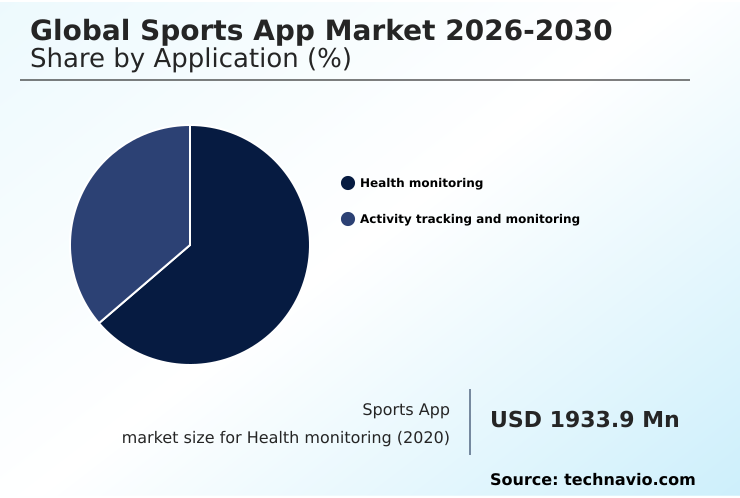
The Health monitoring segment was valued at USD 2.93 billion in 2024 and showed a gradual increase during the forecast period.
Regional Analysis
APAC is estimated to contribute 30.9% to the growth of the global market during the forecast period.Technavio’s analysts have elaborately explained the regional trends and drivers that shape the market during the forecast period.
See How Sports App Market Demand is Rising in APAC Request Free Sample
The market's geographic landscape shows distinct regional dynamics, with APAC leading incremental growth, contributing 30.9% of the global opportunity. This is fueled by high adoption of fitness and training applications centered on physical activity tracking and mobile sensor integration.
North America follows closely, representing 30.1% of the opportunity, where wearable device compatibility and personalized workout schedules drive high per-user monetization.
In Europe, which accounts for 28.7% of the market, there is a strong focus on personalized athlete analytics and the use of interactive 3D models.
The rise of gamified fitness communities and social mapping features is a global trend, with community-driven fitness challenges and youth sports team management tools gaining traction.
Some platforms in mature markets report a 40% higher average revenue per user through professional-grade coaching tools.
Market Dynamics
Our researchers analyzed the data with 2025 as the base year, along with the key drivers, trends, and challenges. A holistic analysis of drivers will help companies refine their marketing strategies to gain a competitive advantage.
- The trajectory of the global sports app market is increasingly defined by technological convergence and evolving user expectations. The impact of 5G on sports streaming quality is profound, enabling higher-fidelity broadcasts and paving the way for mainstream adoption of augmented reality in live sports broadcasting.
- This technological shift allows for the creation of virtual reality for immersive athlete training and more engaging real-time analytics for fan engagement. Simultaneously, the industry grapples with the persistent challenges of fragmented sports media rights, which complicates content acquisition and leads to strategies for managing user subscription fatigue.
- Cybersecurity risks in sports data applications are also a primary concern, necessitating robust solutions to maintain user trust, especially as data privacy regulations in health apps become more stringent. Monetization strategies for fitness applications are diversifying beyond simple subscriptions to include gamified community fitness platforms and specialized software for youth sports team management.
- For example, platforms that successfully implement social features in fitness apps see retention rates that are nearly double those that do not. The ability to offer low-bandwidth video streaming technology and effective performance tracking using GPS and sensor data is crucial for capturing market share, particularly in emerging economies.
- The future lies in improving user engagement in sports apps through a blend of premium content, social connectivity, and innovative features like integrated betting.
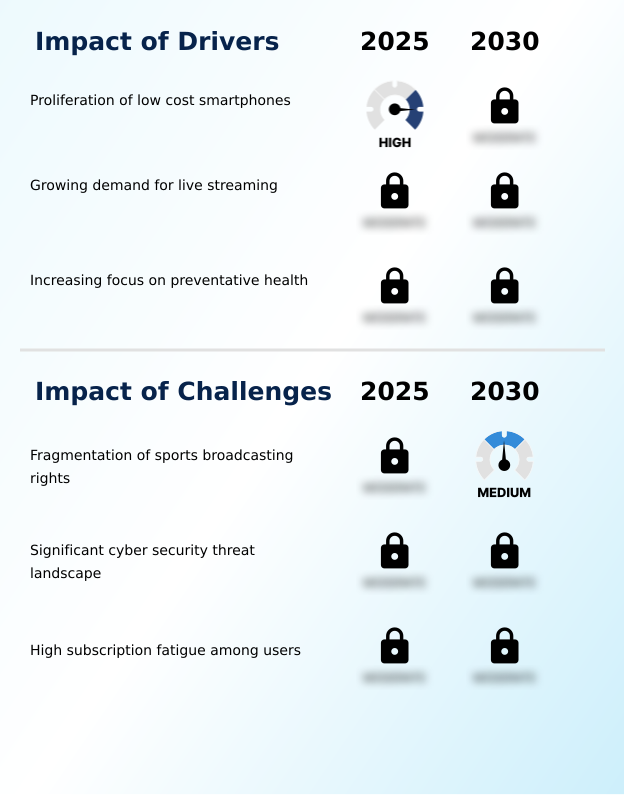
What are the key market drivers leading to the rise in the adoption of Sports App Industry?
- The proliferation of low-cost smartphones is a key driver, significantly expanding the market's addressable user base, particularly in developing economies.
- The global expansion of the sports app market is fueled by low-cost smartphone proliferation and accelerating 5G network expansion, which together are driving mobile internet subscriber growth. This creates a vast addressable audience for high-definition streaming and localized sports content.
- The adoption of digital payment integration facilitates monetization through in-app micro-transactions and ad-supported content models, lowering the barrier to entry for users. This ecosystem supports real-time video streaming for live events and high-intensity interval training sessions.
- Developers are leveraging social workout tracking and advanced video compression to enhance user experience, while GPS activity recording enables features like muscle-building workout plans. This accessibility has led to a 60% increase in user acquisition in certain emerging markets.
What are the market trends shaping the Sports App Industry?
- The integration of augmented reality visuals is emerging as a significant market trend. This provides users with an immersive and interactive viewing experience.
- The integration of augmented reality visuals is reshaping the user experience, with interactive tactical overlays and real-time velocity metrics enhancing viewer understanding. This hyper-interactive consumption model relies on high-fidelity spatial data processed by advanced computer vision algorithms. To manage the computational load, developers are increasingly utilizing cloud-based rendering and edge computing for sports, which reduces latency for live events.
- The use of content delivery network usage ensures that high-quality streams with features like player heat map overlays and multi-view streaming features are accessible globally. This approach improves fan engagement metrics by over 25%, as live statistics integration and topographical map integration create a more data-rich environment.
- Innovations in low-bandwidth streaming optimization are making these features more accessible on a wider range of devices.
What challenges does the Sports App Industry face during its growth?
- The fragmentation of sports broadcasting rights presents a key challenge, complicating the user experience and impacting industry growth.
- The industry's growth is constrained by the challenge of fragmented broadcasting rights, which complicates access to live streaming content and on-demand video media. This forces users to navigate multiple platforms for real-time score updates, leading to user subscription fatigue.
- The complex cybersecurity threat landscape requires significant investment to protect user data within comprehensive statistical databases and on platforms like virtual cycling platforms. This environment creates opportunities for new models, including direct-to-consumer streaming models and blockchain-based ticketing, to simplify access.
- However, intense competition means platforms must innovate with features like interactive betting overlays and enhanced gamification of user experience through team communication platforms, as users with multiple subscriptions show a 50% higher churn rate.
Exclusive Technavio Analysis on Customer Landscape
The sports app market forecasting report includes the adoption lifecycle of the market, covering from the innovator’s stage to the laggard’s stage. It focuses on adoption rates in different regions based on penetration. Furthermore, the sports app market report also includes key purchase criteria and drivers of price sensitivity to help companies evaluate and develop their market growth analysis strategies.
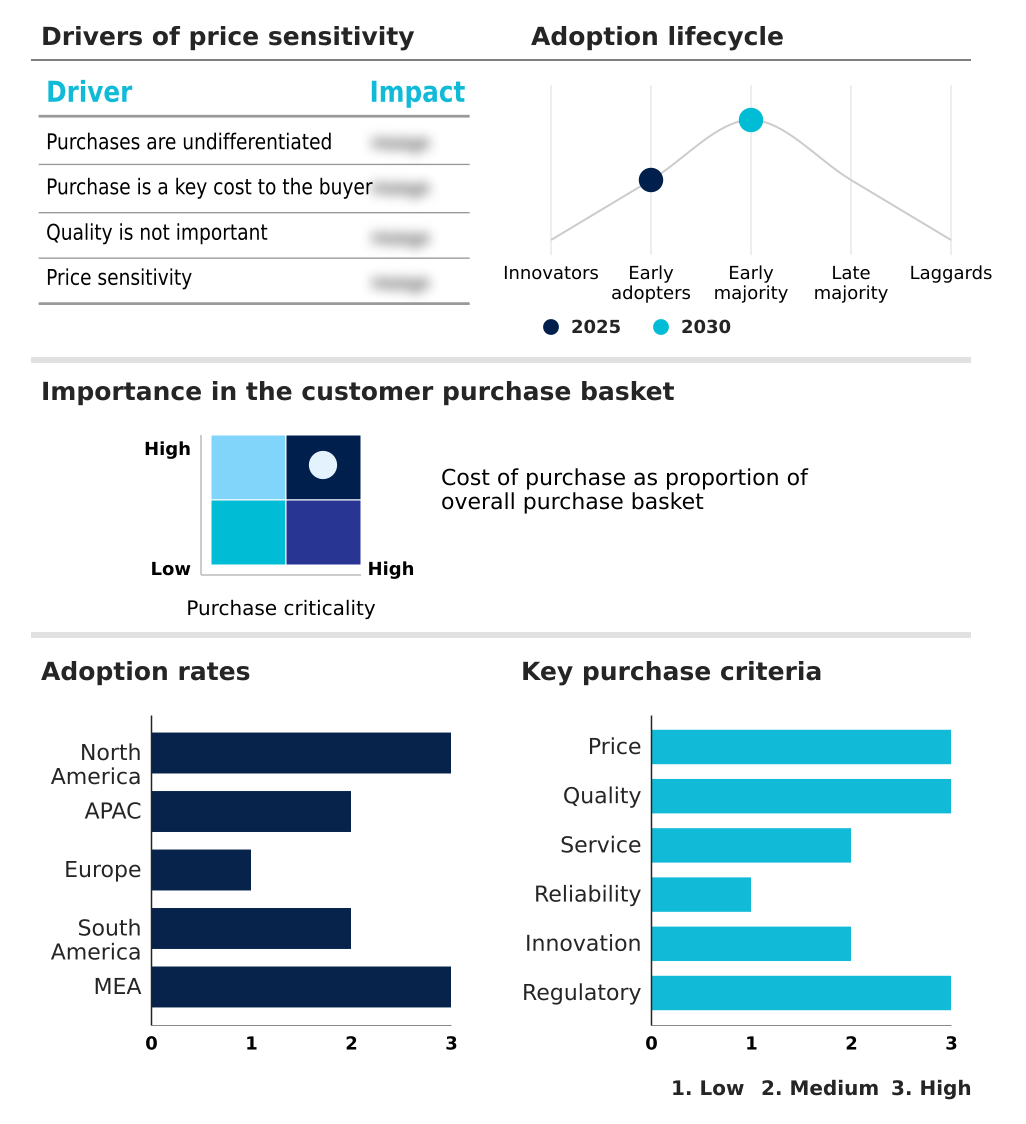
Customer Landscape of Sports App Industry
Competitive Landscape
Companies are implementing various strategies, such as strategic alliances, sports app market forecast, partnerships, mergers and acquisitions, geographical expansion, and product/service launches, to enhance their presence in the industry.
Apple Inc. - Offers a suite of applications for workout tracking, activity monitoring, and sports updates, fully integrated within a proprietary hardware and software ecosystem.
The industry research and growth report includes detailed analyses of the competitive landscape of the market and information about key companies, including:
- Apple Inc.
- DAZN Group Ltd
- DICKS Sporting Goods Inc.
- Fitbit LLC
- FotMob
- Fox Corp.
- Freeletics GmbH
- Garmin Ltd.
- Heja Sports AB
- Jefit Inc.
- Jiostar India Pvt Ltd
- LiveScore Group
- NBCUniversal
- Peloton Interactive Inc.
- Sofa IT d.o.o.
- Spond AS
- SportEasy SAS
- Strava Inc.
- TrainHeroic Inc.
- Zwift Inc.
Qualitative and quantitative analysis of companies has been conducted to help clients understand the wider business environment as well as the strengths and weaknesses of key industry players. Data is qualitatively analyzed to categorize companies as pure play, category-focused, industry-focused, and diversified; it is quantitatively analyzed to categorize companies as dominant, leading, strong, tentative, and weak.
Recent Development and News in Sports app market
- In May 2025, Fox Corp. announced a strategic partnership aimed at enhancing its digital streaming capabilities for major league baseball, focusing on interactive features.
- In March 2025, DAZN Group Ltd expanded its global rights portfolio by securing exclusive digital broadcasting agreements for several regional sports leagues, strengthening its content offering.
- In February 2025, Fitbit LLC launched a specialized recovery dashboard that utilizes metabolic data to predict muscle fatigue, providing users with actionable recovery insights.
- In January 2025, NBCUniversal updated its mobile platform to incorporate machine learning algorithms that deliver personalized game highlights based on user viewing history.
Dive into Technavio’s robust research methodology, blending expert interviews, extensive data synthesis, and validated models for unparalleled Sports App Market insights. See full methodology.
| Market Scope | |
|---|---|
| Page number | 279 |
| Base year | 2025 |
| Historic period | 2020-2024 |
| Forecast period | 2026-2030 |
| Growth momentum & CAGR | Accelerate at a CAGR of 12.3% |
| Market growth 2026-2030 | USD 3960.1 million |
| Market structure | Fragmented |
| YoY growth 2025-2026(%) | 11.4% |
| Key countries | US, Canada, Mexico, China, India, Japan, Australia, South Korea, Thailand, UK, Germany, France, Italy, Spain, Sweden, Brazil, Argentina, Colombia, UAE, Saudi Arabia, South Africa, Egypt and Turkey |
| Competitive landscape | Leading Companies, Market Positioning of Companies, Competitive Strategies, and Industry Risks |
Research Analyst Overview
- The market's evolution is marked by a definitive shift from basic physical activity tracking to sophisticated, data-centric fitness and training applications. This progression is enabled by widespread mobile sensor integration and enhanced wearable device compatibility. Modern platforms deliver a rich mix of live streaming content, on-demand video media, and real-time score updates through comprehensive statistical databases.
- A key development is the use of personalized athlete analytics and AI-driven fitness coaching, often delivered through gamified fitness communities. Technologically, the adoption of augmented reality visuals, including player heat map overlays and real-time velocity metrics, demonstrates a move toward a hyper-interactive consumption model. This is supported by advancements in computer vision algorithms and cloud-based rendering.
- The adoption of personalized analytics has already resulted in a 15% improvement in training efficiency for many amateur users. The proliferation of virtual cycling platforms and tools for high-intensity interval training, which rely on GPS activity recording, further diversifies the market's offerings.
What are the Key Data Covered in this Sports App Market Research and Growth Report?
-
What is the expected growth of the Sports App Market between 2026 and 2030?
-
USD 3.96 billion, at a CAGR of 12.3%
-
-
What segmentation does the market report cover?
-
The report is segmented by Application (Health monitoring, and Activity tracking and monitoring), Gender (Male, and Female), Platform (Google play store, and Apple iOS store) and Geography (North America, APAC, Europe, South America, Middle East and Africa)
-
-
Which regions are analyzed in the report?
-
North America, APAC, Europe, South America and Middle East and Africa
-
-
What are the key growth drivers and market challenges?
-
Proliferation of low cost smartphones, Fragmentation of sports broadcasting rights
-
-
Who are the major players in the Sports App Market?
-
Apple Inc., DAZN Group Ltd, DICKS Sporting Goods Inc., Fitbit LLC, FotMob, Fox Corp., Freeletics GmbH, Garmin Ltd., Heja Sports AB, Jefit Inc., Jiostar India Pvt Ltd, LiveScore Group, NBCUniversal, Peloton Interactive Inc., Sofa IT d.o.o., Spond AS, SportEasy SAS, Strava Inc., TrainHeroic Inc. and Zwift Inc.
-
Market Research Insights
- The market is characterized by rapid technological evolution, where immersive fan engagement is becoming a key differentiator. The strategic use of wearable performance analytics and community-driven fitness challenges is boosting user retention by over 25% on some platforms. The integration of social mapping features and AI-driven sleep analysis tools is creating more holistic user experiences.
- Direct-to-consumer streaming models are disrupting traditional broadcasting, while interactive betting overlays are opening new revenue streams, increasing in-app spending by 15% for early adopters. The focus is shifting toward creating comprehensive wearable technology ecosystems that support everything from strength and conditioning programs to AI-powered coaching algorithms, driving a more personalized and sticky user experience.
We can help! Our analysts can customize this sports app market research report to meet your requirements.
 RIA -
RIA -