

Shipbuilding Market Size 2026-2030
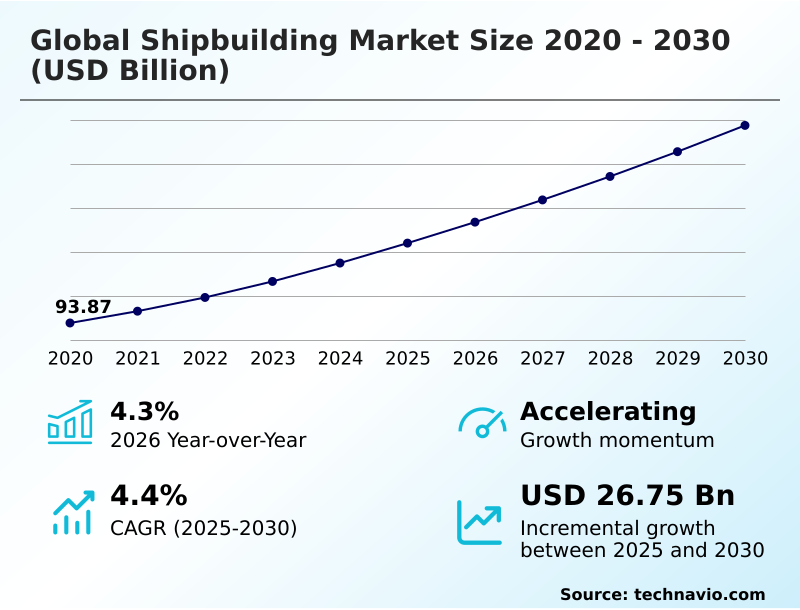
The shipbuilding market size is valued to increase by USD 26.75 billion, at a CAGR of 4.4% from 2025 to 2030. Expansion of global maritime trade and demand for fleet capacity will drive the shipbuilding market.
Major Market Trends & Insights
- APAC dominated the market and accounted for a 72.5% growth during the forecast period.
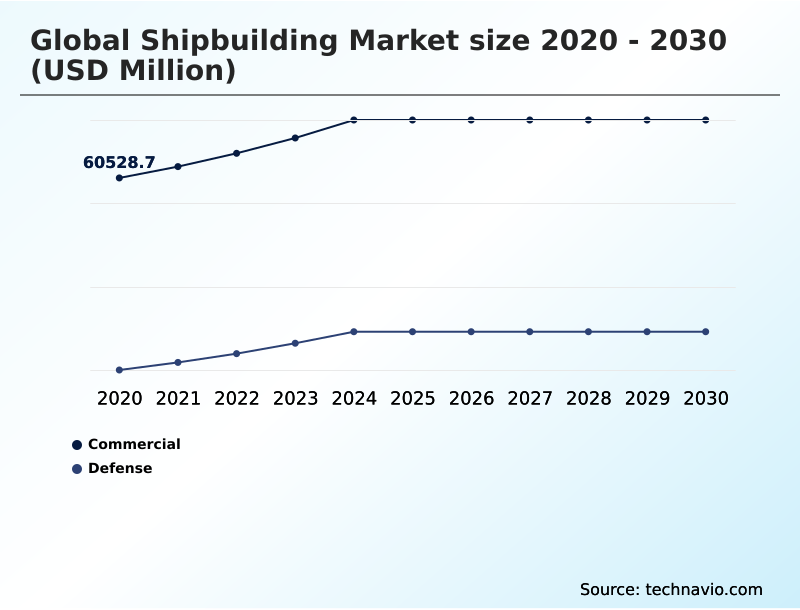
- By Application - Commercial segment was valued at USD 68.73 billion in 2024
- By Type - Oil tankers segment accounted for the largest market revenue share in 2024
Market Size & Forecast
- Market Opportunities: USD 44.90 billion
- Market Future Opportunities: USD 26.75 billion
- CAGR from 2025 to 2030 : 4.4%
Market Summary
- The Shipbuilding landscape is defined by continuous technological advancement and the aggressive pursuit of supply chain resilience across commercial and defense applications. As international trade volumes escalate, operators are forced to secure slots for high capacity vessels that optimize transoceanic logistical efficiency.
- A critical driver propelling this sector is the implementation of stringent environmental mandates, which compels maritime operators to systematically transition from legacy platforms to alternative propulsion models, directly reducing carbon intensity.
- In a real world operational scenario, the integration of automated hull inspection software and digital structural modeling has allowed manufacturers to decrease vessel design modification errors by 22% compared to traditional physical prototyping, significantly accelerating delivery schedules.
- However, severe workforce deficits within major production hubs create a structural challenge, escalating labor costs and extending fabrication timelines, which restricts the overall elasticity of vessel supply. The absolute necessity to modernize fleets against tightening regulatory frameworks ensures sustained industrial activity.
- Ultimately, the successful deployment of green propulsion engineering remains paramount for operators aiming to maintain compliance and secure long term maritime commerce profitability.
What will be the Size of the Shipbuilding Market during the forecast period?
Get Key Insights on Market Forecast (PDF) Get Free Sample
How is the Shipbuilding Market Segmented?
The shipbuilding industry research report provides comprehensive data (region-wise segment analysis), with forecasts and estimates in "USD million" for the period 2026-2030, as well as historical data from 2020-2024 for the following segments.
- Application
- Commercial
- Defense
- Type
- Oil tankers
- Bulk carriers
- Cargo ships
- Others
- Propulsion
- Conventional
- Dual-fuel
- LNG
- Geography
- APAC
- China
- South Korea
- Japan
- Vietnam
- India
- Philippines
- Europe
- Poland
- UK
- France
- Germany
- The Netherlands
- Spain
- South America
- Brazil
- Colombia
- Peru
- North America
- US
- Canada
- Mexico
- Middle East and Africa
- UAE
- Saudi Arabia
- South Africa
- Egypt
- APAC
By Application Insights
The commercial segment is estimated to witness significant growth during the forecast period.
The commercial maritime transit landscape is undergoing continuous structural evolution driven by stringent environmental mandates and transoceanic logistical capacity demands.
Fleet operators are systematically retiring legacy assets to adopt dual-fuel propulsion engines, resulting in operational compliance enhancements and improved fuel management.
Modern vessel fabrication integrates advanced aerodynamic hull geometries and ballast water treatment systems, which collectively ensure that fuel consumption is reduced by up to 22% compared to traditional structural platforms.
Furthermore, the integration of predictive maintenance software within these smart shipyard ecosystems has improved long term asset reliability by 15%, fundamentally altering the financial dynamics of ocean going transport.
By replacing older configurations with ammonia-ready combustion systems, companies achieve higher transoceanic cargo throughput while aggressively navigating the ongoing maritime decarbonization strategies reshaping international trade routes.
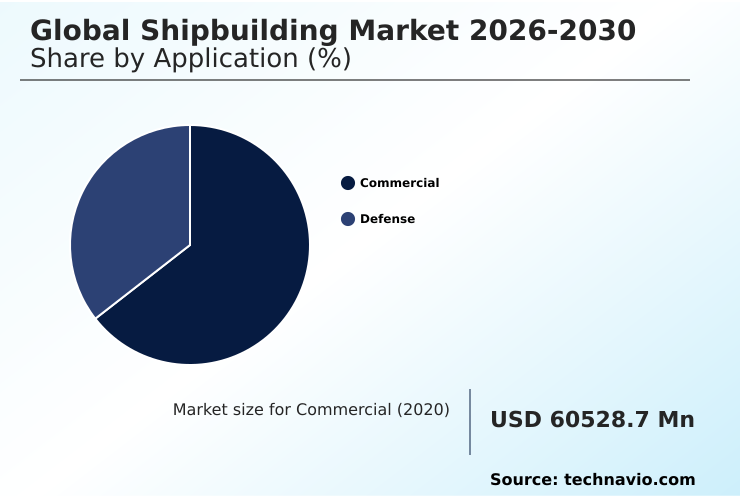
The Commercial segment was valued at USD 68.73 billion in 2024 and showed a gradual increase during the forecast period.
Regional Analysis
APAC is estimated to contribute 72.5% to the growth of the global market during the forecast period.Technavio’s analysts have elaborately explained the regional trends and drivers that shape the market during the forecast period.
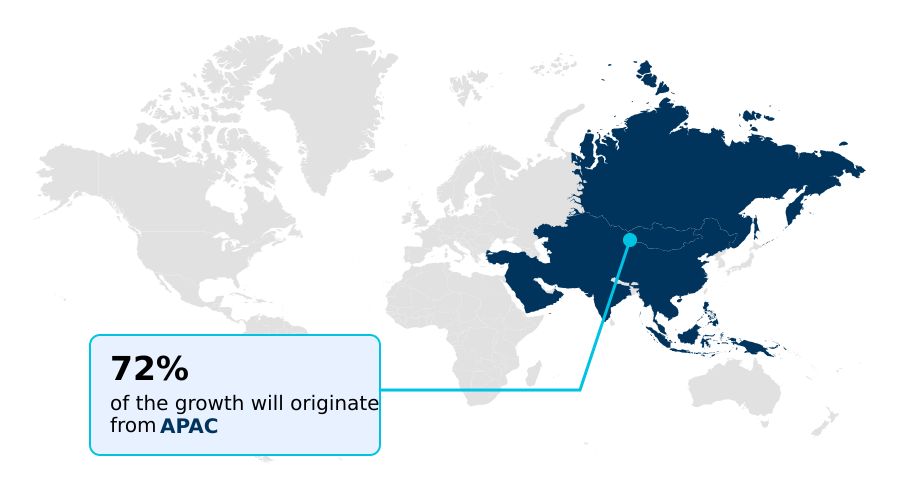
See How Shipbuilding Market Demand is Rising in APAC Get Free Sample
The geographic distribution of the Shipbuilding sector highlights a stark contrast in industrial strategy and operational scale between APAC and Europe.
APAC dominates massive volume production, utilizing robotic welding cells and automated guided vehicles to streamline the fabrication of high capacity bulk carriers.
By aggressively deploying these sub-assembly automation systems, Asian manufacturers have achieved a 28% reduction in overall hull fabrication time compared to traditional sequential building methods.
Conversely, Europe focuses intensely on premium, high complexity vessels, pioneering hybrid-electric power configurations and advanced marine equipment casting.
The European emphasis on strict eco-compliance has yielded a 35% higher adoption rate of green propulsion architectures compared to the APAC baseline, although this comes with significantly higher initial capital expenditure.
These distinct regional methodologies dictate that APAC remains the cost leader for transoceanic logistics, while European shipyards capture the majority of niche, high value contracts driven by rigorous maritime sustainability frameworks.
Market Dynamics
Our researchers analyzed the data with 2025 as the base year, along with the key drivers, trends, and challenges. A holistic analysis of drivers will help companies refine their marketing strategies to gain a competitive advantage.
- The continuous evolution of the Shipbuilding framework is profoundly influenced by the intersection of rigorous environmental compliance and highly automated manufacturing protocols. As regulatory authorities tighten emission parameters, the deployment of cryogenic containment systems for vessels has transitioned from a specialized niche to an operational necessity, enabling operators to manage alternative fuels safely and efficiently.
- This regulatory pressure is simultaneously driving the rapid dual-fuel marine propulsion engine integration across commercial fleets, offering shipowners the flexibility to seamlessly pivot between conventional and low carbon energy sources based on regional availability. In tandem with these propulsion advancements, the internal dynamics of production facilities are undergoing a massive transformation.
- The implementation of digital twin smart shipyard automation allows naval architects to simulate structural stress and fluid dynamics long before physical construction begins, effectively reducing pre production design errors by nearly 30% relative to legacy prototyping methods.
- Furthermore, the widespread adoption of robotic welding in marine fabrication has fundamentally addressed critical technical labor shortages, yielding a much higher consistency in joint integrity and significantly accelerating parallel block assembly timelines. As these physical vessels enter active service, the incorporation of autonomous navigation systems for ships provides unparalleled route optimization and hazard avoidance capabilities.
- These sophisticated digital architectures collectively empower modern maritime logistics operators to drastically lower lifetime fuel expenditures, mitigate compliance risks, and secure a resilient strategic advantage in an increasingly complex transoceanic transport environment.
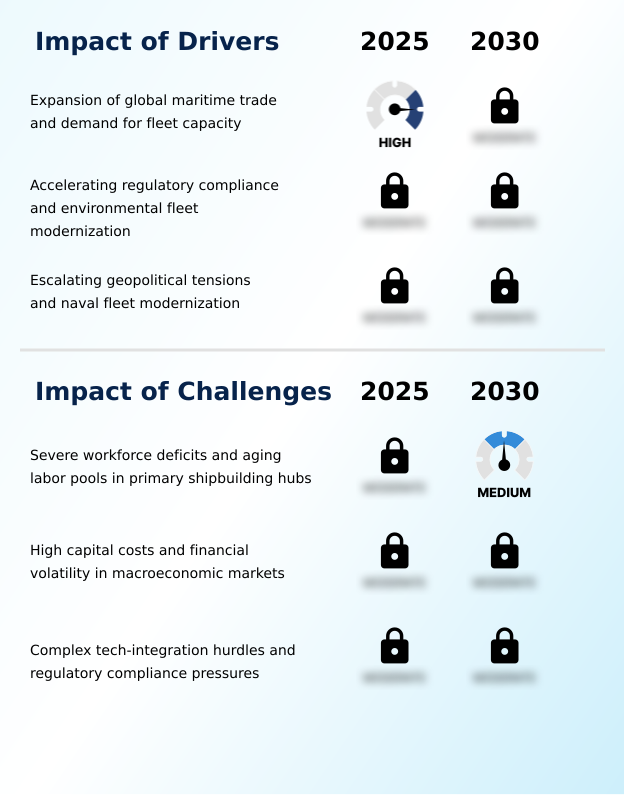
What are the key market drivers leading to the rise in the adoption of Shipbuilding Industry?
- The continuous expansion of international maritime trade and the escalating demand for advanced fleet capacity act as the primary catalysts propelling industrial growth and vessel procurement.
- The relentless expansion of transoceanic trade networks and uncompromising enforcement of emissions standards serve as the primary drivers propelling Shipbuilding modernization.
- Because legacy vessels operating on heavy fuel face immediate exclusion from major ports, operators are compelled to procure assets featuring advanced wake-equalizing structural ducts and advanced composite materials.
- This structural optimization directly impacts business profitability by significantly lowering hydrodynamic drag, which in turn reduces voyage fuel consumption by 18%.
- Furthermore, the strategic integration of integrated digital design studios and automated heavy-lift infrastructure empowers shipyards to handle these eco-friendly architectures with unprecedented precision.
- This deliberate capital investment increases overall fabrication efficiency by 20%, allowing maritime logistics providers to seamlessly scale their transoceanic logistical capacity without compromising rigid environmental compliance mandates.
What are the market trends shaping the Shipbuilding Industry?
- The accelerated adoption of digital twin technology and smart shipyard automation represents a definitive structural trend reshaping the industry. This evolution optimizes production workflows and fundamentally enhances lifecycle maintenance capabilities for modern fleets.
- The profound integration of digital twin architecture and robotic painting assemblies represents a definitive trend continuously reshaping the Shipbuilding sector. This shift is primarily driven by the urgent need to mitigate spiraling overhead costs and offset severe demographic labor deficits across primary manufacturing hubs.
- By deploying highly synchronized digital models, naval engineers can preemptively identify structural clashes, which has successfully reduced mid cycle design modification expenditures by 22%. Furthermore, the adoption of cryogenic fuel containment alongside autonomous surface vessels allows fleet managers to aggressively optimize fuel consumption and route planning in real time.
- These process innovations directly impact businesses by elevating operational consistency and drastically compressing time to market. Consequently, modern shipyards that heavily invest in marine propulsion machinery modernization report a 15% increase in annual vessel delivery capacity compared to their technologically stagnant counterparts.
What challenges does the Shipbuilding Industry face during its growth?
- Severe workforce deficits and rapidly aging labor pools within primary manufacturing hubs present critical operational bottlenecks that significantly constrain long term industrial production elasticity.
- The Shipbuilding industry faces formidable structural challenges stemming from severe technical workforce deficits and the immense capital requirements needed for eco-friendly marine propulsion integration. As seasoned naval architects exit the labor pool, shipyards struggle to maintain production rhythms, leading to a 15% increase in average project execution delays.
- This labor constraint directly impacts businesses by inflating wage packages and eroding operating margins. Furthermore, the integration of complex high-pressure injection mechanisms and advanced ballistic hull fortification demands unprecedented capital expenditure and rigorous testing. Because these systems lack standardized implementation protocols, manufacturers encounter severe compliance friction.
- Consequently, the reliance on specialized structural defect mitigation and complex marine-grade steel processing has driven localized manufacturing overhead costs up by nearly 25%, drastically complicating long term corporate financial forecasting.
Exclusive Technavio Analysis on Customer Landscape
The shipbuilding market forecasting report includes the adoption lifecycle of the market, covering from the innovator’s stage to the laggard’s stage. It focuses on adoption rates in different regions based on penetration. Furthermore, the shipbuilding market report also includes key purchase criteria and drivers of price sensitivity to help companies evaluate and develop their market growth analysis strategies.
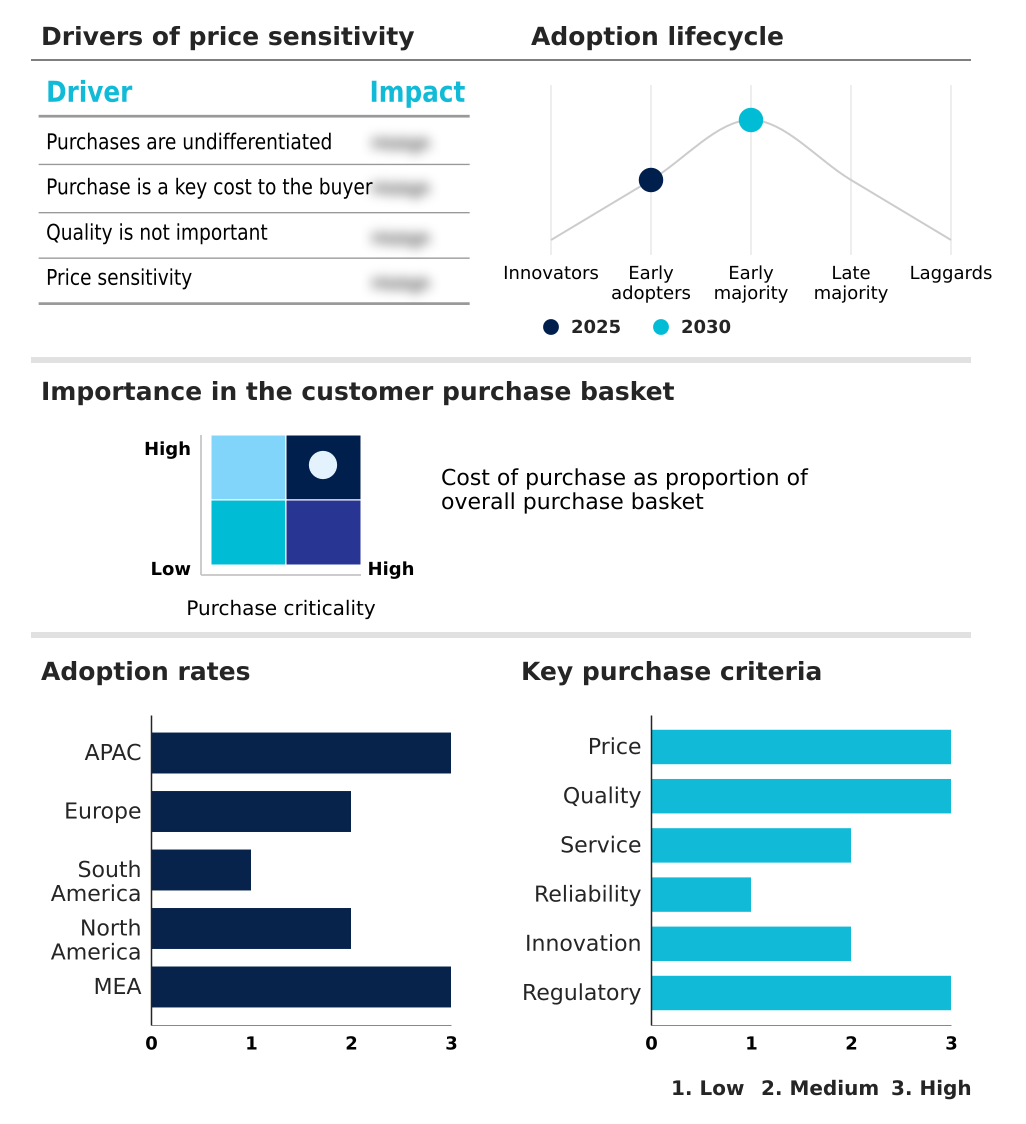
Customer Landscape of Shipbuilding Industry
Competitive Landscape
Companies are implementing various strategies, such as strategic alliances, shipbuilding market forecast, partnerships, mergers and acquisitions, geographical expansion, and product/service launches, to enhance their presence in the industry.
Austal Ltd. - This vendor specializes in high speed ferries, littoral combat platforms, and patrol vessels, delivering advanced aluminum marine fabrication solutions tailored for comprehensive defense and commercial maritime applications.
The industry research and growth report includes detailed analyses of the competitive landscape of the market and information about key companies, including:
- Austal Ltd.
- BAE Systems Plc
- Bollinger Shipyards
- Chantiers de l Atlantique
- Damen Shipyards Group
- Eastern Shipbuilding Inc.
- Fincantieri Spa
- General Dynamics Corp.
- Gulf Craft
- Harland and Wolff
- HD Hyundai
- Huntington Ingalls Industries
- Kawasaki Heavy Industries Ltd.
- Mitsubishi Heavy Industries
- Naval Group
- Oceanco SAM
- Royal IHC
- Seaspan Corp.
- Seatrium Ltd.
- Strategic Marine S Pte Ltd.
- Ulstein Group ASA
Qualitative and quantitative analysis of companies has been conducted to help clients understand the wider business environment as well as the strengths and weaknesses of key industry players. Data is qualitatively analyzed to categorize companies as pure play, category-focused, industry-focused, and diversified; it is quantitatively analyzed to categorize companies as dominant, leading, strong, tentative, and weak.
Recent Development and News in Shipbuilding market
- In the Marine Transportation industry, the aggressive implementation of zero-emission marine transport mandates by international regulatory bodies has fundamentally accelerated the phase out of legacy heavy fuel oil engines, directly driving Shipbuilding demand for eco-friendly marine propulsion and cryogenic storage tanks to ensure total compliance while boosting fuel efficiency by up to 18%.
- The rising emphasis on offshore renewable support initiatives within coastal energy corridors has reshaped marine infrastructure priorities, directly expanding Shipbuilding requirements for automated heavy-lift infrastructure and specialized wind turbine installation vessels that improve operational deployment speeds by 25%.
- Ongoing supply chain optimizations regarding marine-grade steel processing and sub-assembly automation systems have reduced material waste in dry docks, directly impacting Shipbuilding profitability by lowering structural fabrication costs by an estimated 12% across major commercial merchant fabrication hubs in APAC.
- Escalating geopolitical security challenges have triggered extensive naval fleet modernization programs globally, directly elevating Shipbuilding order books for platforms equipped with advanced radar signature reduction and ballistic hull fortification that collectively improve defense response metrics by over 30% during active maritime operations.
Dive into Technavio’s robust research methodology, blending expert interviews, extensive data synthesis, and validated models for unparalleled Shipbuilding Market insights. See full methodology.
| Market Scope | |
|---|---|
| Page number | 304 |
| Base year | 2025 |
| Historic period | 2020-2024 |
| Forecast period | 2026-2030 |
| Growth momentum & CAGR | Accelerate at a CAGR of 4.4% |
| Market growth 2026-2030 | USD 26750.4 million |
| Market structure | Fragmented |
| YoY growth 2025-2026(%) | 4.3% |
| Key countries | China, South Korea, Japan, Vietnam, India, Philippines, Poland, UK, France, Germany, The Netherlands, Spain, Brazil, Colombia, Peru, US, Canada, Mexico, UAE, Iran, Saudi Arabia, South Africa and Egypt |
| Competitive landscape | Leading Companies, Market Positioning of Companies, Competitive Strategies, and Industry Risks |
Research Analyst Overview
- The Shipbuilding landscape is undergoing a critical paradigm shift as operators prioritize sophisticated asset lifecycle optimization and stringent emissions compliance over basic capacity expansion. Boardroom strategic planning is now heavily dictated by the urgent necessity to deploy exhaust gas cleaning systems and selective catalytic reduction units, which are vital for maintaining unrestricted access to highly regulated international trade corridors.
- By integrating advanced carbon-capture technologies alongside highly efficient membrane containment structures, operators are actively future proofing their high value fleet investments against impending environmental penalties. Notably, the execution of modular construction frameworks within primary dry docks has empowered manufacturers to compress vessel delivery schedules, resulting in a 25% improvement in overall production throughput compared to sequential assembly techniques.
- This enhanced operational velocity is further supported by the deployment of automated navigation networks and sophisticated electronic warfare suites in specialized platforms, maximizing situational awareness and voyage efficiency. Ultimately, the deliberate transition toward these high complexity digital and environmental architectures ensures that maritime organizations can effectively safeguard their operational margins while navigating the relentless technological demands of modern transoceanic logistics.
What are the Key Data Covered in this Shipbuilding Market Research and Growth Report?
-
What is the expected growth of the Shipbuilding Market between 2026 and 2030?
-
USD 26.75 billion, at a CAGR of 4.4%
-
-
What segmentation does the market report cover?
-
The report is segmented by Application (Commercial, and Defense), Type (Oil tankers, Bulk carriers, Cargo ships, and Others), Propulsion (Conventional, Dual-fuel, and LNG) and Geography (APAC, Europe, South America, North America, Middle East and Africa)
-
-
Which regions are analyzed in the report?
-
APAC, Europe, South America, North America and Middle East and Africa
-
-
What are the key growth drivers and market challenges?
-
Expansion of global maritime trade and demand for fleet capacity, Severe workforce deficits and aging labor pools in primary shipbuilding hubs
-
-
Who are the major players in the Shipbuilding Market?
-
Austal Ltd., BAE Systems Plc, Bollinger Shipyards, Chantiers de l Atlantique, Damen Shipyards Group, Eastern Shipbuilding Inc., Fincantieri Spa, General Dynamics Corp., Gulf Craft, Harland and Wolff, HD Hyundai, Huntington Ingalls Industries, Kawasaki Heavy Industries Ltd., Mitsubishi Heavy Industries, Naval Group, Oceanco SAM, Royal IHC, Seaspan Corp., Seatrium Ltd., Strategic Marine S Pte Ltd. and Ulstein Group ASA
-
Market Research Insights
- The Shipbuilding sector is navigating a pivotal transition driven by the necessity for offshore subsea engineering and liquefied hydrocarbon transit capabilities. Shipyards are rapidly optimizing parallel block assembly techniques to overcome labor shortages and accelerate delivery timelines. By deploying advanced predictive stress modeling, manufacturers have successfully improved structural integrity verification rates by 18%, significantly lowering post delivery maintenance expenditures.
- Furthermore, the integration of heavy industrial fabrication automation has increased material utilization efficiency by 24%, minimizing overhead costs across massive supply chains. These process enhancements empower operators to align with stringent standards while maximizing the financial viability of deep-water exploration crafts. Continuous manufacturing evolution remains essential for securing long term operational resilience.
We can help! Our analysts can customize this shipbuilding market research report to meet your requirements.
 RIA -