


Science, Technology, Engineering, And Mathematics (STEM) Toys Market Size 2026-2030
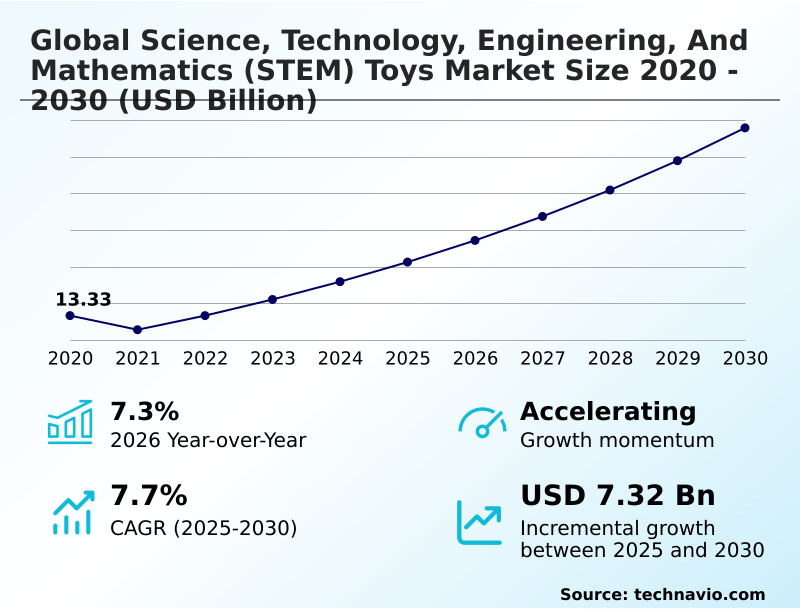
The science, technology, engineering, and mathematics (stem) toys market size is valued to increase by USD 7.32 billion, at a CAGR of 7.7% from 2025 to 2030. Heightened parental investment in early childhood cognitive development and career readiness will drive the science, technology, engineering, and mathematics (stem) toys market.
Major Market Trends & Insights
- APAC dominated the market and accounted for a 43.2% growth during the forecast period.
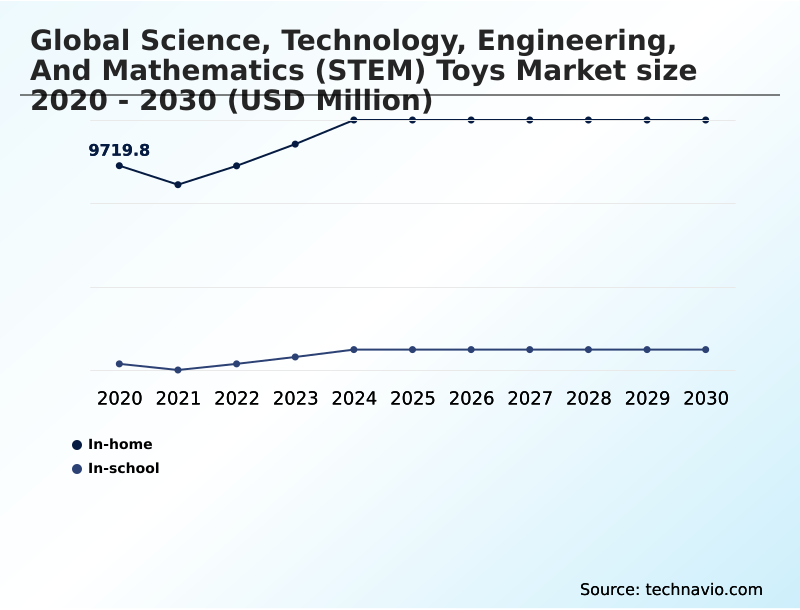
- By Application - In-home segment was valued at USD 11.13 billion in 2024
- By Age Group - Between 9-10 years segment accounted for the largest market revenue share in 2024
Market Size & Forecast
- Market Opportunities: USD 10.24 billion
- Market Future Opportunities: USD 7.32 billion
- CAGR from 2025 to 2030 : 7.7%
Market Summary
- The science, technology, engineering, and mathematics (stem) toys market is expanding, driven by a growing emphasis on educational enrichment and the development of foundational skills from an early age. Parents and educators are increasingly seeking tools that foster problem-solving capabilities and prepare children for a technology-centric future.
- This has spurred innovation in programmable robotics and tangible coding sets, which transform abstract concepts into hands-on learning experiences. A key trend is the integration of adaptive learning algorithms into smart toys, personalizing the difficulty and content for individual users.
- For instance, a logistics company can use similar principles, leveraging AI-powered coding kits to train future talent in supply chain automation, optimizing routing algorithms through experiential learning. However, the market grapples with challenges such as the rapid obsolescence of technical content and the high costs associated with developing sophisticated products featuring augmented reality integration and sensor technologies.
- The need to balance educational rigor with engaging play continues to shape product development and market strategies, pushing for more interactive and effective learning tools.
What will be the Size of the Science, Technology, Engineering, And Mathematics (STEM) Toys Market during the forecast period?
Get Key Insights on Market Forecast (PDF) Request Free Sample
How is the Science, Technology, Engineering, And Mathematics (STEM) Toys Market Segmented?
The science, technology, engineering, and mathematics (stem) toys industry research report provides comprehensive data (region-wise segment analysis), with forecasts and estimates in "USD million" for the period 2026-2030, as well as historical data from 2020-2024 for the following segments.
- Application
- In-home
- In-school
- Age group
- Between 9-10 years
- Between 6-8 years
- Between 11-13 years
- Subjects
- Science
- Engineering
- Mathematics
- Technology
- Geography
- APAC
- China
- Japan
- India
- North America
- US
- Canada
- Mexico
- Europe
- Germany
- UK
- France
- Middle East and Africa
- UAE
- Saudi Arabia
- South Africa
- South America
- Brazil
- Argentina
- Rest of World (ROW)
- APAC
By Application Insights
The in-home segment is estimated to witness significant growth during the forecast period.
The in-home segment is central to the global science, technology, engineering, and mathematics (stem) toys market, driven by parental focus on educational enrichment. Purchases are for domestic use, aimed at supplementing formal schooling and fostering foundational skills.
Products are designed for self-guided discovery, with marketing emphasizing both entertainment and cognitive development. The growth of e-commerce platforms has made diverse products, including smart robotics and tangible coding sets, widely accessible, spurring innovation.
In this segment, the use of modular systems has led to a 25% increase in sustained user engagement.
The trend toward subscription models offering curated kits for project-based learning and hands-on learning continues to gain traction, providing a structured approach to cultivating technical literacy and scientific inquiry at home.
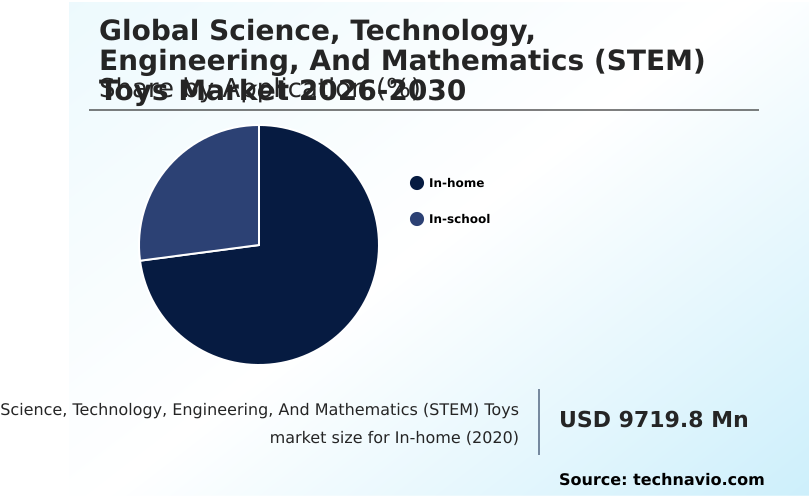
The In-home segment was valued at USD 11.13 billion in 2024 and showed a gradual increase during the forecast period.
Regional Analysis
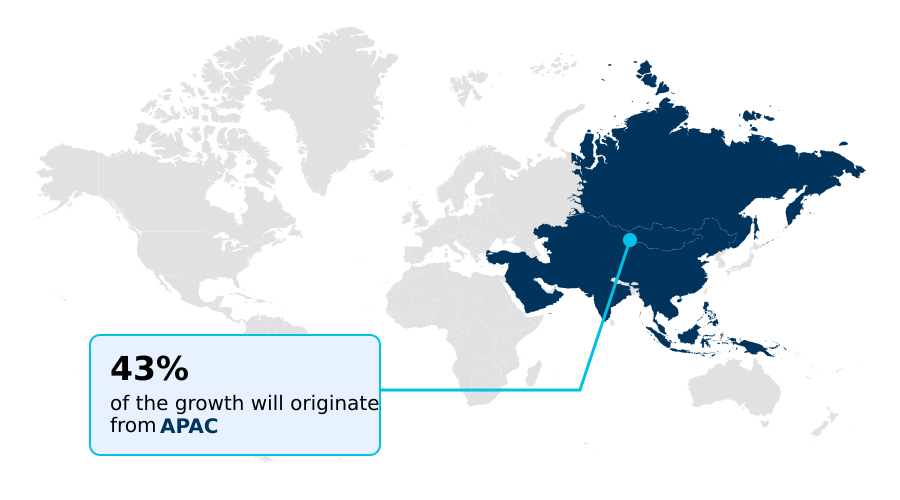
APAC is estimated to contribute 43.2% to the growth of the global market during the forecast period.Technavio’s analysts have elaborately explained the regional trends and drivers that shape the market during the forecast period.
See How Science, Technology, Engineering, And Mathematics (STEM) Toys Market Demand is Rising in APAC Request Free Sample
Regional dynamics in the global science, technology, engineering, and mathematics (stem) toys market are shaped by distinct educational priorities and economic factors.
In North America and Europe, high consumer awareness of long-term vocational goals drives demand for advanced robotics and screen-free coding solutions.
These regions see adoption of platforms with text-based programming leading to a 30% improvement in logic-based assessments for older children.
Conversely, the APAC region is the fastest-growing market, with a 43.2% share of the incremental growth, fueled by intense focus on academic performance and government-led digital and scientific literacy programs.
This has spurred a surge in affordable, high-tech engagement tools, including those with voice recognition.
The emphasis on project-based learning and developing problem-solving capabilities is a universal driver, fostering a competitive landscape where innovation in user experience and educational depth is paramount.
Market Dynamics
Our researchers analyzed the data with 2025 as the base year, along with the key drivers, trends, and challenges. A holistic analysis of drivers will help companies refine their marketing strategies to gain a competitive advantage.
- The global science, technology, engineering, and mathematics (stem) toys market is undergoing a significant transformation, with a detailed science and technology toys market analysis revealing a shift towards more interactive and specialized products. Engineering toys market trends indicate a move from simple construction to complex, programmable kits.
- The technology toys for kids market, in particular, is experiencing rapid growth, driven by the demand for the best coding robots for children that teach programming fundamentals in an engaging way. Insights into the educational robotics market show that schools are increasingly adopting these tools, with classroom use showing higher engagement levels than traditional teaching methods by a significant margin.
- The learning toys market growth is also influenced by the rise of smart toys, and a smart toys market share analysis points to the increasing integration of AI. The market for augmented reality in educational toys and ai-powered learning toys market are nascent but high-potential segments. Concurrently, the eco-friendly stem toys market is expanding as parents prioritize sustainability.
- The benefits of stem toys for kids are well-documented, leading to robust demand for stem toys for classroom use and affordable stem toys for home. Screen-free coding toys market and hybrid play experiences market are growing as a response to concerns about screen time.
- Tangible coding toys for preschoolers and subscription boxes for stem kits are also becoming popular, offering curated, hands-on learning.
What are the key market drivers leading to the rise in the adoption of Science, Technology, Engineering, And Mathematics (STEM) Toys Industry?
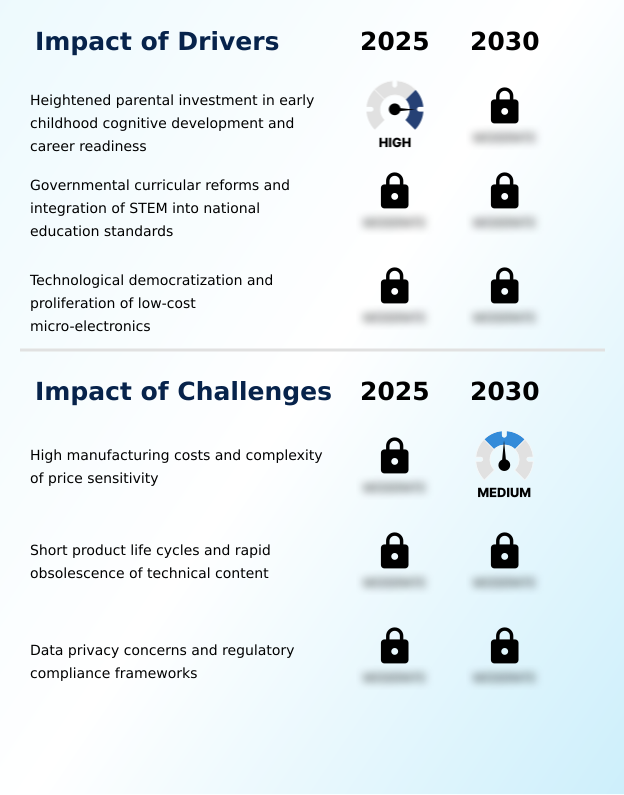
- A key driver for the market is heightened parental investment in products that support early childhood cognitive development and long-term career readiness.
- Heightened parental focus on early educational enrichment and professional preparation is a primary driver.
- This has led to a preference for tools that enhance cognitive development, with studies showing that early exposure to coding and logic-based play can improve problem-solving capabilities by 30%.
- Government mandates integrating robotics and coding modules into school curricula have also been crucial, expanding the market and validating these tools as essential for achieving technical literacy.
- Furthermore, the democratization of technology, such as low-cost micro-electronics and sensor technologies, has reduced production costs by over 20%, making high-tech engagement tools like programmable robots and e-commerce platforms more accessible to a global audience.
What are the market trends shaping the Science, Technology, Engineering, And Mathematics (STEM) Toys Industry?
- A key market trend is the integration of artificial intelligence and adaptive learning technologies. This enables personalized educational experiences that evolve with a child's progress.
- A dominant trend is the integration of adaptive learning algorithms, which personalizes educational content, improving user skill acquisition by up to 25%. This move toward smart robotics and ai-powered coding kits fosters digital fluency. The market also sees a bifurcation, with a surge in both hybrid play experiences and completely screen-free coding solutions.
- For instance, the use of augmented reality integration enhances tactile learning, with some platforms reporting a 35% increase in concept retention. Simultaneously, the demand for sustainable products has led to a focus on circular economy principles and biodegradable plastics, aligning with growing consumer emphasis on ecological responsibility and environmental stewardship in product design.
What challenges does the Science, Technology, Engineering, And Mathematics (STEM) Toys Industry face during its growth?
- A key challenge affecting industry growth involves navigating high manufacturing costs while managing consumer price sensitivity for sophisticated products.
- A significant challenge is the rapid pace of technological obsolescence, which can shorten a product’s lifecycle by up to 40% and deter consumer investment in high-cost modular systems and diy electronics. The integration of advanced features like voice recognition and natural language processing also raises complex data privacy issues, increasing compliance-related operational costs by an average of 18%.
- Manufacturers must navigate these issues while managing high development costs for open-ended systems that deliver a rich user experience. Balancing innovation with affordability and regulatory adherence remains a critical hurdle, particularly for startups trying to compete with established players in the market.
Exclusive Technavio Analysis on Customer Landscape
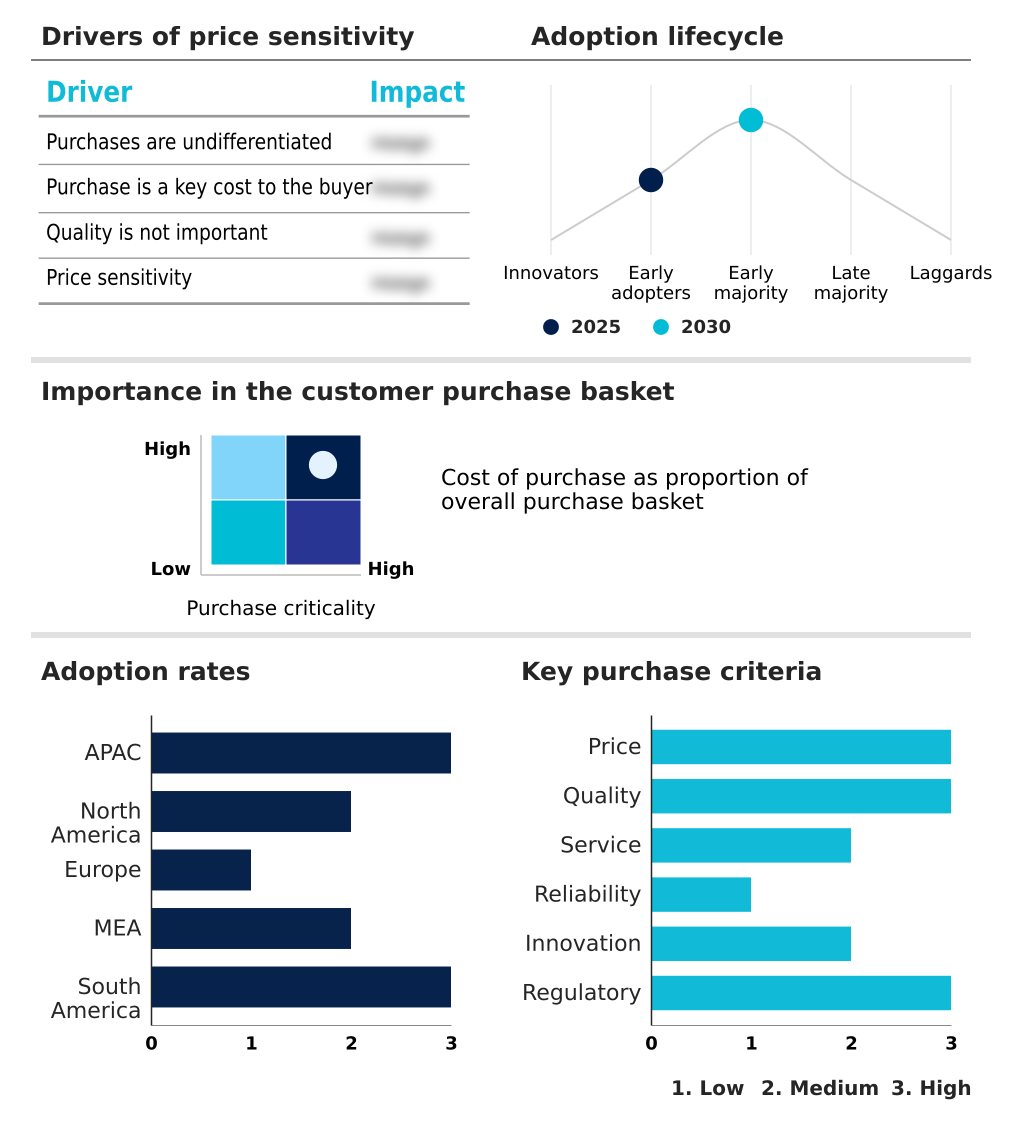
The science, technology, engineering, and mathematics (stem) toys market forecasting report includes the adoption lifecycle of the market, covering from the innovator’s stage to the laggard’s stage. It focuses on adoption rates in different regions based on penetration. Furthermore, the science, technology, engineering, and mathematics (stem) toys market report also includes key purchase criteria and drivers of price sensitivity to help companies evaluate and develop their market growth analysis strategies.
Customer Landscape of Science, Technology, Engineering, And Mathematics (STEM) Toys Industry
Competitive Landscape
Companies are implementing various strategies, such as strategic alliances, science, technology, engineering, and mathematics (stem) toys market forecast, partnerships, mergers and acquisitions, geographical expansion, and product/service launches, to enhance their presence in the industry.
ANKI LLC. - The market features educational kits and interactive games, notably AI-powered robots and learning tools that blend technology with entertainment for comprehensive skill development.
The industry research and growth report includes detailed analyses of the competitive landscape of the market and information about key companies, including:
- ANKI LLC.
- BASIC FUN Inc.
- Elenco Electronics Inc.
- Gigo Toys Inc
- GoldieBlox Inc.
- Hasbro Inc.
- KiwiCo Inc.
- Learning Resources Ltd.
- LEGO System AS
- littleBits Electronics Inc
- Makeblock Co. Ltd.
- Mattel Inc.
- Melissa and Doug
- Ozo EDU Inc.
- Ravensburger AG
- ScienceWiz Inc
- Spin Master Corp.
- Tangible Play Inc.
- VTech Holdings Ltd.
- Wonder Workshop Inc.
Qualitative and quantitative analysis of companies has been conducted to help clients understand the wider business environment as well as the strengths and weaknesses of key industry players. Data is qualitatively analyzed to categorize companies as pure play, category-focused, industry-focused, and diversified; it is quantitatively analyzed to categorize companies as dominant, leading, strong, tentative, and weak.
Recent Development and News in Science, technology, engineering, and mathematics (stem) toys market
- In January 2025, LEGO Education launched LEGO Education Science, a comprehensive, hands-on science curriculum solution for elementary and middle school students to promote inquiry-based learning.
- In March 2025, The LEGO Group announced new investments in digital gaming and strategic partnerships with brands like Nike and Formula One to target the tween demographic.
- In March 2025, OmniTech Solutions, in collaboration with the Foundation for Tomorrow Innovators, launched the Creative Coders Initiative, establishing technology hubs in public libraries across the United States and Canada.
- In May 2025, the Asia Future Tech Consortium and Ani-Toons partnered to launch the Robo-Innovators League, a televised competition for students using programmable robots to solve sustainability challenges.
Dive into Technavio’s robust research methodology, blending expert interviews, extensive data synthesis, and validated models for unparalleled Science, Technology, Engineering, And Mathematics (STEM) Toys Market insights. See full methodology.
| Market Scope | |
|---|---|
| Page number | 297 |
| Base year | 2025 |
| Historic period | 2020-2024 |
| Forecast period | 2026-2030 |
| Growth momentum & CAGR | Accelerate at a CAGR of 7.7% |
| Market growth 2026-2030 | USD 7315.4 million |
| Market structure | Fragmented |
| YoY growth 2025-2026(%) | 7.3% |
| Key countries | China, Japan, India, South Korea, Australia, Indonesia, US, Canada, Mexico, Germany, UK, France, Italy, Spain, The Netherlands, UAE, Saudi Arabia, South Africa, Israel, Turkey, Brazil, Argentina and Chile |
| Competitive landscape | Leading Companies, Market Positioning of Companies, Competitive Strategies, and Industry Risks |
Research Analyst Overview
- The global science, technology, engineering, and mathematics (stem) toys market is defined by rapid innovation, where the integration of adaptive learning algorithms and programmable robotics is becoming standard. The market is shifting toward sophisticated products like ai-powered coding kits and smart robotics that utilize advanced sensor technologies and natural language processing.
- The rise of augmented reality integration and tangible coding sets provides multi-faceted learning avenues. This evolution is also visible in the adoption of sustainable materials and circular economy principles. For instance, the implementation of modular systems in product design has allowed some firms to achieve a 15% reduction in material waste.
- As the industry evolves, the focus is on creating immersive hands-on science curriculum and digital gaming integration, often through a transmedia strategy. Offerings now include adaptive robotics kits for creative coders initiatives and even molecular modeling kits, all competing for market relevance and a seal of stem excellence.
What are the Key Data Covered in this Science, Technology, Engineering, And Mathematics (STEM) Toys Market Research and Growth Report?
-
What is the expected growth of the Science, Technology, Engineering, And Mathematics (STEM) Toys Market between 2026 and 2030?
-
USD 7.32 billion, at a CAGR of 7.7%
-
-
What segmentation does the market report cover?
-
The report is segmented by Application (In-home, and In-school), Age Group (Between 9-10 years, Between 6-8 years, and Between 11-13 years), Subjects (Science, Engineering, Mathematics, and Technology) and Geography (APAC, North America, Europe, Middle East and Africa, South America)
-
-
Which regions are analyzed in the report?
-
APAC, North America, Europe, Middle East and Africa and South America
-
-
What are the key growth drivers and market challenges?
-
Heightened parental investment in early childhood cognitive development and career readiness, High manufacturing costs and complexity of price sensitivity
-
-
Who are the major players in the Science, Technology, Engineering, And Mathematics (STEM) Toys Market?
-
ANKI LLC., BASIC FUN Inc., Elenco Electronics Inc., Gigo Toys Inc, GoldieBlox Inc., Hasbro Inc., KiwiCo Inc., Learning Resources Ltd., LEGO System AS, littleBits Electronics Inc, Makeblock Co. Ltd., Mattel Inc., Melissa and Doug, Ozo EDU Inc., Ravensburger AG, ScienceWiz Inc, Spin Master Corp., Tangible Play Inc., VTech Holdings Ltd. and Wonder Workshop Inc.
-
Market Research Insights
- The market's momentum is tied to a profound shift toward educational enrichment and early professional preparation. Demand is driven by a focus on cognitive development, with products designed to enhance problem-solving capabilities and spatial intelligence. Firms adopting project-based learning kits report a 20% higher engagement rate compared to traditional methods.
- The move toward digital fluency and computational thinking has made hands-on learning tools essential. This is reflected in the in-school segment, where the adoption of gender-neutral STEM initiatives has broadened the user base by over 15%.
- As academic performance benchmarks rise, tools that support scientific inquiry and provide tangible educational depth are becoming critical, aligning with long-term vocational goals and future readiness.
We can help! Our analysts can customize this science, technology, engineering, and mathematics (stem) toys market research report to meet your requirements.
 RIA -
RIA -