


Military Connectors Market Size 2026-2030
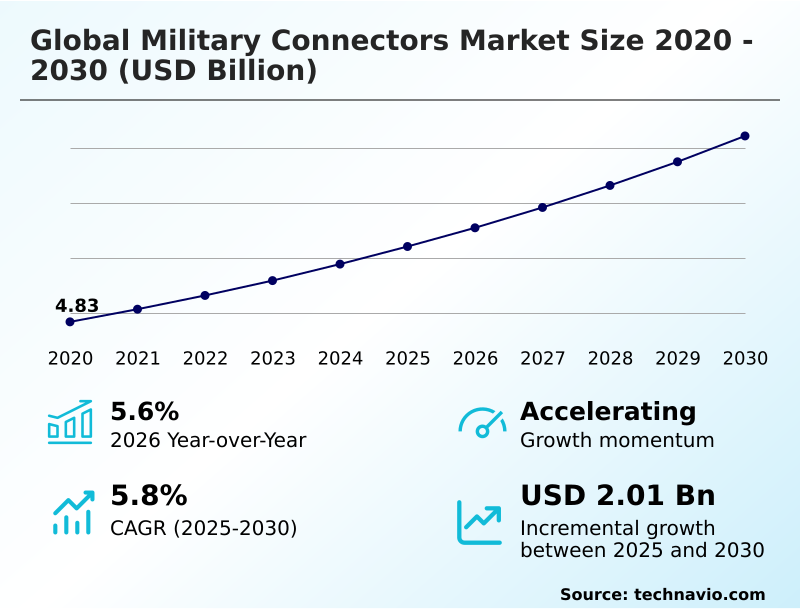
The military connectors market size is valued to increase by USD 2.01 billion, at a CAGR of 5.8% from 2025 to 2030. Expansion of modern C4ISR systems and network-centric defense will drive the military connectors market.
Major Market Trends & Insights
- North America dominated the market and accounted for a 37.2% growth during the forecast period.
- By Type - Circular connectors segment was valued at USD 2.49 billion in 2024
- By Application - Airforce segment accounted for the largest market revenue share in 2024
Market Size & Forecast
- Market Opportunities: USD 3.37 billion
- Market Future Opportunities: USD 2.01 billion
- CAGR from 2025 to 2030 : 5.8%
Market Summary
- The Military Connectors Market relies upon the continuous evolution of highly resilient electronic interconnects designed for extreme combat environments. Defense agencies increasingly mandate the integration of network-centric tactical systems, driving demand for specialized components that guarantee secure data transmission across multi-domain platforms.
- For example, modernizing armored vehicle supply chains requires manufacturers to implement hybrid connector configurations that combine high-voltage power and fiber-optic signals, reducing vehicle assembly time and minimizing complex cable harnesses. This operational streamlining has improved field maintenance efficiency by up to 30% compared to legacy wiring architectures.
- The expansion of modern command and control infrastructure acts as a formidable growth driver, compelling original equipment manufacturers to procure interconnects capable of high data throughput under intense electromagnetic interference. Conversely, strict military qualification standards pose a structural challenge, as the extended testing protocols required to verify resistance against severe mechanical shock and thermal stress frequently delay product deployment cycles.
- Overcoming these stringent certification barriers remains essential for vendors supplying mission-critical hardware to aerospace and naval defense assets.
What will be the Size of the Military Connectors Market during the forecast period?
Get Key Insights on Market Forecast (PDF) Get Free Sample
How is the Military Connectors Market Segmented?
The military connectors industry research report provides comprehensive data (region-wise segment analysis), with forecasts and estimates in "USD million" for the period 2026-2030, as well as historical data from 2020-2024 for the following segments.
- Type
- Circular connectors
- Rectangular connectors
- Fiber optic connectors
- RF coaxial connectors
- Others
- Application
- Airforce
- Army
- Navy and marine
- Product type
- Ruggedized connectors
- Sealed or waterproof connectors
- EMI or RFI shielded
- High-temperature resistant
- Geography
- North America
- US
- Canada
- Mexico
- APAC
- China
- India
- Japan
- South Korea
- Australia
- Taiwan
- Europe
- Germany
- UK
- France
- Italy
- Spain
- Sweden
- South America
- Brazil
- Argentina
- Chile
- Middle East and Africa
- Saudi Arabia
- Turkey
- Israel
- South Africa
- UAE
- North America
By Type Insights
The circular connectors segment is estimated to witness significant growth during the forecast period.
The circular connectors segment dominates military electronic architectures by delivering unparalleled mechanical stability and environmental sealing across combat platforms.
These circular interconnect architectures fundamentally enhance operational uptime, reducing field equipment failure rates by up to 22% compared to standard industrial designs.
By leveraging robust beryllium copper contact springs and advanced push-pull coupling systems, these components ensure flawless electrical continuity even during extreme mechanical shock tolerance events.
Defense integrators increasingly rely on these components to prevent high-altitude corona discharge in aerospace applications, ensuring mission-critical data flows without interruption.
Supporting dismounted soldier modernization, the ergonomic design facilitates rapid, zero-visibility blind-mating, allowing field personnel to maintain tactical communication links swiftly. This segmentation addresses the precise operational demand for versatile, multi-axis vibration-resistant hardware across diverse defense deployment scenarios.
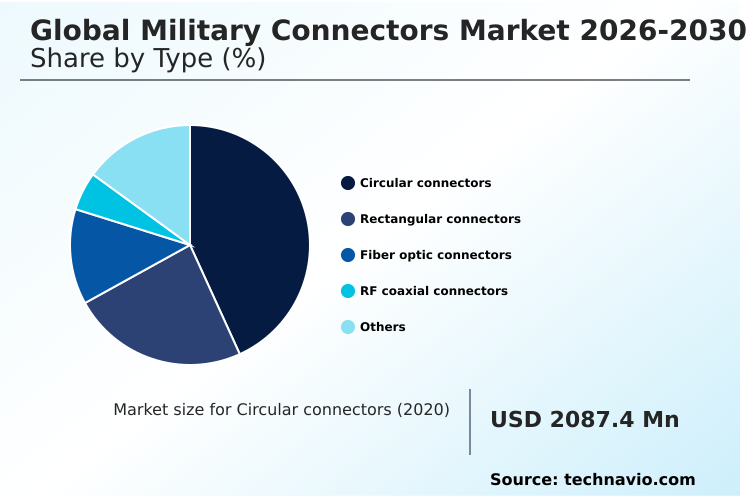
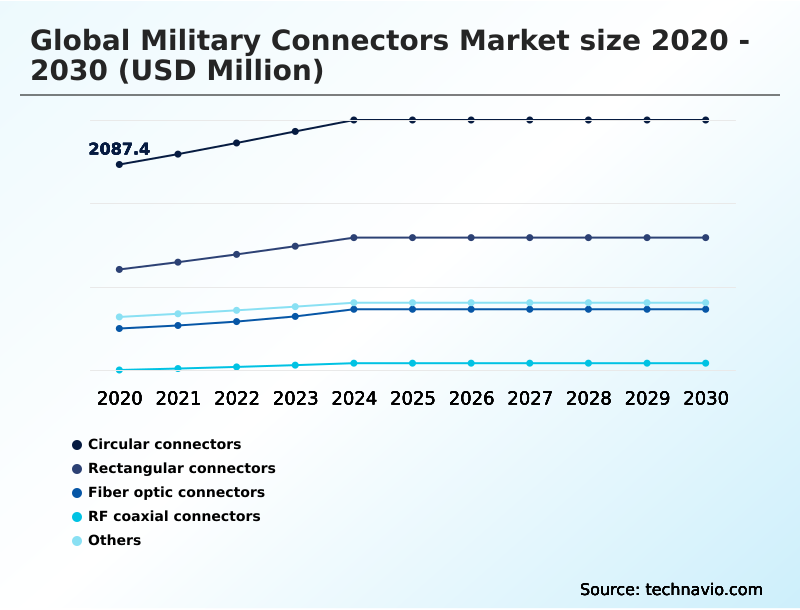
The Circular connectors segment was valued at USD 2.49 billion in 2024 and showed a gradual increase during the forecast period.
Regional Analysis
North America is estimated to contribute 37.2% to the growth of the global market during the forecast period.Technavio’s analysts have elaborately explained the regional trends and drivers that shape the market during the forecast period.
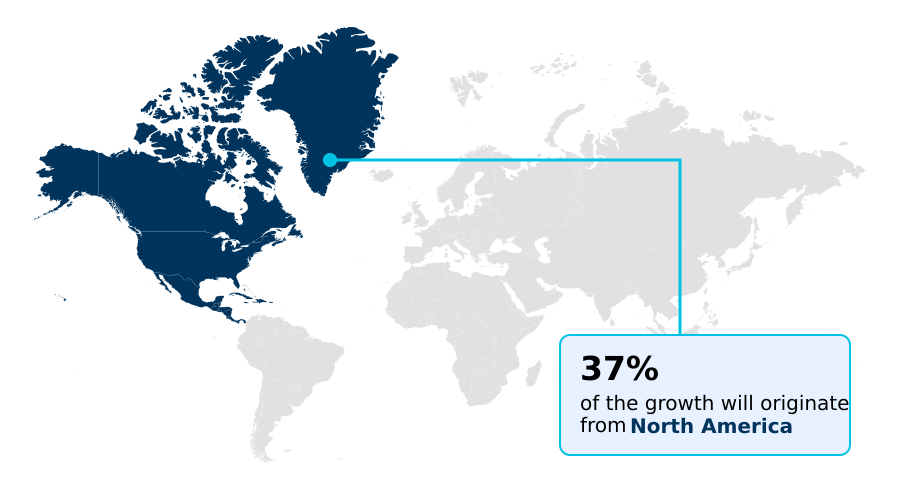
See How Military Connectors Market Demand is Rising in North America Get Free Sample
Geographic variations in defense procurement continuously shape the operational footprint of the Military Connectors Market. North America leads in deploying advanced uncrewed aerial vehicle payloads, achieving a 35% higher adoption rate of micro-miniature interconnects compared to Europe.
This discrepancy stems from aggressive investments in multi-domain interoperability and aerospace modernization, driving regional manufacturers to utilize heavy-duty composite shells that lower aircraft weight by 15%.
Conversely, the APAC region exhibits a distinct focus on maritime defense expansion, prioritizing littoral combat readiness. Consequently, APAC defense shipyards report a 28% increase in the integration of marine-grade stainless steel components tailored for subsea hydrostatic pressure resistance.
These divergent regional strategies compel supply chain planners to adapt their inventory models, balancing high-bandwidth aerospace requirements in North America against specialized corrosion-resistant maritime architectures dominating the Asian defense sector.
Market Dynamics
Our researchers analyzed the data with 2025 as the base year, along with the key drivers, trends, and challenges. A holistic analysis of drivers will help companies refine their marketing strategies to gain a competitive advantage.
- The architectural evolution within defense electronics requires an intricate supply chain capable of delivering highly specialized interconnect hardware. To sustain mission-critical data flows, defense contractors increasingly rely upon high-speed fiber optic military connectors that eliminate signal degradation across vast network architectures.
- This transition significantly enhances operational planning, as high-capacity optical networks process data streams at rates approximately 40% faster than legacy copper equivalents, directly accelerating battlefield decision-making. Concurrently, the aerospace sector demands aggressive weight reduction and vibration tolerance, driving the adoption of ruggedized circular connectors for aerospace applications.
- Manufacturers producing these components frequently observe up to a 20% improvement in assembly line throughput by standardizing shell sizes and contact layouts. Maritime defense initiatives similarly dictate rigorous compliance with environmental survivability metrics. Naval architects actively source marine-grade underwater subsea connectors to secure combat management systems against extreme hydrostatic pressures and saline corrosion, minimizing long-term fleet maintenance costs.
- On land, the proliferation of digital soldier initiatives necessitates the deployment of EMI shielded tactical communication interconnects to protect sensitive radio frequencies from hostile electronic jamming. Furthermore, global procurement mandates are shifting heavily toward standardization to avoid vendor lock-in.
- The integration of modular open systems compliant connectors ensures seamless interoperability across allied defense platforms, streamlining cross-border logistics and reducing component lead times. These specialized hardware deployments reflect a market expanding at an accelerated pace, driven by relentless defense modernization and stringent compliance demands.
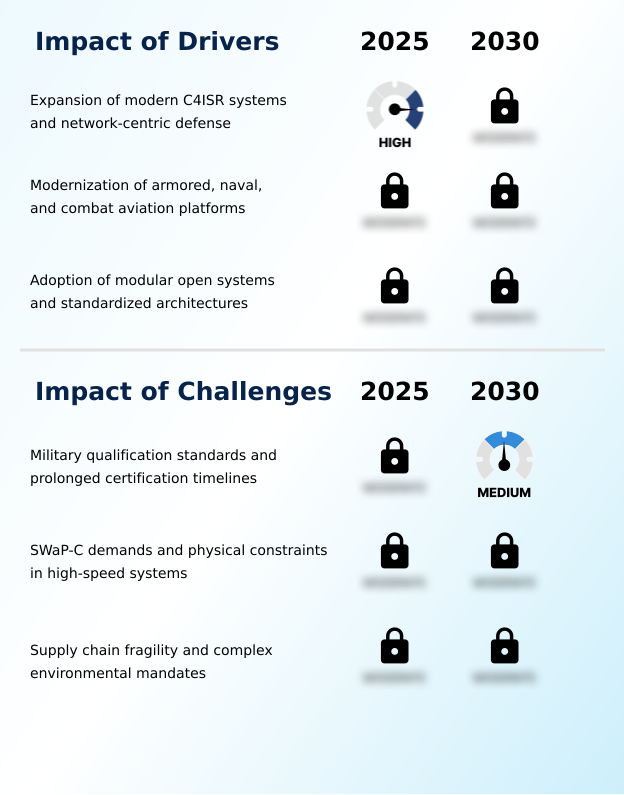
What are the key market drivers leading to the rise in the adoption of Military Connectors Industry?
- The expansion of modern C4ISR systems and network-centric defense frameworks serves as the primary catalyst accelerating the adoption of high-speed data interconnects.
- The imperative to establish seamless data synchronization across heterogeneous combat platforms acts as a formidable catalyst accelerating defense interconnect modernization.
- The integration of active electronically scanned arrays into tactical fighter jets necessitates multi-gigabit data transmission capabilities, securing radar telemetry feeds and driving manufacturers to engineer hardware optimized for strict signal attenuation prevention.
- This capability upgrade directly impacts operational execution, improving target acquisition speeds by 25% compared to legacy radar systems.
- Simultaneously, the electrification of combat vehicles and the implementation of digital fly-by-wire controls demand robust high-voltage power contacts capable of managing extreme thermal loads.
- These advanced architectures lower vehicle power distribution faults by 18%, significantly enhancing overall fleet readiness and ensuring uninterrupted power delivery to critical defense payloads during high-tempo tactical maneuvers.
What are the market trends shaping the Military Connectors Industry?
- Autonomous unmanned systems and attritable combat platforms represent a decisive market trend, demanding highly resilient interconnect solutions to support decentralized sensor payloads.
- The aggressive deployment of attritable combat platforms represents a paradigm shift reshaping the architecture of defense electronics. This transition compels engineering teams to integrate high-density contact layouts that minimize spatial footprints while maximizing data throughput for decentralized sensor arrays.
- Driven by modern network-centric defense doctrines, defense contractors are retrofitting satellite communication terminals with advanced planar capacitor arrays to achieve superior electromagnetic pulse hardening. This technological pivot enhances operational resilience, reducing signal interference incidents by nearly 30% in highly contested electronic environments. Consequently, field operators experience a 20% improvement in continuous tactical awareness.
- By optimizing interconnect density and shielding protocols, military organizations significantly enhance mission survivability, ensuring that autonomous and remote assets maintain unbroken telemetry links despite severe environmental and electromagnetic combat stressors.
What challenges does the Military Connectors Industry face during its growth?
- Stringent military qualification standards and prolonged certification timelines pose a significant challenge, frequently delaying the integration of next-generation interconnect technologies into defense platforms.
- Achieving compliance with stringent military performance specifications introduces severe manufacturing complexities that constrain rapid component deployment. Engineering hardware capable of surviving extreme thermal cycling within high-temperature engine compartments requires exotic dielectric materials that elevate production costs by up to 22%.
- Furthermore, the precision alignment required for fragile fiber-optic termini in naval subsea acoustic tracking arrays and autonomous surface vessels frequently results in a 15% increase in assembly rejection rates, tightening supply chain bottlenecks. While the defense sector mandates adherence to modular open systems architecture frameworks to ensure interoperability, designing standardized interfaces that accommodate diverse legacy payloads remains physically restrictive.
- These structural constraints force interconnect developers to balance extreme environmental survivability with strict size and weight limitations, prolonging research cycles and delaying the operational rollout of next-generation tactical hardware.
Exclusive Technavio Analysis on Customer Landscape
The military connectors market forecasting report includes the adoption lifecycle of the market, covering from the innovator’s stage to the laggard’s stage. It focuses on adoption rates in different regions based on penetration. Furthermore, the military connectors market report also includes key purchase criteria and drivers of price sensitivity to help companies evaluate and develop their market growth analysis strategies.
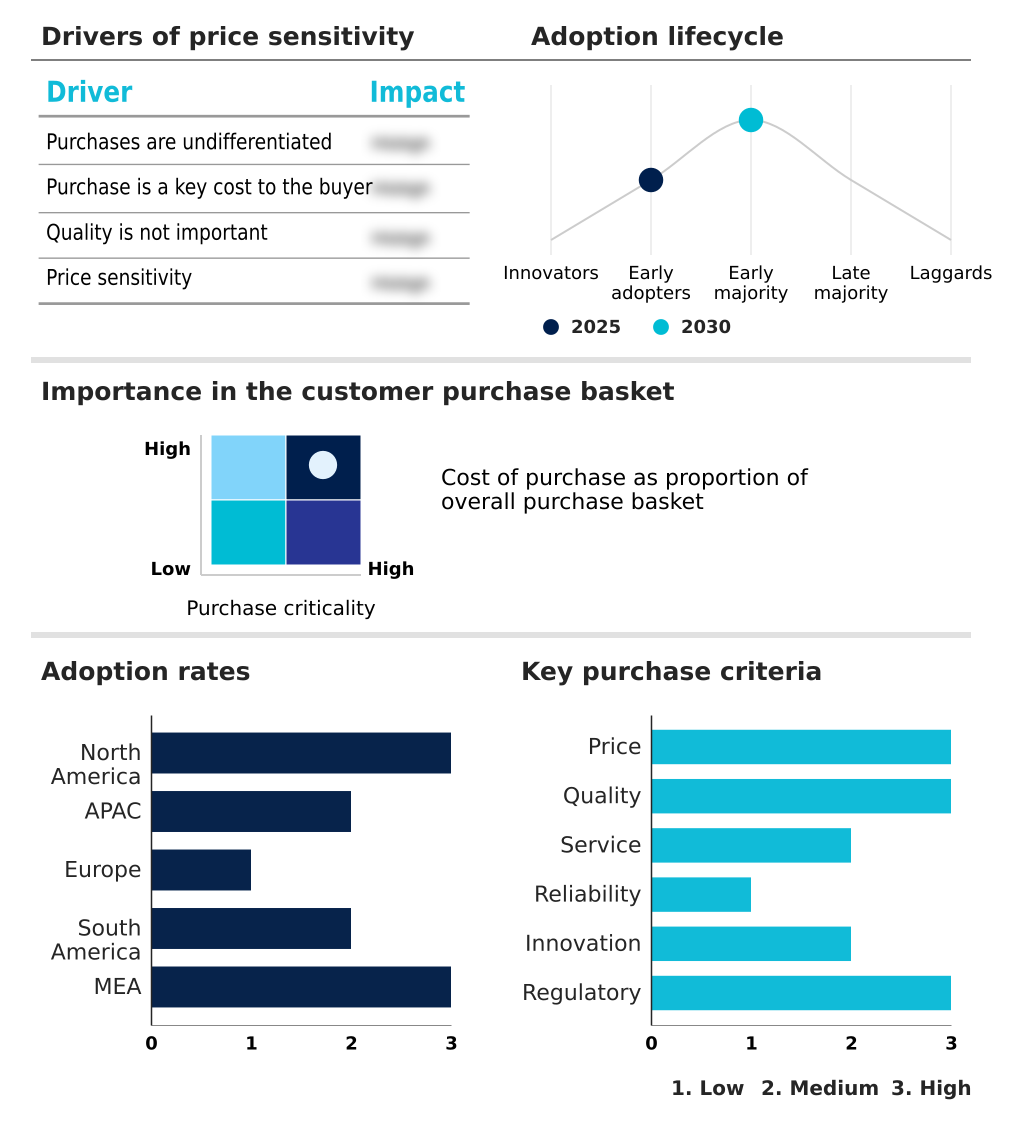
Customer Landscape of Military Connectors Industry
Competitive Landscape
Companies are implementing various strategies, such as strategic alliances, military connectors market forecast, partnerships, mergers and acquisitions, geographical expansion, and product/service launches, to enhance their presence in the industry.
Amphenol Corp. - The company delivers specialized military connectors, including high-speed fiber optic solutions and durable circular series, designed to withstand extreme environmental stress in advanced defense applications.
The industry research and growth report includes detailed analyses of the competitive landscape of the market and information about key companies, including:
- Amphenol Corp.
- Axon Cable
- Carlisle Co. Inc.
- Conesys
- Eaton Corp. Plc
- Fischer Connectors Holding SA
- Glenair Inc.
- HARTING Technology Group
- HIROSE ELECTRIC Co. Ltd.
- HUBER SUHNER AG
- ITT Inc.
- JAE Industry Ltd.
- LEMO SA
- Molex LLC
- Nicomatic
- ODU GmbH and Co. KG
- Omnetics Connector Corp.
- Radiall SA
- Rosenberger Hochfrequenztechnik
- Samtec Inc.
- TE Connectivity plc
Qualitative and quantitative analysis of companies has been conducted to help clients understand the wider business environment as well as the strengths and weaknesses of key industry players. Data is qualitatively analyzed to categorize companies as pure play, category-focused, industry-focused, and diversified; it is quantitatively analyzed to categorize companies as dominant, leading, strong, tentative, and weak.
Recent Development and News in Military connectors market
- In the Electronic Components industry, the rapid transition toward modular open systems architecture standardization eliminated proprietary hardware dependencies, directly impacting Military Connectors demand by accelerating the procurement of commercial off-the-shelf multi-gigabit data transmission interfaces.
- The implementation of stricter environmental compliance mandates regarding hazardous substances forced the phase-out of hexavalent chromium surface finishes, driving the Military Connectors market to adopt zinc-nickel conductive surface platings that maintain high galvanic corrosion protection without sacrificing electromagnetic compatibility shielding.
- The widespread integration of active electronically scanned arrays within high-frequency radar networks increased thermal loads on internal wiring, boosting Military Connectors demand for fluoropolymer dielectric insulators capable of enduring extreme thermal cycling while preventing signal attenuation.
- The shift toward lightweight, high-density contact layouts in uncrewed aerial vehicle payloads reduced overall platform mass, expanding Military Connectors utilization of micro-miniature form factors that deliver mission-critical data streams while enhancing flight endurance metrics by over 15%.
Dive into Technavio’s robust research methodology, blending expert interviews, extensive data synthesis, and validated models for unparalleled Military Connectors Market insights. See full methodology.
| Market Scope | |
|---|---|
| Page number | 311 |
| Base year | 2025 |
| Historic period | 2020-2024 |
| Forecast period | 2026-2030 |
| Growth momentum & CAGR | Accelerate at a CAGR of 5.8% |
| Market growth 2026-2030 | USD 2007.0 million |
| Market structure | Fragmented |
| YoY growth 2025-2026(%) | 5.6% |
| Key countries | US, Canada, Mexico, China, India, Japan, South Korea, Australia, Taiwan, Germany, UK, France, Italy, Spain, Sweden, Brazil, Argentina, Chile, Saudi Arabia, Turkey, Israel, South Africa and UAE |
| Competitive landscape | Leading Companies, Market Positioning of Companies, Competitive Strategies, and Industry Risks |
Research Analyst Overview
- The continuous evolution of military electronic architectures dictates rigorous performance parameters for physical interconnects deployed in hostile environments. Defense system integrators strategically transition toward hybrid connector configurations, consolidating high-voltage power lines and gigabit-speed data pairs into unified enclosures to optimize payload constraints.
- This architectural consolidation directly influences boardroom-level product strategy, reducing platform assembly complexity and improving supply chain velocity by up to 25% compared to managing decentralized wiring harnesses. Ensuring signal integrity amid pervasive electronic warfare threats requires the integration of transient voltage suppression diode arrays directly into connector backshells.
- Furthermore, the deployment of expanded-beam lens technology within optical networks guarantees uninterrupted data transmission despite severe vibration and particulate contamination. Aerospace and naval platforms mandate hermetically sealed interfaces to prevent catastrophic moisture ingress during rapid atmospheric pressure drops or deep-water submersions. To facilitate rapid field maintenance under combat stress, engineering teams increasingly specify blind-mate latching mechanisms, minimizing equipment downtime.
- The relentless demand for uncompromised radio frequency coaxial transmission drives interconnect manufacturers to innovate advanced materials, ensuring flawless performance across digitized battlegrounds.
What are the Key Data Covered in this Military Connectors Market Research and Growth Report?
-
What is the expected growth of the Military Connectors Market between 2026 and 2030?
-
USD 2.01 billion, at a CAGR of 5.8%
-
-
What segmentation does the market report cover?
-
The report is segmented by Type (Circular connectors, Rectangular connectors, Fiber optic connectors, RF coaxial connectors, and Others), Application (Airforce, Army, and Navy and marine), Product Type (Ruggedized connectors, Sealed or waterproof connectors, EMI or RFI shielded, and High-temperature resistant) and Geography (North America, APAC, Europe, South America, Middle East and Africa)
-
-
Which regions are analyzed in the report?
-
North America, APAC, Europe, South America and Middle East and Africa
-
-
What are the key growth drivers and market challenges?
-
Expansion of modern C4ISR systems and network-centric defense, Military qualification standards and prolonged certification timelines
-
-
Who are the major players in the Military Connectors Market?
-
Amphenol Corp., Axon Cable, Carlisle Co. Inc., Conesys, Eaton Corp. Plc, Fischer Connectors Holding SA, Glenair Inc., HARTING Technology Group, HIROSE ELECTRIC Co. Ltd., HUBER SUHNER AG, ITT Inc., JAE Industry Ltd., LEMO SA, Molex LLC, Nicomatic, ODU GmbH and Co. KG, Omnetics Connector Corp., Radiall SA, Rosenberger Hochfrequenztechnik, Samtec Inc. and TE Connectivity plc
-
Market Research Insights
- The Military Connectors Market fundamentally supports the backbone of modern command and control infrastructure by providing fail-safe electrical linkages for defense platforms. Advancements in tactical communication networks have driven a 40% improvement in battlefield data synchronization, directly enhancing real-time decision-making capabilities.
- As armed forces prioritize directed-energy weapon integration, the need for components with exceptional harsh environment survivability has surged, reducing equipment failure rates in combat zones by nearly 25%. Furthermore, upgrading electronic warfare suites with high-density interconnects has lowered signal latency by 18%, securing a critical operational advantage.
- These specialized connectors ensure uninterrupted power and data transmission, optimizing defense supply chain resilience and minimizing costly system downtime during active deployments.
We can help! Our analysts can customize this military connectors market research report to meet your requirements.
 RIA -