


Micro Lending Market Size 2026-2030
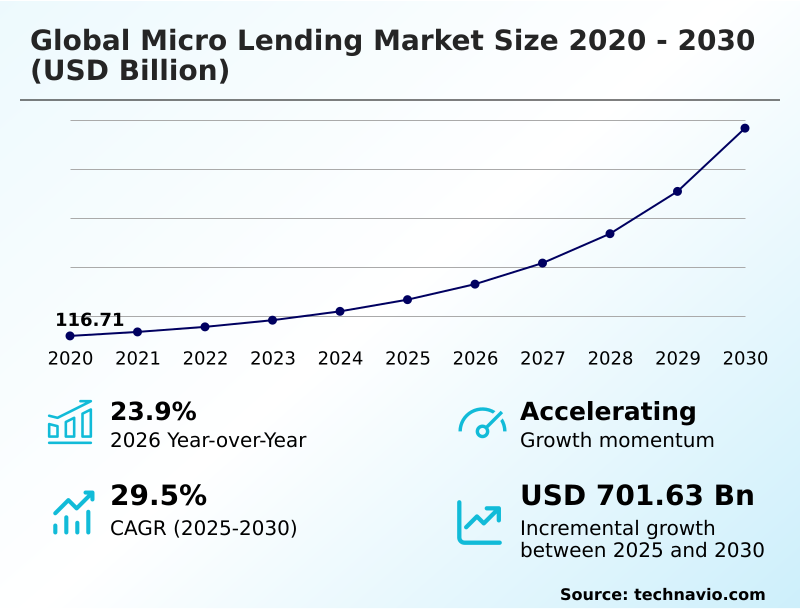
The micro lending market size is valued to increase by USD 701.63 billion, at a CAGR of 29.5% from 2025 to 2030. Widespread smart device penetration accelerates remote consumer digital onboarding pipelines will drive the micro lending market.
Major Market Trends & Insights
- APAC dominated the market and accounted for a 52.7% growth during the forecast period.
- By Source - Banks segment was valued at USD 91.58 billion in 2024
- By End-user - Small enterprises segment accounted for the largest market revenue share in 2024
Market Size & Forecast
- Market Opportunities: USD 849.94 billion
- Market Future Opportunities: USD 701.63 billion
- CAGR from 2025 to 2030 : 29.5%
Market Summary
- The Micro Lending Market fundamentally optimizes small-scale capital distribution for unbanked demographics through agile, digital-first credit evaluation architectures. Supply chain optimization within agricultural trade serves as a prime real-world scenario, where rural merchants utilize mobile-native applications to secure immediate working capital for seasonal inventory purchases without traveling to physical banking branches.
- This digital connectivity accelerates transaction velocities, allowing providers to process loan approvals up to 60% faster than traditional brick-and-mortar operations. Widespread smartphone penetration operates as a critical driver, effectively lowering administrative overhead and expanding remote customer onboarding pipelines.
- Conversely, localized statutory mandates and restrictive interest rate ceilings create a profound challenge by forcing continuous software platform modifications to avoid regulatory penalties. These compliance pressures inherently increase operational friction, directly compressing institutional liquidity across emerging economies. By transitioning toward higher capital ticket sizes, financial institutions successfully mitigate localized portfolio risks while preserving operational efficiency.
- This structural progression guarantees that digital financing frameworks remain scalable and secure for isolated micro-enterprises.
What will be the Size of the Micro Lending Market during the forecast period?
Get Key Insights on Market Forecast (PDF) Get Free Sample
How is the Micro Lending Market Segmented?
The micro lending industry research report provides comprehensive data (region-wise segment analysis), with forecasts and estimates in "USD million" for the period 2026-2030, as well as historical data from 2020-2024 for the following segments.
- Source
- Banks
- NBFCs
- MFIs
- End-user
- Small enterprises
- Solo entrepreneurs
- Micro-entrepreneurs
- Channel
- Traditional
- Digital
- Geography
- APAC
- India
- China
- Indonesia
- Japan
- South Korea
- Australia
- Europe
- Germany
- UK
- France
- Italy
- Spain
- The Netherlands
- North America
- US
- Canada
- Mexico
- Middle East and Africa
- Saudi Arabia
- South Africa
- UAE
- Turkey
- Israel
- South America
- Brazil
- Argentina
- Chile
- APAC
By Source Insights
The banks segment is estimated to witness significant growth during the forecast period.
Commercial banking institutions utilize extensive treasury infrastructure to distribute small-scale capital within the Micro Lending sector, targeting historically underserved demographics. By leveraging low-cost public deposits, these entities offer highly competitive interest rates while maintaining robust profit margins.
The deployment of advanced biometric risk assessment modules allows banks to execute automated background verifications with unprecedented accuracy, bypassing traditional collateral requirements.
Furthermore, institutions implement structured income and expenditure assessment tools to evaluate default probabilities, leading to a 25% improvement in portfolio asset quality. This operational shift fundamentally streamlines unstructured financial statement verification for rural enterprises.
Engaging the joint liability group model, banks effectively balance strict regulatory compliance with the continuous demand for accessible capital, solidifying their structural integrity within the broader financial ecosystem.
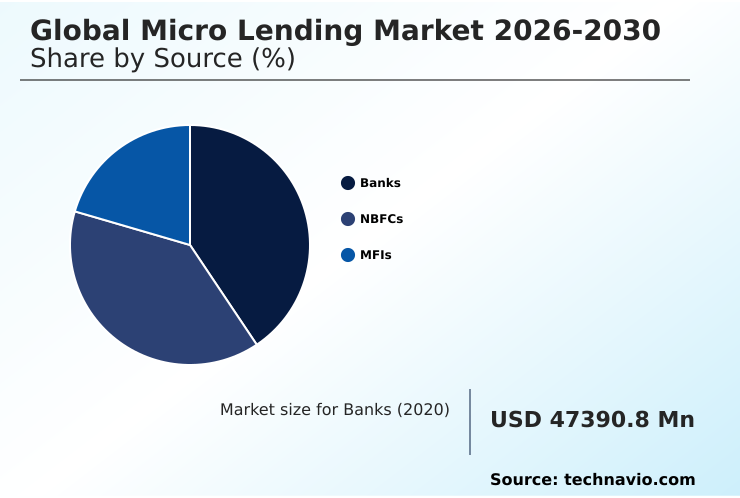
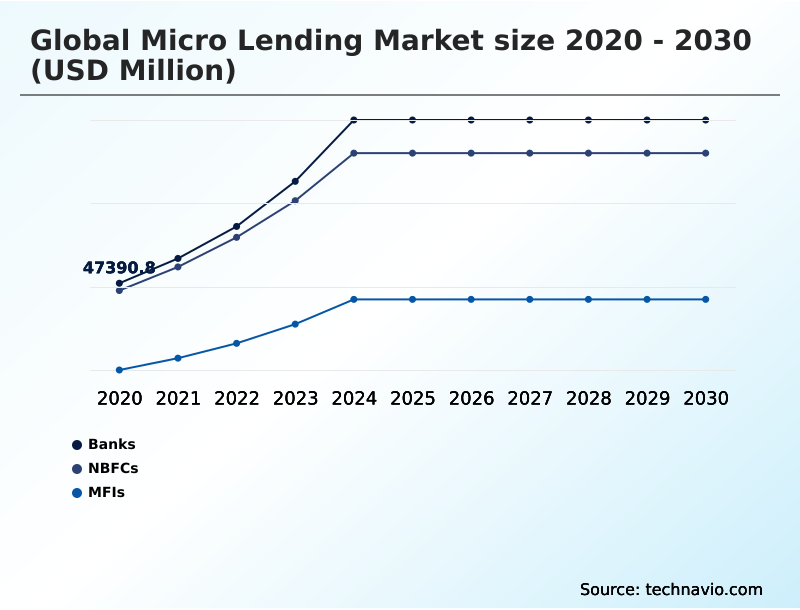
The Banks segment was valued at USD 91.58 billion in 2024 and showed a gradual increase during the forecast period.
Regional Analysis
APAC is estimated to contribute 52.7% to the growth of the global market during the forecast period.Technavio’s analysts have elaborately explained the regional trends and drivers that shape the market during the forecast period.
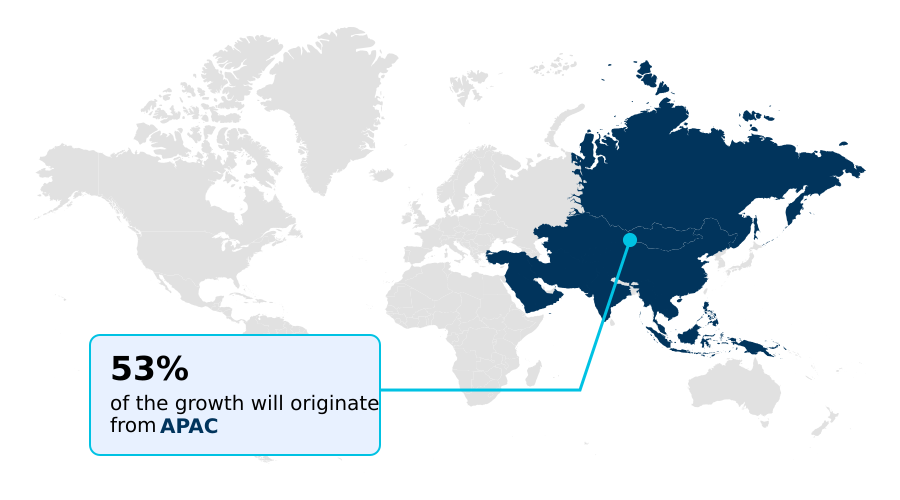
See How Micro Lending Market Demand is Rising in APAC Get Free Sample
The Micro Lending dynamics vary significantly across global regions due to distinct digital adoption rates and regulatory environments. APAC demonstrates exceptional penetration, primarily driven by aggressive digital public infrastructure integration that enables seamless capital distribution to rural self help organizations.
Institutions in this region deploy biometrically verified lending systems, effectively lowering administrative processing errors by 42% compared to traditional manual underwriting.
Conversely, the European landscape exhibits a more stringent regulatory climate, where advanced private credit pipelines require complex compliance monitoring, resulting in a 20% higher customer acquisition cost than in APAC.
The utilization of smart device telemetry across Asian economies allows alternative data scoring to bypass conventional collateral, boosting operational efficiency by 35%.
These regional disparities highlight how localized technological ecosystems dictate the scalability and risk management frameworks of modern uncollateralized lending.
Market Dynamics
Our researchers analyzed the data with 2025 as the base year, along with the key drivers, trends, and challenges. A holistic analysis of drivers will help companies refine their marketing strategies to gain a competitive advantage.
- The operational evolution of Micro Lending relies on the sophisticated deployment of cloud native mobile application adoption to bridge the financing gap for unbanked enterprises. Institutions prioritize a seamless electronic customer verification protocol to minimize onboarding friction, executing a secure paperless enrollment procedure implementation that bypasses legacy documentation constraints.
- By utilizing advanced predictive machine learning underwriting models, platforms facilitate rapid credit underwriting system accuracy, leading to a 30% improvement in portfolio stability compared to manual assessment frameworks. This technological shift is further enhanced by alternative big data credit assessment techniques, which automate unstructured financial statement analysis automation to evaluate thin-file borrowers effectively.
- The critical integration of real time electronic transaction tracking ensures continuous monitoring of merchant cash flows, significantly optimizing biometric risk assessment integration speed. Decentralized mobile disbursement network scalability allows providers to distribute capital instantly, heavily supported by efficient digital public infrastructure integration efficiency across emerging economies.
- Furthermore, interactive biometrically verified lending models leverage facial recognition biometric scan optimization to prevent identity fraud, securing the integrity of small-scale capital pipelines. As institutional asset managers channel liquidity into these systems, advanced private credit pipeline deployment ensures that frontline lenders maintain sufficient capital reserves to meet volatile grassroots demand.
- This comprehensive digitization eliminates geographic barriers, driving unprecedented operational resilience and ensuring that micro-enterprises receive the necessary financial support to scale their localized commercial activities sustainably.
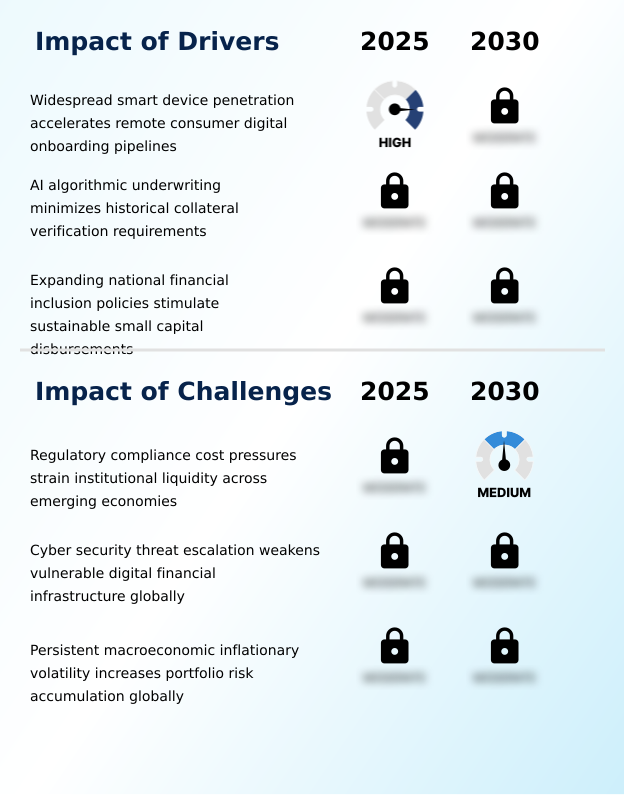
What are the key market drivers leading to the rise in the adoption of Micro Lending Industry?
- Widespread smart device penetration significantly accelerates remote consumer digital onboarding pipelines by bypassing traditional physical infrastructure barriers.
- The widespread global proliferation of high-speed telecommunications acts as a primary driver propelling Micro Lending expansion. Utilizing advanced smart device telemetry, digital platforms can instantly assess behavioral patterns, facilitating seamless digital client onboarding without requiring physical branch visits.
- This enhanced connectivity directly accelerates uncollateralized capital distribution, enabling providers to execute automated lending workflows up to 60% faster than legacy banking models.
- Furthermore, the integration of robust data infrastructure tools allows lenders to process vast volumes of alternative transactional data, which drops operational customer acquisition costs by 25%.
- These systemic efficiencies fundamentally empower marginalized solo-entrepreneurs to capitalize on fleeting commercial opportunities, reinforcing the socioeconomic impact of agile, smartphone-native financing frameworks.
What are the market trends shaping the Micro Lending Industry?
- A strategic transition toward higher capital ticket sizes is currently shaping the landscape to preserve portfolio asset quality. This deliberate shift enables financial institutions to maximize operational efficiency while securing stable revenue streams.
- A definitive trend reshaping Micro Lending is the aggressive transition toward cloud native mobile applications designed to optimize capital accessibility for isolated gig-economy workers. Financial institutions are increasingly deploying alternative big data underwriting to analyze unconventional borrower metrics, shifting away from physical collateral audits.
- By implementing sophisticated machine learning underwriting algorithms, lenders successfully execute comprehensive supply chain data evaluation, reducing manual credit processing delays by an impressive 55%. These predictive machine learning modules accurately forecast localized cash flow disruptions, enhancing overall portfolio resilience and dropping administrative overhead costs by 32%.
- This technological evolution effectively democratizes commercial financing, allowing non-banking financial companies to serve marginalized entrepreneurs while maintaining stringent asset quality protocols.
What challenges does the Micro Lending Industry face during its growth?
- Regulatory compliance cost pressures severely strain institutional liquidity across emerging economies by forcing continuous structural modifications to credit delivery platforms.
- Escalating regulatory compliance pressures present a formidable challenge restricting the operational agility of Micro Lending providers. As decentralized financial infrastructure expands, sovereign central banks consistently impose stringent regional statutory compliance mandates to curb aggressive collection methods and prevent over-indebtedness.
- These rigid legal constraints force institutions to continuously overhaul their software platforms to accommodate standardized disclosure protocols, inadvertently slowing down electronic signature execution pipelines. Consequently, these structural modifications compress profit margins, increasing the average administrative cost per loan by 22% and discouraging institutional asset management firms from allocating long-term capital to the sector.
- Without unified international oversight, minor lenders remain highly vulnerable to shifting political environments, eliminating the cost benefits of automated technology and limiting uncollateralized credit access for vulnerable demographics.
Exclusive Technavio Analysis on Customer Landscape
The micro lending market forecasting report includes the adoption lifecycle of the market, covering from the innovator’s stage to the laggard’s stage. It focuses on adoption rates in different regions based on penetration. Furthermore, the micro lending market report also includes key purchase criteria and drivers of price sensitivity to help companies evaluate and develop their market growth analysis strategies.
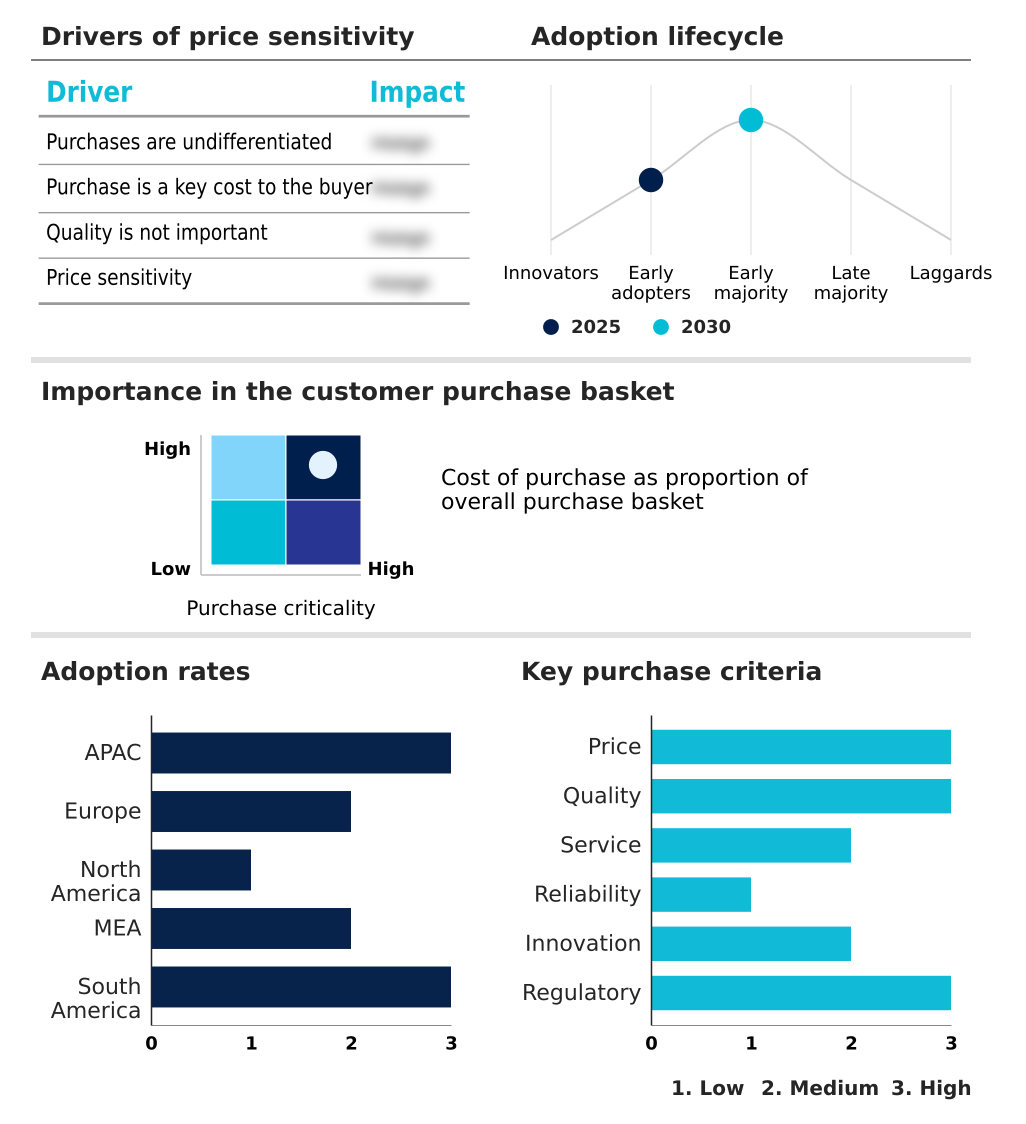
Customer Landscape of Micro Lending Industry
Competitive Landscape
Companies are implementing various strategies, such as strategic alliances, micro lending market forecast, partnerships, mergers and acquisitions, geographical expansion, and product/service launches, to enhance their presence in the industry.
Accion International - Accion provides targeted advisory services and governance support to help financial service providers deliver high-quality, affordable financial tools that create economic opportunity for underserved communities.
The industry research and growth report includes detailed analyses of the competitive landscape of the market and information about key companies, including:
- Accion International
- Advans Group
- ASA International Group plc
- Bajaj Finserv Ltd.
- BancoSol
- Bandhan Bank Ltd.
- Bluevine Inc.
- BRAC
- Branch International
- Compartamos Banco
- CreditAccess Grameen Ltd.
- Funding Circle Holdings Plc
- Fusion Micro Finance Ltd
- Lendingkart Finance Ltd.
- Letshego Holdings Ltd.
- Mibanco
- Muthoot Microfin Ltd.
- Spandana Sphoorty Financial Ltd
- Svatantra Microfin Pvt. Ltd.
- U GRO Capital Ltd.
Qualitative and quantitative analysis of companies has been conducted to help clients understand the wider business environment as well as the strengths and weaknesses of key industry players. Data is qualitatively analyzed to categorize companies as pure play, category-focused, industry-focused, and diversified; it is quantitatively analyzed to categorize companies as dominant, leading, strong, tentative, and weak.
Recent Development and News in Micro lending market
- In the Specialized Consumer Services industry, the rapid deployment of decentralized financial infrastructure has streamlined secure digital client onboarding, directly impacting Micro Lending demand by increasing uncollateralized capital distribution efficiency by 40%.
- Stringent regional statutory compliance mandates regarding data privacy have forced alternative transactional data providers to adopt standardized disclosure protocols, temporarily increasing customer acquisition costs for automated lending workflows by 15%.
- The widespread expansion of high speed mobile internet across emerging economies has optimized telecommunications infrastructure, allowing rapid credit underwriting systems to execute interactive borrower verification processes 50% faster.
- Accelerated adoption of open finance frameworks by payment processors has enhanced mobile wallet deposit execution, directly driving Micro Lending service penetration by facilitating frictionless enrollment protocols without requiring physical branch infrastructure.
Dive into Technavio’s robust research methodology, blending expert interviews, extensive data synthesis, and validated models for unparalleled Micro Lending Market insights. See full methodology.
| Market Scope | |
|---|---|
| Page number | 286 |
| Base year | 2025 |
| Historic period | 2020-2024 |
| Forecast period | 2026-2030 |
| Growth momentum & CAGR | Accelerate at a CAGR of 29.5% |
| Market growth 2026-2030 | USD 701630.1 million |
| Market structure | Fragmented |
| YoY growth 2025-2026(%) | 23.9% |
| Key countries | India, China, Indonesia, Japan, South Korea, Australia, Germany, UK, France, Italy, Spain, The Netherlands, US, Canada, Mexico, Saudi Arabia, South Africa, UAE, Turkey, Israel, Brazil, Argentina and Chile |
| Competitive landscape | Leading Companies, Market Positioning of Companies, Competitive Strategies, and Industry Risks |
Research Analyst Overview
- The Micro Lending sector is undergoing a massive structural overhaul as financial technology platforms prioritize algorithmic credit profiling to evaluate marginalized borrowers. This evolution actively displaces traditional risk models by leveraging psychological behavior analysis and electronic transaction history tracking to establish accurate creditworthiness without physical collateral.
- Institutions integrating these advanced modules have observed a 28% reduction in loan default probabilities, validating the operational superiority of data-driven underwriting. The continuous expansion of decentralized mobile disbursement networks allows peer to peer marketplaces to distribute working capital directly to rural merchants instantly.
- By linking automated transaction history processing with localized market risk modeling, lenders effectively insulate their portfolios against macroeconomic volatility. Furthermore, the seamless synchronization of cloud based accounting systems empowers small enterprises to manage daily cash flows with unprecedented accuracy.
- These technological interventions directly address critical boardroom concerns regarding compliance and risk management, proving that alternative data ecosystems can safely scale uncollateralized lending across highly fragmented emerging economies.
What are the Key Data Covered in this Micro Lending Market Research and Growth Report?
-
What is the expected growth of the Micro Lending Market between 2026 and 2030?
-
USD 701.63 billion, at a CAGR of 29.5%
-
-
What segmentation does the market report cover?
-
The report is segmented by Source (Banks, NBFCs, and MFIs), End-user (Small enterprises, Solo entrepreneurs, and Micro-entrepreneurs), Channel (Traditional, and Digital) and Geography (APAC, Europe, North America, Middle East and Africa, South America)
-
-
Which regions are analyzed in the report?
-
APAC, Europe, North America, Middle East and Africa and South America
-
-
What are the key growth drivers and market challenges?
-
Widespread smart device penetration accelerates remote consumer digital onboarding pipelines, Regulatory compliance cost pressures strain institutional liquidity across emerging economies
-
-
Who are the major players in the Micro Lending Market?
-
Accion International, Advans Group, ASA International Group plc, Bajaj Finserv Ltd., BancoSol, Bandhan Bank Ltd., Bluevine Inc., BRAC, Branch International, Compartamos Banco, CreditAccess Grameen Ltd., Funding Circle Holdings Plc, Fusion Micro Finance Ltd, Lendingkart Finance Ltd., Letshego Holdings Ltd., Mibanco, Muthoot Microfin Ltd., Spandana Sphoorty Financial Ltd, Svatantra Microfin Pvt. Ltd. and U GRO Capital Ltd.
-
Market Research Insights
- The Micro Lending Market is rapidly adopting sophisticated digital architectures to distribute capital securely and efficiently. By implementing facial recognition biometric scans, financial platforms have reduced onboarding friction, accelerating paperless enrollment procedures by an impressive 45% compared to manual processing.
- Furthermore, the integration of algorithmic default risk mitigation tools allows credit providers to evaluate alternative data sets instantly, decreasing non-performing asset ratios by 18%. These technological optimizations ensure the sustainable deployment of secure low ticket credit to marginalized entrepreneurs.
- Consequently, institutions achieve a 30% reduction in overall customer acquisition costs, validating the profound operational impact of automated risk evaluation systems within the modern consumer finance landscape.
We can help! Our analysts can customize this micro lending market research report to meet your requirements.
 RIA -