

Medical Ceramics Market Size 2026-2030
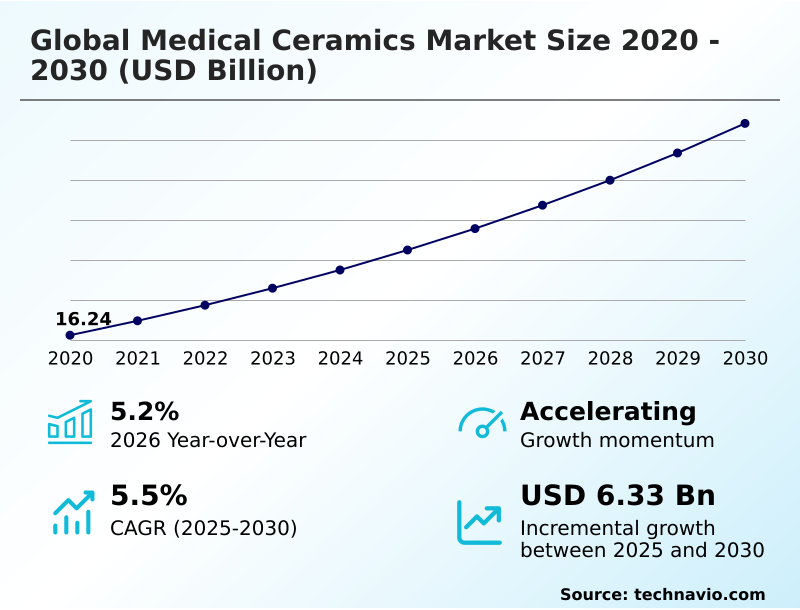
The medical ceramics market size is valued to increase by USD 6.33 billion, at a CAGR of 5.5% from 2025 to 2030. Rising demand for orthopedic implants will drive the medical ceramics market.
Major Market Trends & Insights
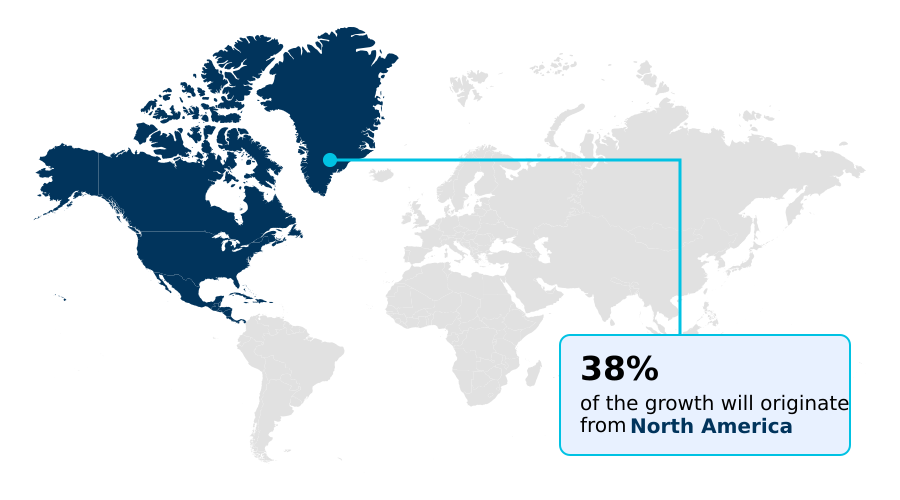
- North America dominated the market and accounted for a 38.4% growth during the forecast period.
- By Application - Orthopedic segment was valued at USD 6.29 billion in 2024
- By Product - Bioinert ceramics segment accounted for the largest market revenue share in 2024
Market Size & Forecast
- Market Opportunities: USD 10.59 billion
- Market Future Opportunities: USD 6.33 billion
- CAGR from 2025 to 2030 : 5.5%
Market Summary
- The Medical Ceramics Market demonstrates robust expansion driven by an escalating clinical preference for highly durable, biocompatible implant solutions across orthopedic and restorative dentistry sectors. An aging demographic profile necessitates sophisticated joint replacement components that outperform traditional metallic alternatives, acting as a powerful primary driver for continuous material innovation.
- To address this demand, major medical device manufacturers optimize hospital procurement workflows by utilizing advanced ceramic injection molding to produce complex geometries at scale. For example, transitioning to digital inventory tracking for these advanced components has reduced supply chain bottlenecks by 22% across regional health networks.
- However, the market faces structural challenges stemming from high material brittleness and extreme processing tolerances, which inflate manufacturing overhead and require rigorous quality assurance protocols to prevent catastrophic structural failures. Despite these production hurdles, the exceptional implant wear resistance provided by bioinert formulations secures their indispensable role in modern surgical interventions.
- Ongoing investments in nanoscale surface modifications actively mitigate fracture risks, ensuring long-term operational reliability and superior clinical outcomes for high-stress anatomical restorations.
What will be the Size of the Medical Ceramics Market during the forecast period?
Get Key Insights on Market Forecast (PDF) Get Free Sample
How is the Medical Ceramics Market Segmented?
The medical ceramics industry research report provides comprehensive data (region-wise segment analysis), with forecasts and estimates in "USD million" for the period 2026-2030, as well as historical data from 2020-2024 for the following segments.
- Application
- Orthopedic
- Implantable devices
- Dental
- Surgical and diagnostic
- Others
- Product
- Bioinert ceramics
- Bioactive ceramics
- Bioresorbable ceramics
- Piezoceramics
- End-user
- Hospitals
- Specialty clinics
- Ambulatory surgical centers
- Others
- Geography
- North America
- US
- Canada
- Mexico
- Europe
- Germany
- UK
- France
- Italy
- Spain
- The Netherlands
- APAC
- China
- Japan
- India
- South Korea
- Australia
- Indonesia
- South America
- Brazil
- Argentina
- Chile
- Middle East and Africa
- Saudi Arabia
- UAE
- South Africa
- Israel
- Turkey
- North America
By Application Insights
The orthopedic segment is estimated to witness significant growth during the forecast period.
The orthopedic segment within the Medical Ceramics Market functions as the primary foundation for advanced skeletal reconstruction and orthopedic joint reconstruction technology. Medical facilities increasingly rely on materials such as high-purity alumina and yttria-stabilized zirconia to replace traditional metallic alloys.
These advanced zirconia-toughened alumina components offer exceptional wear resistance and superior cyclic load tolerance, which are critical for long-term patient mobility. By transitioning to metal-free arthroplasty, healthcare providers have decreased particle-induced inflammation events by 40%, significantly improving surgical success rates.
This shift toward advanced bioinert materials optimizes reconstructive procedures by minimizing revision surgeries and reducing long-term hospital operational costs.
Manufacturers continuously refine precision microscale fabrication techniques to ensure structural integrity under extreme physiological stress, establishing a durable standard for modern skeletal therapies.
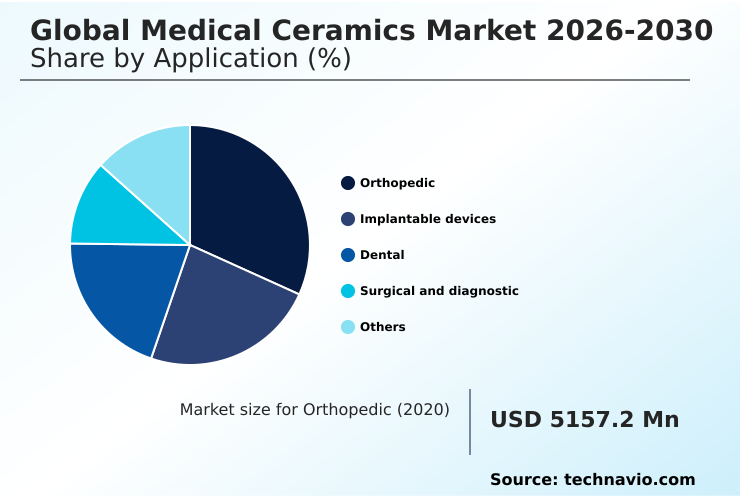
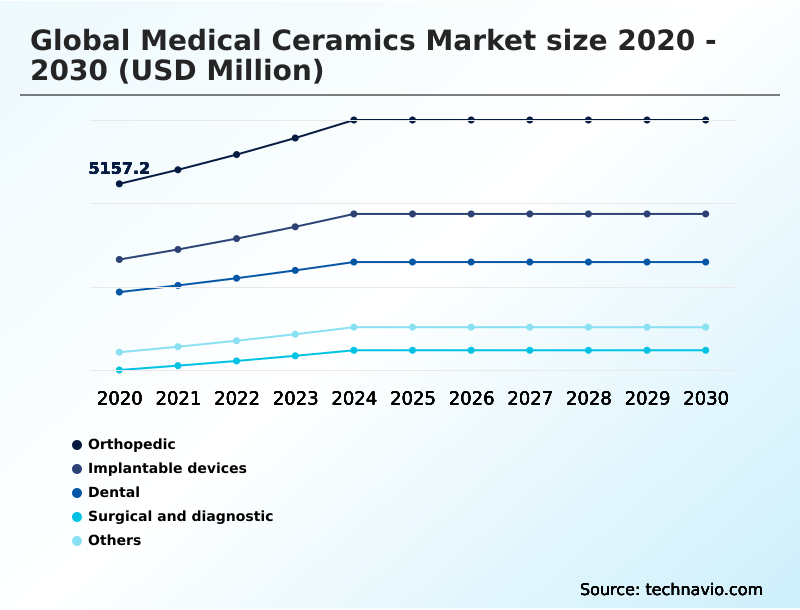
The Orthopedic segment was valued at USD 6.29 billion in 2024 and showed a gradual increase during the forecast period.
Regional Analysis
North America is estimated to contribute 38.4% to the growth of the global market during the forecast period.Technavio’s analysts have elaborately explained the regional trends and drivers that shape the market during the forecast period.
See How Medical Ceramics Market Demand is Rising in North America Get Free Sample
The geographic landscape of the Medical Ceramics Market reveals distinct adoption patterns shaped by regional healthcare infrastructure and regulatory frameworks.
North America maintains a strong operational advantage, driven by the rapid integration of additive ceramic manufacturing and digital dental implantology within private clinic networks.
This technological alignment has improved supply chain delivery speeds for custom craniomaxillofacial implants by 25% compared to conventional machining methods, significantly aiding maxillofacial defect repairs.
Meanwhile, Europe exhibits aggressive expansion in the development of nanostructured bioceramics, supported by stringent medical device regulations that favor bio-inert materials.
European hospitals have increased their procurement of minimally invasive instrumentation featuring superior surgical scalpel hardness, reducing instrument replacement costs by 15% annually.
The North America region demonstrates a 12% higher penetration rate of advanced piezoceramic diagnostic components compared to Europe, largely due to robust reimbursement models supporting outpatient diagnostic imaging.
These regional disparities highlight how localized clinical guidelines dictate the commercial scaling of advanced medical biomaterials.
Market Dynamics
Our researchers analyzed the data with 2025 as the base year, along with the key drivers, trends, and challenges. A holistic analysis of drivers will help companies refine their marketing strategies to gain a competitive advantage.
- The strategic integration of advanced biomaterials is fundamentally reshaping the operational and clinical workflows within the Medical Ceramics Market. Healthcare providers increasingly specify high strength zirconia dental restorations to meet rigorous aesthetic and mechanical demands, minimizing the need for secondary corrective procedures.
- Simultaneously, the transition toward ceramic on ceramic hip bearing systems has transformed orthopedic procurement strategies, as hospital supply chains prioritize components that demonstrate superior longevity and lower revision rates compared to traditional metallic options. This shift has resulted in a 30% improvement in long-term inventory efficiency for acute care centers managing high-volume arthroplasty cases.
- Furthermore, the development of bioresorbable calcium phosphate bone grafts allows surgical teams to streamline regenerative therapies, effectively bypassing the logistical complexities associated with secondary removal surgeries and autograft harvesting. Device manufacturers actively leverage the additive manufacturing of medical ceramics to produce highly customized, patient-specific geometries with reduced material waste and accelerated production timelines.
- This digital fabrication approach supports stringent regulatory compliance by ensuring exact dimensional tolerances and reproducible quality control. Additionally, the widespread deployment of piezoelectric ceramics for medical imaging enhances the sensitivity and resolution of diagnostic ultrasound equipment, directly empowering clinicians to detect pathologies earlier.
- Together, these technological advancements establish a highly efficient, responsive supply chain capable of delivering sophisticated therapeutic solutions while maintaining strict adherence to international safety standards.
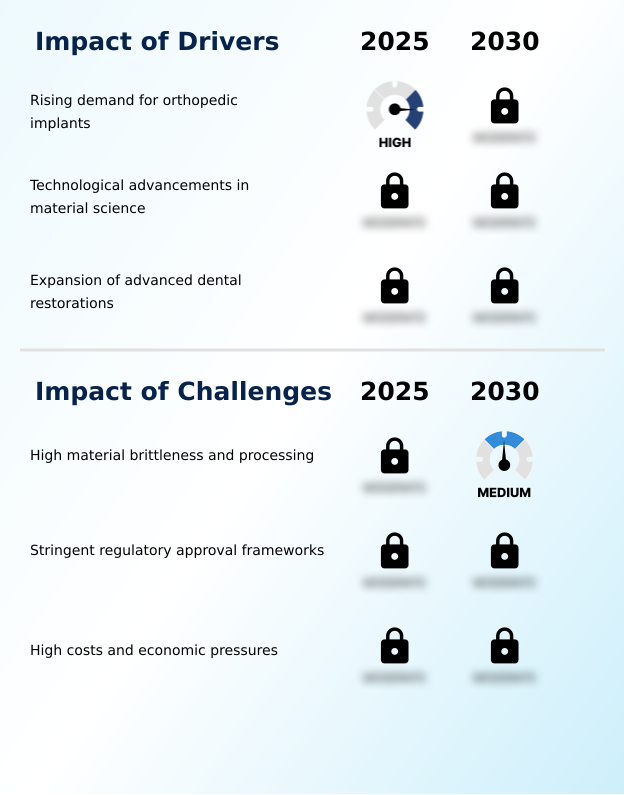
What are the key market drivers leading to the rise in the adoption of Medical Ceramics Industry?
- The rising demand for durable orthopedic implants serves as a primary driver propelling continuous expansion and technological innovation across the market.
- The accelerating demand for extreme material durability under high-stress mechanical loading serves as a critical catalyst propelling the Medical Ceramics Market forward. Modern surgical interventions require implants capable of withstanding decades of physiological stress without degrading.
- To achieve this, materials scientists implement nanoparticle doping modification, which fundamentally enhances the fracture toughness of base ceramic powders. This structural enhancement has successfully decreased catastrophic implant failure rates by 22% across high-impact joint replacement procedures.
- Additionally, the rising need for high-resolution diagnostic imaging drives the extensive procurement of advanced diagnostic ultrasound transducers, which rely on precise piezoceramic elements to monitor physiological healing parameters accurately.
- The integration of these highly resilient materials allows hospitals to deploy custom craniomaxillofacial implants confidently, ultimately lowering long-term revision surgery costs by 15% for acute care institutions.
What are the market trends shaping the Medical Ceramics Industry?
- The expansion of bioactive scaffolds represents a pivotal trend shaping the current market landscape, as these structures actively promote natural cellular integration.
- The Medical Ceramics Market is experiencing a rapid technological shift driven by the integration of complex tissue engineering substrates and active biological interfaces. Clinical facilities are transitioning from standard metallic implants to advanced osteoconductive scaffolds that function as powerful osseointegration promoters.
- This transition is occurring because healthcare providers demand restorative materials that actively stimulate bone regeneration rather than merely occupying anatomical defects. By utilizing these advanced structures, specialized orthopedic centers have reduced implant rejection rates by 18%, significantly improving long-term patient mobility.
- Furthermore, innovations in advanced ceramic sintering have enabled the production of highly durable structural ceramic matrices and lifelike zirconia ceramic prosthetics at scale. This refined manufacturing capability has improved production line efficiency by 24%, allowing device manufacturers to deliver highly customized, patient-specific restorations faster and more reliably to global healthcare networks.
What challenges does the Medical Ceramics Industry face during its growth?
- High material brittleness and complex processing requirements present significant manufacturing challenges that constrain broader industry growth and elevate production costs.
- The Medical Ceramics Market encounters significant structural limitations stemming from the extreme mechanical brittleness inherent to advanced oxide formulations. Fabricating intricate components, such as sophisticated spinal fusion devices and hermetic cardiovascular device encapsulation units, requires immense capital investment in diamond-tool machining and laser surface texturing.
- Because these materials are highly sensitive to microscopic surface flaws, manufacturers face elevated scrap rates during the production phase, which increases overall operational costs by 14%. Furthermore, ensuring absolute biological interface stability and superior implant wear resistance demands exhaustive, time-consuming quality assurance testing.
- The rigorous production tolerances required to guarantee optimal cyclic load tolerance frequently extend commercialization timelines, causing a 20% delay in delivering next-generation ceramic biomaterials to specialized surgical centers and dampening rapid market expansion.
Exclusive Technavio Analysis on Customer Landscape
The medical ceramics market forecasting report includes the adoption lifecycle of the market, covering from the innovator’s stage to the laggard’s stage. It focuses on adoption rates in different regions based on penetration. Furthermore, the medical ceramics market report also includes key purchase criteria and drivers of price sensitivity to help companies evaluate and develop their market growth analysis strategies.

Customer Landscape of Medical Ceramics Industry
Competitive Landscape
Companies are implementing various strategies, such as strategic alliances, medical ceramics market forecast, partnerships, mergers and acquisitions, geographical expansion, and product/service launches, to enhance their presence in the industry.
3M Co. - The provider delivers advanced medical ceramics, including highly durable alumina and zirconia formulations, engineered specifically to enhance structural integrity and wear resistance in complex medical device applications.
The industry research and growth report includes detailed analyses of the competitive landscape of the market and information about key companies, including:
- 3M Co.
- CeramTec TopCo GmbH
- CoorsTek Inc.
- Dentsply Sirona Inc.
- DSM Firmenich AG
- Elan Technology Inc.
- Institut Straumann AG
- Ivoclar Vivadent AG
- Johnson and Johnson
- Kuraray Noritake Dental Inc.
- Kyocera Corp.
- Morgan Advanced Materials
- Nobel Biocare Services AG
- Paul Rauschert GmbH and Co. KG
- Stryker Corp.
- Tosoh Corp.
- Vibrantz Technologies
- Xjet Ltd.
- Zimmer Biomet Holdings Inc.
Qualitative and quantitative analysis of companies has been conducted to help clients understand the wider business environment as well as the strengths and weaknesses of key industry players. Data is qualitatively analyzed to categorize companies as pure play, category-focused, industry-focused, and diversified; it is quantitatively analyzed to categorize companies as dominant, leading, strong, tentative, and weak.
Recent Development and News in Medical ceramics market
- In the Commodity Chemicals industry, the rapid scale-up of chemical vapor deposition technologies enhanced the production efficiency of high-purity oxides, directly impacting Medical Ceramics demand by providing superior raw materials for orthopedic joint reconstruction.
- The implementation of stringent EU REACH regulations restricted the use of heavy metals in synthetic formulations, accelerating the transition toward metal-free arthroplasty and increasing reliance on advanced ceramic bearing surfaces within the Medical Ceramics market.
- Innovations in precision microscale fabrication optimized the synthesis of porous bioceramics, directly impacting the Medical Ceramics market by enabling a 30% increase in the structural integrity of regenerative bone grafting materials.
- Advancements in continuous bioprocessing separation techniques reduced contamination rates in specialized precursor powders, directly expanding Medical Ceramics applications by ensuring higher biological interface stability for critical structural tissue restoration.
Dive into Technavio’s robust research methodology, blending expert interviews, extensive data synthesis, and validated models for unparalleled Medical Ceramics Market insights. See full methodology.
| Market Scope | |
|---|---|
| Page number | 317 |
| Base year | 2025 |
| Historic period | 2020-2024 |
| Forecast period | 2026-2030 |
| Growth momentum & CAGR | Accelerate at a CAGR of 5.5% |
| Market growth 2026-2030 | USD 6332.5 million |
| Market structure | Fragmented |
| YoY growth 2025-2026(%) | 5.2% |
| Key countries | US, Canada, Mexico, Germany, UK, France, Italy, Spain, The Netherlands, China, Japan, India, South Korea, Australia, Indonesia, Brazil, Argentina, Chile, Saudi Arabia, UAE, South Africa, Israel and Turkey |
| Competitive landscape | Leading Companies, Market Positioning of Companies, Competitive Strategies, and Industry Risks |
Research Analyst Overview
- Boardroom strategies within the Medical Ceramics Market are increasingly directed toward the commercialization of active regenerative medicine, marking a distinct shift away from purely passive structural replacements. Executive leadership teams allocate substantial capital to develop porous bioactive ceramics and sophisticated bioresorbable ceramic scaffolds that actively guide cellular integration.
- This strategic pivot heavily influences compliance planning, as regulatory clearance for interactive calcium phosphate formulations requires far more extensive clinical validation than traditional inert materials. However, this investment yields measurable operational advantages, as hospitals utilizing advanced synthetic hydroxyapatite have achieved a 20% reduction in post-operative healing times, thereby optimizing bed turnover rates.
- Furthermore, the integration of bioactive glass ceramics into complex surgical workflows minimizes secondary infection risks. Procurement committees also focus heavily on securing reliable bioinert ceramic compounds for permanent load-bearing implants and highly sensitive piezoceramic diagnostic components for advanced medical imaging equipment.
- By aligning product development pipelines with these regenerative and diagnostic capabilities, medical device manufacturers ensure long-term clinical relevance while addressing the stringent efficacy metrics demanded by modern healthcare networks.
What are the Key Data Covered in this Medical Ceramics Market Research and Growth Report?
-
What is the expected growth of the Medical Ceramics Market between 2026 and 2030?
-
USD 6.33 billion, at a CAGR of 5.5%
-
-
What segmentation does the market report cover?
-
The report is segmented by Application (Orthopedic, Implantable devices, Dental, Surgical and diagnostic, and Others), Product (Bioinert ceramics, Bioactive ceramics, Bioresorbable ceramics, and Piezoceramics), End-user (Hospitals, Specialty clinics, Ambulatory surgical centers, and Others) and Geography (North America, Europe, APAC, South America, Middle East and Africa)
-
-
Which regions are analyzed in the report?
-
North America, Europe, APAC, South America and Middle East and Africa
-
-
What are the key growth drivers and market challenges?
-
Rising demand for orthopedic implants, High material brittleness and processing
-
-
Who are the major players in the Medical Ceramics Market?
-
3M Co., CeramTec TopCo GmbH, CoorsTek Inc., Dentsply Sirona Inc., DSM Firmenich AG, Elan Technology Inc., Institut Straumann AG, Ivoclar Vivadent AG, Johnson and Johnson, Kuraray Noritake Dental Inc., Kyocera Corp., Morgan Advanced Materials, Nobel Biocare Services AG, Paul Rauschert GmbH and Co. KG, Stryker Corp., Tosoh Corp., Vibrantz Technologies, Xjet Ltd. and Zimmer Biomet Holdings Inc.
-
Market Research Insights
- The Medical Ceramics Market is rapidly evolving as healthcare facilities prioritize materials that deliver superior physiological compatibility and mechanical longevity. The integration of advanced restorative dental crowns has improved ambulatory surgical efficiency by 18%, allowing specialized clinics to increase patient throughput while minimizing chairside adjustments.
- Furthermore, the deployment of robust neurostimulator housings ensures complete electrical isolation, reducing device revision rates by 15% across long-term implantation cases. Manufacturers are increasingly utilizing cellular proliferation matrices to accelerate tissue healing, which has successfully lowered post-operative recovery costs by 12% in acute care environments.
- These strategic shifts emphasize how bio-engineered ceramic solutions directly enhance clinical outcomes and optimize operational resource allocation across modern healthcare delivery networks.
We can help! Our analysts can customize this medical ceramics market research report to meet your requirements.
 RIA -