

Laminated Veneer Lumber Market Size 2026-2030
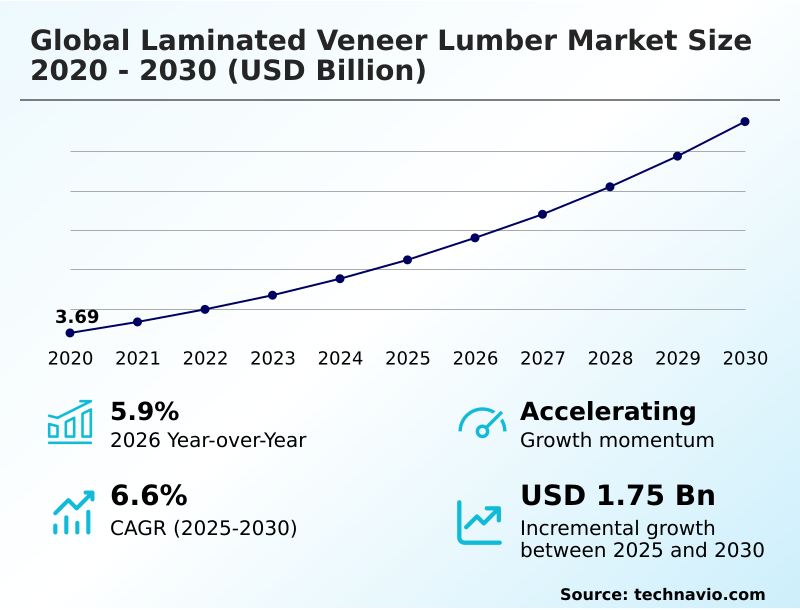
The laminated veneer lumber market size is valued to increase by USD 1.75 billion, at a CAGR of 6.6% from 2025 to 2030. Growing emphasis on sustainable and green building practices will drive the laminated veneer lumber market.
Major Market Trends & Insights
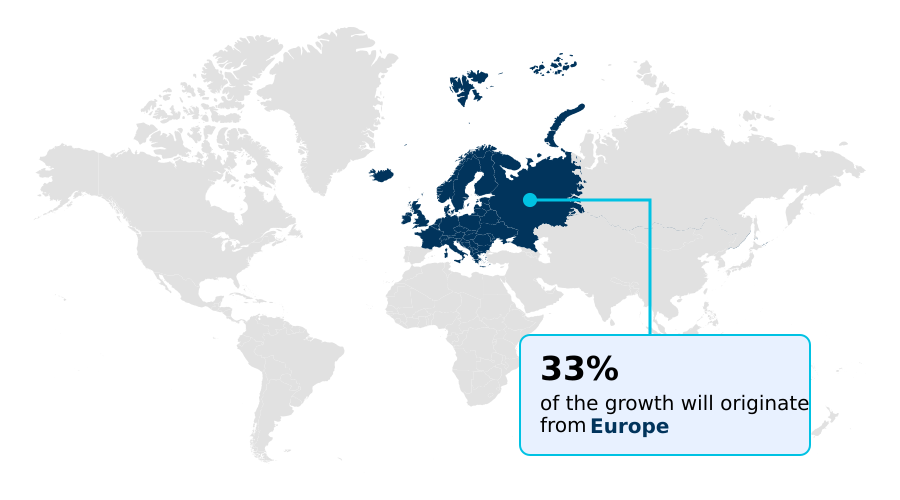
- Europe dominated the market and accounted for a 32.8% growth during the forecast period.
- By Type - Cross-banded LVL segment was valued at USD 2.29 billion in 2024
- By End-user - Residential segment accounted for the largest market revenue share in 2024
Market Size & Forecast
- Market Opportunities: USD 2.69 billion
- Market Future Opportunities: USD 1.75 billion
- CAGR from 2025 to 2030 : 6.6%
Market Summary
- The Laminated Veneer Lumber Market demonstrates robust expansion driven by the global transition toward industrialized construction and sustainable infrastructure. Manufacturers are increasingly optimizing timber procurement logistics and veneer drying systems to streamline supply chain operations, ensuring a consistent flow of high-quality raw materials for prefabricated building systems.
- This operational refinement has enabled facilities to achieve a 25% improvement in production throughput compared to traditional solid-sawn milling processes. The escalating emphasis on low embodied carbon materials serves as a primary driver, compelling developers to substitute concrete with carbon sequestration materials in multi story wood buildings.
- Conversely, the market faces significant operational challenges due to supply chain constraints and the inherent volatility in raw material costs, which restrict profit margins and complicate long-term capacity planning. By integrating automated veneer grading and high pressure pressing technologies, producers can mitigate natural wood defects, thereby maintaining the high strength to weight ratio required for modern architectural grade veneer applications.
What will be the Size of the Laminated Veneer Lumber Market during the forecast period?
Get Key Insights on Market Forecast (PDF) Get Free Sample
How is the Laminated Veneer Lumber Market Segmented?
The laminated veneer lumber industry research report provides comprehensive data (region-wise segment analysis), with forecasts and estimates in "USD million" for the period 2026-2030, as well as historical data from 2020-2024 for the following segments.
- Type
- Cross-banded LVL
- Structural LVL
- Others
- End-user
- Residential
- Commercial
- Industrial
- Grade type
- Structural grade
- Non-structural grade
- Geography
- North America
- US
- Canada
- Mexico
- Europe
- Germany
- UK
- France
- Italy
- Spain
- The Netherlands
- APAC
- China
- Japan
- India
- South Korea
- Australia
- Indonesia
- South America
- Brazil
- Chile
- Argentina
- Middle East and Africa
- Saudi Arabia
- UAE
- Turkey
- South Africa
- Israel
- North America
By Type Insights
The cross-banded lvl segment is estimated to witness significant growth during the forecast period.
The cross-banded LVL segment fundamentally alters structural framing components by incorporating alternating grain orientations to maximize isotropic strength properties. This sophisticated wood processing technology significantly enhances dimensional stability enhancement, providing superior resistance to warping and twisting compared to traditional materials.
By integrating advanced rotary peeled veneer layers with durable bio based adhesives, manufacturers deliver high load bearing capacity tailored for complex residential housing development and commercial infrastructure projects.
This engineered wood configuration directly impacts operational efficiency, allowing construction teams to achieve a 15% reduction in material waste during on-site assembly. The specialized configuration ensures reliable performance across diverse environmental conditions, supporting sustainable building materials adoption.
By mitigating natural wood defects, this segment offers predictable, resilient structural solutions essential for modern architectural applications.
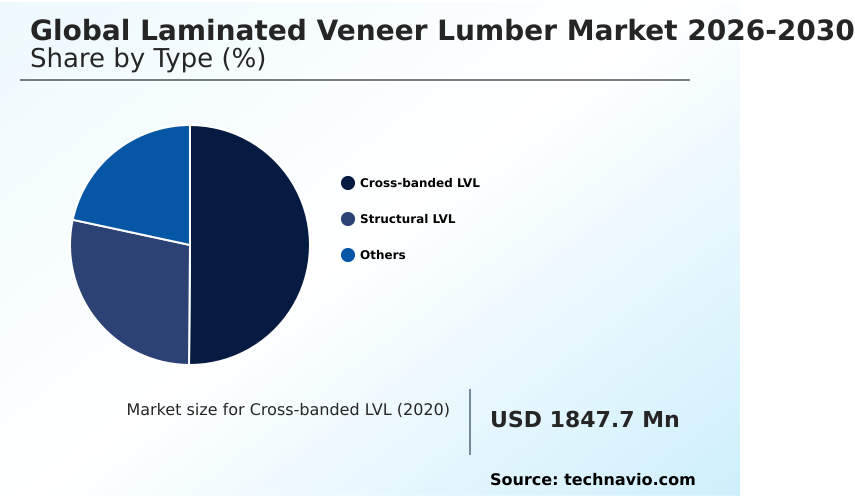
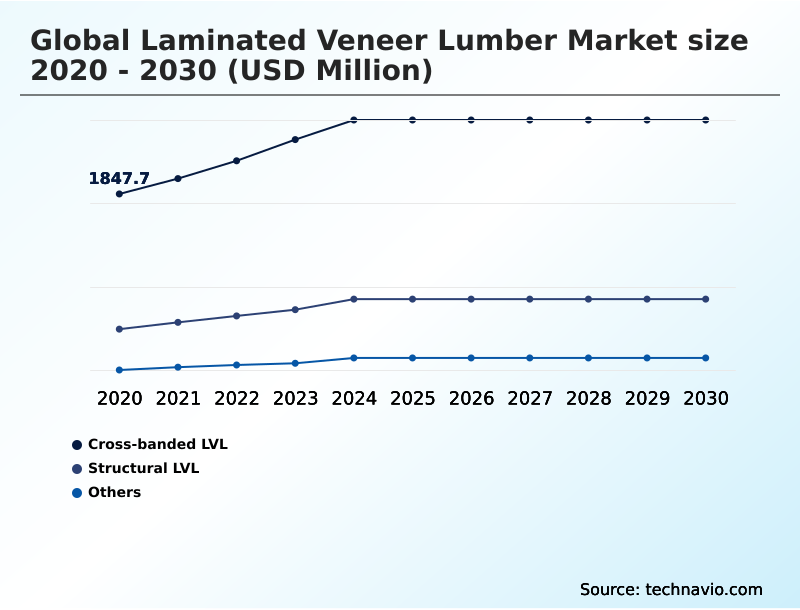
The Cross-banded LVL segment was valued at USD 2.29 billion in 2024 and showed a gradual increase during the forecast period.
Regional Analysis
Europe is estimated to contribute 32.8% to the growth of the global market during the forecast period.Technavio’s analysts have elaborately explained the regional trends and drivers that shape the market during the forecast period.
See How Laminated Veneer Lumber Market Demand is Rising in Europe Get Free Sample
The geographic landscape of the Laminated Veneer Lumber Market reveals distinct operational shifts, with North America demonstrating mature adoption driven by extensive residential housing development and established wood frame construction standards.
In contrast, the APAC region exhibits accelerated infrastructure modernization, adopting structural framing components at a 40% faster rate than European markets to support rapid urban expansion.
This divergence in demand requires manufacturers to adapt supply chain strategies, integrating advanced veneer drying systems and computer numerical control fabrication to meet regional specifications.
North American facilities have realized a 15% reduction in logistics costs through localized timber procurement logistics, whereas APAC producers focus on expanding capacity for prefabricated building systems to offset labor shortages.
The strategic implementation of green building certifications across these regions ensures compliance with environmental benchmarks, driving a 20% efficiency gain in cross-border material distribution and structural engineering specifications.
Market Dynamics
Our researchers analyzed the data with 2025 as the base year, along with the key drivers, trends, and challenges. A holistic analysis of drivers will help companies refine their marketing strategies to gain a competitive advantage.
- The continuous evolution of the Laminated Veneer Lumber Market is reshaping modern construction methodologies, particularly as developers prioritize resource-efficient building systems. The strategic deployment of engineered wood beams for commercial buildings has revolutionized architectural design, enabling expansive open-concept floor plans that require fewer intermediate supports.
- This structural upgrade directly supports the sustainable structural framing materials adoption trend, allowing procurement teams to align corporate sustainability goals with rigorous operational planning requirements. By specifying fire retardant treated structural wood, contractors can meet stringent municipal safety codes while maintaining the aesthetic and environmental benefits of mass timber construction.
- The integration of prefabricated mass timber floor cassettes further streamlines site logistics, yielding an installation efficiency that is approximately 35% faster than conventional concrete slab construction. This acceleration significantly reduces overhead costs and minimizes exposure to volatile labor markets.
- Additionally, the development of high load bearing wood veneer beams ensures consistent mechanical performance across varied climate conditions, outperforming traditional solid-sawn lumber in dimensional stability and resistance to warping. These material advancements enable supply chain managers to consolidate vendor networks, optimizing inventory turnover and reducing material waste.
- Ultimately, these targeted innovations provide a robust foundation for scaling off-site manufacturing capabilities, reinforcing the critical role of advanced wood products in next-generation sustainable infrastructure development.
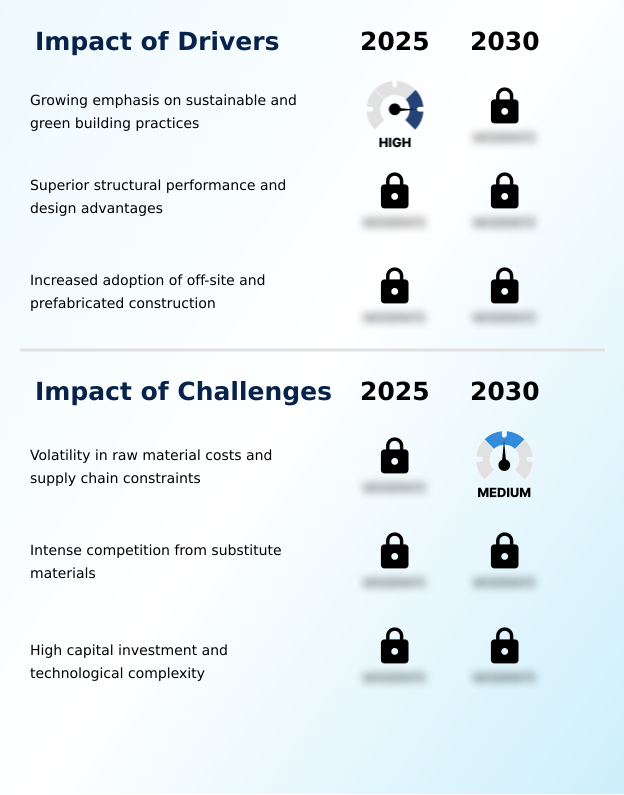
What are the key market drivers leading to the rise in the adoption of Laminated Veneer Lumber Industry?
- The escalating global emphasis on sustainable and green building practices serves as a primary catalyst accelerating market expansion.
- The accelerating demand for sustainable building materials and stringent green building certifications are serving as primary drivers within the Laminated Veneer Lumber Market.
- Regulatory pressures mandating low embodied carbon construction are compelling developers to substitute energy-intensive steel with advanced structural framing components. This transition allows firms to achieve a 40% reduction in overall project carbon footprint, directly supporting corporate ESG compliance targets.
- Additionally, the inherent high strength to weight ratio of rotary peeled veneer products facilitates lighter foundation requirements, cutting sub-structure material costs by approximately 18%.
- By leveraging wood defect randomization techniques during the manufacturing process, producers deliver highly predictable load bearing capacity, significantly enhancing the structural reliability of residential and commercial wood frame construction projects.
What are the market trends shaping the Laminated Veneer Lumber Industry?
- The increasing integration of engineered wood into mass timber construction systems represents a defining market trend. This evolution supports the development of larger and more sustainable building infrastructures.
- The Laminated Veneer Lumber Market is increasingly characterized by the rapid adoption of prefabricated building systems and the integration of hybrid construction systems in commercial infrastructure. This shift is driven by the urgent need to accelerate project timelines and minimize on-site labor dependencies.
- By utilizing long span roof trusses and modular floor cassettes, construction firms have successfully compressed structural assembly times by up to 30% compared to traditional on-site framing methods. Furthermore, the implementation of advanced computer numerical control fabrication has improved component dimensional accuracy, resulting in a 22% reduction in costly on-site modifications.
- This enhanced precision directly impacts operational workflows, enabling developers to scale multi story wood buildings efficiently while capitalizing on the superior isotropic strength properties of engineered wood joists.
What challenges does the Laminated Veneer Lumber Industry face during its growth?
- Persistent volatility in raw material costs and ongoing supply chain constraints present significant structural challenges to industry growth.
- The Laminated Veneer Lumber Market faces significant operational hurdles due to the escalating costs of timber procurement logistics and stringent sustainable forest sourcing mandates. The reliance on specialized high pressure pressing and sophisticated adhesive application equipment demands substantial upfront capital, restricting capacity expansion for mid-tier manufacturers.
- These supply chain bottlenecks have increased raw material lead times by up to 25%, forcing production facilities to hold larger safety stocks and thereby inflating inventory holding costs by approximately 15%. Furthermore, navigating complex structural engineering specifications for seismic resistant structures requires intensive research and development investments.
- This technological complexity challenges producers attempting to maintain competitive pricing for architectural grade veneer applications, ultimately threatening profit margins across the broader engineered wood products sector.
Exclusive Technavio Analysis on Customer Landscape
The laminated veneer lumber market forecasting report includes the adoption lifecycle of the market, covering from the innovator’s stage to the laggard’s stage. It focuses on adoption rates in different regions based on penetration. Furthermore, the laminated veneer lumber market report also includes key purchase criteria and drivers of price sensitivity to help companies evaluate and develop their market growth analysis strategies.
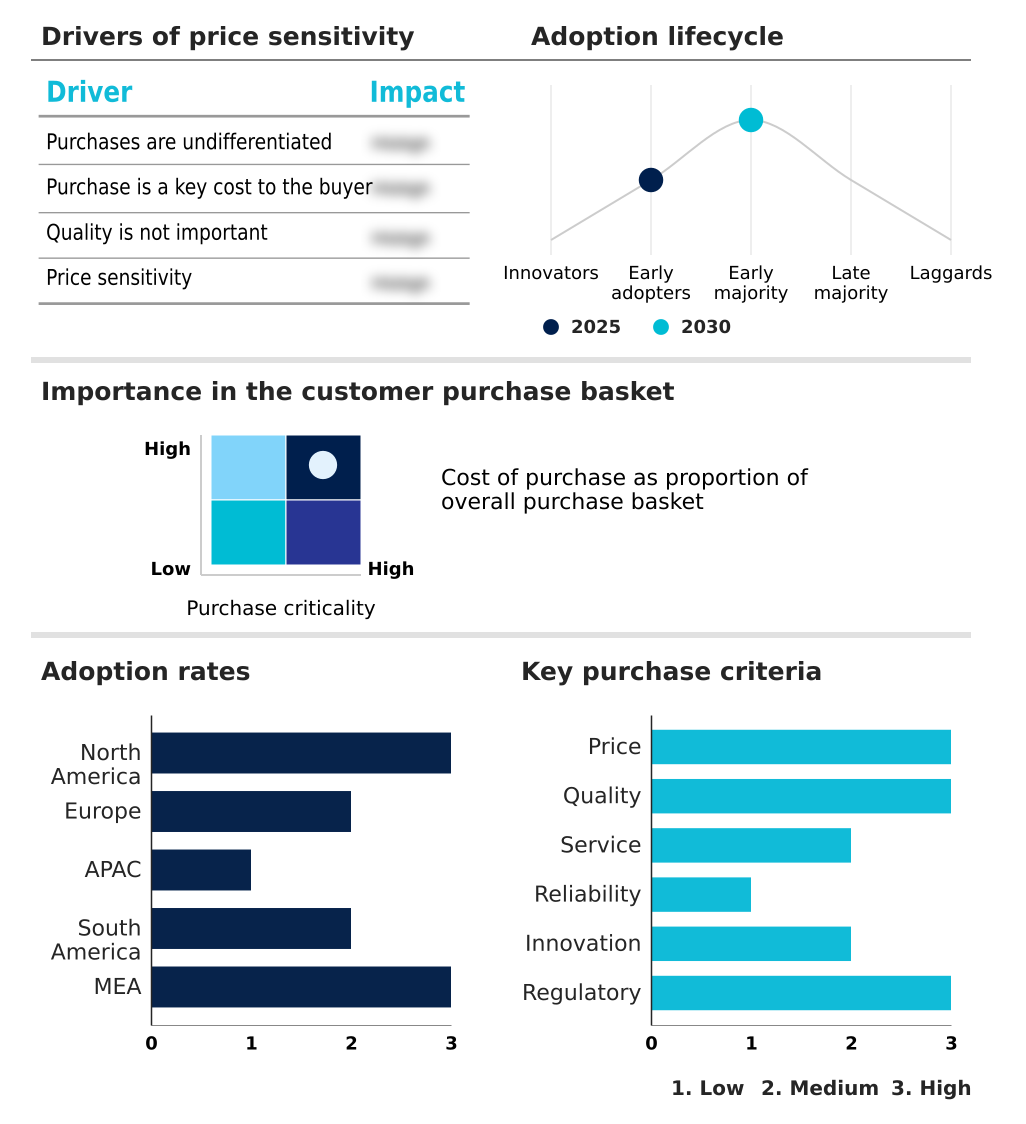
Customer Landscape of Laminated Veneer Lumber Industry
Competitive Landscape
Companies are implementing various strategies, such as strategic alliances, laminated veneer lumber market forecast, partnerships, mergers and acquisitions, geographical expansion, and product/service launches, to enhance their presence in the industry.
Boise Cascade Co. - The comprehensive portfolio delivers advanced structural LVL beams and engineered headers, providing exceptional load-bearing support and dimensional consistency for modern residential and commercial framing applications.
The industry research and growth report includes detailed analyses of the competitive landscape of the market and information about key companies, including:
- Boise Cascade Co.
- Canfor Corp.
- Celulosa Arauco y Constitucion
- Georgia Pacific LLC
- Louisiana Pacific Corp.
- LVL Global
- Metsa Group
- Murphy
- Pacific Woodtech Corp
- Pollmeier Massivholz GmbH
- Steico Groups
- Stora Enso Oyj
- Sunrise plywood
- SVEZA
- Tolko Industries Ltd.
- TT Plywood
- UFP Industries Inc.
- Wesbeam Pty Ltd.
- West Fraser Timber Co. Ltd.
- Weyerhaeuser Co.
Qualitative and quantitative analysis of companies has been conducted to help clients understand the wider business environment as well as the strengths and weaknesses of key industry players. Data is qualitatively analyzed to categorize companies as pure play, category-focused, industry-focused, and diversified; it is quantitatively analyzed to categorize companies as dominant, leading, strong, tentative, and weak.
Recent Development and News in Laminated veneer lumber market
- In the Forest Products industry, the widespread adoption of stringent green building certifications has mandated the use of low embodied carbon materials, directly impacting Laminated Veneer Lumber demand by accelerating its specification in multi story wood buildings.
- The integration of computer numerical control fabrication with building information modeling software has optimized wood processing technology, allowing off site manufacturing facilities to increase precision and reduce assembly time by 20% for prefabricated wall panels.
- Advancements in bio based adhesives and moisture resistant coating technologies have enhanced the durability of structural engineering specifications, expanding the viability of engineered wood joists in high-humidity commercial infrastructure projects.
- Shifting forestry management practices and sustainable forest sourcing mandates have constrained traditional timber procurement logistics, driving a 15% increase in the utilization of wood defect randomization techniques to maximize yield for structural framing components.
Dive into Technavio’s robust research methodology, blending expert interviews, extensive data synthesis, and validated models for unparalleled Laminated Veneer Lumber Market insights. See full methodology.
| Market Scope | |
|---|---|
| Page number | 290 |
| Base year | 2025 |
| Historic period | 2020-2024 |
| Forecast period | 2026-2030 |
| Growth momentum & CAGR | Accelerate at a CAGR of 6.6% |
| Market growth 2026-2030 | USD 1750.9 million |
| Market structure | Fragmented |
| YoY growth 2025-2026(%) | 5.9% |
| Key countries | US, Canada, Mexico, Germany, UK, France, Italy, Spain, The Netherlands, China, Japan, India, South Korea, Australia, Indonesia, Brazil, Chile, Argentina, Saudi Arabia, UAE, Turkey, South Africa and Israel |
| Competitive landscape | Leading Companies, Market Positioning of Companies, Competitive Strategies, and Industry Risks |
Research Analyst Overview
- The Laminated Veneer Lumber Market is undergoing a structural transformation as the integration of mass timber construction into high-rise architecture reshapes strategic product planning. Boardroom executives are increasingly prioritizing carbon sequestration materials to align with stringent ESG compliance mandates and mitigate long-term regulatory risks. By leveraging building information modeling alongside automated veneer grading, companies are drastically optimizing their manufacturing workflows.
- This digital integration allows procurement teams to reduce structural over-engineering, resulting in a 25% decrease in raw material waste during the production of cross laminated timber and glued laminated timber components. The shift toward off site manufacturing necessitates highly predictable dimensional stability enhancement, compelling manufacturers to invest heavily in advanced phenolic resin adhesive applications.
- Consequently, the deployment of specialized structural wood beams with a superior high strength to weight ratio enables developers to bypass the logistical constraints of traditional steel framing. This evolution not only fortifies supply chain resilience but also accelerates the global transition toward sustainable building materials, establishing engineered wood products as indispensable assets for future-proof commercial and residential infrastructure.
What are the Key Data Covered in this Laminated Veneer Lumber Market Research and Growth Report?
-
What is the expected growth of the Laminated Veneer Lumber Market between 2026 and 2030?
-
USD 1.75 billion, at a CAGR of 6.6%
-
-
What segmentation does the market report cover?
-
The report is segmented by Type (Cross-banded LVL, Structural LVL, and Others), End-user (Residential, Commercial, and Industrial), Grade Type (Structural grade, and Non-structural grade) and Geography (North America, Europe, APAC, South America, Middle East and Africa)
-
-
Which regions are analyzed in the report?
-
North America, Europe, APAC, South America and Middle East and Africa
-
-
What are the key growth drivers and market challenges?
-
Growing emphasis on sustainable and green building practices, Volatility in raw material costs and supply chain constraints
-
-
Who are the major players in the Laminated Veneer Lumber Market?
-
Boise Cascade Co., Canfor Corp., Celulosa Arauco y Constitucion, Georgia Pacific LLC, Louisiana Pacific Corp., LVL Global, Metsa Group, Murphy, Pacific Woodtech Corp, Pollmeier Massivholz GmbH, Steico Groups, Stora Enso Oyj, Sunrise plywood, SVEZA, Tolko Industries Ltd., TT Plywood, UFP Industries Inc., Wesbeam Pty Ltd., West Fraser Timber Co. Ltd. and Weyerhaeuser Co.
-
Market Research Insights
- The Laminated Veneer Lumber Market is rapidly evolving to support the complex requirements of modern commercial infrastructure projects and residential housing development. Companies integrating advanced wood processing technology and automated adhesive application equipment have secured a 20% improvement in structural consistency, directly reducing on-site installation errors.
- Furthermore, the adoption of prefabricated wall panels and modular floor cassettes enables contractors to accelerate project timelines by up to 30% compared to traditional wood frame construction techniques. By leveraging sustainable forest sourcing and optimized timber procurement logistics, manufacturers ensure compliance with stringent environmental regulations while significantly lowering overall operational costs, delivering resilient and dimensionally stable structural elements.
We can help! Our analysts can customize this laminated veneer lumber market research report to meet your requirements.
 RIA -