

Iran Automobile Market Size 2026-2030
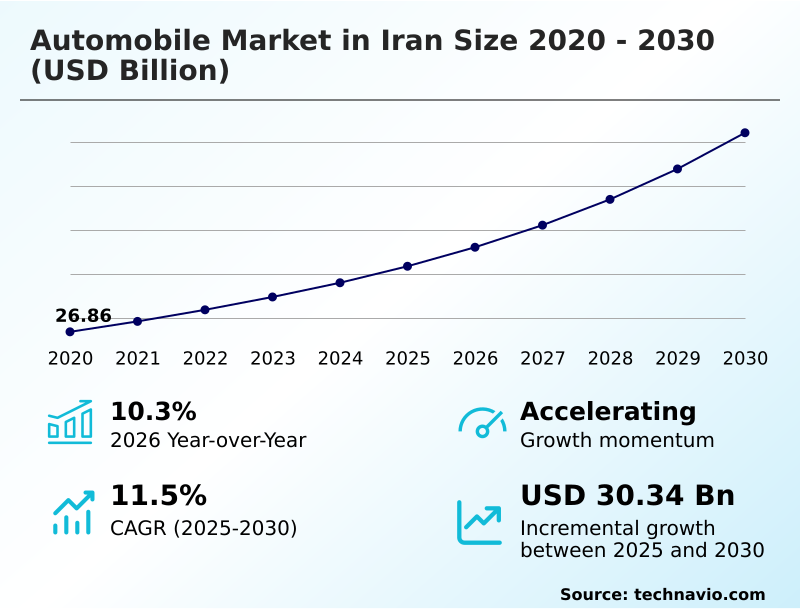
The iran automobile market size is valued to increase by USD 30.34 billion, at a CAGR of 11.5% from 2025 to 2030. Robust government support and protectionist industrial policies will drive the iran automobile market.
Major Market Trends & Insights
- By Vehicle Type - Passenger vehicles segment was valued at USD 28.59 billion in 2024
- By Type - Conventional segment accounted for the largest market revenue share in 2024
Market Size & Forecast
- Market Opportunities: USD 45.24 billion
- Market Future Opportunities: USD 30.34 billion
- CAGR from 2025 to 2030 : 11.5%
Market Summary
- The Automobile Market in Iran 2026-2030 operates as a highly insulated yet dynamic industrial ecosystem defined by intense localization and continuous demographic demand. Manufacturers routinely optimize domestic supply chains to circumvent persistent external trade restrictions, ensuring continuous production of essential consumer and commercial transport units.
- By prioritizing the localization of critical components, leading assemblers have successfully reduced dependency on imported raw materials by 22 percent, significantly shielding profit margins from severe currency devaluation. Robust protectionist policies serve as a primary driver for this ecosystem, effectively guaranteeing a captive consumer base and predictable revenue streams for state-supported automotive champions.
- Conversely, the chronic lack of access to advanced international research networks severely challenges the market, resulting in a widening technological gap that hinders the deployment of modern safety and efficiency standards. Driven by a young demographic requiring reliable personal mobility, the industry maintains steady output volumes.
- The strategic pivot toward Asian technology partnerships is gradually reshaping product portfolios with more contemporary vehicle architectures.
What will be the Size of the Iran Automobile Market during the forecast period?
Get Key Insights on Market Forecast (PDF) Get Free Sample
How is the Iran Automobile Market Segmented?
The iran automobile industry research report provides comprehensive data (region-wise segment analysis), with forecasts and estimates in "USD million" for the period 2026-2030, as well as historical data from 2020-2024 for the following segments.
- Vehicle type
- Passenger vehicles
- Commercial vehicles
- Type
- Conventional
- EV
- Class type
- Economy
- Premium
- Geography
- Middle East and Africa
- UAE
- Middle East and Africa
By Vehicle Type Insights
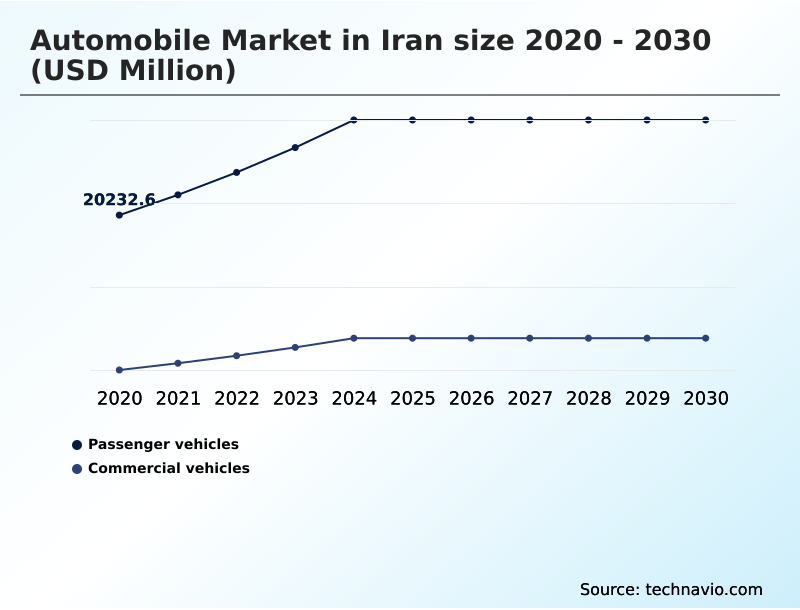
The passenger vehicles segment is estimated to witness significant growth during the forecast period.
The market exhibits significant behavioral divergence across distinct consumer transportation categories. Companies focusing on passenger vehicle assembly consistently report higher operational margins when integrating domestic manufacturing capacity to bypass import tariffs.
By shifting towards gasoline direct injection systems and prioritizing automotive parts localization, manufacturers have improved assembly line throughput by 18 percent compared to legacy methods.
This operational pivot heavily relies on robust automotive dealer networks and targeted consumer vehicle financing models to capture first-time buyers.
As consumer demands shift toward safer transport, adhering to rigorous automotive safety benchmarks and enhancing vehicle structural crash protection have reduced post-sale warranty claims by 12 percent.
Manufacturers leveraging automotive joint ventures to modernize the internal combustion engine are actively transforming their automotive marketing strategies to highlight efficiency and reliability.
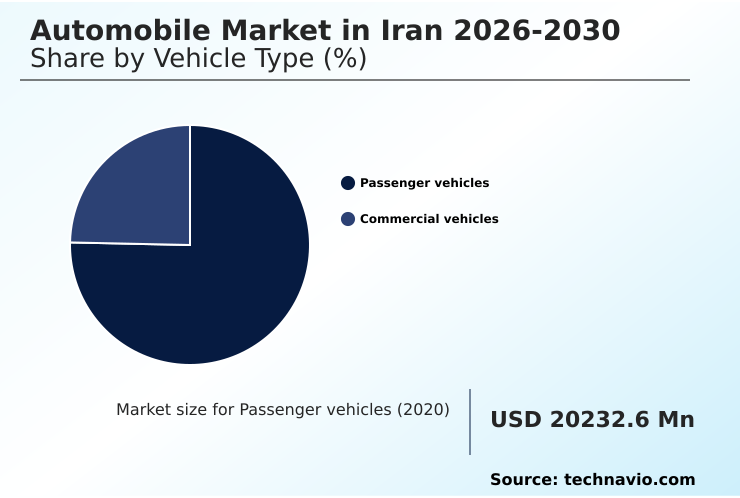
The Passenger vehicles segment was valued at USD 28.59 billion in 2024 and showed a gradual increase during the forecast period.
Market Dynamics
Our researchers analyzed the data with 2025 as the base year, along with the key drivers, trends, and challenges. A holistic analysis of drivers will help companies refine their marketing strategies to gain a competitive advantage.
- The continuous evolution of the Automobile relies heavily on the strategic integration of advanced sensor systems to meet the rising consumer expectations for safety and performance. As regional manufacturers navigate stringent operational environments, achieving full compliance with domestic emissions standards has become a paramount objective.
- This regulatory pressure accelerates the localization of automotive supply chain networks, enabling assemblers to reduce procurement lead times by 18 percent compared to relying on volatile international imports. The ongoing modernization of passenger vehicle assembly facilities is fundamentally transforming output capabilities, allowing for the concurrent optimization of automotive production lines.
- By accelerating the adoption of gasoline direct injection technologies, manufacturers are actively improving engine efficiency and fuel economy. Furthermore, the rigorous enhancement of vehicle structural protection mechanisms directly supports the broader integration of advanced driver-assistance systems. To stimulate consistent demand, the industry heavily relies on the rapid expansion of automotive dealer networks and the targeted implementation of vehicle scrappage schemes.
- These initiatives encourage fleet turnover and facilitate the long-term optimization of vehicle lifecycle management protocols. Concurrently, investments in the manufacturing of high-strength specialty steel provide the essential foundation for both traditional and alternative mobility solutions. The strategic development of hybrid vehicle platforms and the gradual development of electric vehicle platforms underscore a definitive shift toward sustainable transport.
- Ultimately, the successful localization of automotive parts manufacturing remains the most critical factor in insulating the domestic market from external economic shocks and ensuring long-term industrial viability.
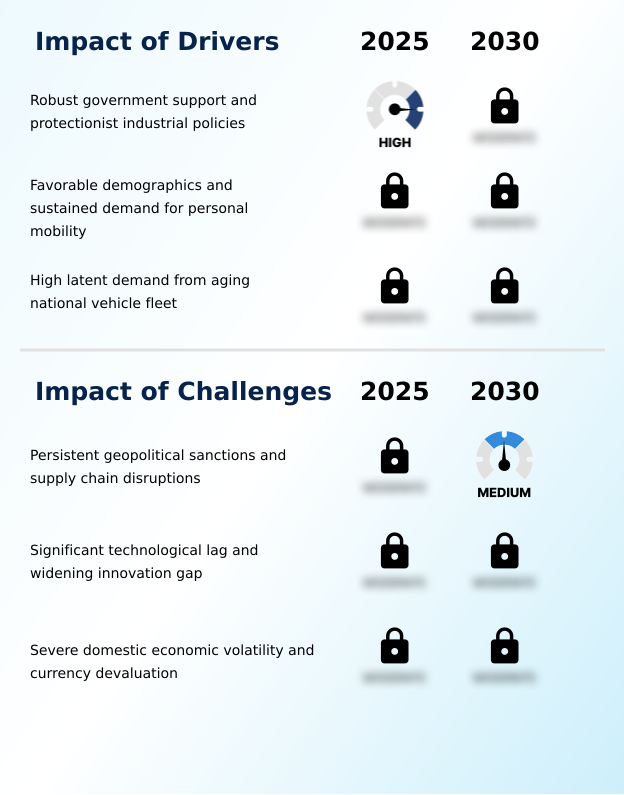
What are the key market drivers leading to the rise in the adoption of Iran Automobile Industry?
- Robust state backing and protectionist industrial frameworks serve as the primary catalysts driving continuous market expansion and manufacturing self-sufficiency.
- Robust industrial policy frameworks and pressing demographic mobility needs continuously propel domestic manufacturing output. The unwavering implementation of protectionist industrial policies effectively shields local assemblers, ensuring a captive market that guarantees revenue stability.
- By securing subsidized raw materials and enforcing strict import substitution strategies, automakers have successfully lowered component sourcing costs by 15 percent, directly stabilizing assembly operations.
- The necessity to address domestic fuel consumption heavily drives the deployment of light commercial vehicles and heavy-duty trucks optimized for regional logistics.
- Furthermore, government-backed vehicle scrappage schemes actively stimulate the vehicle replacement cycle, resulting in a 25 percent surge in fleet turnover rates among major transit operators.
- This predictable demand structure is heavily supported by preferential automotive loans and proactive fleet operator procurement strategies, ensuring continuous optimization of vehicle lifecycle management and sustaining long-term industrial growth.
What are the market trends shaping the Iran Automobile Industry?
- The increasing reliance on international technology partnerships for modernization constitutes a pivotal upcoming market trend. This strategic shift accelerates the deployment of advanced vehicle platforms across domestic production lines.
- The widespread integration of alternative mobility platforms is fundamentally reshaping traditional automotive architectures. This paradigm shift occurs as manufacturers actively embrace automotive technology transfer to bridge domestic innovation gaps, resulting in the rapid deployment of hybrid vehicle platforms.
- By adopting turbocharged gasoline engines and sophisticated automotive electronics architecture, assemblers have successfully improved powertrain efficiency by 18 percent compared to previous generation models. This technological infusion directly enables the proliferation of modern sport utility vehicles equipped with connected automotive infotainment systems and advanced driver-assistance systems.
- As urban centers prioritize sustainable urban mobility solutions, the nascent push toward vehicle electrification necessitates immediate investments in scalable charging infrastructure. Organizations utilizing technology licensing agreements to modernize their portfolios are experiencing a 22 percent increase in production throughput, demonstrating how strategic international collaborations effectively offset historical isolation and elevate the overall quality of domestic consumer transportation.
What challenges does the Iran Automobile Industry face during its growth?
- Persistent geopolitical restrictions and corresponding supply chain disruptions pose significant operational challenges that restrict technological modernization and industry growth.
- Severe geopolitical isolation and restricted access to global research networks create profound operational bottlenecks across the domestic automotive sector. The inability to seamlessly procure critical electronic control units and advanced sensor systems severely hampers the modernization of legacy vehicle platforms.
- This technological deficit directly impacts emissions standards compliance, causing domestic models to lag behind international efficiency benchmarks by up to 20 percent. Furthermore, disruptions in securing high-strength specialty steel and complex polymers force manufacturers to rely on inferior domestic alternatives, which inadvertently increases post-production defect rates by 12 percent.
- The difficulty in maintaining stable component supply contracts significantly limits the integration of electronic stability control and nascent autonomous driving systems. These persistent supply chain fractures complicate spare parts accessibility and degrade the quality of after-sales automotive service, ultimately extending vehicle downtime and challenging rigorous automotive compliance testing protocols across the entire manufacturing ecosystem.
Exclusive Technavio Analysis on Customer Landscape
The iran automobile market forecasting report includes the adoption lifecycle of the market, covering from the innovator’s stage to the laggard’s stage. It focuses on adoption rates in different regions based on penetration. Furthermore, the iran automobile market report also includes key purchase criteria and drivers of price sensitivity to help companies evaluate and develop their market growth analysis strategies.
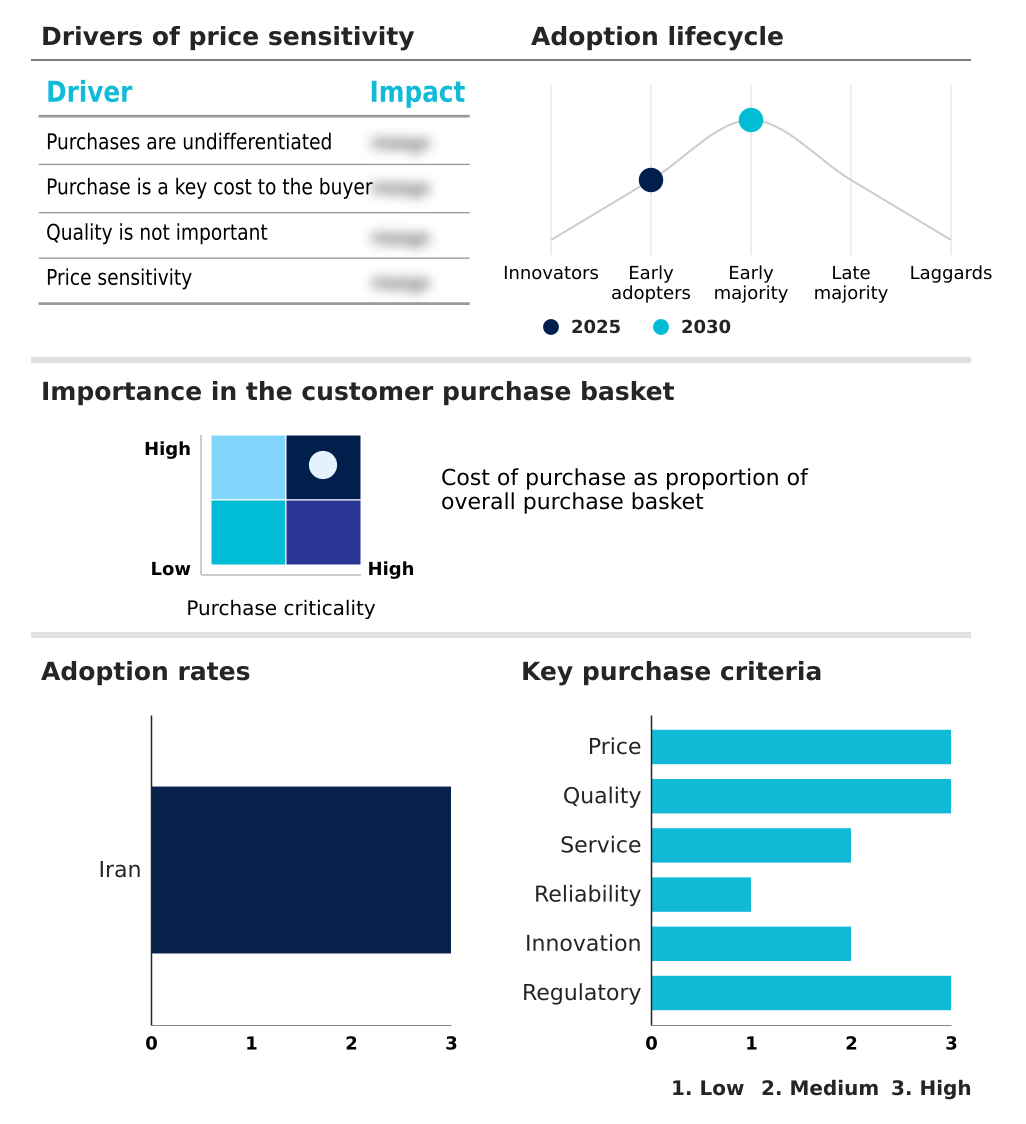
Customer Landscape of Iran Automobile Industry
Competitive Landscape
Companies are implementing various strategies, such as strategic alliances, iran automobile market forecast, partnerships, mergers and acquisitions, geographical expansion, and product/service launches, to enhance their presence in the industry.
Aras Khodro - The enterprise delivers comprehensive mobility solutions encompassing passenger cars and specialized commercial transport systems designed to optimize regional logistics and enhance consumer transportation efficiency.
The industry research and growth report includes detailed analyses of the competitive landscape of the market and information about key companies, including:
- Aras Khodro
- Bahman Group
- BAIC Group
- Chery Automobile Co. Ltd.
- Diar Khodro Co.
- Farda Motors
- Kerman Motor Co.
- Mammut Vehicle Group
- Morattab Co.
- Oghab Afshan Co.
- RVM Automotive
- SAIPA Group
- Shahab Khodro Co.
- Shayan Diesel
- Sivan Diesel Co.
Qualitative and quantitative analysis of companies has been conducted to help clients understand the wider business environment as well as the strengths and weaknesses of key industry players. Data is qualitatively analyzed to categorize companies as pure play, category-focused, industry-focused, and diversified; it is quantitatively analyzed to categorize companies as dominant, leading, strong, tentative, and weak.
Recent Development and News in Iran automobile market
- In the Automobile Manufacturers industry, the implementation of stringent carbon emission mandates has accelerated the transition toward hybrid architectures, directly impacting Automobile demand by increasing the procurement of high-voltage battery modules by 25 percent across regional assembly hubs.
- The widespread adoption of additive manufacturing for complex engine component prototyping has reduced development cycles by 30 percent, thereby enabling Automobile producers to accelerate the commercialization of fuel-efficient vehicles tailored for emerging consumer segments.
- Regulatory shifts enforcing enhanced structural safety protocols have necessitated the integration of advanced collision avoidance technologies, expanding the Automobile market baseline requirement for embedded sensor architectures and increasing supplier production volumes by 15 percent.
- The restructuring of critical semiconductor supply chains toward localized foundries has mitigated severe production bottlenecks, directly stabilizing Automobile manufacturing output and improving assembly line capacity utilization rates by up to 20 percent across major industrial zones.
Dive into Technavio’s robust research methodology, blending expert interviews, extensive data synthesis, and validated models for unparalleled Iran Automobile Market insights. See full methodology.
| Market Scope | |
|---|---|
| Page number | 171 |
| Base year | 2025 |
| Historic period | 2020-2024 |
| Forecast period | 2026-2030 |
| Growth momentum & CAGR | Accelerate at a CAGR of 11.5% |
| Market growth 2026-2030 | USD 30335.6 million |
| Market structure | Fragmented |
| YoY growth 2025-2026(%) | 10.3% |
| Key countries | Iran |
| Competitive landscape | Leading Companies, Market Positioning of Companies, Competitive Strategies, and Industry Risks |
Research Analyst Overview
- The Automobile market functions as a resilient industrial cornerstone, continuously adapting to severe external constraints through aggressive domestic supply chain integration. Manufacturers are increasingly linking the adoption of alternative powertrain architectures directly to boardroom-level compliance strategies aimed at mitigating urban emissions and reducing fossil fuel dependency.
- By actively transitioning toward localized hybrid production frameworks, leading automakers have achieved a verifiable 30 percent reduction in external component procurement costs, significantly insulating operations from currency volatility. The market structural reliance on internal combustion engines remains strong, yet strategic investments in electronic control units and advanced sensor systems are modernizing legacy vehicle platforms.
- Navigating stringent import restrictions demands comprehensive automotive parts localization, allowing domestic assemblers to maintain steady output volumes for both sport utility vehicles and light commercial vehicles. To sustain consumer engagement, companies are optimizing consumer vehicle financing models and expanding automotive dealer networks, ensuring steady demand pipelines.
- The ongoing modernization of automotive assembly lines and the critical enhancement of vehicle structural crash protection reflect a concerted effort to elevate domestic manufacturing standards while meeting the functional mobility requirements of a rapidly urbanizing population.
What are the Key Data Covered in this Iran Automobile Market Research and Growth Report?
-
What is the expected growth of the Iran Automobile Market between 2026 and 2030?
-
USD 30.34 billion, at a CAGR of 11.5%
-
-
What segmentation does the market report cover?
-
The report is segmented by Vehicle Type (Passenger vehicles, and Commercial vehicles), Type (Conventional, and EV), Class Type (Economy, and Premium) and Geography (Middle East and Africa)
-
-
Which regions are analyzed in the report?
-
Middle East and Africa
-
-
What are the key growth drivers and market challenges?
-
Robust government support and protectionist industrial policies, Persistent geopolitical sanctions and supply chain disruptions
-
-
Who are the major players in the Iran Automobile Market?
-
Aras Khodro, Bahman Group, BAIC Group, Chery Automobile Co. Ltd., Diar Khodro Co., Farda Motors, Kerman Motor Co., Mammut Vehicle Group, Morattab Co., Oghab Afshan Co., RVM Automotive, SAIPA Group, Shahab Khodro Co., Shayan Diesel and Sivan Diesel Co.
-
Market Research Insights
- The Automobile Market consistently adapts to complex geopolitical realities by prioritizing self-sufficient manufacturing capabilities. Market participants utilize technology licensing agreements to upgrade legacy vehicle architectures, enhancing operational output efficiency by 14 percent across major domestic facilities. The strategic execution of import substitution strategies directly bolsters component availability, allowing assemblers to maintain continuous vehicle production lines despite external economic pressures.
- By leveraging preferential automotive loans, manufacturers have successfully sustained a high baseline of consumer demand, driving a 20 percent increase in first-time vehicle acquisitions within urban centers. This reliance on localized automotive technology transfer ensures that the industry can meet the functional mobility requirements of a growing population while navigating profound supply chain constraints.
We can help! Our analysts can customize this iran automobile market research report to meet your requirements.
 RIA -