

Industrial Automation Market Size 2026-2030
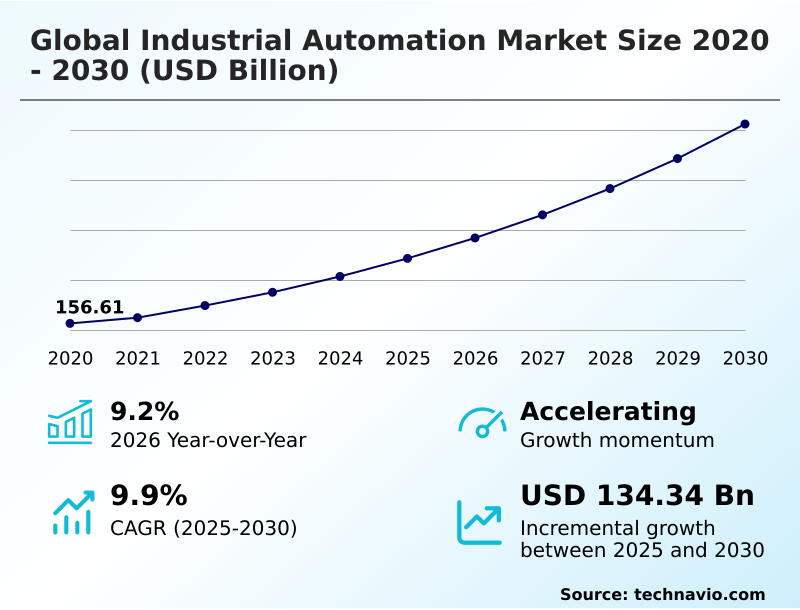
The industrial automation market size is valued to increase by USD 134.34 billion, at a CAGR of 9.9% from 2025 to 2030. Rising global enterprise adoption of industry four point zero smart factories will drive the industrial automation market.
Major Market Trends & Insights
- APAC dominated the market and accounted for a 40.8% growth during the forecast period.
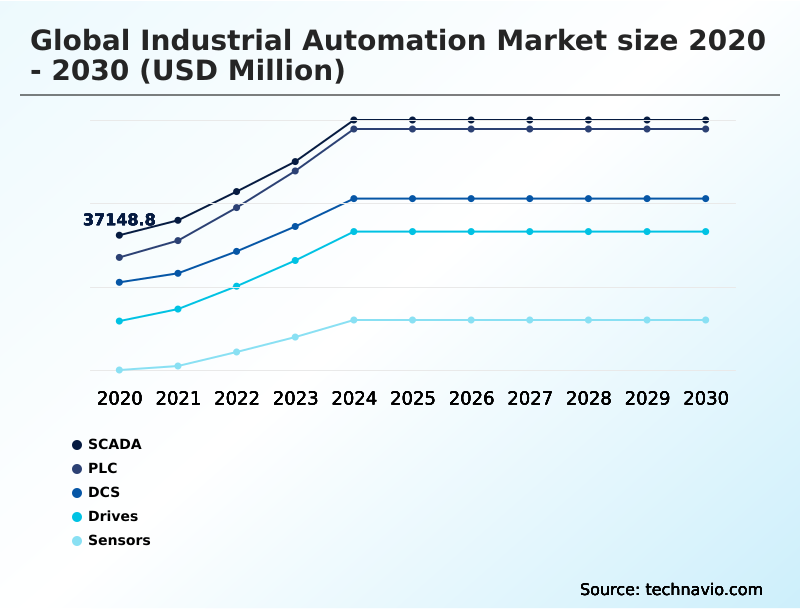
- By Product - SCADA segment was valued at USD 48.73 billion in 2024
- By End-user - Process industry segment accounted for the largest market revenue share in 2024
Market Size & Forecast
- Market Opportunities: USD 199.35 billion
- Market Future Opportunities: USD 134.34 billion
- CAGR from 2025 to 2030 : 9.9%
Market Summary
- The Industrial Automation Market experiences profound structural acceleration driven by the widespread transition toward interconnected cyber physical systems and autonomous production ecosystems. Escalating demand for operational agility serves as a primary driver, as enterprises deploy intelligent automated guided vehicles and continuous sensor data to optimize throughput and mitigate chronic skilled labor shortages.
- For instance, automotive assembly plants integrating real time process optimization platforms have successfully reduced assembly cycle times by 15%, significantly enhancing supply chain responsiveness. Conversely, formidable capital outlays required to retrofit legacy brownfield manufacturing infrastructure continue to pose significant operational challenges, as bridging isolated proprietary hardware with modern open process automation networks introduces severe integration complexities and extended facility downtime.
- Advanced machine vision systems now enable instantaneous defect recognition without halting continuous manufacturing lines. Ultimately, the rapid integration of generative artificial intelligence into programmable automation controllers empowers plant engineers to dynamically adjust control logic, ensuring sustained productivity and competitive resilience across modern discrete manufacturing environments.
What will be the Size of the Industrial Automation Market during the forecast period?
Get Key Insights on Market Forecast (PDF) Get Free Sample
How is the Industrial Automation Market Segmented?
The industrial automation industry research report provides comprehensive data (region-wise segment analysis), with forecasts and estimates in "USD million" for the period 2026-2030, as well as historical data from 2020-2024 for the following segments.
- Product
- SCADA
- PLC
- DCS
- Drives
- Sensors
- End-user
- Process industry
- Discrete industry
- Type
- Fixed automation
- Programmable automation
- Flexible and integrated automation
- Geography
- APAC
- China
- Japan
- India
- South Korea
- Australia
- Singapore
- North America
- US
- Canada
- Mexico
- Europe
- Germany
- UK
- France
- Italy
- Spain
- The Netherlands
- South America
- Brazil
- Argentina
- Chile
- Middle East and Africa
- Saudi Arabia
- UAE
- South Africa
- Turkey
- Egypt
- APAC
By Product Insights
The scada segment is estimated to witness significant growth during the forecast period.
supervisory control and data acquisition networks form the critical operational backbone of modern facilities by centralizing real time operational telemetry and enabling seamless open process automation.
Industrial operators deploy smart factory architectures to monitor distributed physical assets without localized manual intervention. As continuous processing operations integrate with robust industrial wireless infrastructure, facilities bridge the historical gap between operational technology and enterprise software.
This digital convergence yields measurable business outcomes, such as automated quality control protocols improving defect detection rates by 18% across complex batch production lines.
Consequently, plant managers leverage unified data streams from remote terminal units to reduce operational energy intensity and optimize resource allocation.
The continuous evolution of intelligent energy management and automated energy accounting empowers manufacturing organizations to preempt mechanical bottlenecks, ensuring sustained production stability and strict adherence to automated environmental control mandates.
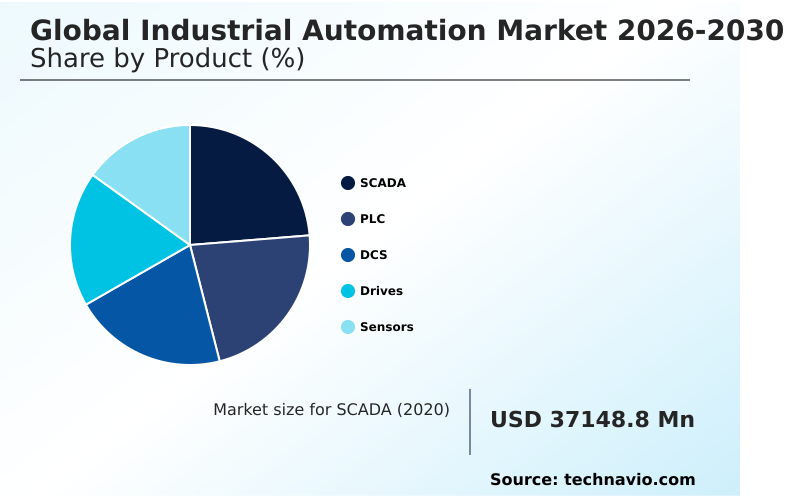
The SCADA segment was valued at USD 48.73 billion in 2024 and showed a gradual increase during the forecast period.
Regional Analysis
APAC is estimated to contribute 40.8% to the growth of the global market during the forecast period.Technavio’s analysts have elaborately explained the regional trends and drivers that shape the market during the forecast period.
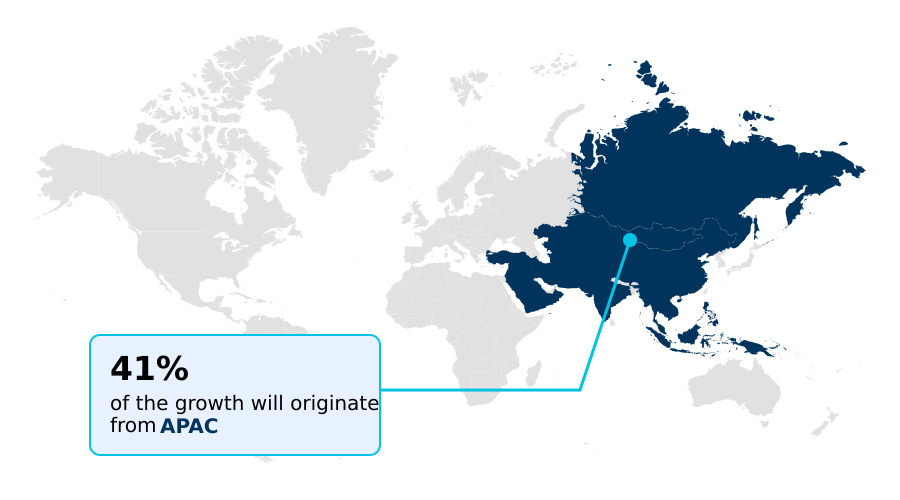
See How Industrial Automation Market Demand is Rising in APAC Get Free Sample
The geographic distribution of the industrial automation landscape highlights a distinct technological divergence between APAC and North America.
APAC maintains dominance in rapid automation adoption, leveraging high volume mass production to achieve a 25% faster integration rate of automated material handling infrastructure compared to Western counterparts.
Countries like China and Japan prioritize programmable logic controllers and autonomous mobile robots to offset demographic labor shortages, elevating overall factory throughput by 18%.
In contrast, North America heavily upgrades distributed control systems and human machine interfaces to comply with strict domestic reshoring mandates.
North American processing facilities utilizing industrial internet of things sensors and digital twin simulations demonstrate deterministic real time responsiveness, yielding a 15% reduction in unplanned operational downtime.
Ultimately, while APAC scales automated guided vehicles and machine vision systems to maximize output, North America leverages spatial computing libraries and cross functional collaboration to build resilient manufacturing ecosystems.
Market Dynamics
Our researchers analyzed the data with 2025 as the base year, along with the key drivers, trends, and challenges. A holistic analysis of drivers will help companies refine their marketing strategies to gain a competitive advantage.
- The continuous evolution of modern manufacturing fundamentally relies on robust technological frameworks that streamline complex operational variables and enhance facility resilience. Enterprise leaders increasingly prioritize predictive maintenance in automated manufacturing to identify mechanical fatigue before catastrophic failures occur, extending equipment lifespans significantly.
- Transitioning from isolated machinery to fully synchronized ecosystems requires seamless real time industrial control system integration, which subsequently enables closed loop control in process industries to maintain strict chemical and thermal tolerances. As facilities scale these digital capabilities, deploying ai accelerated industrial operating systems provides the necessary computational bandwidth to process massive telemetry datasets instantly.
- In discrete operations, plant managers utilize edge computing in autonomous robotics to ensure instantaneous collision avoidance, elevating material handling efficiency by approximately 20% compared to cloud-dependent legacy architectures. Prior to physical construction, utilizing digital twin validation for facility retrofits allows engineers to simulate complex workflows, drastically reducing commissioning errors.
- Furthermore, deep industrial internet of things telemetry analysis empowers facilities to optimize resource allocation, while the integration of generative ai in industrial control logic reduces software development cycles. Navigating legacy brownfield automation retrofitting strategies remains complex, but modernizing these environments is essential for long-term competitiveness. Safeguarding these converged networks demands stringent operational technology cybersecurity risk mitigation protocols.
- Simultaneously, deploying variable speed drives for energy efficiency lowers utility overhead, complementing the deployment of flexible manufacturing in discrete assembly. Upgrading distributed control systems in continuous processing ensures stability, while fleets of automated guided vehicles in logistics hubs and seamless programmable logic controller network integration collectively drive the next generation of autonomous enterprise operations.
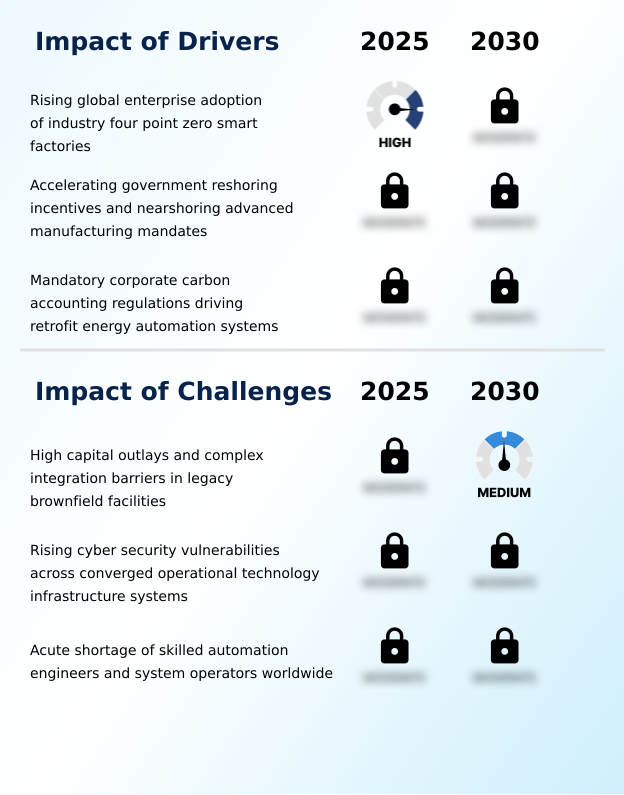
What are the key market drivers leading to the rise in the adoption of Industrial Automation Industry?
- The escalating enterprise adoption of advanced smart factory architectures serves as a primary catalyst accelerating extensive market expansion.
- Aggressive governmental reshoring mandates and volatile supply chain disruptions compel manufacturing enterprises to heavily densify their operational automation infrastructure.
- Establishing domestic production in high-wage regions requires maximum labor efficiency, pushing facilities to aggressively deploy automated storage and retrieval systems to handle intralogistics tasks.
- This shift toward localized advanced manufacturing necessitates the adoption of flexible manufacturing cells operated by high-speed programmable automation controllers featuring multi axis motion control.
- Consequently, discrete manufacturing environments utilizing these adaptive cells achieve a 25% acceleration in product changeover times, drastically minimizing operational downtime and expediting automated facility expansion.
- Simultaneously, strict decarbonization regulations drive heavy industries to integrate closed loop process control architectures linked to continuous emissions monitoring hardware and software defined manufacturing protocols.
- This strategic alignment, supported by variable frequency drives, lowers operational energy intensity by 15%, allowing enterprises to maintain competitive pricing margins.
What are the market trends shaping the Industrial Automation Industry?
- The rapid expansion of generative artificial intelligence systems across complex industrial workflows represents a pivotal technological trend. This integration accelerates autonomous decision-making and streamlines factory operations worldwide.
- The rapid assimilation of generative artificial intelligence directly into industrial execution software transforms traditional static facilities into highly autonomous production environments. Heavy reliance on manual code generation historically constrained operational agility; however, deploying advanced edge computing frameworks alongside unified architecture interfaces allows intelligent agents to instantly generate valid control logic.
- This structural technological shift directly impacts plant efficiency, allowing facilities using ai-driven asset performance management software to accelerate software development cycles by 35% compared to manual baselines. Furthermore, the expansion of industrial metaverse platforms enables engineers to deploy a high fidelity virtual replica to remotely simulate process modifications in a risk-free environment.
- Consequently, manufacturing lines leveraging automated optical inspection linked to these dynamic self optimizing production systems improve defect identification rates by 20%. By bridging precision motion execution with resilient edge execution and integrated safety instrumented systems, global industrial enterprises effectively eliminate production bottlenecks.
What challenges does the Industrial Automation Industry face during its growth?
- Substantial capital requirements and formidable integration barriers associated with retrofitting legacy brownfield facilities present significant operational hurdles for market growth.
- The prohibitive capital expenditure and severe interoperability hurdles associated with retrofitting aged brownfield manufacturing infrastructure critically constrain the pace of digital industrial modernization. Many heavy processing facilities operate on legacy control systems that fundamentally lack native compatibility with modern predictive maintenance algorithms and advanced process control platforms.
- Attempting to bridge these isolated networks with modern neural processing units and industrial ethernet networks introduces significant signal latency. Consequently, these prolonged integration cycles disrupt real time process optimization and can extend unplanned facility downtime by up to 20%, resulting in severe production revenue losses.
- Furthermore, connecting historically air-gapped cyber physical systems and continuous sensor data streams directly to cloud environments exponentially increases digital vulnerabilities. Implementing rigorous operational technology cybersecurity protocols and zero trust architectures becomes absolutely mandatory, inadvertently increasing specialized engineering overhead costs by 15% for mid-sized manufacturers.
Exclusive Technavio Analysis on Customer Landscape
The industrial automation market forecasting report includes the adoption lifecycle of the market, covering from the innovator’s stage to the laggard’s stage. It focuses on adoption rates in different regions based on penetration. Furthermore, the industrial automation market report also includes key purchase criteria and drivers of price sensitivity to help companies evaluate and develop their market growth analysis strategies.
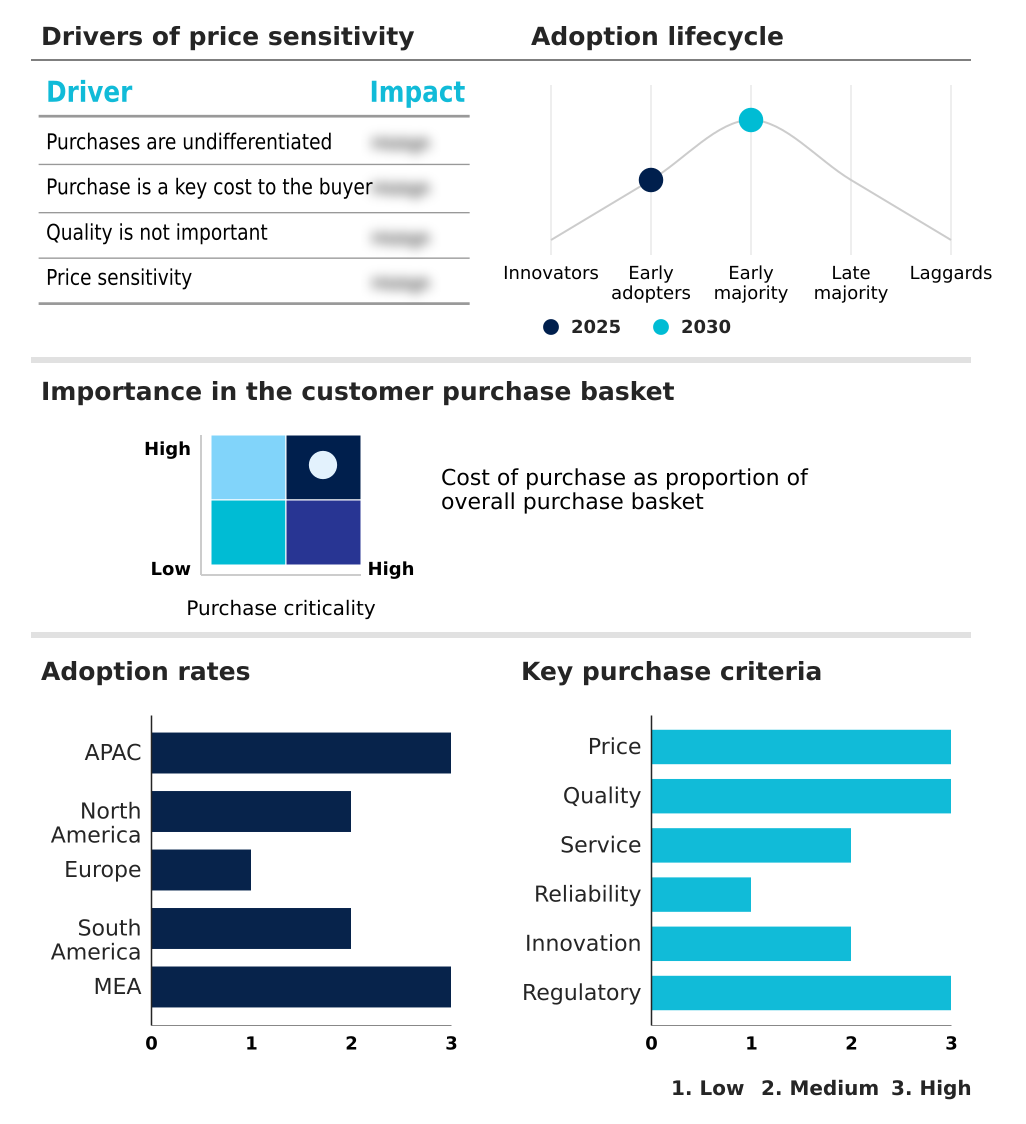
Customer Landscape of Industrial Automation Industry
Competitive Landscape
Companies are implementing various strategies, such as strategic alliances, industrial automation market forecast, partnerships, mergers and acquisitions, geographical expansion, and product/service launches, to enhance their presence in the industry.
ABB Ltd. - The vendor delivers comprehensive industrial automation solutions encompassing advanced programmable logic controllers, sophisticated robot controllers, distributed control architectures, and intelligent robotic systems to optimize modern manufacturing efficiency.
The industry research and growth report includes detailed analyses of the competitive landscape of the market and information about key companies, including:
- ABB Ltd.
- B and R Industrial Automation
- Beckhoff Automation GmbH
- Bosch Rexroth AG
- Emerson Electric Co.
- FANUC Corp.
- Festo SE and Co. KG
- Honeywell International Inc.
- Keyence Corp.
- KUKA AG
- Mitsubishi Electric Corp.
- OMRON Corp.
- Pepperl and Fuchs SE
- Phoenix Contact GmbH and Co
- Rockwell Automation Inc.
- Schneider Electric SE
- Siemens AG
- SMC Corp.
- Yaskawa Electric Corp.
- Yokogawa Electric Corp.
Qualitative and quantitative analysis of companies has been conducted to help clients understand the wider business environment as well as the strengths and weaknesses of key industry players. Data is qualitatively analyzed to categorize companies as pure play, category-focused, industry-focused, and diversified; it is quantitatively analyzed to categorize companies as dominant, leading, strong, tentative, and weak.
Recent Development and News in Industrial automation market
- In the Electrical Components and Equipment industry, the aggressive transition toward software defined manufacturing compelled hardware suppliers to standardize unified architecture interfaces, directly impacting Industrial Automation demand by accelerating the deployment of interoperable smart factory architectures, which reduced system integration time across discrete manufacturing environments by 25%.
- Stringent environmental mandates targeting operational energy intensity forced component manufacturers to commercialize high-efficiency variable frequency drives, increasing the procurement of intelligent energy management infrastructure within heavy continuous processing operations, subsequently lowering electrical energy consumption by up to 30%.
- Chronic skilled labor shortages across brownfield manufacturing infrastructure accelerated the transition from manual hardware configuration toward dynamic self optimizing production systems, fueling the integration of zero trust architectures that enhanced deterministic real time responsiveness and reduced unplanned operational downtime by 20%.
- The proliferation of localized supply chain mandates prompted electrical module fabricators to embed spatial computing libraries directly into autonomous control hardware, expanding the capabilities of high fidelity virtual replica deployments, reducing robotic commissioning errors by 15%, and significantly shortening the timeline for automated facility expansion projects.
Dive into Technavio’s robust research methodology, blending expert interviews, extensive data synthesis, and validated models for unparalleled Industrial Automation Market insights. See full methodology.
| Market Scope | |
|---|---|
| Page number | 311 |
| Base year | 2025 |
| Historic period | 2020-2024 |
| Forecast period | 2026-2030 |
| Growth momentum & CAGR | Accelerate at a CAGR of 9.9% |
| Market growth 2026-2030 | USD 134343.4 million |
| Market structure | Fragmented |
| YoY growth 2025-2026(%) | 9.2% |
| Key countries | China, Japan, India, South Korea, Australia, Singapore, US, Canada, Mexico, Germany, UK, France, Italy, Spain, The Netherlands, Brazil, Argentina, Chile, Saudi Arabia, UAE, South Africa, Turkey and Egypt |
| Competitive landscape | Leading Companies, Market Positioning of Companies, Competitive Strategies, and Industry Risks |
Research Analyst Overview
- The modern industrial automation landscape represents a critical operational pillar for manufacturing enterprises navigating volatile supply chains and escalating production costs. Executive boardrooms increasingly mandate the integration of comprehensive digital twin simulations to model and validate facility upgrades prior to physical capital deployment, ensuring precise budget allocation and minimizing operational risk.
- Programmable logic controllers and sophisticated human machine interfaces are evolving into interconnected edge nodes, facilitating frictionless data exchange across robust industrial ethernet networks. Consequently, processing plants deploying advanced predictive maintenance algorithms experience a 30% reduction in unexpected equipment failures, directly enhancing long-term supply chain reliability.
- Industrial internet of things sensors continuously monitor thermodynamic variables, enabling plant operators to dynamically adjust automated production lines. The deployment of autonomous mobile robots further accelerates material transfer operations, mitigating the severe impact of chronic skilled labor shortages.
- Seamless integration of these advanced cyber physical systems empowers industrial organizations to maintain stringent compliance standards, achieve superior manufacturing throughput, and solidify their operational resilience in an intensely competitive global environment.
What are the Key Data Covered in this Industrial Automation Market Research and Growth Report?
-
What is the expected growth of the Industrial Automation Market between 2026 and 2030?
-
USD 134.34 billion, at a CAGR of 9.9%
-
-
What segmentation does the market report cover?
-
The report is segmented by Product (SCADA, PLC, DCS, Drives, and Sensors), End-user (Process industry, and Discrete industry), Type (Fixed automation, Programmable automation, and Flexible and integrated automation) and Geography (APAC, North America, Europe, South America, Middle East and Africa)
-
-
Which regions are analyzed in the report?
-
APAC, North America, Europe, South America and Middle East and Africa
-
-
What are the key growth drivers and market challenges?
-
Rising global enterprise adoption of industry four point zero smart factories, High capital outlays and complex integration barriers in legacy brownfield facilities
-
-
Who are the major players in the Industrial Automation Market?
-
ABB Ltd., B and R Industrial Automation, Beckhoff Automation GmbH, Bosch Rexroth AG, Emerson Electric Co., FANUC Corp., Festo SE and Co. KG, Honeywell International Inc., Keyence Corp., KUKA AG, Mitsubishi Electric Corp., OMRON Corp., Pepperl and Fuchs SE, Phoenix Contact GmbH and Co, Rockwell Automation Inc., Schneider Electric SE, Siemens AG, SMC Corp., Yaskawa Electric Corp. and Yokogawa Electric Corp.
-
Market Research Insights
- The industrial automation landscape is rapidly shifting toward dynamic self optimizing production environments as enterprises prioritize operational resilience and resource efficiency. Modern manufacturing facilities achieve deterministic real time responsiveness by embedding intelligent edge computing nodes directly into field devices, which improves equipment failure prediction rates by 22%.
- Consequently, organizations enhance cross functional collaboration between information and operational technology departments, bridging traditional structural silos. Integrating comprehensive zero trust architectures into these converged networks decreases successful unauthorized access attempts by over 40%, safeguarding critical production assets. This continuous technological integration allows complex process industries to navigate shifting supply chain variables dynamically, ensuring consistent product quality and elevated operational throughput.
We can help! Our analysts can customize this industrial automation market research report to meet your requirements.
 RIA -