


Hydrogen Sulfide (H2S) Scavenger Market Size 2026-2030
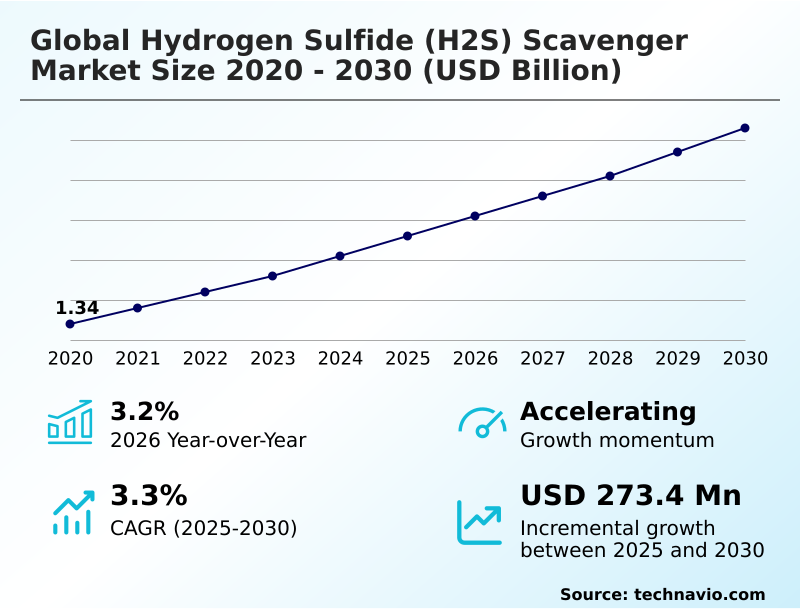
The hydrogen sulfide (h2s) scavenger market size is valued to increase by USD 273.4 million, at a CAGR of 3.3% from 2025 to 2030. Rising production of sour crude and natural gas in mature and unconventional reservoirs will drive the hydrogen sulfide (h2s) scavenger market.
Major Market Trends & Insights
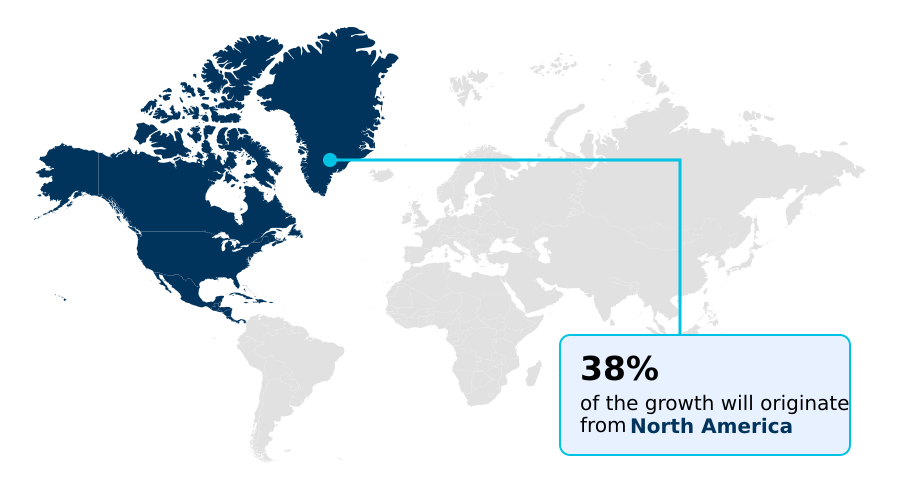
- North America dominated the market and accounted for a 37.7% growth during the forecast period.
- By End-user - Oil and gas segment was valued at USD 977.8 million in 2024
- By Type - Non-regenerative segment accounted for the largest market revenue share in 2024
Market Size & Forecast
- Market Opportunities: USD 485.8 million
- Market Future Opportunities: USD 273.4 million
- CAGR from 2025 to 2030 : 3.3%
Market Summary
- The Hydrogen Sulfide (H2S) Scavenger Market is undergoing a significant transformation, driven by the dual pressures of exploiting more challenging hydrocarbon reserves and adhering to stricter environmental regulations. As easily accessible sweet crude and gas sources diminish, operators globally are increasingly reliant on chemical solutions to manage the corrosive and toxic effects of H2S.
- This necessity fuels innovation in both regenerative and non-regenerative scavenger technologies. Key trends include the integration of digital monitoring and automated dosing systems, which optimize chemical usage and reduce operational costs.
- For instance, a midstream operator can leverage real-time sensor data to precisely inject scavengers, preventing pipeline blockages from solid byproducts and ensuring compliance with safety standards, thereby enhancing asset integrity. The market is also expanding beyond its traditional oil and gas stronghold into emerging sectors like biogas upgrading and wastewater treatment, where odor and corrosion control are paramount.
- However, challenges related to the disposal of spent chemical byproducts and the technical limitations of certain formulations in extreme conditions persist, pushing the industry toward developing more sustainable and efficient solutions.
What will be the Size of the Hydrogen Sulfide (H2S) Scavenger Market during the forecast period?
Get Key Insights on Market Forecast (PDF) Request Free Sample
How is the Hydrogen Sulfide (H2S) Scavenger Market Segmented?
The hydrogen sulfide (h2s) scavenger industry research report provides comprehensive data (region-wise segment analysis), with forecasts and estimates in "USD million" for the period 2026-2030, as well as historical data from 2020-2024 for the following segments.
- End-user
- Oil and gas
- Water and wastewater treatment
- Others
- Type
- Non-regenerative
- Regenerative
- Application
- Onshore
- Offshore
- Geography
- North America
- US
- Canada
- Mexico
- APAC
- China
- Japan
- India
- Europe
- Germany
- UK
- France
- Middle East and Africa
- Saudi Arabia
- UAE
- South Africa
- South America
- Brazil
- Argentina
- Colombia
- Rest of World (ROW)
- North America
By End-user Insights
The oil and gas segment is estimated to witness significant growth during the forecast period.
The oil and gas sector is the principal end-user, with demand driven by the need to exploit sour reserves. Effective pipeline integrity management relies on sophisticated corrosion mitigation chemicals to counter the effects of hydrogen sulfide.
In unconventional shale plays, operators are implementing automated dosing systems and non-regenerative scavengers to manage fluctuating sulfide levels.
A key development is the use of AI-powered platforms with virtual flow meters to reduce chemical over-treatment by nearly 20%, enhancing production chemical optimization.
This digital approach to sour gas treatment prevents equipment damage and ensures operational continuity, particularly in high-pressure high-temperature applications, and aids in the overall total cost of ownership reduction.
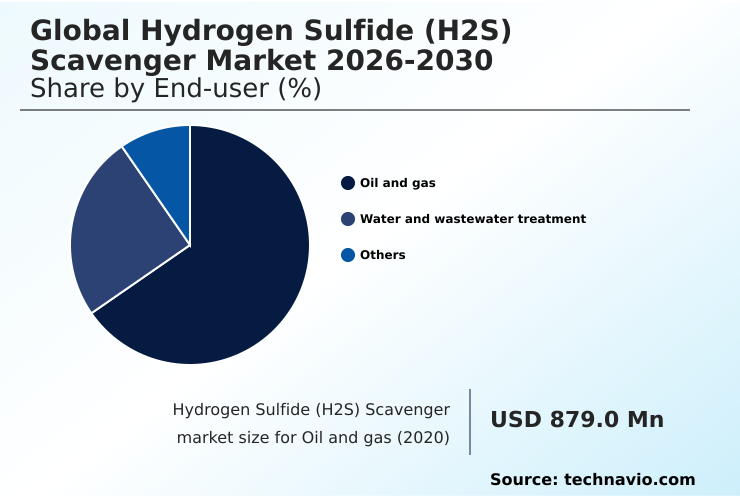
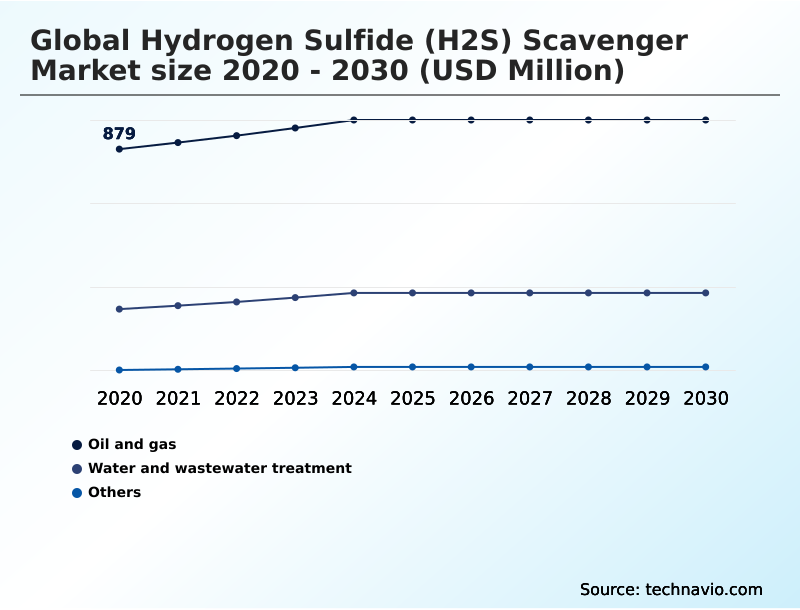
The Oil and gas segment was valued at USD 977.8 million in 2024 and showed a gradual increase during the forecast period.
Regional Analysis
North America is estimated to contribute 37.7% to the growth of the global market during the forecast period.Technavio’s analysts have elaborately explained the regional trends and drivers that shape the market during the forecast period.
See How Hydrogen Sulfide (H2S) Scavenger Market Demand is Rising in North America Request Free Sample
The geographic landscape is characterized by distinct regional dynamics. North America accounts for the largest market share, approximately 37.75% of the incremental growth, driven by its vast unconventional shale resources that require robust biogas upgrading and wastewater treatment chemicals.
The APAC region is the fastest-growing, contributing 32.52%, fueled by massive investments in natural gas infrastructure and municipal projects demanding effective odor control chemicals. The Middle East and Africa remain critical due to large-scale sour gas treatment operations.
In Europe, the focus is on green chemistry principles and sustainability, leading the adoption of advanced solutions for renewable natural gas (rng) treatment and adherence to strict regulations, reflecting a global need for specialized geothermal steam treatment technologies.
Market Dynamics
Our researchers analyzed the data with 2025 as the base year, along with the key drivers, trends, and challenges. A holistic analysis of drivers will help companies refine their marketing strategies to gain a competitive advantage.
- Strategic decision-making in the Hydrogen Sulfide (H2S) Scavenger Market is increasingly nuanced, focusing on specialized applications and total lifecycle costs. The selection of an h2s scavenger for shale gas operations, for instance, differs significantly from choosing a non-triazine scavenger for offshore platforms, where subsea integrity is paramount.
- A key consideration is the cost of spent scavenger disposal, which can be substantial and influences the choice between regenerative vs non-regenerative scavengers. Companies are now automating h2s chemical injection systems to mitigate these expenses and avoid performance issues.
- The growing market for h2s removal in biogas upgrading is driving demand for chemistries that are effective even in high-CO2 gas streams. Success hinges on preventing dithiazine solids formation and developing eco-friendly h2s scavenger formulations. New frontiers include h2s treatment in geothermal plants and advanced odor control in wastewater networks.
- Ultimately, the choice of specialty chemicals for sour gas must balance immediate efficacy with long-term operational impacts, such as improving scavenger reaction kinetics while reducing scavenger over-injection risks.
- Optimized scavenger selection for sour crude is no longer just a chemical decision but a strategic one that directly impacts operational budgets, where advanced systems can lower total treatment costs by over 15% compared to traditional, unmonitored approaches.
- This is crucial for h2s management in lng facilities and ensuring corrosion prevention in refining units, while meeting regulatory compliance for h2s scavengers and managing the impact of h2s on pipeline infrastructure.
What are the key market drivers leading to the rise in the adoption of Hydrogen Sulfide (H2S) Scavenger Industry?
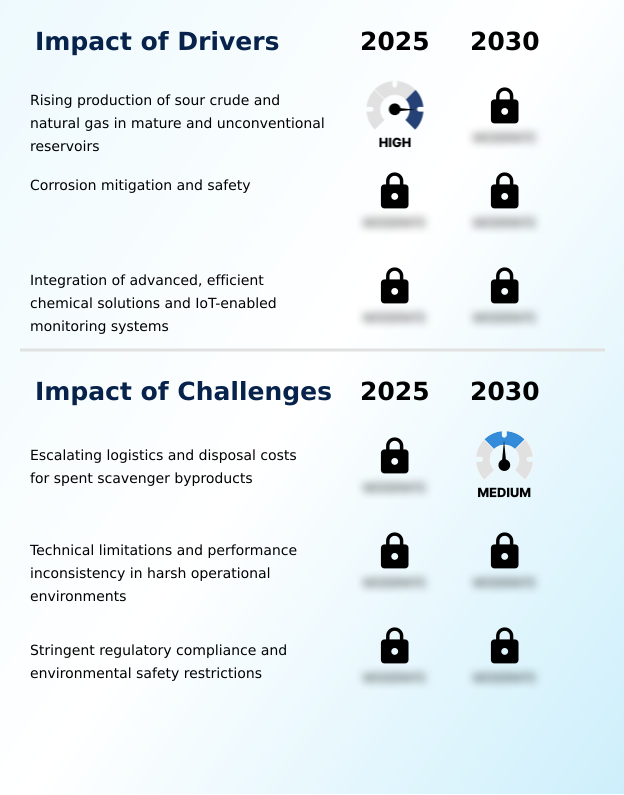
- The market is primarily driven by the rising production of sour crude and natural gas, which necessitates advanced chemical solutions for corrosion mitigation and safety compliance.
- The increasing exploitation of sour gas reserves is a primary driver, compelling operators to adopt advanced solutions for infrastructure preservation and workforce protection standards.
- The need for effective industrial gas purification is critical in preventing sulfide stress cracking and ensuring the safety of cryogenic heat exchangers in liquefied natural gas (lng) purification.
- Implementing proactive corrosion mitigation chemicals has been shown to reduce unscheduled maintenance shutdowns by up to 25%.
- Furthermore, technological convergence is enabling the use of cloud-based analytics to optimize industrial sulfur management across vast networks, with some operators seeing a 30% reduction in performance loss in harsh environments by using regenerative systems and adhering to updated occupational hygiene guidelines.
What are the market trends shaping the Hydrogen Sulfide (H2S) Scavenger Industry?
- The market is witnessing a significant shift toward the integration of AI-driven digital chemical management. This includes the adoption of automated dosing systems to optimize operational precision.
- A prominent market trend is the move toward digital chemical management, where real-time h2s monitoring informs sophisticated chemical injection systems. This transition helps mitigate issues tied to triazine-based scavengers, such as the formation of unwanted solids. Advanced liquid redox catalysts are gaining traction in the rapidly expanding renewable natural gas (rng) treatment sector, aligning with circular economy objectives.
- For instance, some hybrid systems achieve the ultra-low sulfur levels needed for gas-to-grid injection, a process where efficiency has improved by over 15%. This focus on high-performance non-triazine formulations and low-toxicity formulations reflects a broader industry push for greater sustainability and asset integrity management.
What challenges does the Hydrogen Sulfide (H2S) Scavenger Industry face during its growth?
- A key market challenge stems from the escalating logistics and disposal costs associated with spent scavenger byproducts, which are increasingly classified as hazardous waste.
- A significant challenge is the rising cost of spent scavenger disposal, as byproducts are re-classified as hazardous waste, with disposal fees increasing substantially. Logistical complexities are compounded by the technical limitations of conventional non-regenerative scavengers in high-pressure high-temperature applications, where field audits show performance losses of around 30%.
- The risk of over-dosing can lead to the formation of dithiazine solids, compromising subsea flowline integrity. Stricter environmental safety standards and the need for downstream processing compatibility are forcing a shift towards biodegradable scavengers and advanced chemistries, even though compliance costs can account for nearly 25% of the total challenge profile for some firms.
Exclusive Technavio Analysis on Customer Landscape
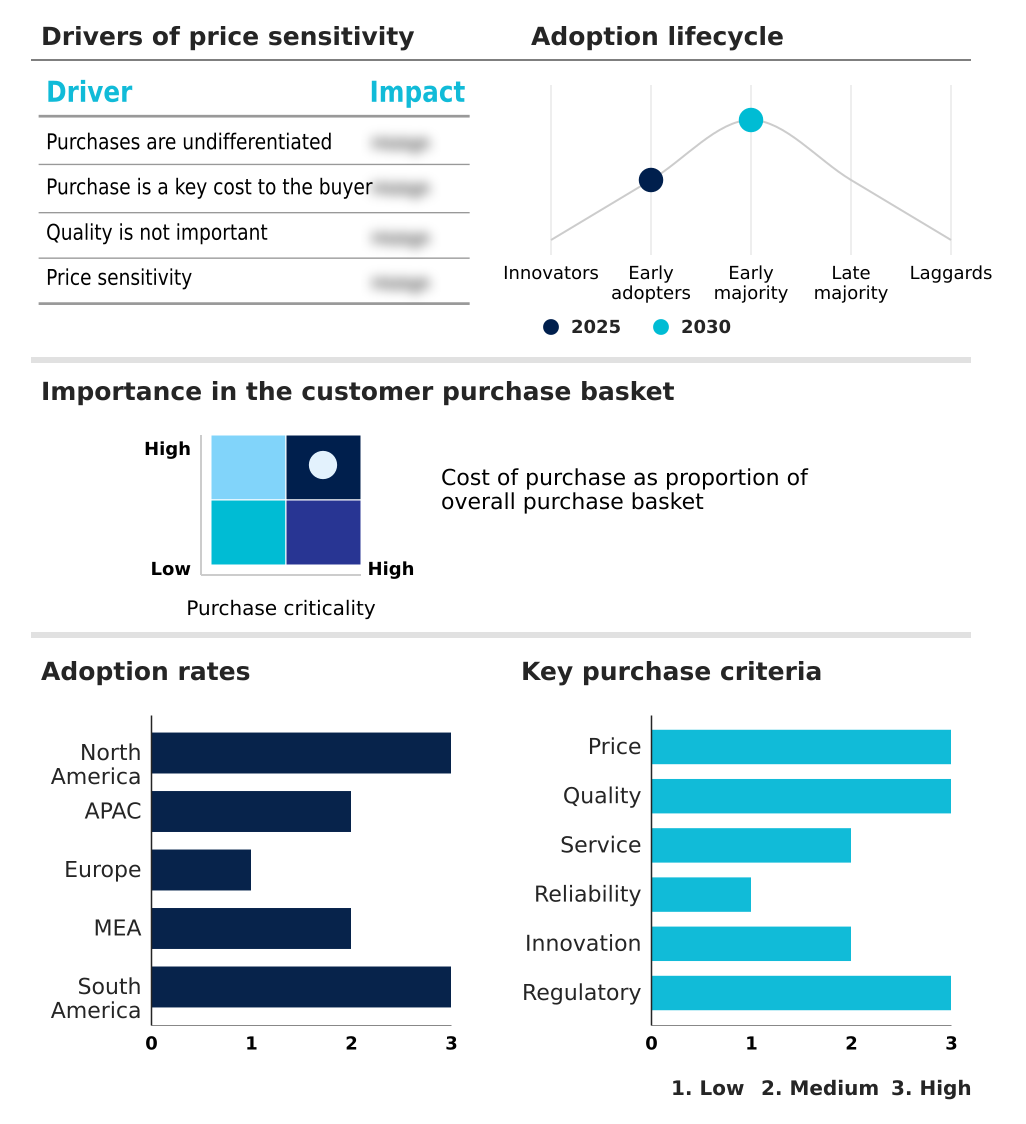
The hydrogen sulfide (h2s) scavenger market forecasting report includes the adoption lifecycle of the market, covering from the innovator’s stage to the laggard’s stage. It focuses on adoption rates in different regions based on penetration. Furthermore, the hydrogen sulfide (h2s) scavenger market report also includes key purchase criteria and drivers of price sensitivity to help companies evaluate and develop their market growth analysis strategies.
Customer Landscape of Hydrogen Sulfide (H2S) Scavenger Industry
Competitive Landscape
Companies are implementing various strategies, such as strategic alliances, hydrogen sulfide (h2s) scavenger market forecast, partnerships, mergers and acquisitions, geographical expansion, and product/service launches, to enhance their presence in the industry.
Arkema Group - Offers specialized hydrogen sulfide (H2S) scavenger chemistries, including triazine-based solutions, designed for natural gas processing and refinery desulfurization applications.
The industry research and growth report includes detailed analyses of the competitive landscape of the market and information about key companies, including:
- Arkema Group
- Baker Hughes Co.
- BASF SE
- Cestoil Chemical Inc.
- Chevron Phillips Chemical Co.
- Clariant International Ltd.
- Dow Chemical Co.
- Ecolab Inc.
- Halliburton Co.
- Hexion Inc.
- Imperial Chemicals Pvt. Ltd.
- Kemira Oyj
- Merichem Co.
- Newpoint Gas LLC
- Nouryon Chemicals Holding B.V.
- Schlumberger Ltd.
- SNF Group
- Solvay SA
- The Lubrizol Corp.
- Thermax Ltd.
- Venus Ethoxyethers Pvt. Ltd.
- Vink Chemicals GmbH and Co. KG
Qualitative and quantitative analysis of companies has been conducted to help clients understand the wider business environment as well as the strengths and weaknesses of key industry players. Data is qualitatively analyzed to categorize companies as pure play, category-focused, industry-focused, and diversified; it is quantitatively analyzed to categorize companies as dominant, leading, strong, tentative, and weak.
Recent Development and News in Hydrogen sulfide (h2s) scavenger market
- In June 2025, Baker Hughes Co. advanced the market by introducing AI-powered features into its Leucipa automated field production platform, enabling autonomous, real-time dosing of H2S scavengers.
- In March 2025, operators in North Africa commenced operations at the Chadar field, emphasizing the global trend of managing elevated sulfur levels at the point of extraction to prevent corrosion.
- In January 2026, ADNOC Sour Gas implemented enhanced real-time H2S safety and detection systems across its facilities, which handle over one billion cubic feet of sour gas daily, highlighting a move toward integrated safety and chemical scavenging.
- In January 2026, the Namami Gange Mission Phase II in India marked a milestone with the commissioning of major sewerage infrastructure projects, driving demand for H2S scavengers for odor control and asset protection.
Dive into Technavio’s robust research methodology, blending expert interviews, extensive data synthesis, and validated models for unparalleled Hydrogen Sulfide (H2S) Scavenger Market insights. See full methodology.
| Market Scope | |
|---|---|
| Page number | 300 |
| Base year | 2025 |
| Historic period | 2020-2024 |
| Forecast period | 2026-2030 |
| Growth momentum & CAGR | Accelerate at a CAGR of 3.3% |
| Market growth 2026-2030 | USD 273.4 million |
| Market structure | Fragmented |
| YoY growth 2025-2026(%) | 3.2% |
| Key countries | US, Canada, Mexico, China, Japan, India, South Korea, Australia, Indonesia, Germany, UK, France, Italy, Spain, The Netherlands, Saudi Arabia, UAE, South Africa, Nigeria, Egypt, Brazil, Argentina and Colombia |
| Competitive landscape | Leading Companies, Market Positioning of Companies, Competitive Strategies, and Industry Risks |
Research Analyst Overview
- The Hydrogen Sulfide (H2S) Scavenger Market is defined by a technological pivot towards precision and sustainability, driven by operational necessities in upstream and midstream sectors. The industry is moving beyond conventional triazine-based scavengers to adopt advanced non-triazine formulations and regenerative systems, especially for large-scale sour gas treatment and crude oil desulfurization.
- This shift addresses the persistent issue of dithiazine solids formation, which compromises infrastructure. A critical development is the deployment of automated dosing systems integrated with real-time h2s monitoring, a strategy proven to reduce chemical over-treatment by nearly 20%. This directly impacts boardroom decisions on operational expenditure and asset lifecycle management.
- Demand is also expanding into new verticals like biogas upgrading, geothermal steam treatment, and wastewater treatment chemicals, which require specialized odor control chemicals. Formulators are focused on complying with stringent environmental safety standards, leading to innovation in solid-bed media and liquid redox catalysts.
- This evolution ensures effective pipeline integrity management, hydrogen-induced cracking prevention, and efficient industrial gas purification, all while managing the complexities of spent scavenger disposal and the need for effective chemical injection systems in high-pressure high-temperature applications.
What are the Key Data Covered in this Hydrogen Sulfide (H2S) Scavenger Market Research and Growth Report?
-
What is the expected growth of the Hydrogen Sulfide (H2S) Scavenger Market between 2026 and 2030?
-
USD 273.4 million, at a CAGR of 3.3%
-
-
What segmentation does the market report cover?
-
The report is segmented by End-user (Oil and gas, Water and wastewater treatment, and Others), Type (Non-regenerative, and Regenerative), Application (Onshore, and Offshore) and Geography (North America, APAC, Europe, Middle East and Africa, South America)
-
-
Which regions are analyzed in the report?
-
North America, APAC, Europe, Middle East and Africa and South America
-
-
What are the key growth drivers and market challenges?
-
Rising production of sour crude and natural gas in mature and unconventional reservoirs, Escalating logistics and disposal costs for spent scavenger byproducts
-
-
Who are the major players in the Hydrogen Sulfide (H2S) Scavenger Market?
-
Arkema Group, Baker Hughes Co., BASF SE, Cestoil Chemical Inc., Chevron Phillips Chemical Co., Clariant International Ltd., Dow Chemical Co., Ecolab Inc., Halliburton Co., Hexion Inc., Imperial Chemicals Pvt. Ltd., Kemira Oyj, Merichem Co., Newpoint Gas LLC, Nouryon Chemicals Holding B.V., Schlumberger Ltd., SNF Group, Solvay SA, The Lubrizol Corp., Thermax Ltd., Venus Ethoxyethers Pvt. Ltd. and Vink Chemicals GmbH and Co. KG
-
Market Research Insights
- The market's dynamics are shaped by a strategic pivot toward efficiency and sustainability, driven by the need for enhanced asset integrity management. The integration of digital chemical management platforms has led to significant operational gains, with some pilot programs demonstrating a reduction in chemical overtreatment by nearly 20%.
- Concurrently, tightening regulations for refinery emission control are accelerating the adoption of low-toxicity formulations and biodegradable scavengers. While green chemistry principles guide new product development, performance inconsistencies remain a hurdle, as field audits reveal that approximately 30% of conventional scavenging programs experience performance loss in extreme conditions.
- This creates a complex landscape where companies must balance cost, compliance, and reliability to achieve total cost of ownership reduction.
We can help! Our analysts can customize this hydrogen sulfide (h2s) scavenger market research report to meet your requirements.
 RIA -
RIA -