


US Hospital Supplies Market Size 2026-2030
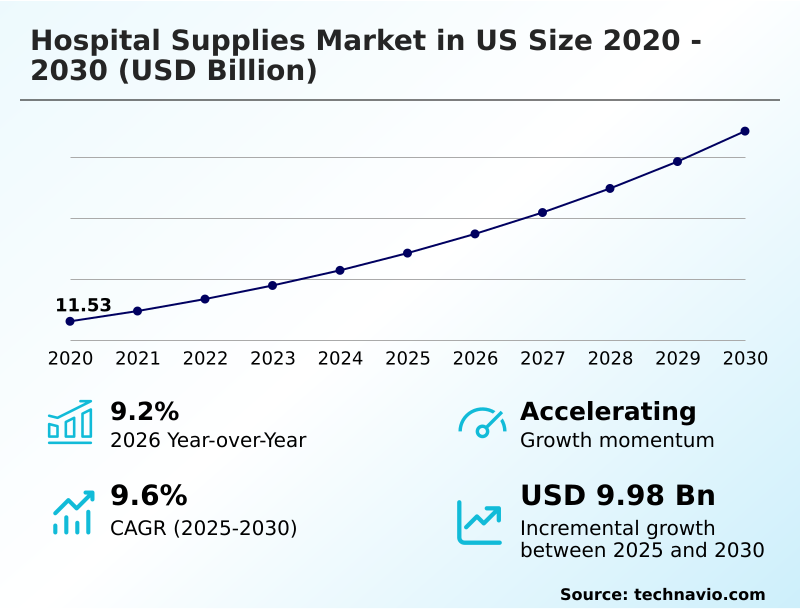
The us hospital supplies market size is valued to increase by USD 9.98 billion, at a CAGR of 9.6% from 2025 to 2030. Growing healthcare expenditure across acute and non-acute care settings will drive the us hospital supplies market.
Major Market Trends & Insights
- By Product - Consumables segment was valued at USD 9.24 billion in 2024
- By End-user - Hospitals segment accounted for the largest market revenue share in 2024
Market Size & Forecast
- Market Opportunities: USD 15.55 billion
- Market Future Opportunities: USD 9.98 billion
- CAGR from 2025 to 2030 : 9.6%
Market Summary
- The Hospital Supplies Market in US experiences robust demand fueled by expanding patient volumes and the continual requirement for essential clinical materials. Healthcare expenditure allocation directed toward acute care utilization serves as a primary driver, compelling facilities to secure steady volumes of medical surgical consumables.
- For example, a major regional hospital network implementing automated inventory tracking achieved a 22% reduction in stockouts compared to traditional manual counting methods, optimizing clinical workflow optimization and minimizing procedural delays. Conversely, stringent regulatory compliance standards regarding medical product traceability act as a substantial challenge, imposing heavy administrative burdens and necessitating constant infrastructure upgrades.
- Facilities must carefully navigate unique device identification mandates to maintain uninterrupted operations. As chronic disease management demands intensify, ambulatory care centers increasingly require sophisticated diagnostic imaging systems and reliable infection prevention materials. Ultimately, organizations that prioritize supply chain resilience and strategic inventory stockpiles demonstrate superior operational continuity, ensuring consistent care delivery despite broader logistical complexities.
What will be the Size of the US Hospital Supplies Market during the forecast period?
Get Key Insights on Market Forecast (PDF) Get Free Sample
How is the US Hospital Supplies Market Segmented?
The us hospital supplies industry research report provides comprehensive data (region-wise segment analysis), with forecasts and estimates in "USD million" for the period 2026-2030, as well as historical data from 2020-2024 for the following segments.
- Product
- Consumables
- Devices
- End-user
- Hospitals
- Clinics
- Others
- Distribution channel
- Offline
- Online
- Geography
- North America
- US
- North America
By Product Insights
The consumables segment is estimated to witness significant growth during the forecast period.
Consumable medical products dictate a continuous replenishment cycle fundamental to operational continuity across clinical settings. Facilities rely on items such as sterile flush syringes, wound management materials, and advanced wound bioactives to execute daily patient care protocols safely.
As care complexity rises, group purchasing organizations increasingly leverage enterprise resource planning systems to optimize procurement efficiency. Implementing these centralized frameworks has reduced inventory holding costs by 14% across major hospital networks.
Furthermore, maintaining strategic inventory stockpiles ensures readiness during supply disruptions, allowing providers to align with value-based care initiatives seamlessly. Compared to durable equipment like anesthesia delivery systems or respiratory support ventilators, single-use consumables require high-frequency purchasing.
By utilizing predictive analytics, institutions have achieved an 18% improvement in supply availability, directly supporting uninterrupted clinical operations.
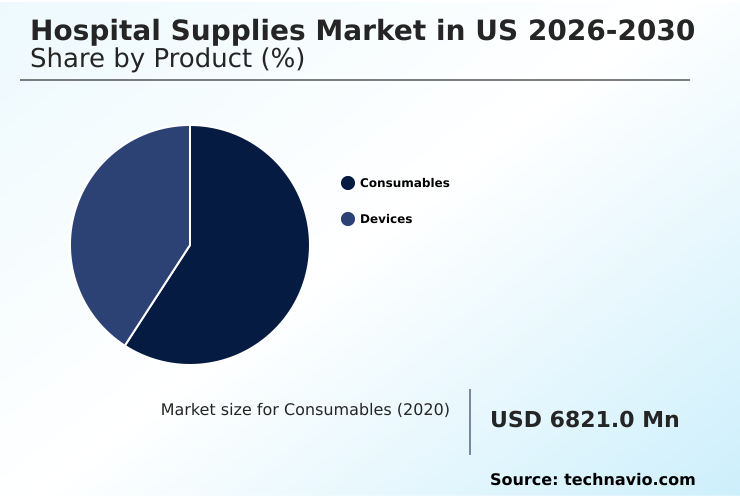
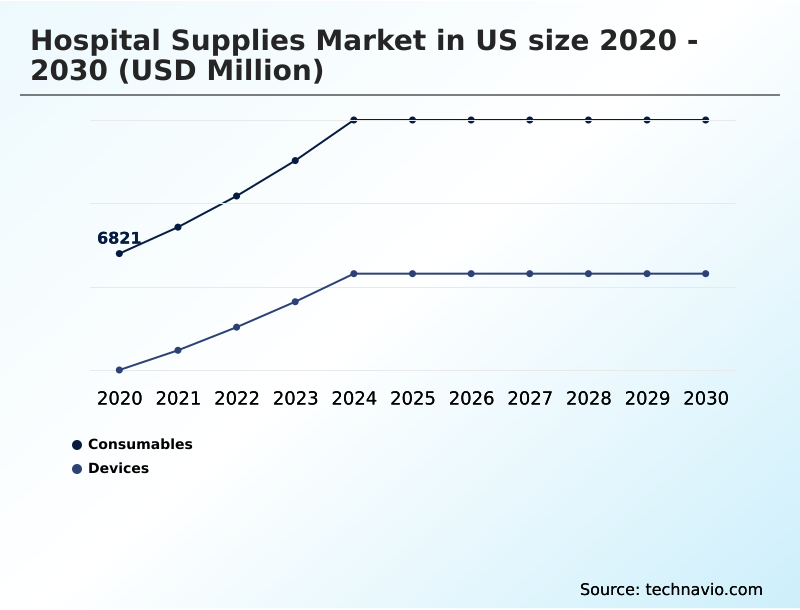
The Consumables segment was valued at USD 9.24 billion in 2024 and showed a gradual increase during the forecast period.
Market Dynamics
Our researchers analyzed the data with 2025 as the base year, along with the key drivers, trends, and challenges. A holistic analysis of drivers will help companies refine their marketing strategies to gain a competitive advantage.
- Managing the procurement lifecycle requires sophisticated coordination, particularly as healthcare organizations transition toward automated medical inventory management software and AI optimized clinical supply procurement. This digital pivot enables facilities to maintain precise control over chronic illness continuous care supplies, ensuring uninterrupted therapeutic interventions.
- In surgical departments, the adoption of minimally invasive surgical procedural equipment continues to rise, demanding highly specialized sterilization and tracking protocols, while expanding the need for ambulatory surgical center operational supplies. To guarantee compliance and patient safety, institutions actively deploy regulatory compliant medical device traceability frameworks.
- By transitioning to cloud connected hospital distribution networks, regional health systems have observed a 22% improvement in supply transfer efficiency across facilities compared to legacy fragmented logistics systems. Furthermore, expanding value based outpatient diagnostic equipment installations requires consistent replenishment of associated testing consumables, pulling demand outside traditional inpatient walls.
- To safeguard against logistical volatility, supply chain directors are prioritizing strategic medical supply stockpile management, buffering their organizations against sudden material shortages. The efficient execution of hospital surgical instrument tray distribution remains critical for maintaining operating room throughput, directly impacting procedural revenue.
- Concurrently, the rise of direct to patient home healthcare supplies introduces decentralized delivery complexities, while advanced diagnostic imaging technology deployment necessitates specialized protective and operational accessories. Ultimately, integrating predictive clinical inventory forecasting models strengthens integrated healthcare supply chain resilience, reducing waste and ensuring that inpatient infection control disposable products are perpetually available to safeguard both patients and clinical staff.
What are the key market drivers leading to the rise in the adoption of US Hospital Supplies Industry?
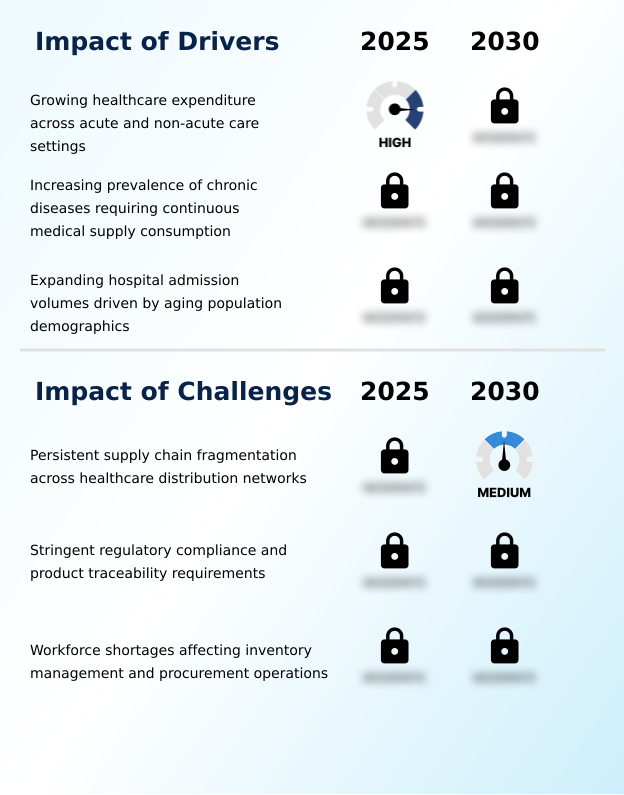
- Growing healthcare expenditure across acute and non-acute care settings functions as a primary catalyst for increased medical supply procurement and operational expansion.
- Expanding acute care utilization and an aging demographic footprint are directly accelerating the consumption of medical surgical consumables and advanced wound bioactives.
- As chronic disease management demands intensify, healthcare facilities face an uncompromising need to maintain continuous availability of patient monitoring devices and clinical diagnostic assays.
- This surging patient volume compels institutions to expand their operational capacity, directly elevating procurement volumes across all care settings.
- By standardizing the procurement of intravenous infusion equipment and vascular access catheters, major integrated delivery networks have successfully lowered per-unit supply costs by 14% and reduced procedural setup times by 11%.
- These structured purchasing strategies enable hospitals to accommodate higher surgical procedural volume while maintaining strict budgetary control and ensuring uninterrupted clinical service delivery.
What are the market trends shaping the US Hospital Supplies Industry?
- Advancing artificial intelligence-enabled procurement and inventory optimization platforms represents an emerging structural shift. This technological integration enables healthcare facilities to transition from reactive purchasing toward predictive operational frameworks.
- The rapid integration of predictive procurement analytics is fundamentally transforming how healthcare networks manage continuous replenishment cycles. Driven by the necessity to eliminate stockouts during critical procedures, facilities are adopting cloud-based supply platforms to connect fragmented departments. This technological shift impacts operations by allowing supply chain managers to monitor automated inventory tracking metrics in real time.
- Consequently, hospitals deploying these advanced systems have reduced emergency freight expenses by 28% and improved inventory turnover ratios by 15% compared to non-integrated peers. The implementation of radio frequency identification tags on high-value surgical energy devices and orthopedic surgical implants further ensures precise medical product traceability.
- This transition not only secures clinical workflow optimization but also guarantees that essential materials are available precisely when clinical personnel require them, minimizing costly procedural delays.
What challenges does the US Hospital Supplies Industry face during its growth?
- Persistent supply chain fragmentation across healthcare distribution networks remains a substantial structural barrier that limits inventory visibility and complicates procurement continuity.
- Persistent supply chain fragmentation and complex regulatory compliance standards create substantial operational hurdles for healthcare procurement leaders. Managing the continuous availability of infection prevention materials and disposable protective apparel is frequently disrupted by disconnected logistics networks and supplier bottlenecks.
- Because facilities must adhere to strict unique device identification mandates, they are forced to invest heavily in tracking infrastructure, straining operational budgets. Disjointed distribution systems across consolidated service centers often lead to localized shortages, reducing overall supply availability by up to 18% during peak demand periods.
- Furthermore, ensuring seamless medical product traceability for critical items like anesthesia delivery systems increases administrative workloads by 22%, forcing clinical staff to redirect valuable time away from patient care toward intensive inventory reconciliation.
Exclusive Technavio Analysis on Customer Landscape
The us hospital supplies market forecasting report includes the adoption lifecycle of the market, covering from the innovator’s stage to the laggard’s stage. It focuses on adoption rates in different regions based on penetration. Furthermore, the us hospital supplies market report also includes key purchase criteria and drivers of price sensitivity to help companies evaluate and develop their market growth analysis strategies.
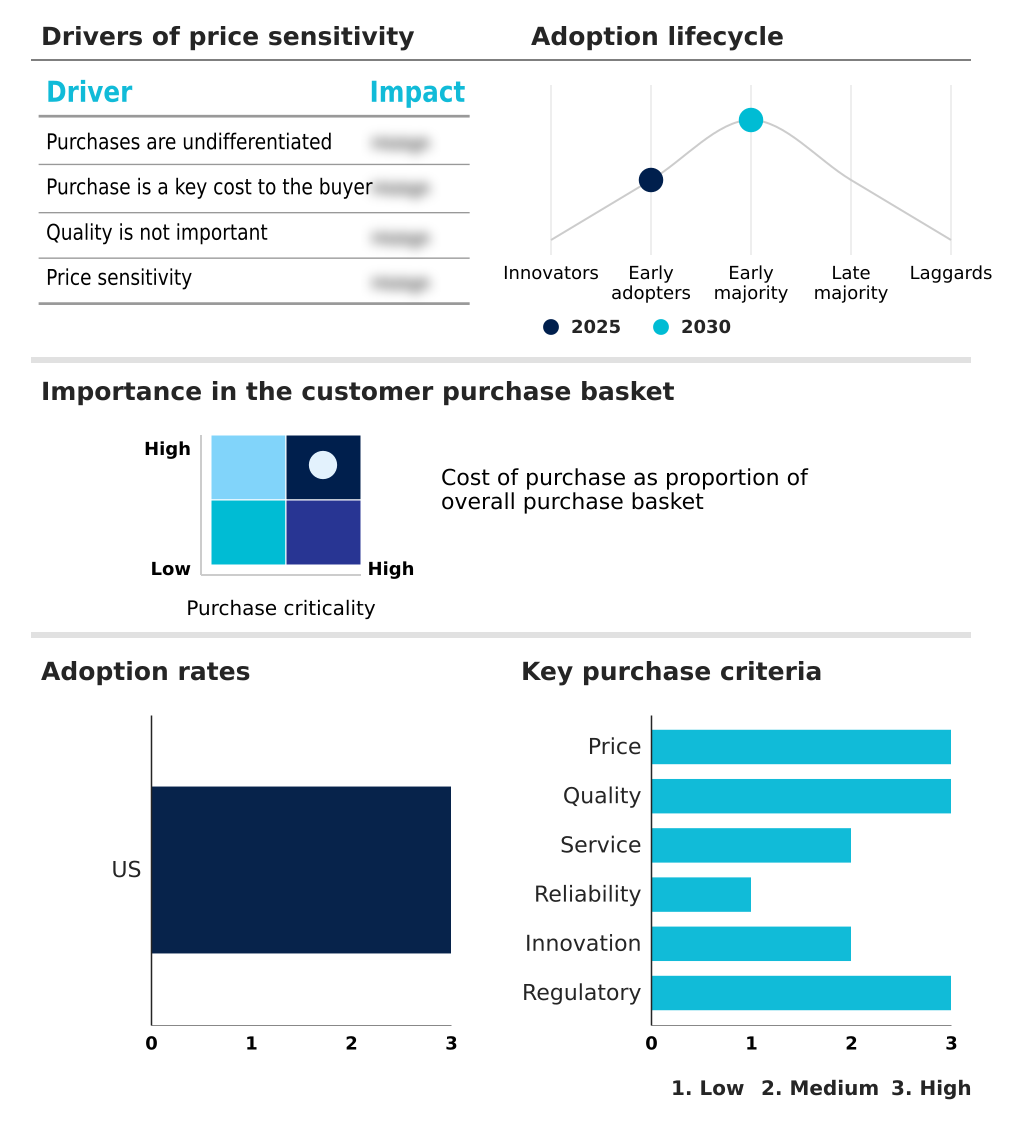
Customer Landscape of US Hospital Supplies Industry
Competitive Landscape
Companies are implementing various strategies, such as strategic alliances, us hospital supplies market forecast, partnerships, mergers and acquisitions, geographical expansion, and product/service launches, to enhance their presence in the industry.
Abbott Laboratories - The enterprise provides essential clinical products, including diagnostic instruments and specialized monitoring systems, facilitating accurate patient assessments and continuous care delivery across diverse medical environments.
The industry research and growth report includes detailed analyses of the competitive landscape of the market and information about key companies, including:
- Abbott Laboratories
- ASP Global Manufacturing GmbH
- B. Braun of America Inc.
- Becton Dickinson and Co.
- Boston Scientific Corp.
- Cardinal Health Inc.
- CONMED Corp.
- Cook Medical LLC
- Dragerwerk AG and Co. KGaA
- Edwards Lifesciences Corp.
- Fresenius Kabi AG
- GE HealthCare Technologies
- Johnson and Johnson
- Medline Inc.
- Olympus Corp.
- ResMed Inc.
- Smith and Nephew plc
- Solventum Corp.
- STERIS plc
- Stryker Corp.
- Thermo Fisher Scientific Inc.
- Zimmer Biomet Holdings Inc.
Qualitative and quantitative analysis of companies has been conducted to help clients understand the wider business environment as well as the strengths and weaknesses of key industry players. Data is qualitatively analyzed to categorize companies as pure play, category-focused, industry-focused, and diversified; it is quantitatively analyzed to categorize companies as dominant, leading, strong, tentative, and weak.
Recent Development and News in Us hospital supplies market
- In the Health Care Supplies industry, the implementation of stringent environmental regulations regarding single-use plastics has prompted manufacturers to adopt biodegradable materials, directly impacting Hospital Supplies demand by accelerating the transition toward eco-friendly disposable protective apparel and infection prevention materials with a 15% adoption rate increase.
- The integration of artificial intelligence into clinical workflow optimization protocols has fundamentally altered procurement strategies, compelling hospitals to utilize predictive demand forecasting tools that reduce excess inventory costs by up to 20% across medical surgical consumables.
- Strengthened regulatory compliance standards surrounding unique device identification have forced widespread operational overhauls, driving the market to implement radio frequency identification tags for enhanced medical product traceability across integrated delivery networks.
- A structural shift toward decentralized value-based care initiatives has expanded post-acute care settings, directly pulling demand for portable patient monitoring devices and chronic disease management tools previously confined to traditional inpatient environments.
Dive into Technavio’s robust research methodology, blending expert interviews, extensive data synthesis, and validated models for unparalleled US Hospital Supplies Market insights. See full methodology.
| Market Scope | |
|---|---|
| Page number | 184 |
| Base year | 2025 |
| Historic period | 2020-2024 |
| Forecast period | 2026-2030 |
| Growth momentum & CAGR | Accelerate at a CAGR of 9.6% |
| Market growth 2026-2030 | USD 9976.1 million |
| Market structure | Fragmented |
| YoY growth 2025-2026(%) | 9.2% |
| Key countries | US |
| Competitive landscape | Leading Companies, Market Positioning of Companies, Competitive Strategies, and Industry Risks |
Research Analyst Overview
- Executive leadership within healthcare institutions is increasingly prioritizing the deployment of predictive procurement analytics to mitigate volatility and ensure the steady availability of critical clinical assets. This strategic pivot heavily influences budgeting and compliance frameworks, as boardrooms mandate rigorous medical product traceability to align with evolving safety regulations.
- By integrating cloud-based supply platforms, hospital networks have realized a 25% acceleration in order processing speed compared to decentralized manual workflows. Such operational efficiency directly supports the seamless utilization of diagnostic imaging systems and surgical energy devices across diverse care settings.
- Furthermore, managing the lifecycle of orthopedic surgical implants and endoscopic optical instruments requires precise tracking to prevent procedural delays and minimize revenue leakage. The strategic focus on automated inventory tracking empowers supply chain directors to optimize the replenishment of sterile flush syringes and respiratory support ventilators without accumulating wasteful surplus.
- By utilizing radio frequency identification tags, facilities maintain unparalleled visibility into their inventory, reinforcing compliance while actively safeguarding the continuity of patient care.
What are the Key Data Covered in this US Hospital Supplies Market Research and Growth Report?
-
What is the expected growth of the US Hospital Supplies Market between 2026 and 2030?
-
USD 9.98 billion, at a CAGR of 9.6%
-
-
What segmentation does the market report cover?
-
The report is segmented by Product (Consumables, and Devices), End-user (Hospitals, Clinics, and Others), Distribution Channel (Offline, and Online) and Geography (North America)
-
-
Which regions are analyzed in the report?
-
North America
-
-
What are the key growth drivers and market challenges?
-
Growing healthcare expenditure across acute and non-acute care settings, Persistent supply chain fragmentation across healthcare distribution networks
-
-
Who are the major players in the US Hospital Supplies Market?
-
Abbott Laboratories, ASP Global Manufacturing GmbH, B. Braun of America Inc., Becton Dickinson and Co., Boston Scientific Corp., Cardinal Health Inc., CONMED Corp., Cook Medical LLC, Dragerwerk AG and Co. KGaA, Edwards Lifesciences Corp., Fresenius Kabi AG, GE HealthCare Technologies, Johnson and Johnson, Medline Inc., Olympus Corp., ResMed Inc., Smith and Nephew plc, Solventum Corp., STERIS plc, Stryker Corp., Thermo Fisher Scientific Inc. and Zimmer Biomet Holdings Inc.
-
Market Research Insights
- Expanding acute care utilization and evolving outpatient treatment services fundamentally reshape procurement dynamics within the Hospital Supplies Market in US. Healthcare organizations increasingly deploy digital procurement portals to streamline purchasing, resulting in a 24% improvement in order accuracy compared to legacy manual systems. As surgical procedural volume rises, facilities prioritize supply chain resilience to mitigate disruptions.
- By integrating predictive demand forecasting, integrated delivery networks have successfully reduced excess inventory holding costs by 18%. Furthermore, the expansion of consolidated service centers allows providers to centralize logistics, generating a 15% gain in distribution efficiency across regional hospital systems.
- These operational refinements ensure that critical clinical materials remain readily available, optimizing resource utilization and elevating the standard of continuous patient care.
We can help! Our analysts can customize this us hospital supplies market research report to meet your requirements.
 RIA -