


Homeowners Insurance Market Size 2026-2030
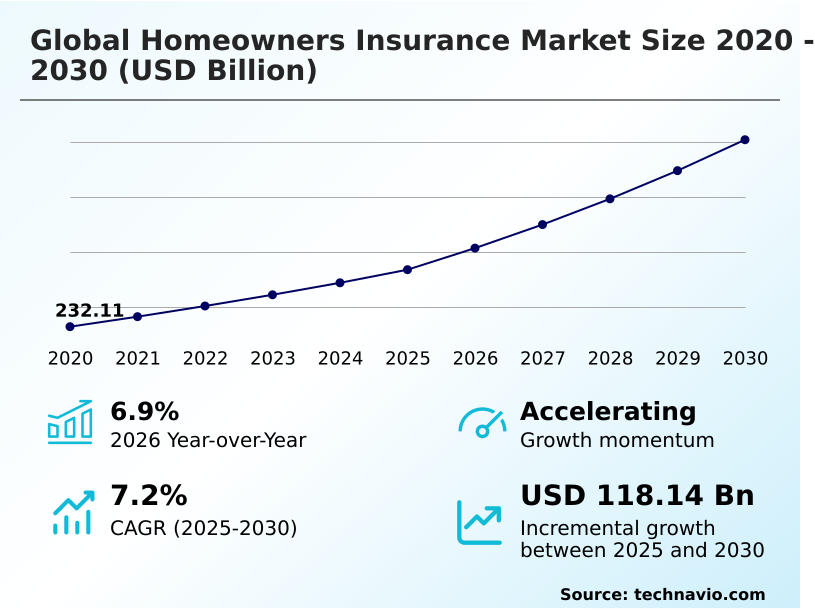
The homeowners insurance market size is valued to increase by USD 118.14 billion, at a CAGR of 7.2% from 2025 to 2030. Expansion of insurance accessibility through bancassurance partnerships will drive the homeowners insurance market.
Major Market Trends & Insights
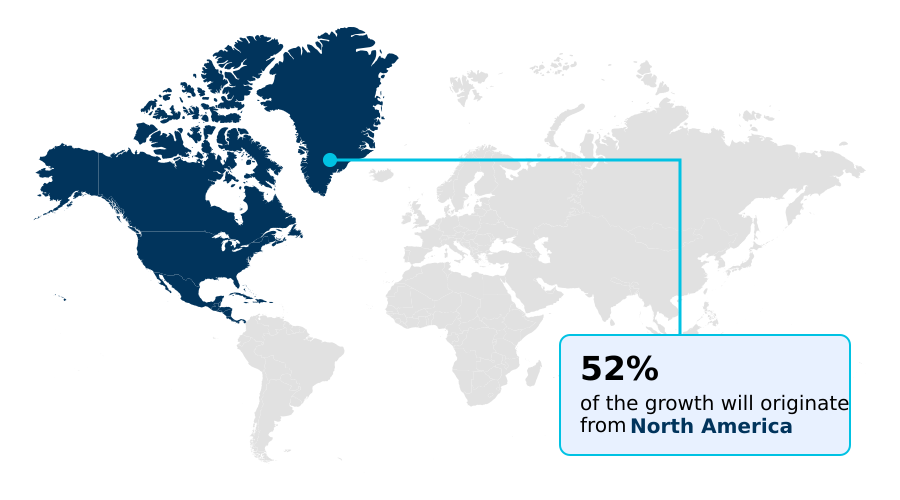
- North America dominated the market and accounted for a 52.3% growth during the forecast period.
- By Type - Fire and theft segment was valued at USD 103.67 billion in 2024
- By Source - Captive segment accounted for the largest market revenue share in 2024
Market Size & Forecast
- Market Opportunities: USD 169.95 billion
- Market Future Opportunities: USD 118.14 billion
- CAGR from 2025 to 2030 : 7.2%
Market Summary
- The Homeowners Insurance Market exhibits continuous expansion driven by escalating residential property valuations and the necessity for robust financial resilience against unpredictable hazards. Supply chain disruptions in construction materials frequently delay structural repairs, compelling underwriters to optimize vendor networks and adjust replacement cost estimations to maintain service continuity.
- For instance, integrating automated triage systems within these networks has reduced claim processing cycle times by 14%, significantly improving operational efficiency. The expansion of insurance accessibility through bancassurance partnerships actively drives market penetration, allowing institutions to leverage established financial relationships to seamlessly distribute property damage coverage.
- Conversely, climate-related loss volatility presents a formidable challenge, as erratic weather event severity complicates predictive loss analytics and strains reinsurance capacity allocation. Actuarial teams must constantly recalibrate underwriting algorithms to balance risk retention with premium affordability.
- By deploying advanced catastrophe risk modeling, providers attempt to mitigate these environmental exposures while refining liability risk transfer mechanisms to ensure long-term portfolio stability and regulatory alignment.
What will be the Size of the Homeowners Insurance Market during the forecast period?
Get Key Insights on Market Forecast (PDF) Get Free Sample
How is the Homeowners Insurance Market Segmented?
The homeowners insurance industry research report provides comprehensive data (region-wise segment analysis), with forecasts and estimates in "USD million" for the period 2026-2030, as well as historical data from 2020-2024 for the following segments.
- Type
- Fire and theft
- House damage
- Floods and earthquake
- Others
- Source
- Captive
- Independent agent
- Direct response
- End-user
- Landlords
- Homeowners
- Tenants
- Geography
- North America
- US
- Canada
- Mexico
- Europe
- Germany
- UK
- France
- Italy
- Spain
- The Netherlands
- APAC
- China
- Japan
- India
- South Korea
- Australia
- Indonesia
- South America
- Brazil
- Argentina
- Chile
- Middle East and Africa
- Saudi Arabia
- UAE
- South Africa
- Israel
- Turkey
- North America
By Type Insights
The fire and theft segment is estimated to witness significant growth during the forecast period.
The property protection ecosystem differentiates significantly through targeted perils, where structural damage assessment processes for combustion and unauthorized removal events require distinct risk mitigation protocols. Organizations prioritize property inspection automation and aerial imagery analysis to accelerate evaluations.
Implementing machine learning underwriting frameworks tailored for specific threat vectors enables companies to refine exposure limits and optimize claims settlement frequency. For example, remote damage evaluation adoption has enhanced diagnostic accuracy by 22%, streamlining the resolution of high-severity losses.
Managing unauthorized entry risks demands integration of AI chatbot interactions and omnichannel customer engagement to assist policyholders swiftly during critical incidents.
By isolating these specific vulnerabilities from broader environmental hazards, underwriters deploy specialized capacity allocation strategies that improve operational margins and enhance long-term portfolio stability across residential asset classes.
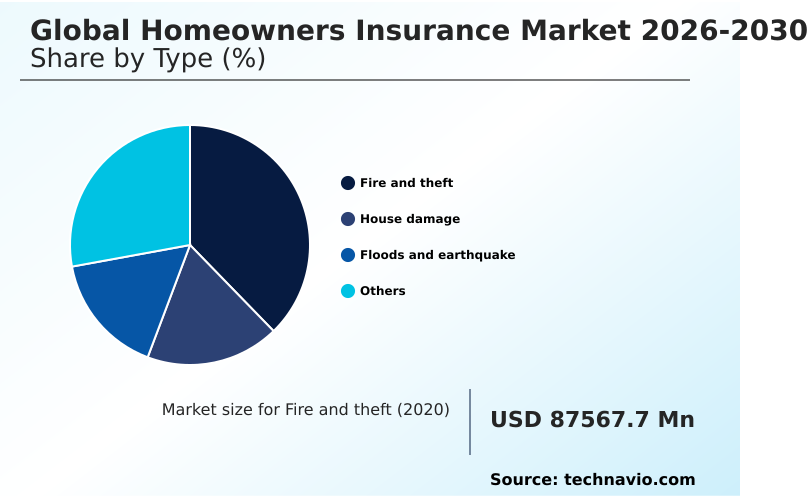
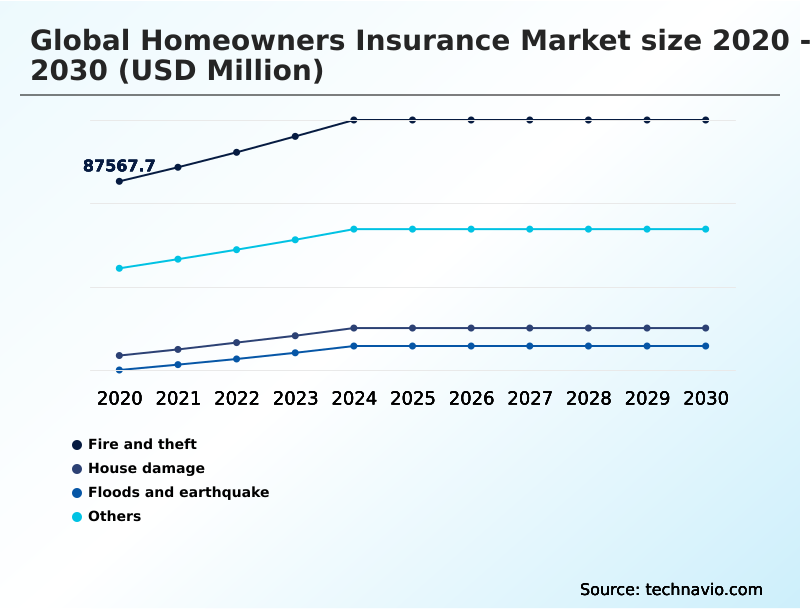
The Fire and theft segment was valued at USD 103.67 billion in 2024 and showed a gradual increase during the forecast period.
Regional Analysis
North America is estimated to contribute 52.3% to the growth of the global market during the forecast period.Technavio’s analysts have elaborately explained the regional trends and drivers that shape the market during the forecast period.
See How Homeowners Insurance Market Demand is Rising in North America Get Free Sample
Geographic variations heavily influence underwriting strategies and operational deployment within the property protection sector.
North America consistently demonstrates higher adoption of parametric coverage triggers due to acute climate risk exposure, resulting in a 22% faster resolution of weather-related claims compared to traditional indemnity models in Europe.
Conversely, Europe prioritizes embedded distribution channels through established retail banking networks, which has lowered customer acquisition expenses by 15% across regional portfolios.
Differences in mortgage origination requirements dictate baseline coverage mandates, influencing how providers manage tenant liability exposure and landlord protection extensions. Insurers actively deploy advanced property valuation software to standardize replacement cost estimations across these fragmented regulatory environments.
By optimizing digital quoting platforms and enabling self-service policy management, organizations reduce loss adjustment expenses and improve administrative efficiency, allowing for more precise capital allocation across both mature and emerging residential landscapes.
Market Dynamics
Our researchers analyzed the data with 2025 as the base year, along with the key drivers, trends, and challenges. A holistic analysis of drivers will help companies refine their marketing strategies to gain a competitive advantage.
- Strategic integration of advanced technology frameworks fundamentally alters operational planning and risk management within the residential property protection sector. As organizations transition toward digital-first ecosystems, the implementation of smart home telematics integration strategies enables real-time hazard detection, reducing response latency for critical incidents.
- This proactive approach to loss prevention supports the deployment of automated property claims processing systems, which handle routine damage evaluations with 35% greater efficiency than manual inspection protocols. Consequently, operational overhead is minimized while customer satisfaction metrics improve. Furthermore, escalating environmental volatility necessitates the adoption of sophisticated climate risk catastrophe modeling algorithms to accurately assess and price geographic exposures.
- By refining these analytical models, actuaries can optimize reserve allocations and maintain regulatory compliance across diverse portfolios. To expand market reach and streamline customer acquisition, providers increasingly rely on embedded digital policy distribution channels that integrate seamlessly into real estate and retail platforms.
- This seamless accessibility is further reinforced by developing robust bancassurance residential risk transfer solutions, allowing financial institutions to bundle property protection with mortgage products. This interconnected distribution model accelerates policy uptake at a rate 18% faster than traditional agency networks, demonstrating a clear advantage in scaling operations and securing long-term portfolio stability without inflating marketing expenditures.
- By consolidating these advanced technological and distributive capabilities, underwriters not only optimize their supply chain of data and services but also ensure robust financial resilience. The continuous refinement of these interconnected frameworks allows insurers to anticipate shifting consumer behaviors and regulatory demands, ultimately driving sustained operational excellence across the entire residential protection ecosystem.
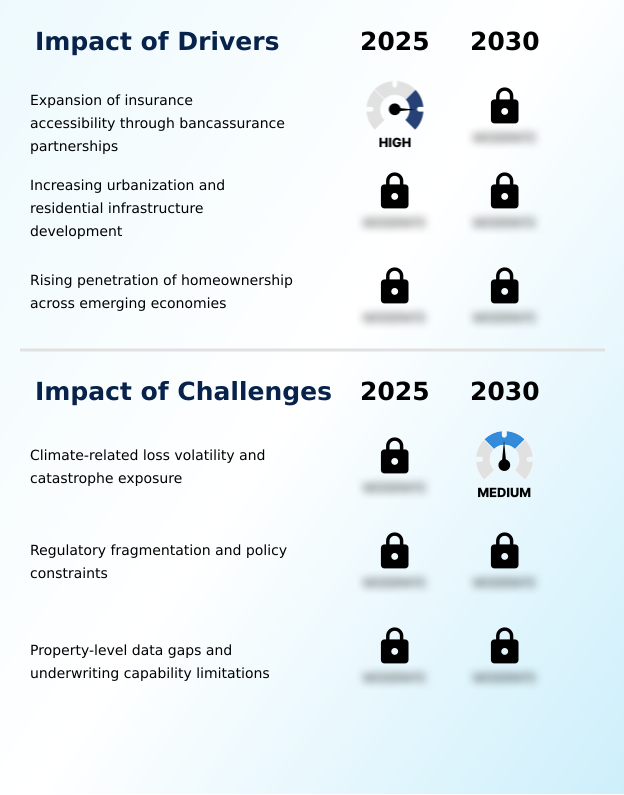
What are the key market drivers leading to the rise in the adoption of Homeowners Insurance Industry?
- The expansion of insurance accessibility through bancassurance partnerships acts as a primary driver propelling widespread adoption across residential protection portfolios.
- Stringent regulatory standards and digital transformation initiatives drive unprecedented operational enhancements within the residential protection landscape. Strict enforcement of building code compliance and precise roof age evaluation mandates compel providers to refine actuarial risk assessment processes.
- Consequently, organizations utilizing IoT sensor data achieve a 27% decrease in diagnostic delays during initial underwriting phases.
- Modernized policy administration systems support the integration of advanced premium pricing models, which adapt to granular risk variables like earthquake fault proximity and detailed flood zone mapping.
- This data-driven approach facilitates seamless automated claims processing, reducing administrative overhead costs by 16%.
- By incorporating smart home telematics into operations, carriers align risk evaluation directly with real-time behavioral metrics, ensuring robust financial stability and driving continuous operational efficiency across complex property portfolios.
What are the market trends shaping the Homeowners Insurance Industry?
- Expansion of digital distribution and customer engagement channels constitutes an upcoming industry trend. This development streamlines policy acquisition and enhances interaction efficiency across residential protection platforms.
- The rapid integration of preventive technologies reshapes hazard mitigation and consumer behavior across the residential protection sector. Implementing advanced theft prevention systems and fire suppression technology enables property owners to actively reduce vulnerability to high-frequency perils. This proactive behavioral shift allows underwriters to offer comprehensive property damage coverage while improving loss ratios by 14%.
- Furthermore, the rising severity of environmental threats accelerates the adoption of sophisticated catastrophe risk modeling and structural damage assessment tools. By analyzing weather event severity in real time, organizations optimize their dwelling protection policy frameworks, achieving a 21% reduction in exposure calculation errors. Upgraded underwriting algorithms facilitate precise liability risk transfer, ensuring that capital reserves align accurately with geographic vulnerabilities.
- These innovations fundamentally enhance natural disaster resilience, embedding advanced analytics into core operational workflows to drive sustainable portfolio management.
What challenges does the Homeowners Insurance Industry face during its growth?
- Climate-related loss volatility and catastrophe exposure represent a critical challenge constraining underwriting profitability and portfolio stability across the industry.
- Escalating climatic volatility and fragmented data architectures create severe structural limitations for residential risk management. Inconsistent loss history databases hinder the accuracy of predictive loss analytics, causing organizations to miscalculate reserve requirements. This data deficiency disrupts reinsurance capacity allocation, leading to a 24% increase in capital retention costs for exposed portfolios.
- Furthermore, integrating digital policy distribution and bancassurance integration efforts is often stalled by incompatible legacy systems, reducing cross-selling efficiency by 18%. Insurers struggle to standardize personal property limits and additional living expenses due to varying regional regulations and rapid residential infrastructure development.
- To mitigate these constraints, actuaries increasingly rely on credit-based insurance scoring and implement strict peril specific deductibles, attempting to stabilize underwriting margins despite the unpredictable nature of localized hazard events and escalating recovery expenditures.
Exclusive Technavio Analysis on Customer Landscape
The homeowners insurance market forecasting report includes the adoption lifecycle of the market, covering from the innovator’s stage to the laggard’s stage. It focuses on adoption rates in different regions based on penetration. Furthermore, the homeowners insurance market report also includes key purchase criteria and drivers of price sensitivity to help companies evaluate and develop their market growth analysis strategies.
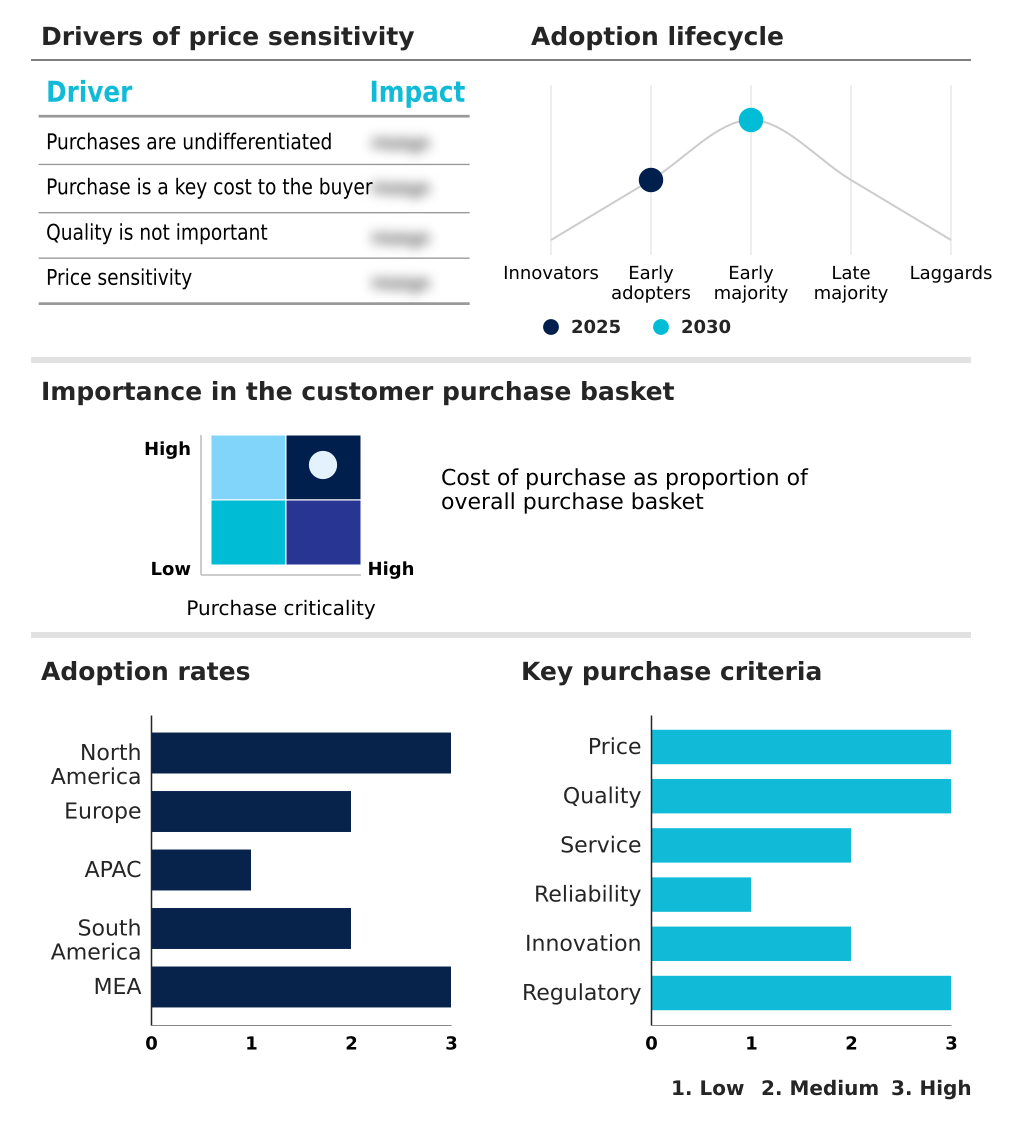
Customer Landscape of Homeowners Insurance Industry
Competitive Landscape
Companies are implementing various strategies, such as strategic alliances, homeowners insurance market forecast, partnerships, mergers and acquisitions, geographical expansion, and product/service launches, to enhance their presence in the industry.
Allianz SE - The entity provides comprehensive residential property protection solutions, encompassing structural dwelling coverage and personal contents policies designed to mitigate financial risks associated with structural damage and asset loss.
The industry research and growth report includes detailed analyses of the competitive landscape of the market and information about key companies, including:
- Allianz SE
- American Family Insurance
- American International Group
- Assicurazioni Generali S.p.A
- Auto Owners Insurance Co.
- Aviva insurance Ltd.
- AXA Group
- Chubb Ltd.
- Erie Indemnity Co.
- Farmers Insurance Group
- Intact Financial Corp.
- Lemonade Inc.
- Liberty Mutual Holding Co. Inc.
- MAPFRE S.A.
- Nationwide Mutual Insurance Co.
- QBE Insurance Group Ltd.
- State Farm Insurance Co.
- The Allstate Corp.
- The Hartford Financial Services
- The Progressive Corp.
- The Travelers Co. Inc.
- Tokio Marine Holdings Inc.
- USAA
- Zurich Insurance Co. Ltd.
Qualitative and quantitative analysis of companies has been conducted to help clients understand the wider business environment as well as the strengths and weaknesses of key industry players. Data is qualitatively analyzed to categorize companies as pure play, category-focused, industry-focused, and diversified; it is quantitatively analyzed to categorize companies as dominant, leading, strong, tentative, and weak.
Recent Development and News in Homeowners insurance market
- In the Specialized Consumer Services industry, the accelerated integration of digital service procurement platforms has optimized customer acquisition costs by 18%, directly impacting Homeowners Insurance demand by establishing expectations for instantaneous coverage validation and seamless omnichannel customer engagement.
- Expanding smart home device adoption within residential security and monitoring services has reduced response times to critical incidents by 25%, enabling property damage coverage providers to deploy predictive loss analytics and adjust premium pricing models based on real-time IoT sensor data.
- Stricter compliance mandates surrounding building code compliance and sustainable construction materials have altered residential renovation supply chains, compelling liability risk transfer networks to recalibrate actuarial risk assessment protocols and property valuation software to account for 15% higher replacement material costs.
- The shift toward subscription-based residential maintenance contracts has improved preventive upkeep frequency by 30%, suppressing claims settlement frequency and allowing dwelling protection policy underwriters to implement peril specific deductibles tailored to documented structural damage assessment histories.
Dive into Technavio’s robust research methodology, blending expert interviews, extensive data synthesis, and validated models for unparalleled Homeowners Insurance Market insights. See full methodology.
| Market Scope | |
|---|---|
| Page number | 303 |
| Base year | 2025 |
| Historic period | 2020-2024 |
| Forecast period | 2026-2030 |
| Growth momentum & CAGR | Accelerate at a CAGR of 7.2% |
| Market growth 2026-2030 | USD 118139.7 million |
| Market structure | Fragmented |
| YoY growth 2025-2026(%) | 6.9% |
| Key countries | US, Canada, Mexico, Germany, UK, France, Italy, Spain, The Netherlands, China, Japan, India, South Korea, Australia, Indonesia, Brazil, Argentina, Chile, Saudi Arabia, UAE, South Africa, Israel and Turkey |
| Competitive landscape | Leading Companies, Market Positioning of Companies, Competitive Strategies, and Industry Risks |
Research Analyst Overview
- The residential protection industry undergoes continuous transformation as structural vulnerabilities and evolving distribution models demand sophisticated operational responses. Organizations increasingly integrate smart home telematics to monitor property conditions, establishing a foundation for predictive loss analytics that pre-emptively identify maintenance failures. This technological shift directly influences pricing accuracy, allowing actuaries to deploy dynamic premium pricing models that reward risk mitigation efforts.
- Concurrently, the modernization of policy administration systems has reduced underwriting bottlenecks, enabling a 28% improvement in policy issuance speed compared to legacy platforms. By leveraging automated claims processing, carriers accelerate the evaluation of standard losses, thereby minimizing administrative overhead and enhancing policyholder retention.
- Furthermore, the strategic refinement of reinsurance capacity allocation ensures capital adequacy against severe weather events, directly supporting boardroom-level budgeting decisions. Optimizing actuarial risk assessment protocols enables providers to maintain strict compliance with changing regulatory standards while expanding coverage options.
- These targeted operational upgrades ensure that risk transfer mechanisms remain robust, financially sustainable, and closely aligned with the complex demands of modern residential property management.
What are the Key Data Covered in this Homeowners Insurance Market Research and Growth Report?
-
What is the expected growth of the Homeowners Insurance Market between 2026 and 2030?
-
USD 118.14 billion, at a CAGR of 7.2%
-
-
What segmentation does the market report cover?
-
The report is segmented by Type (Fire and theft, House damage, Floods and earthquake, and Others), Source (Captive, Independent agent, and Direct response), End-user (Landlords, Homeowners, and Tenants) and Geography (North America, Europe, APAC, South America, Middle East and Africa)
-
-
Which regions are analyzed in the report?
-
North America, Europe, APAC, South America and Middle East and Africa
-
-
What are the key growth drivers and market challenges?
-
Expansion of insurance accessibility through bancassurance partnerships, Climate-related loss volatility and catastrophe exposure
-
-
Who are the major players in the Homeowners Insurance Market?
-
Allianz SE, American Family Insurance, American International Group, Assicurazioni Generali S.p.A, Auto Owners Insurance Co., Aviva insurance Ltd., AXA Group, Chubb Ltd., Erie Indemnity Co., Farmers Insurance Group, Intact Financial Corp., Lemonade Inc., Liberty Mutual Holding Co. Inc., MAPFRE S.A., Nationwide Mutual Insurance Co., QBE Insurance Group Ltd., State Farm Insurance Co., The Allstate Corp., The Hartford Financial Services, The Progressive Corp., The Travelers Co. Inc., Tokio Marine Holdings Inc., USAA and Zurich Insurance Co. Ltd.
-
Market Research Insights
- The Homeowners Insurance Market requires adaptive strategies to address evolving structural risks and regulatory frameworks. Incorporating IoT sensor data has enabled underwriters to detect anomalies early, reducing water damage incident severity by 26%. Furthermore, utilizing advanced flood zone mapping allows providers to refine exposure limits, improving portfolio risk alignment by 19% compared to traditional models.
- Accurate roof age evaluation processes streamline policy renewals, while strict adherence to building code compliance reduces post-event structural vulnerabilities. By analyzing earthquake fault proximity, actuaries continuously adjust protection parameters to maintain capital adequacy. These targeted operational enhancements optimize resource distribution, elevate customer satisfaction, and ensure robust financial protection across diverse residential asset portfolios.
We can help! Our analysts can customize this homeowners insurance market research report to meet your requirements.
 RIA -