
Disposable Hospital Supplies Market Analysis, Size, and Forecast 2026-2030: North America (US, Canada, and Mexico), Europe (Germany, UK, and France), Asia (China, Japan, and India), South America (Brazil, Argentina, and Colombia), Middle East and Africa (Saudi Arabia, UAE, and South Africa), Rest of World (ROW)

Disposable Hospital Supplies Market Analysis, Size, and Forecast 2026-2030:
North America (US, Canada, and Mexico), Europe (Germany, UK, and France), Asia (China, Japan, and India), South America (Brazil, Argentina, and Colombia), Middle East and Africa (Saudi Arabia, UAE, and South Africa), Rest of World (ROW)

Published: Oct 2026 300 Pages SKU: IRTNTR43291

Market Overview at a Glance

$24.46 B
Market Opportunity
8.2%
CAGR 2025 - 2030
40.6%
North America Growth
$26.20 B
Consumables segment 2024

Disposable Hospital Supplies Market Size 2026-2030

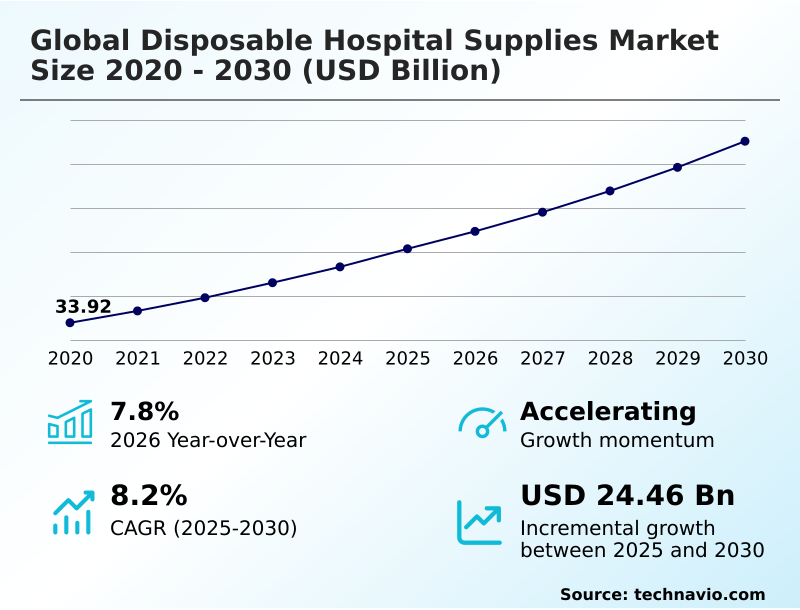
The disposable hospital supplies market size is valued to increase by USD 24.46 billion, at a CAGR of 8.2% from 2025 to 2030. Rising surgical volumes and healthcare utilization will drive the disposable hospital supplies market.

Major Market Trends & Insights

  • North America dominated the market and accounted for a 40.6% growth during the forecast period.
  • By Product - Consumables segment was valued at USD 26.20 billion in 2024
  • By Application - Cardiovascular segment accounted for the largest market revenue share in 2024

Market Size & Forecast

  • Market Opportunities: USD 41.27 billion
  • Market Future Opportunities: USD 24.46 billion
  • CAGR from 2025 to 2030 : 8.2%

Market Summary

  • The Disposable Hospital Supplies Market functions as a critical enabler of safe, continuous, and efficient clinical operations across modern healthcare ecosystems. Rising surgical volumes heavily drive demand, as increased clinical interventions directly require vast quantities of specialized tools to maintain sterile environments and ensure patient safety.
  • Conversely, unpredictable material sourcing presents a major structural challenge, where component shortages often delay the distribution of essential products and force facilities to maintain costly safety stocks. In response, large hospital networks are overhauling their procurement strategies to mitigate these disruptions.
  • Transitioning to predictive ordering models and digital tracking has allowed clinical facilities to reduce emergency supply transport costs by 22% compared to traditional reactive purchasing. This data-driven approach ensures the consistent availability of vital items while optimizing physical storage capacity in clinical wards.
  • By aligning procurement practices with actual procedural demand, healthcare providers maintain high operational efficiency, navigate logistical uncertainties effectively, and sustain rigorous standards of care delivery in an increasingly complex and regulated medical landscape.

What will be the Size of the Disposable Hospital Supplies Market during the forecast period?
Get Key Insights on Market Forecast (PDF) Get Free Sample

How is the Disposable Hospital Supplies Market Segmented?

The disposable hospital supplies industry research report provides comprehensive data (region-wise segment analysis), with forecasts and estimates in "USD million" for the period 2026-2030, as well as historical data from 2020-2024 for the following segments.

  • Product
    • Consumables
    • Devices
  • Application
    • Cardiovascular
    • Gynecology
    • Others
  • End-user
    • Hospitals and Clinics
    • ASCs
    • Home Healthcare Settings
    • Others
  • Geography
    • North America
      • US
      • Canada
      • Mexico
    • Europe
      • Germany
      • UK
      • France
      • Italy
      • Spain
      • The Netherlands
    • Asia
      • China
      • Japan
      • India
      • South Korea
      • Indonesia
      • Singapore
    • Rest of World (ROW)

By Product Insights

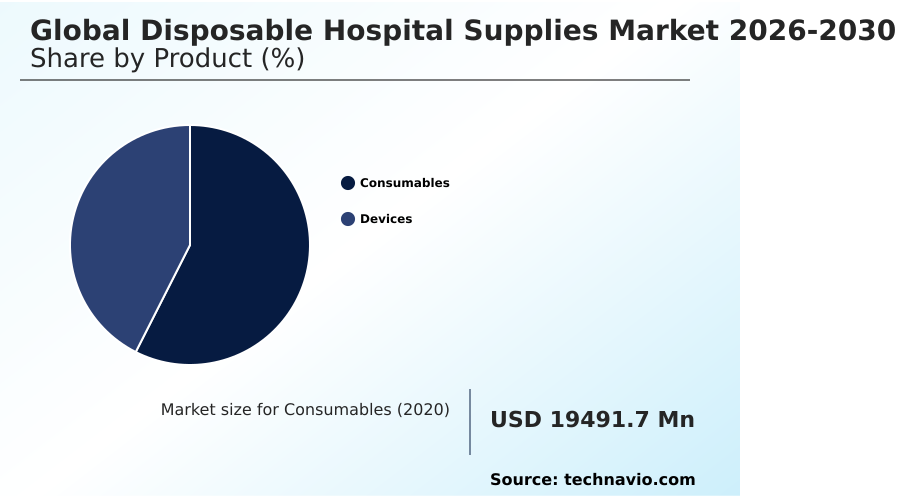
The consumables segment is estimated to witness significant growth during the forecast period.

The consumables sector of the global disposable hospital supplies market 2026-2030 functions as the operational backbone for clinical continuity across care settings. Continuous demand for single-use medical devices ensures rigorous cross-contamination prevention during high-frequency treatments.

Healthcare networks increasingly rely on standardized surgical drapes and procedure trays to streamline clinical workflow optimization. Incorporating automated replenishment systems has improved inventory allocation accuracy by 18%, significantly reducing stockouts of critical medical consumables like surgical gloves.

This shift toward data-driven hospital inventory management allows facilities to enhance operational efficiency while maintaining safe patient care environments.
Get Free Sample

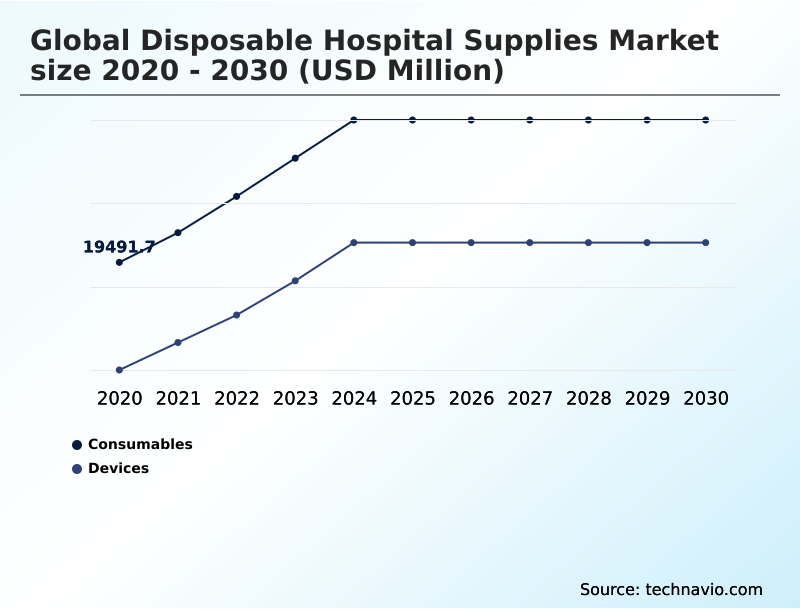
The Consumables segment was valued at USD 26.20 billion in 2024 and showed a gradual increase during the forecast period.
Get Free Sample

Regional Analysis

North America is estimated to contribute 40.6% to the growth of the global market during the forecast period.Technavio’s analysts have elaborately explained the regional trends and drivers that shape the market during the forecast period.
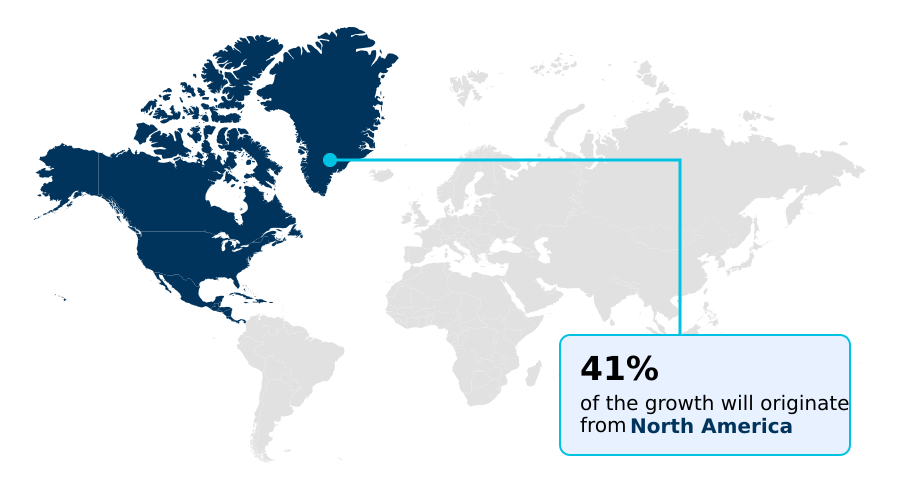
See How Disposable Hospital Supplies Market Demand is Rising in North America Get Free Sample

The geographic landscape of the global disposable hospital supplies market 2026-2030 highlights distinct regional approaches to procurement.

North America demonstrates advanced technology integration, achieving 24% higher supply chain resilience compared to Europe by utilizing predictive analytics for sourcing specimen collection kits and wound dressings.

In contrast, Europe aggressively advances sustainable medical packaging initiatives, driving a 30% faster adoption of eco-friendly materials that maintain sterile barrier integrity and optimize sterilization packaging.

Asian markets primarily focus on healthcare capacity expansion, prioritizing domestic manufacturing localization to meet surging demand for prefilled syringes and hypoallergenic exam gloves. These varying priorities dictate corporate strategies across regions to support evolving clinical needs.

Market Dynamics

Our researchers analyzed the data with 2025 as the base year, along with the key drivers, trends, and challenges. A holistic analysis of drivers will help companies refine their marketing strategies to gain a competitive advantage.

  • As clinical networks adapt to evolving safety standards, procurement strategies within the global disposable hospital supplies market 2026-2030 become central to operational planning. Facilities prioritizing sterile single-use surgical instrument kits consistently demonstrate superior efficiency, completing room turnovers up to 20% faster than those relying on traditional reprocessing cycles. This strategic shift directly supports high-volume centers managing intensive schedules.
  • Simultaneously, the targeted integration of infection control single-use medical devices helps organizations mitigate the severe financial risks associated with cross-contamination. To manage this massive influx of consumables effectively, administrators are deploying advanced disposable hospital supplies inventory management platforms.
  • These intelligent systems analyze clinical usage patterns to optimize stock levels, reducing emergency supply orders by nearly a third compared to manual tracking methods. Furthermore, as sustainability mandates tighten globally, forward-thinking manufacturers are innovating with biodegradable disposable medical product materials, offering eco-conscious alternatives without compromising critical barrier protection.
  • The demand for minimally invasive procedure disposable components is also accelerating, reflecting a broader clinical pivot toward specialized, low-impact surgical techniques. By aligning these advanced procurement strategies with overarching clinical goals, healthcare systems can enhance patient safety, streamline logistics, and achieve substantial long-term operational gains.
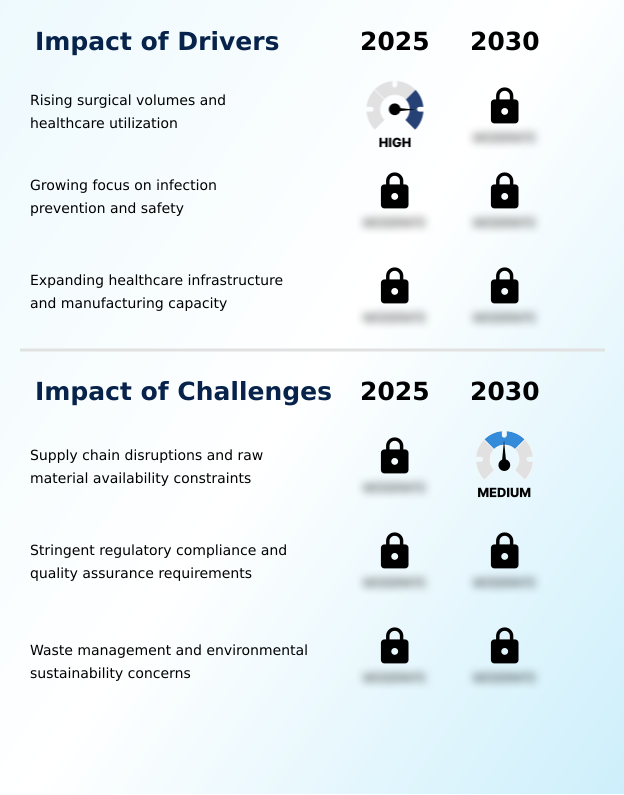
What are the key market drivers leading to the rise in the adoption of Disposable Hospital Supplies Industry?

  • Rising surgical volumes and increased healthcare utilization serve as the primary drivers propelling market growth.

  • Surging surgical volumes and stricter regulatory compliance standards act as primary catalysts propelling the global disposable hospital supplies market 2026-2030. Healthcare facilities face immense pressure to eliminate healthcare-associated infections, directly necessitating the aggressive high-volume procurement of critical infection prevention supplies.
  • By standardizing the deployment of single-use endotracheal tubes and anesthesia breathing circuits, intensive care units have reduced cross-infection rates by 12% and lowered corresponding readmission costs by 18%.
  • This intensive demand is further supported by rigorous biocompatibility testing protocols that encourage widespread latex-free material adoption across all clinical tools.
  • Consequently, the escalating utilization of advanced interventions, including negative pressure wound therapy and artificial organ consumables, forces manufacturers to scale production dynamically to sustain global medical readiness.

What are the market trends shaping the Disposable Hospital Supplies Industry?

  • The growing adoption of smart inventory management systems represents a significant trend shaping the market landscape.

  • The global disposable hospital supplies market 2026-2030 is shifting toward the rapid ambulatory care expansion to accommodate modern medical practices. As healthcare networks navigate the outpatient care transition, there is a pronounced increase in the utilization of procedure-specific kits to support efficiency.
  • This structural shift effectively accelerates minimally invasive surgical workflows, lowering room turnover times by 15% and increasing daily procedural capacity by 12%. Clinics are rapidly adopting single-use instrument covers and customized fluid management systems to maintain sterile environments without reprocessing delays.
  • Furthermore, specialized products like suction canisters, self-adherent wraps, incontinence care products, and ostomy bags are being heavily deployed to sustain continuous care outside traditional hospital settings, completely transforming institutional procurement strategies.

What challenges does the Disposable Hospital Supplies Industry face during its growth?

  • Supply chain disruptions and raw material availability constraints present significant challenges affecting industry expansion.

  • Persistent material constraints and ecological mandates severely impact the operational fluidity of the global disposable hospital supplies market 2026-2030. Manufacturers face recurring shortages of medical grade polymers, delaying the production of specialized items like dialyzers and venous access catheters. This disruption limits clinical availability, increasing emergency freight expenditures by 20% and reducing overall network efficiency by 15%.
  • Concurrently, complex medical waste disposal regulations impose strict compliance costs on facilities managing contaminated items like tracheostomy tubes and sharps disposal containers. These stringent ecological rules complicate biohazard segregation protocols, forcing institutions to invest heavily in specialized waste logistics.
  • Consequently, these compounding pressures force hospital group purchasing entities to constantly renegotiate sourcing contracts to prevent critical shortages while absorbing escalating compliance costs.

Exclusive Technavio Analysis on Customer Landscape

The disposable hospital supplies market forecasting report includes the adoption lifecycle of the market, covering from the innovator’s stage to the laggard’s stage. It focuses on adoption rates in different regions based on penetration. Furthermore, the disposable hospital supplies market report also includes key purchase criteria and drivers of price sensitivity to help companies evaluate and develop their market growth analysis strategies.
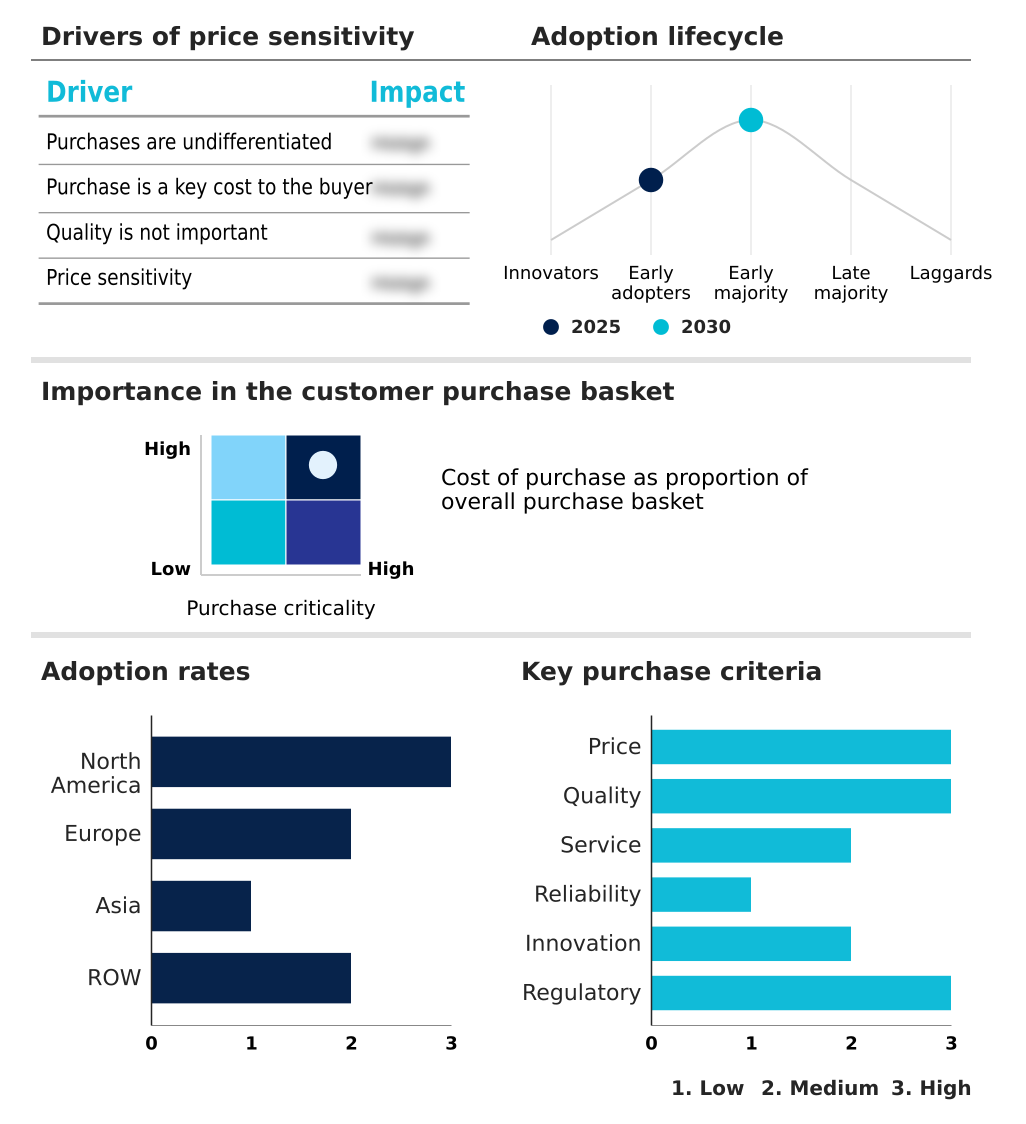
Customer Landscape of Disposable Hospital Supplies Industry

Competitive Landscape

Companies are implementing various strategies, such as strategic alliances, disposable hospital supplies market forecast, partnerships, mergers and acquisitions, geographical expansion, and product/service launches, to enhance their presence in the industry.

3M Co. - The portfolio features advanced wound dressings, self-adherent wraps, and specialized surgical drapes engineered to enhance infection control and streamline clinical workflows across demanding medical environments.

The industry research and growth report includes detailed analyses of the competitive landscape of the market and information about key companies, including:

  • 3M Co.
  • Ansell Ltd.
  • B.Braun SE
  • Baxter International Inc.
  • Becton Dickinson and Co.
  • Boston Scientific Corp.
  • Cardinal Health Inc.
  • Coloplast AS
  • ConvaTec Group Plc
  • Getinge AB
  • Medline Inc.
  • Medtronic Plc
  • Molnlycke Health Care AB
  • Nipro Corp.
  • Poly Medicure Ltd.
  • Smith and Nephew plc
  • Stryker Corp.
  • Teleflex Inc.
  • Terumo Corp.
  • Top Glove Corp. Bhd
  • Zimmer Biomet Holdings Inc.

Qualitative and quantitative analysis of companies has been conducted to help clients understand the wider business environment as well as the strengths and weaknesses of key industry players. Data is qualitatively analyzed to categorize companies as pure play, category-focused, industry-focused, and diversified; it is quantitatively analyzed to categorize companies as dominant, leading, strong, tentative, and weak.

Recent Development and News in Disposable hospital supplies market

  • In the Health Care Supplies industry, the integration of radio frequency identification tracking has optimized medical warehouse logistics, directly impacting the global disposable hospital supplies market 2026-2030 by reducing supply chain stockouts by 14% and ensuring continuous availability of single-use medical devices.
  • Stringent medical waste disposal protocols mandated by environmental agencies have accelerated the adoption of sustainable medical packaging, driving manufacturers of procedure trays to utilize biodegradable materials that lower institutional disposal costs by up to 12%.
  • The rapid ambulatory care expansion toward outpatient surgical centers has shifted procurement patterns, increasing the demand for pre-sterilized procedure-specific kits that streamline minimally invasive surgical workflows and reduce room turnover times by approximately 20%.
  • Domestic manufacturing localization initiatives across North America and Europe have fortified supply chain resilience, allowing clinical networks to secure reliable access to critical medical grade polymers and infection prevention supplies while mitigating international shipping delays by 25%.

Dive into Technavio’s robust research methodology, blending expert interviews, extensive data synthesis, and validated models for unparalleled Disposable Hospital Supplies Market insights. See full methodology.

Market Scope
Page number 300
Base year 2025
Historic period 2020-2024
Forecast period 2026-2030
Growth momentum & CAGR Accelerate at a CAGR of 8.2%
Market growth 2026-2030 USD 24457.5 million
Market structure Fragmented
YoY growth 2025-2026(%) 7.8%
Key countries US, Canada, Mexico, Germany, UK, France, Italy, Spain, The Netherlands, China, Japan, India, South Korea, Indonesia, Singapore, Brazil, Saudi Arabia, UAE, Australia, Argentina, Colombia, South Africa and Israel
Competitive landscape Leading Companies, Market Positioning of Companies, Competitive Strategies, and Industry Risks

Request Free Sample

Research Analyst Overview

  • The global disposable hospital supplies market 2026-2030 is undergoing a structural transformation driven by an uncompromising emphasis on patient safety and procedural optimization. Clinical institutions are overhauling product strategies by transitioning from traditional bulk purchasing to the targeted procurement of highly specialized medical consumables.
  • This shift directly supports modern workflows, allowing surgical departments to decrease pre-operative preparation times by 18% compared to standard loose-item assembly. Furthermore, the rising threat of cross-contamination is pushing administrators to mandate the strict utilization of single-use medical devices, particularly advanced wound dressings and standardized procedure trays.
  • To navigate these complex consumption patterns, executives are integrating predictive procurement models that monitor the usage of prefilled syringes and surgical gloves in real time. This technological upgrade directly links inventory control to budgetary compliance, preventing capital from being trapped in excess storage.
  • As clinical standards evolve, decision-makers must continuously refine their sourcing models, ensuring uninterrupted access to critical surgical drapes while balancing clinical efficacy with stringent financial oversight.

What are the Key Data Covered in this Disposable Hospital Supplies Market Research and Growth Report?

  • What is the expected growth of the Disposable Hospital Supplies Market between 2026 and 2030?

    • USD 24.46 billion, at a CAGR of 8.2%

  • What segmentation does the market report cover?

    • The report is segmented by Product (Consumables, and Devices), Application (Cardiovascular, Gynecology, and Others), End-user (Hospitals and Clinics, ASCs, Home Healthcare Settings, and Others) and Geography (North America, Europe, Asia, Rest of World (ROW))

  • Which regions are analyzed in the report?

    • North America, Europe, Asia and Rest of World (ROW)

  • What are the key growth drivers and market challenges?

    • Rising surgical volumes and healthcare utilization, Supply chain disruptions and raw material availability constraints

  • Who are the major players in the Disposable Hospital Supplies Market?

    • 3M Co., Ansell Ltd., B.Braun SE, Baxter International Inc., Becton Dickinson and Co., Boston Scientific Corp., Cardinal Health Inc., Coloplast AS, ConvaTec Group Plc, Getinge AB, Medline Inc., Medtronic Plc, Molnlycke Health Care AB, Nipro Corp., Poly Medicure Ltd., Smith and Nephew plc, Stryker Corp., Teleflex Inc., Terumo Corp., Top Glove Corp. Bhd and Zimmer Biomet Holdings Inc.

Market Research Insights

  • The global disposable hospital supplies market 2026-2030 is rapidly adapting to demands for enhanced institutional efficiency and stricter safety protocols. Healthcare systems are heavily investing in clinical workflow optimization to process higher patient loads effectively. Implementing advanced hospital inventory management systems has reduced supply stockouts by 18%, significantly improving daily care continuity.
  • Furthermore, as environmental regulations tighten, institutions are prioritizing sustainable medical packaging to address ecological goals, cutting disposal waste volumes by 12% annually. These strategic operational adjustments bolster overall supply chain resilience. Consequently, healthcare providers can maintain rigorous infection control standards while maximizing logistical performance across diverse medical environments.

We can help! Our analysts can customize this disposable hospital supplies market research report to meet your requirements.

Get in touch

1. Executive Summary

1.1 Market overview

Executive Summary - Chart on Market Overview
Executive Summary - Data Table on Market Overview
Executive Summary - Chart on Global Market Characteristics
Executive Summary - Chart on Market by Geography
Executive Summary - Chart on Market Segmentation by Product
Executive Summary - Chart on Market Segmentation by Application
Executive Summary - Chart on Market Segmentation by End-user
Executive Summary - Chart on Incremental Growth
Executive Summary - Data Table on Incremental Growth
Executive Summary - Chart on Company Market Positioning

2. Technavio Analysis

2.1 Analysis of price sensitivity, lifecycle, customer purchase basket, adoption rates, and purchase criteria

2.2 Criticality of inputs and Factors of differentiation

Chart on Overview on criticality of inputs and factors of differentiation

2.3 Factors of disruption

Chart on Overview on factors of disruption

2.4 Impact of drivers and challenges

Chart on Impact of drivers and challenges in 2025 and 2030

3. Market Landscape

3.1 Market ecosystem

Chart on Parent Market
Data Table on - Parent Market

3.2 Market characteristics

Chart on Market characteristics analysis

3.3 Value chain analysis

Chart on Value chain analysis

4. Market Sizing

4.1 Market definition

Data Table on Offerings of companies included in the market definition

4.2 Market segment analysis

Market segments

4.3 Market size 2025

4.4 Market outlook: Forecast for 2025-2030

Chart on Global - Market size and forecast 2025-2030 ($ million)
Data Table on Global - Market size and forecast 2025-2030 ($ million)
Chart on Global Market: Year-over-year growth 2025-2030 (%)
Data Table on Global Market: Year-over-year growth 2025-2030 (%)

5. Historic Market Size

5.1 Global Disposable Hospital Supplies Market 2020 - 2024

Historic Market Size - Data Table on Global Disposable Hospital Supplies Market 2020 - 2024 ($ million)

5.2 Product segment analysis 2020 - 2024

Historic Market Size - Product Segment 2020 - 2024 ($ million)

5.3 Application segment analysis 2020 - 2024

Historic Market Size - Application Segment 2020 - 2024 ($ million)

5.4 End-user segment analysis 2020 - 2024

Historic Market Size - End-user Segment 2020 - 2024 ($ million)

5.5 Geography segment analysis 2020 - 2024

Historic Market Size - Geography Segment 2020 - 2024 ($ million)

5.6 Country segment analysis 2020 - 2024

Historic Market Size - Country Segment 2020 - 2024 ($ million)

6. Qualitative Analysis

6.1 Impact of AI on global disposable hospital supplies market

6.2 Impact of geopolitical conflicts on global disposable hospital supplies market

7. Five Forces Analysis

7.1 Five forces summary

Five forces analysis - Comparison between 2025 and 2030

7.2 Bargaining power of buyers

Bargaining power of buyers - Impact of key factors 2025 and 2030

7.3 Bargaining power of suppliers

Bargaining power of suppliers - Impact of key factors in 2025 and 2030

7.4 Threat of new entrants

Threat of new entrants - Impact of key factors in 2025 and 2030

7.5 Threat of substitutes

Threat of substitutes - Impact of key factors in 2025 and 2030

7.6 Threat of rivalry

Threat of rivalry - Impact of key factors in 2025 and 2030

7.7 Market condition

Chart on Market condition - Five forces 2025 and 2030

8. Market Segmentation by Product

8.1 Market segments

Chart on Product - Market share 2025-2030 (%)
Data Table on Product - Market share 2025-2030 (%)

8.2 Comparison by Product

Chart on Comparison by Product
Data Table on Comparison by Product

8.3 Consumables - Market size and forecast 2025-2030

Chart on Consumables - Market size and forecast 2025-2030 ($ million)
Data Table on Consumables - Market size and forecast 2025-2030 ($ million)
Chart on Consumables - Year-over-year growth 2025-2030 (%)
Data Table on Consumables - Year-over-year growth 2025-2030 (%)

8.4 Devices - Market size and forecast 2025-2030

Chart on Devices - Market size and forecast 2025-2030 ($ million)
Data Table on Devices - Market size and forecast 2025-2030 ($ million)
Chart on Devices - Year-over-year growth 2025-2030 (%)
Data Table on Devices - Year-over-year growth 2025-2030 (%)

8.5 Market opportunity by Product

Market opportunity by Product ($ million)
Data Table on Market opportunity by Product ($ million)

9. Market Segmentation by Application

9.1 Market segments

Chart on Application - Market share 2025-2030 (%)
Data Table on Application - Market share 2025-2030 (%)

9.2 Comparison by Application

Chart on Comparison by Application
Data Table on Comparison by Application

9.3 Cardiovascular - Market size and forecast 2025-2030

Chart on Cardiovascular - Market size and forecast 2025-2030 ($ million)
Data Table on Cardiovascular - Market size and forecast 2025-2030 ($ million)
Chart on Cardiovascular - Year-over-year growth 2025-2030 (%)
Data Table on Cardiovascular - Year-over-year growth 2025-2030 (%)

9.4 Gynecology - Market size and forecast 2025-2030

Chart on Gynecology - Market size and forecast 2025-2030 ($ million)
Data Table on Gynecology - Market size and forecast 2025-2030 ($ million)
Chart on Gynecology - Year-over-year growth 2025-2030 (%)
Data Table on Gynecology - Year-over-year growth 2025-2030 (%)

9.5 Others - Market size and forecast 2025-2030

Chart on Others - Market size and forecast 2025-2030 ($ million)
Data Table on Others - Market size and forecast 2025-2030 ($ million)
Chart on Others - Year-over-year growth 2025-2030 (%)
Data Table on Others - Year-over-year growth 2025-2030 (%)

9.6 Market opportunity by Application

Market opportunity by Application ($ million)
Data Table on Market opportunity by Application ($ million)

10. Market Segmentation by End-user

10.1 Market segments

Chart on End-user - Market share 2025-2030 (%)
Data Table on End-user - Market share 2025-2030 (%)

10.2 Comparison by End-user

Chart on Comparison by End-user
Data Table on Comparison by End-user

10.3 Hospitals and Clinics - Market size and forecast 2025-2030

Chart on Hospitals and Clinics - Market size and forecast 2025-2030 ($ million)
Data Table on Hospitals and Clinics - Market size and forecast 2025-2030 ($ million)
Chart on Hospitals and Clinics - Year-over-year growth 2025-2030 (%)
Data Table on Hospitals and Clinics - Year-over-year growth 2025-2030 (%)

10.4 ASCs - Market size and forecast 2025-2030

Chart on ASCs - Market size and forecast 2025-2030 ($ million)
Data Table on ASCs - Market size and forecast 2025-2030 ($ million)
Chart on ASCs - Year-over-year growth 2025-2030 (%)
Data Table on ASCs - Year-over-year growth 2025-2030 (%)

10.5 Home Healthcare Settings - Market size and forecast 2025-2030

Chart on Home Healthcare Settings - Market size and forecast 2025-2030 ($ million)
Data Table on Home Healthcare Settings - Market size and forecast 2025-2030 ($ million)
Chart on Home Healthcare Settings - Year-over-year growth 2025-2030 (%)
Data Table on Home Healthcare Settings - Year-over-year growth 2025-2030 (%)

10.6 Others - Market size and forecast 2025-2030

Chart on Others - Market size and forecast 2025-2030 ($ million)
Data Table on Others - Market size and forecast 2025-2030 ($ million)
Chart on Others - Year-over-year growth 2025-2030 (%)
Data Table on Others - Year-over-year growth 2025-2030 (%)

10.7 Market opportunity by End-user

Market opportunity by End-user ($ million)
Data Table on Market opportunity by End-user ($ million)

11. Customer Landscape

11.1 Customer landscape overview

Analysis of price sensitivity, lifecycle, customer purchase basket, adoption rates, and purchase criteria

12. Geographic Landscape

12.1 Geographic segmentation

Chart on Market share by geography 2025-2030 (%)
Data Table on Market share by geography 2025-2030 (%)

12.2 Geographic comparison

Chart on Geographic comparison
Data Table on Geographic comparison

12.3 North America - Market size and forecast 2025-2030

Chart on North America - Market size and forecast 2025-2030 ($ million)
Data Table on North America - Market size and forecast 2025-2030 ($ million)
Chart on North America - Year-over-year growth 2025-2030 (%)
Data Table on North America - Year-over-year growth 2025-2030 (%)
Chart on Regional Comparison - North America
Data Table on Regional Comparison - North America

12.3.1 US - Market size and forecast 2025-2030

Chart on US - Market size and forecast 2025-2030 ($ million)
Data Table on US - Market size and forecast 2025-2030 ($ million)
Chart on US - Year-over-year growth 2025-2030 (%)
Data Table on US - Year-over-year growth 2025-2030 (%)

12.3.2 Canada - Market size and forecast 2025-2030

Chart on Canada - Market size and forecast 2025-2030 ($ million)
Data Table on Canada - Market size and forecast 2025-2030 ($ million)
Chart on Canada - Year-over-year growth 2025-2030 (%)
Data Table on Canada - Year-over-year growth 2025-2030 (%)

12.3.3 Mexico - Market size and forecast 2025-2030

Chart on Mexico - Market size and forecast 2025-2030 ($ million)
Data Table on Mexico - Market size and forecast 2025-2030 ($ million)
Chart on Mexico - Year-over-year growth 2025-2030 (%)
Data Table on Mexico - Year-over-year growth 2025-2030 (%)

12.4 Europe - Market size and forecast 2025-2030

Chart on Europe - Market size and forecast 2025-2030 ($ million)
Data Table on Europe - Market size and forecast 2025-2030 ($ million)
Chart on Europe - Year-over-year growth 2025-2030 (%)
Data Table on Europe - Year-over-year growth 2025-2030 (%)
Chart on Regional Comparison - Europe
Data Table on Regional Comparison - Europe

12.4.1 Germany - Market size and forecast 2025-2030

Chart on Germany - Market size and forecast 2025-2030 ($ million)
Data Table on Germany - Market size and forecast 2025-2030 ($ million)
Chart on Germany - Year-over-year growth 2025-2030 (%)
Data Table on Germany - Year-over-year growth 2025-2030 (%)

12.4.2 UK - Market size and forecast 2025-2030

Chart on UK - Market size and forecast 2025-2030 ($ million)
Data Table on UK - Market size and forecast 2025-2030 ($ million)
Chart on UK - Year-over-year growth 2025-2030 (%)
Data Table on UK - Year-over-year growth 2025-2030 (%)

12.4.3 France - Market size and forecast 2025-2030

Chart on France - Market size and forecast 2025-2030 ($ million)
Data Table on France - Market size and forecast 2025-2030 ($ million)
Chart on France - Year-over-year growth 2025-2030 (%)
Data Table on France - Year-over-year growth 2025-2030 (%)

12.4.4 Italy - Market size and forecast 2025-2030

Chart on Italy - Market size and forecast 2025-2030 ($ million)
Data Table on Italy - Market size and forecast 2025-2030 ($ million)
Chart on Italy - Year-over-year growth 2025-2030 (%)
Data Table on Italy - Year-over-year growth 2025-2030 (%)

12.4.5 Spain - Market size and forecast 2025-2030

Chart on Spain - Market size and forecast 2025-2030 ($ million)
Data Table on Spain - Market size and forecast 2025-2030 ($ million)
Chart on Spain - Year-over-year growth 2025-2030 (%)
Data Table on Spain - Year-over-year growth 2025-2030 (%)

12.4.6 The Netherlands - Market size and forecast 2025-2030

Chart on The Netherlands - Market size and forecast 2025-2030 ($ million)
Data Table on The Netherlands - Market size and forecast 2025-2030 ($ million)
Chart on The Netherlands - Year-over-year growth 2025-2030 (%)
Data Table on The Netherlands - Year-over-year growth 2025-2030 (%)

12.5 Asia - Market size and forecast 2025-2030

Chart on Asia - Market size and forecast 2025-2030 ($ million)
Data Table on Asia - Market size and forecast 2025-2030 ($ million)
Chart on Asia - Year-over-year growth 2025-2030 (%)
Data Table on Asia - Year-over-year growth 2025-2030 (%)
Chart on Regional Comparison - Asia
Data Table on Regional Comparison - Asia

12.5.1 China - Market size and forecast 2025-2030

Chart on China - Market size and forecast 2025-2030 ($ million)
Data Table on China - Market size and forecast 2025-2030 ($ million)
Chart on China - Year-over-year growth 2025-2030 (%)
Data Table on China - Year-over-year growth 2025-2030 (%)

12.5.2 Japan - Market size and forecast 2025-2030

Chart on Japan - Market size and forecast 2025-2030 ($ million)
Data Table on Japan - Market size and forecast 2025-2030 ($ million)
Chart on Japan - Year-over-year growth 2025-2030 (%)
Data Table on Japan - Year-over-year growth 2025-2030 (%)

12.5.3 India - Market size and forecast 2025-2030

Chart on India - Market size and forecast 2025-2030 ($ million)
Data Table on India - Market size and forecast 2025-2030 ($ million)
Chart on India - Year-over-year growth 2025-2030 (%)
Data Table on India - Year-over-year growth 2025-2030 (%)

12.5.4 South Korea - Market size and forecast 2025-2030

Chart on South Korea - Market size and forecast 2025-2030 ($ million)
Data Table on South Korea - Market size and forecast 2025-2030 ($ million)
Chart on South Korea - Year-over-year growth 2025-2030 (%)
Data Table on South Korea - Year-over-year growth 2025-2030 (%)

12.5.5 Indonesia - Market size and forecast 2025-2030

Chart on Indonesia - Market size and forecast 2025-2030 ($ million)
Data Table on Indonesia - Market size and forecast 2025-2030 ($ million)
Chart on Indonesia - Year-over-year growth 2025-2030 (%)
Data Table on Indonesia - Year-over-year growth 2025-2030 (%)

12.5.6 Singapore - Market size and forecast 2025-2030

Chart on Singapore - Market size and forecast 2025-2030 ($ million)
Data Table on Singapore - Market size and forecast 2025-2030 ($ million)
Chart on Singapore - Year-over-year growth 2025-2030 (%)
Data Table on Singapore - Year-over-year growth 2025-2030 (%)

12.6 Rest of World (ROW) - Market size and forecast 2025-2030

Chart on Rest of World (ROW) - Market size and forecast 2025-2030 ($ million)
Data Table on Rest of World (ROW) - Market size and forecast 2025-2030 ($ million)
Chart on Rest of World (ROW) - Year-over-year growth 2025-2030 (%)
Data Table on Rest of World (ROW) - Year-over-year growth 2025-2030 (%)
Chart on Regional Comparison - Rest of World (ROW)
Data Table on Regional Comparison - Rest of World (ROW)

12.6.1 Brazil - Market size and forecast 2025-2030

Chart on Brazil - Market size and forecast 2025-2030 ($ million)
Data Table on Brazil - Market size and forecast 2025-2030 ($ million)
Chart on Brazil - Year-over-year growth 2025-2030 (%)
Data Table on Brazil - Year-over-year growth 2025-2030 (%)

12.6.2 Saudi Arabia - Market size and forecast 2025-2030

Chart on Saudi Arabia - Market size and forecast 2025-2030 ($ million)
Data Table on Saudi Arabia - Market size and forecast 2025-2030 ($ million)
Chart on Saudi Arabia - Year-over-year growth 2025-2030 (%)
Data Table on Saudi Arabia - Year-over-year growth 2025-2030 (%)

12.6.3 UAE - Market size and forecast 2025-2030

Chart on UAE - Market size and forecast 2025-2030 ($ million)
Data Table on UAE - Market size and forecast 2025-2030 ($ million)
Chart on UAE - Year-over-year growth 2025-2030 (%)
Data Table on UAE - Year-over-year growth 2025-2030 (%)

12.6.4 Australia - Market size and forecast 2025-2030

Chart on Australia - Market size and forecast 2025-2030 ($ million)
Data Table on Australia - Market size and forecast 2025-2030 ($ million)
Chart on Australia - Year-over-year growth 2025-2030 (%)
Data Table on Australia - Year-over-year growth 2025-2030 (%)

12.6.5 Argentina - Market size and forecast 2025-2030

Chart on Argentina - Market size and forecast 2025-2030 ($ million)
Data Table on Argentina - Market size and forecast 2025-2030 ($ million)
Chart on Argentina - Year-over-year growth 2025-2030 (%)
Data Table on Argentina - Year-over-year growth 2025-2030 (%)

12.6.6 Colombia - Market size and forecast 2025-2030

Chart on Colombia - Market size and forecast 2025-2030 ($ million)
Data Table on Colombia - Market size and forecast 2025-2030 ($ million)
Chart on Colombia - Year-over-year growth 2025-2030 (%)
Data Table on Colombia - Year-over-year growth 2025-2030 (%)

12.6.7 South Africa - Market size and forecast 2025-2030

Chart on South Africa - Market size and forecast 2025-2030 ($ million)
Data Table on South Africa - Market size and forecast 2025-2030 ($ million)
Chart on South Africa - Year-over-year growth 2025-2030 (%)
Data Table on South Africa - Year-over-year growth 2025-2030 (%)

12.6.8 Israel - Market size and forecast 2025-2030

Chart on Israel - Market size and forecast 2025-2030 ($ million)
Data Table on Israel - Market size and forecast 2025-2030 ($ million)
Chart on Israel - Year-over-year growth 2025-2030 (%)
Data Table on Israel - Year-over-year growth 2025-2030 (%)

12.7 Market opportunity by geography

Market opportunity by geography ($ million)
Data Tables on Market opportunity by geography ($ million)

13. Drivers, Challenges, and Opportunity

13.1 Market drivers

Rising surgical volumes and healthcare utilization
Growing focus on infection prevention and safety
Expanding healthcare infrastructure and manufacturing capacity

13.2 Market challenges

Supply chain disruptions and raw material availability constraints
Stringent regulatory compliance and quality assurance requirements
Waste management and environmental sustainability concerns

13.3 Impact of drivers and challenges

Impact of drivers and challenges in 2025 and 2030

13.4 Market opportunities

Growing adoption of smart inventory management systems
Increasing development of procedure-specific products
Rising focus on sustainable product innovation and design

14. Competitive Landscape

14.1 Overview

14.2

Overview on criticality of inputs and factors of differentiation

14.3 Landscape disruption

Overview on factors of disruption

14.4 Industry risks

Impact of key risks on business

15. Competitive Analysis

15.1 Companies profiled

Companies covered

15.2 Company ranking index

15.3 Market positioning of companies

Matrix on companies position and classification

15.4 3M Co.

3M Co. - Overview
3M Co. - Business segments
3M Co. - Key news
3M Co. - Key offerings
3M Co. - Segment focus
SWOT

15.5 Ansell Ltd.

Ansell Ltd. - Overview
Ansell Ltd. - Business segments
Ansell Ltd. - Key offerings
Ansell Ltd. - Segment focus
SWOT

15.6 Baxter International Inc.

Baxter International Inc. - Overview
Baxter International Inc. - Business segments
Baxter International Inc. - Key news
Baxter International Inc. - Key offerings
Baxter International Inc. - Segment focus
SWOT

15.7 Becton Dickinson and Co.

Becton Dickinson and Co. - Overview
Becton Dickinson and Co. - Business segments
Becton Dickinson and Co. - Key news
Becton Dickinson and Co. - Key offerings
Becton Dickinson and Co. - Segment focus
SWOT

15.8 Boston Scientific Corp.

Boston Scientific Corp. - Overview
Boston Scientific Corp. - Business segments
Boston Scientific Corp. - Key offerings
Boston Scientific Corp. - Segment focus
SWOT

15.9 Cardinal Health Inc.

Cardinal Health Inc. - Overview
Cardinal Health Inc. - Business segments
Cardinal Health Inc. - Key news
Cardinal Health Inc. - Key offerings
Cardinal Health Inc. - Segment focus
SWOT

15.10 Coloplast AS

Coloplast AS - Overview
Coloplast AS - Business segments
Coloplast AS - Key offerings
Coloplast AS - Segment focus
SWOT

15.11 Getinge AB

Getinge AB - Overview
Getinge AB - Business segments
Getinge AB - Key offerings
Getinge AB - Segment focus
SWOT

15.12 Medline Inc.

Medline Inc. - Overview
Medline Inc. - Product / Service
Medline Inc. - Key news
Medline Inc. - Key offerings
SWOT

15.13 Medtronic Plc

Medtronic Plc - Overview
Medtronic Plc - Business segments
Medtronic Plc - Key news
Medtronic Plc - Key offerings
Medtronic Plc - Segment focus
SWOT

15.14 Nipro Corp.

Nipro Corp. - Overview
Nipro Corp. - Business segments
Nipro Corp. - Key offerings
Nipro Corp. - Segment focus
SWOT

15.15 Smith and Nephew plc

Smith and Nephew plc - Overview
Smith and Nephew plc - Business segments
Smith and Nephew plc - Key offerings
Smith and Nephew plc - Segment focus
SWOT

15.16 Stryker Corp.

Stryker Corp. - Overview
Stryker Corp. - Business segments
Stryker Corp. - Key news
Stryker Corp. - Key offerings
Stryker Corp. - Segment focus
SWOT

15.17 Terumo Corp.

Terumo Corp. - Overview
Terumo Corp. - Business segments
Terumo Corp. - Key news
Terumo Corp. - Key offerings
Terumo Corp. - Segment focus
SWOT

15.18 Zimmer Biomet Holdings Inc.

Zimmer Biomet Holdings Inc. - Overview
Zimmer Biomet Holdings Inc. - Business segments
Zimmer Biomet Holdings Inc. - Key news
Zimmer Biomet Holdings Inc. - Key offerings
Zimmer Biomet Holdings Inc. - Segment focus
SWOT

16. Appendix

16.1 Scope of the report

Market definition
Objectives
Notes and caveats

16.2 Inclusions and exclusions checklist

Inclusions checklist
Exclusions checklist

16.3 Currency conversion rates for US$

16.4 Research methodology

16.5 Data procurement

Information sources

16.6 Data validation

16.7 Validation techniques employed for market sizing

16.8 Data synthesis

16.9 360 degree market analysis

16.10 List of abbreviations

Research Methodology

Technavio presents a detailed picture of the market by way of study, synthesis, and summation of data from multiple sources. The analysts have presented the various facets of the market with a particular focus on identifying the key industry influencers. The data thus presented is comprehensive, reliable, and the result of extensive research, both primary and secondary.

INFORMATION SOURCES

Primary sources

  • Manufacturers and suppliers
  • Channel partners
  • Industry experts
  • Strategic decision makers

Secondary sources

  • Industry journals and periodicals
  • Government data
  • Financial reports of key industry players
  • Historical data
  • Press releases

DATA ANALYSIS

Data Synthesis

  • Collation of data
  • Estimation of key figures
  • Analysis of derived insights

Data Validation

  • Triangulation with data models
  • Reference against proprietary databases
  • Corroboration with industry experts

REPORT WRITING

Qualitative

  • Market drivers
  • Market challenges
  • Market trends
  • Five forces analysis

Quantitative

  • Market size and forecast
  • Market segmentation
  • Geographical insights
  • Competitive landscape

Interested in this report?

Get your sample now to see our research methodology and insights!

Download Now

Frequently Asked Questions

Disposable Hospital Supplies market growth will increase by USD 24457.5 million during 2026-2030.

The Disposable Hospital Supplies market is expected to grow at a CAGR of 8.2% during 2026-2030.

Disposable Hospital Supplies market is segmented by Product (Consumables, Devices) Application (Cardiovascular, Gynecology, Others) End-user (Hospitals and Clinics, ASCs, Home Healthcare Settings, Others)

3M Co., Ansell Ltd., B.Braun SE, Baxter International Inc., Becton Dickinson and Co., Boston Scientific Corp., Cardinal Health Inc., Coloplast AS, ConvaTec Group Plc, Getinge AB, Medline Inc., Medtronic Plc, Molnlycke Health Care AB, Nipro Corp., Poly Medicure Ltd., Smith and Nephew plc, Stryker Corp., Teleflex Inc., Terumo Corp., Top Glove Corp. Bhd, Zimmer Biomet Holdings Inc. are a few of the key vendors in the Disposable Hospital Supplies market.

North America will register the highest growth rate of 40.6% among the other regions. Therefore, the Disposable Hospital Supplies market in North America is expected to garner significant business opportunities for the vendors during the forecast period.

US, Canada, Mexico, Germany, UK, France, Italy, Spain, The Netherlands, China, Japan, India, South Korea, Indonesia, Singapore, Brazil, Saudi Arabia, UAE, Australia, Argentina, Colombia, South Africa, Israel

  • Rising surgical volumes and healthcare utilization is the driving factor this market.

The Disposable Hospital Supplies market vendors should focus on grabbing business opportunities from the Product segment as it accounted for the largest market share in the base year.
RIA - Research AI Assistant
Ask RIA