



Curriculum Development Service Market Size 2026-2030
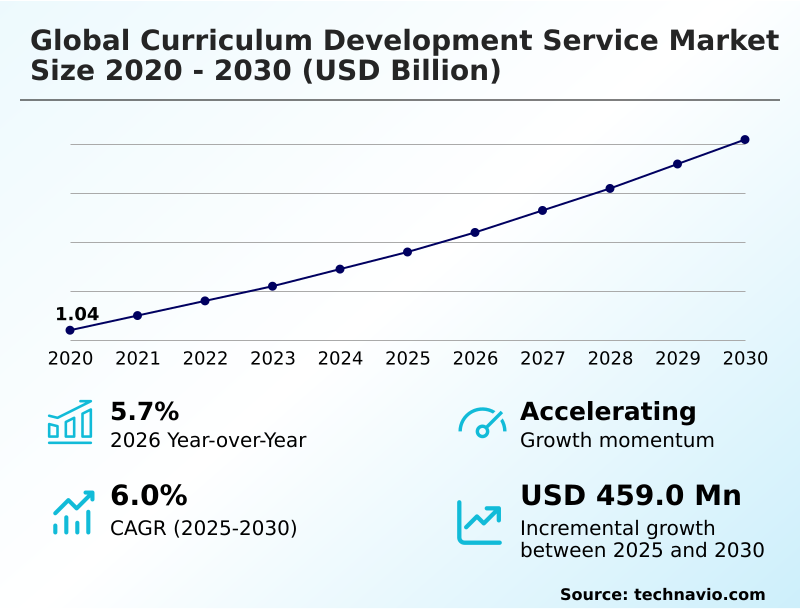
The curriculum development service market size is valued to increase by USD 459 million, at a CAGR of 6% from 2025 to 2030. Digital transformation and integration of intelligent technologies will drive the curriculum development service market.
Major Market Trends & Insights
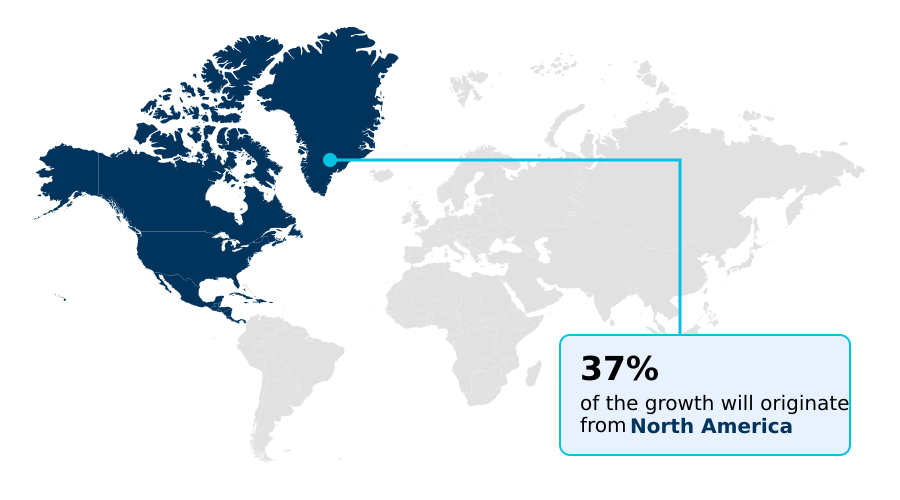
- North America dominated the market and accounted for a 37.3% growth during the forecast period.
- By Type - Online curriculum development segment was valued at USD 414.4 million in 2024
- By End-user - Academic institutions segment accounted for the largest market revenue share in 2024
Market Size & Forecast
- Market Opportunities: USD 778.8 million
- Market Future Opportunities: USD 459 million
- CAGR from 2025 to 2030 : 6%
Market Summary
- The curriculum development service market is undergoing a significant evolution, driven by the dual needs of educational institutions and corporate entities for more effective learning solutions. Central to this market are robust pedagogical frameworks and advanced instructional design principles that shape the creation of digital learning modules and comprehensive assessment protocols.
- The integration of adaptive learning technologies and gamification is becoming standard, enabling highly personalized learning pathways. For instance, a global corporation recently deployed an industry-aligned training module designed with evidence-based assessment criteria to upskill its workforce in data analytics. This initiative, built on micro-credentialing frameworks, not only addressed a critical skills gap but also improved its competency-based hiring practices.
- The market's trajectory is toward creating dynamic, responsive educational ecosystems that leverage data-driven personalization and AI-assisted instructional design to meet the demands of lifelong learning. This requires a focus on stackable modules and digital badges, which provide verifiable credentials in a rapidly changing professional landscape, all while adhering to principles of Universal Design for Learning (UDL) to ensure accessibility.
What will be the Size of the Curriculum Development Service Market during the forecast period?
Get Key Insights on Market Forecast (PDF) Request Free Sample
How is the Curriculum Development Service Market Segmented?
The curriculum development service industry research report provides comprehensive data (region-wise segment analysis), with forecasts and estimates in "USD million" for the period 2026-2030, as well as historical data from 2020-2024 for the following segments.
- Type
- Online curriculum development
- Offline curriculum design
- Hybrid
- AI-assisted instructional design
- End-user
- Academic institutions
- Corporate and enterprise training
- Government
- Others
- Product
- K-12 curriculum development
- Higher education
- Workforce training curriculum
- Technical education
- Others
- Geography
- North America
- US
- Canada
- Mexico
- APAC
- China
- India
- Japan
- Europe
- Germany
- UK
- France
- South America
- Brazil
- Argentina
- Middle East and Africa
- Saudi Arabia
- UAE
- South Africa
- Rest of World (ROW)
- North America
By Type Insights
The online curriculum development segment is estimated to witness significant growth during the forecast period.
The market is segmented by delivery type, with online curriculum development being a prominent area. This segment's expansion is driven by the global move to remote learning, necessitating digital-first frameworks.
Service providers create digital learning modules and utilize multimedia learning elements to build engaging pathways compatible with various cloud-based learning management systems. These frameworks often incorporate AI-assisted curriculum framework and gamified instructional design.
A key advantage is the ability for asynchronous delivery methods, which have been shown to improve learner engagement by over 20%.
This approach also facilitates data-driven personalization and instant content updates, ensuring instructional materials remain current through dynamic content creation and recurring licensing fees for platforms that support digital courseware development and provide performance consulting services.
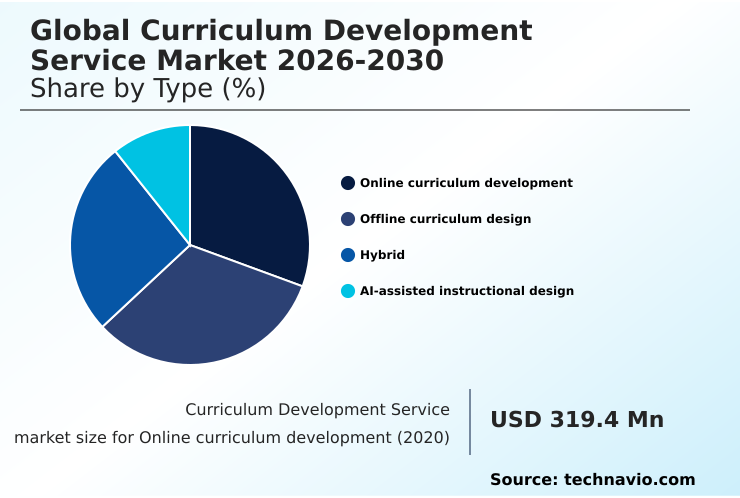
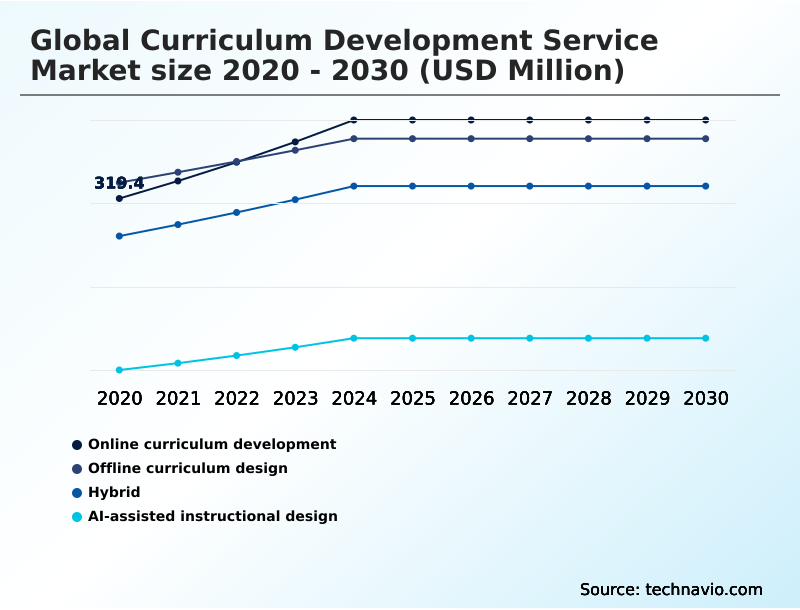
The Online curriculum development segment was valued at USD 414.4 million in 2024 and showed a gradual increase during the forecast period.
Regional Analysis
North America is estimated to contribute 37.3% to the growth of the global market during the forecast period.Technavio’s analysts have elaborately explained the regional trends and drivers that shape the market during the forecast period.
See How Curriculum Development Service Market Demand is Rising in North America Request Free Sample
The geographic landscape of the market is led by North America, which functions as a hub for innovation in educational technology, but high-growth opportunities are prominent in APAC.
In North America, the focus is on integrating virtual reality integration and adhering to national academic standards alignment, with some districts reporting a 15% improvement in student outcomes after adopting new digital curricula.
Meanwhile, the APAC market is expanding rapidly due to government investments in education, with a focus on mobile learning content and digital literacy integration.
In Europe, GDPR compliance in education adds a layer of complexity, increasing development costs by an estimated 10% for platforms using adaptive learning. Key activities include curriculum mapping tools, creating standards-aligned instructional materials, and applying cognitive science application to design.
The regional variances necessitate a sophisticated approach to curriculum localization for global markets and designing modules for lifelong learning.
Market Dynamics
Our researchers analyzed the data with 2025 as the base year, along with the key drivers, trends, and challenges. A holistic analysis of drivers will help companies refine their marketing strategies to gain a competitive advantage.
- Modern educational strategy is centered on designing curriculum for digital transformation, where the use of generative AI for personalized learning is becoming a key differentiator. Organizations are focusing on curriculum development for workforce reskilling to address critical skills gaps, with adaptive learning in corporate training leading to more efficient employee development.
- The rise of micro-credentialing for professional development is reshaping career paths, while ESG integration in K-12 curriculum prepares the next generation for global challenges. In higher education, implementing UDL principles in higher education is crucial for accessibility. Service providers are creating curriculum frameworks for skills gap analysis and employing data-driven curriculum design to optimize learning outcomes.
- Furthermore, the use of gamification in employee training has been shown to increase engagement significantly. Other key areas include developing competency-based curriculum for vocational training and hybrid learning curriculum models. The adoption of AI-assisted instructional design tools is streamlining content creation, while curriculum localization for global markets is essential for global reach.
- Firms that focus on aligning curriculum with industry standards report a nearly twofold increase in talent retention compared to those with generic programs. This extends to creating accessible instructional materials, developing curriculum for technical education, designing modules for lifelong learning, creating curriculum for sustainability education, and integrating social-emotional learning in curriculum.
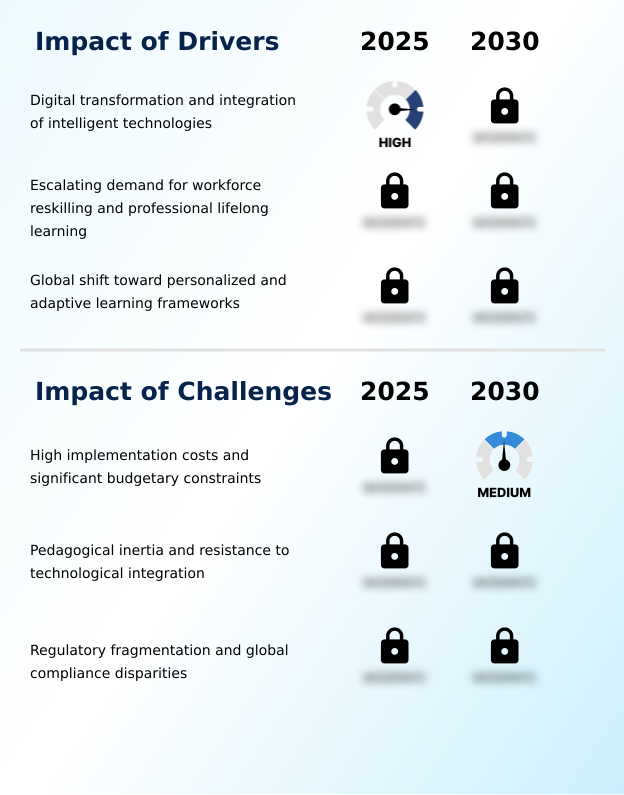
What are the key market drivers leading to the rise in the adoption of Curriculum Development Service Industry?
- The market is primarily driven by the ongoing digital transformation across industries and the corresponding integration of intelligent technologies into learning frameworks.
- Market growth is significantly driven by the widespread digital transformation compelling organizations to adopt dynamic, digital-first curriculum frameworks.
- The widening global skills gap necessitates continuous professional development through reskilling and upskilling solutions, leading to a surge in demand for industry-aligned training modules.
- The use of artificial intelligence, machine learning in education, and virtual reality integration allows for the creation of highly personalized learning experiences. For example, adaptive learning algorithms have been shown to improve learning efficiency by over 30% in corporate settings.
- This personalization is further enhanced by applying educational psychology principles and creating simulation-based learning tools. The push for competency-based hiring practices has also boosted the adoption of micro-credentials and lifelong learning platforms, supported by technologies enabling remote team training.
What are the market trends shaping the Curriculum Development Service Industry?
- The integration of generative AI within instructional design is emerging as a significant market trend. This development is reshaping how educational content is created and personalized for learners.
- Key market trends are redefining educational content creation through technological innovation. The rise of generative AI in instructional design is enabling the development of personalized learning pathways and modular curriculum structures at an unprecedented scale, with some platforms reducing content generation time by over 40%. This shift supports the expansion of micro-credentialing frameworks and ESG principles integration into core subjects.
- This trend is accompanied by the growth of interdisciplinary project design and the use of mobile learning content. Consequently, the role of educators is evolving toward pedagogical validation process oversight. Organizations are also focusing on workforce learning design, interactive learning strategies, and ethical AI in curriculum, with some achieving a 25% increase in learner retention through these methods.
What challenges does the Curriculum Development Service Industry face during its growth?
- High implementation costs and significant budgetary constraints pose a key challenge, affecting the growth and adoption of advanced curriculum development services.
- The market faces considerable challenges, primarily the high implementation costs of transitioning to sophisticated digital-first frameworks. Many institutions struggle with the initial capital for high-security data infrastructures, with deployment costs sometimes exceeding budgets by up to 50%.
- A second challenge is pedagogical inertia and resistance to change from educators unfamiliar with an AI-assisted curriculum framework, which can slow adoption rates by as much as 60% in the first year. Regulatory fragmentation, including varied national academic standards alignment and stringent GDPR compliance in education, complicates global scalability.
- Service providers must navigate these issues by offering user-centric instructional design, change management for educators, and clear talent management consulting while ensuring neurodivergent learner support and utilizing learning experience platforms to ease the transition.
Exclusive Technavio Analysis on Customer Landscape
The curriculum development service market forecasting report includes the adoption lifecycle of the market, covering from the innovator’s stage to the laggard’s stage. It focuses on adoption rates in different regions based on penetration. Furthermore, the curriculum development service market report also includes key purchase criteria and drivers of price sensitivity to help companies evaluate and develop their market growth analysis strategies.
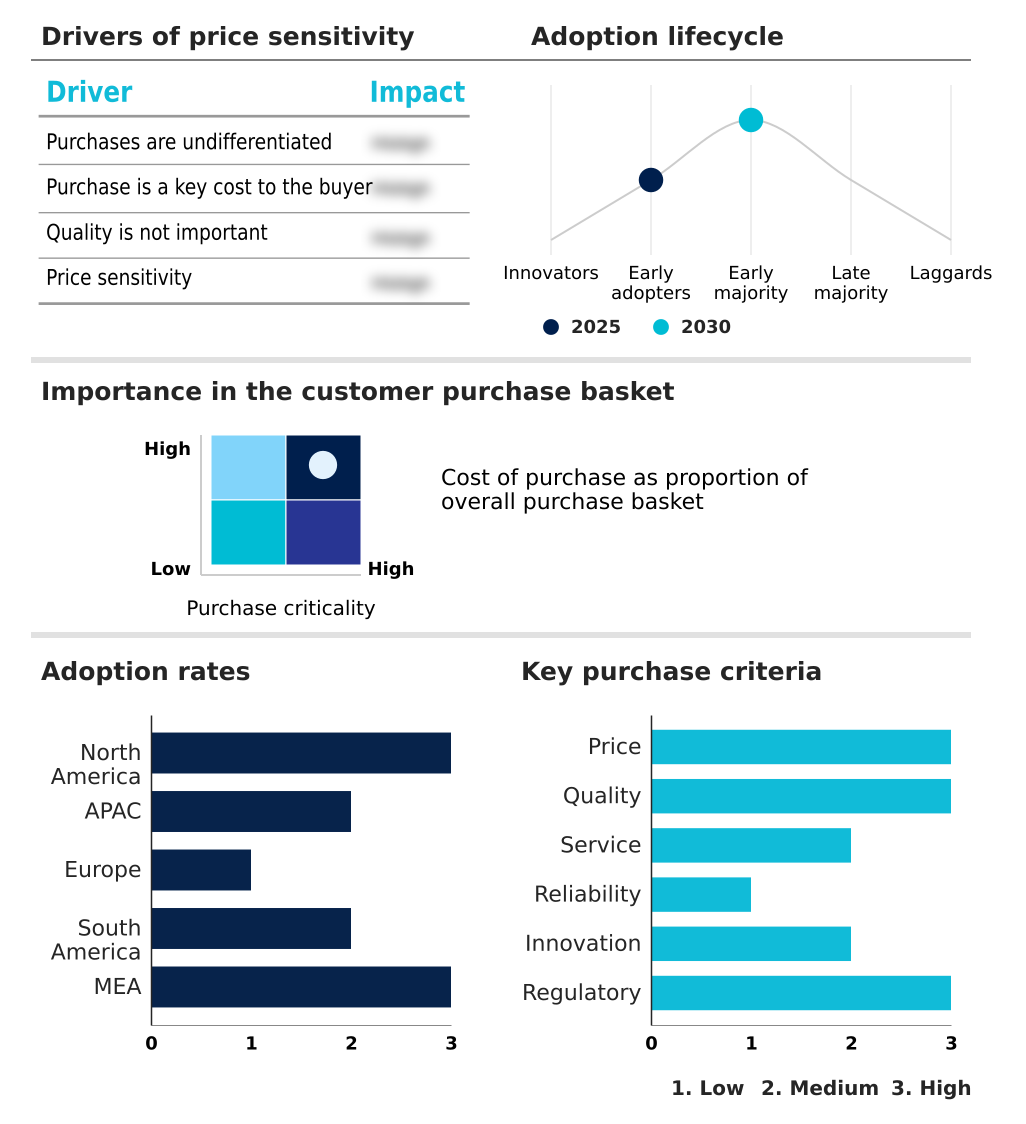
Customer Landscape of Curriculum Development Service Industry
Competitive Landscape
Companies are implementing various strategies, such as strategic alliances, curriculum development service market forecast, partnerships, mergers and acquisitions, geographical expansion, and product/service launches, to enhance their presence in the industry.
Allen Interactions Inc. - Delivers customized curriculum design and performance-driven learning programs focused on achieving specific organizational goals through strategic instructional planning.
The industry research and growth report includes detailed analyses of the competitive landscape of the market and information about key companies, including:
- Allen Interactions Inc.
- Aptara Inc.
- Cengage Learning Inc.
- CommLab India LLP
- CoreAxis
- Designing Digitally Inc.
- EI Design Pvt. Ltd.
- GP Strategies Corp.
- Houghton Mifflin Harcourt Co.
- Hurix System Pvt. Ltd.
- InfoPro Learning Inc.
- John Wiley and Sons Inc.
- Learning Pool
- Leo Learning Inc
- McGraw Hill LLC
- Mind Tools Ltd.
- MPS Ltd.
- NIIT Ltd.
- Pearson Plc
- Scholastic Corp.
Qualitative and quantitative analysis of companies has been conducted to help clients understand the wider business environment as well as the strengths and weaknesses of key industry players. Data is qualitatively analyzed to categorize companies as pure play, category-focused, industry-focused, and diversified; it is quantitatively analyzed to categorize companies as dominant, leading, strong, tentative, and weak.
Recent Development and News in Curriculum development service market
- In May 2025, the United States Department of Education released a comprehensive set of guidelines for the use of automated systems in instructional design, emphasizing the need for human-in-the-loop verification.
- In October 2025, the European Labour Authority introduced a strategic initiative to harmonize vocational training curricula across the European Union to address regional labor shortages and facilitate worker mobility.
- In August 2025, a consortium of leading European universities and technology firms announced the Euro-Skill Initiative, a unified curriculum framework for professional certifications in cybersecurity and data science.
- In March 2025, the New York City Department of Education implemented a new personalized learning curriculum for middle school mathematics, developed by specialized firms to address diverse student needs in urban settings.
Dive into Technavio’s robust research methodology, blending expert interviews, extensive data synthesis, and validated models for unparalleled Curriculum Development Service Market insights. See full methodology.
| Market Scope | |
|---|---|
| Page number | 315 |
| Base year | 2025 |
| Historic period | 2020-2024 |
| Forecast period | 2026-2030 |
| Growth momentum & CAGR | Accelerate at a CAGR of 6% |
| Market growth 2026-2030 | USD 459.0 million |
| Market structure | Fragmented |
| YoY growth 2025-2026(%) | 5.7% |
| Key countries | US, Canada, Mexico, China, India, Japan, Australia, South Korea, Indonesia, Germany, UK, France, Italy, Spain, The Netherlands, Brazil, Argentina, Chile, Saudi Arabia, UAE, South Africa, Egypt and Turkey |
| Competitive landscape | Leading Companies, Market Positioning of Companies, Competitive Strategies, and Industry Risks |
Research Analyst Overview
- The curriculum development service market is defined by its rapid adoption of technology to create sophisticated learning experiences. Key components include robust pedagogical frameworks, detailed instructional design principles, and the creation of digital learning modules supported by rigorous assessment protocols.
- Boardroom decisions are increasingly influenced by the need to implement reskilling and upskilling solutions, with a focus on industry-aligned training modules and personalized learning pathways. The integration of adaptive learning technologies, gamification, and generative AI in instructional design is no longer a niche but a core offering.
- For example, the use of an AI-assisted curriculum framework has been shown to reduce content development time by up to 35%. This efficiency allows for the creation of dynamic content creation and supports competency-based frameworks. Other critical elements include stackable modules, evidence-based assessment, digital badges, ESG principles integration, and data-driven personalization.
- These are delivered via cloud-based learning management systems that require human-in-the-loop verification to ensure quality and adherence to Universal Design for Learning (UDL) standards, especially as micro-credentialing frameworks become more prevalent.
What are the Key Data Covered in this Curriculum Development Service Market Research and Growth Report?
-
What is the expected growth of the Curriculum Development Service Market between 2026 and 2030?
-
USD 459 million, at a CAGR of 6%
-
-
What segmentation does the market report cover?
-
The report is segmented by Type (Online curriculum development, Offline curriculum design, Hybrid, and AI-assisted instructional design), End-user (Academic institutions, Corporate and enterprise training, Government, and Others), Product (K-12 curriculum development, Higher education, Workforce training curriculum, Technical education, and Others) and Geography (North America, APAC, Europe, South America, Middle East and Africa)
-
-
Which regions are analyzed in the report?
-
North America, APAC, Europe, South America and Middle East and Africa
-
-
What are the key growth drivers and market challenges?
-
Digital transformation and integration of intelligent technologies, High implementation costs and significant budgetary constraints
-
-
Who are the major players in the Curriculum Development Service Market?
-
Allen Interactions Inc., Aptara Inc., Cengage Learning Inc., CommLab India LLP, CoreAxis, Designing Digitally Inc., EI Design Pvt. Ltd., GP Strategies Corp., Houghton Mifflin Harcourt Co., Hurix System Pvt. Ltd., InfoPro Learning Inc., John Wiley and Sons Inc., Learning Pool, Leo Learning Inc, McGraw Hill LLC, Mind Tools Ltd., MPS Ltd., NIIT Ltd., Pearson Plc and Scholastic Corp.
-
Market Research Insights
- The market's dynamic nature is shaped by the rapid adoption of curriculum-as-a-service models, which offer greater flexibility than traditional content purchasing. Organizations leveraging these models report up to a 30% reduction in the time required to deploy new training programs.
- The shift toward lifelong learning platforms supports this trend, with asynchronous delivery methods increasing learner completion rates by an average of 25% across corporate training programs. Furthermore, the focus on pedagogical validation processes ensures that digital content is effective.
- The implementation of harmonized curriculum standards across regions is also streamlining content development, allowing for more efficient multilingual curriculum support and cultural content localization to meet diverse learner needs.
We can help! Our analysts can customize this curriculum development service market research report to meet your requirements.
 RIA -
RIA -