



Cultural Tourism Market Size 2026-2030
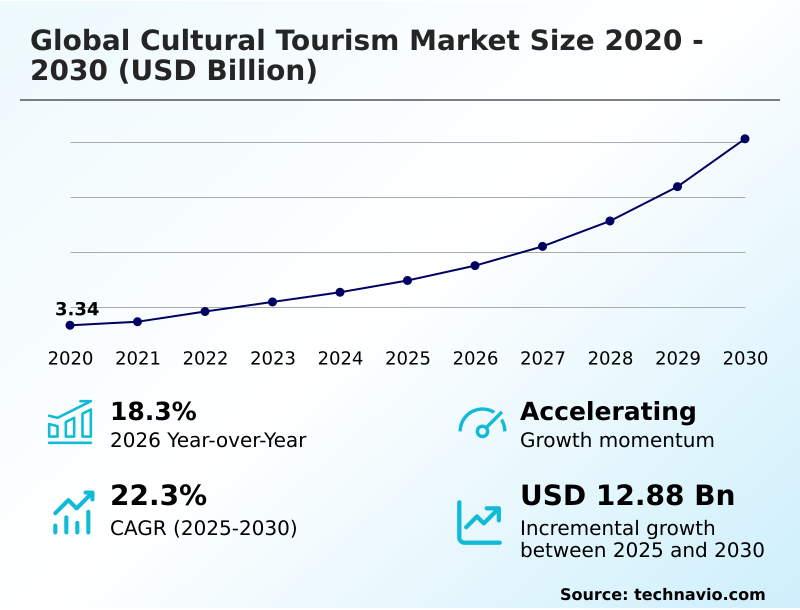
The cultural tourism market size is valued to increase by USD 12.88 billion, at a CAGR of 22.3% from 2025 to 2030. Rising interest in heritage and cultural experiences worldwide will drive the cultural tourism market.
Major Market Trends & Insights
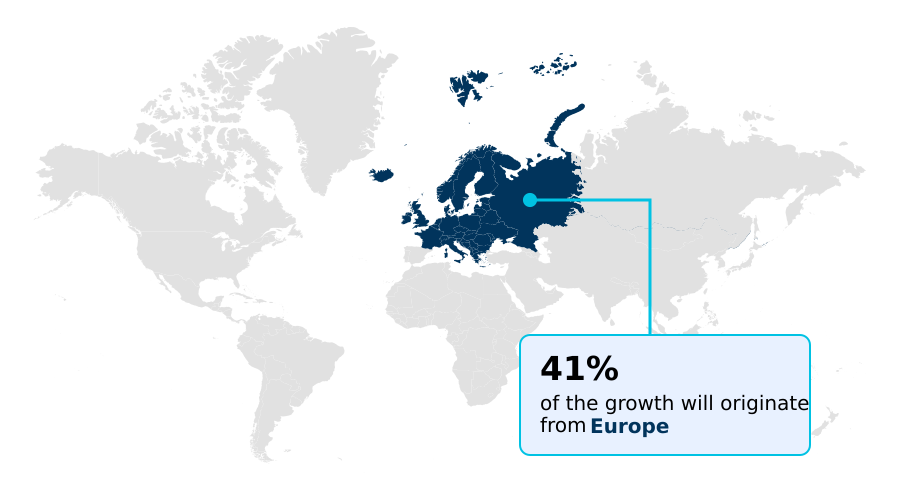
- Europe dominated the market and accounted for a 40.7% growth during the forecast period.
- By Type - Domestic cultural tourism segment was valued at USD 4.40 billion in 2024
- By Service - Cultural eco-tourism segment accounted for the largest market revenue share in 2024
Market Size & Forecast
- Market Opportunities: USD 16.95 billion
- Market Future Opportunities: USD 12.88 billion
- CAGR from 2025 to 2030 : 22.3%
Market Summary
- The Cultural Tourism Market is undergoing a significant transformation, evolving from conventional sightseeing to deep cultural immersion. This shift is powered by digital booking platforms that provide unprecedented access to niche tourism segments, including culinary tourism, indigenous tourism, and specialized art and culture tours.
- Consequently, destination management organizations are grappling with new challenges, such as overtourism mitigation and the critical need for robust heritage site preservation. A forward-thinking tour operator, for example, now utilizes traveler behavior analytics to craft personalized travel itineraries. These itineraries actively promote visitor dispersal strategies, guiding tourists to lesser-known historical landmarks and archaeological sites, thereby enhancing visitor experience management.
- This data-driven approach not only balances commercial objectives with responsible tourism practices but also amplifies the positive local economic impact by spreading revenue across a wider community base. As travelers increasingly seek authentic local experiences, the industry's focus sharpens on sustainability and community-based tourism models to ensure long-term viability and cultural integrity.
What will be the Size of the Cultural Tourism Market during the forecast period?
Get Key Insights on Market Forecast (PDF) Get Free Sample
How is the Cultural Tourism Market Segmented?
The cultural tourism industry research report provides comprehensive data (region-wise segment analysis), with forecasts and estimates in "USD million" for the period 2026-2030, as well as historical data from 2020-2024 for the following segments.
- Type
- Domestic cultural tourism
- International cultural tourism
- Service
- Cultural eco-tourism
- Indigenous cultural tourism
- Socio-cultural tourism
- Application
- Leisure
- Religious pilgrimage
- Education
- Research
- Geography
- Europe
- Germany
- UK
- France
- APAC
- China
- Japan
- India
- North America
- US
- Canada
- Mexico
- South America
- Brazil
- Argentina
- Middle East and Africa
- Saudi Arabia
- UAE
- South Africa
- Rest of World (ROW)
- Europe
By Type Insights
The domestic cultural tourism segment is estimated to witness significant growth during the forecast period.
Domestic cultural tourism is driven by travelers exploring heritage within their own countries, a segment supported by affordability and accessibility. This form of experiential travel focuses on archaeological sites, historical landmarks, and culinary tourism.
Effective destination management is crucial for handling tourist inflow management and ensuring sustainable travel.
The segment's growth is significant, with regions like Europe projected to contribute 40.7% of the total market's incremental growth, highlighting the importance of robust tourism infrastructure development and strategies for visitor flow optimization.
This reflects a strong preference for local cultural immersion and authentic local experiences, which bolsters the local economic impact and supports heritage site preservation, making it a cornerstone of the broader market.
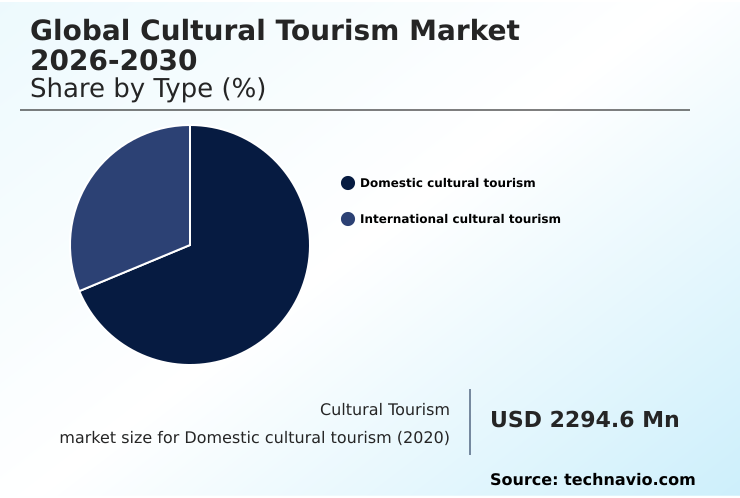
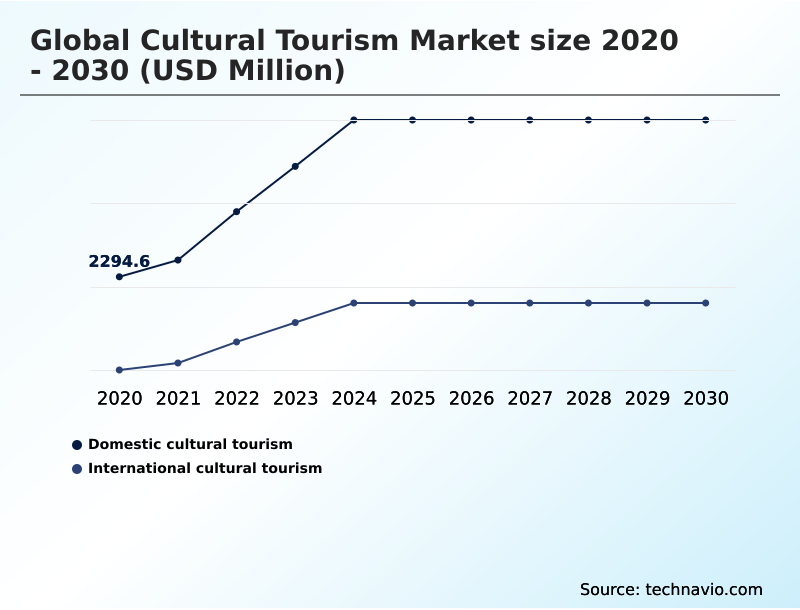
The Domestic cultural tourism segment was valued at USD 4.40 billion in 2024 and showed a gradual increase during the forecast period.
Regional Analysis
Europe is estimated to contribute 40.7% to the growth of the global market during the forecast period.Technavio’s analysts have elaborately explained the regional trends and drivers that shape the market during the forecast period.
See How Cultural Tourism Market Demand is Rising in Europe Get Free Sample
The geographic landscape of the market is characterized by concentrated growth in established regions, with Europe and APAC collectively accounting for over 73% of the market's incremental growth opportunity.
Europe leads, representing 40.7% of this expansion, driven by its dense network of historical landmarks and advanced tourism infrastructure development.
In contrast, APAC's rapid emergence is fueled by a growing middle class and heightened interest in both domestic and cross-border tourism. Destination management in these regions focuses on balancing high tourist inflow management with sustainable travel.
North America, while a mature market, shows steady demand for experiential travel and museum tourism. Effective cultural heritage conservation and destination marketing strategies are key differentiators, as is managing the geopolitical travel impact on traveler sentiment.
Market Dynamics
Our researchers analyzed the data with 2025 as the base year, along with the key drivers, trends, and challenges. A holistic analysis of drivers will help companies refine their marketing strategies to gain a competitive advantage.
- Strategic planning in the Cultural Tourism Market requires a deep understanding of complex, intersecting factors. The impact of overtourism on heritage sites is a primary concern, compelling stakeholders to develop sophisticated strategies for sustainable cultural tourism. This involves balancing tourism with heritage preservation, where the role of digital platforms in tourism becomes crucial for managing visitor flows and engagement.
- The growth of the experiential travel market underscores a shift in consumer demand, requiring operators to analyze traveler preferences for culture more accurately. Concurrently, challenges in managing tourism seasonality and the impact of geopolitics on travel decisions necessitate resilient cultural tourism policy and planning.
- The economic benefits of community-based tourism are substantial, yet this requires careful cultural tourism supply chain management and efforts to develop indigenous tourism respectfully. For example, the domestic tourism segment, which is more than double the size of the international segment, justifies major investment in cultural tourism infrastructure.
- Leveraging technology for visitor engagement, from virtual reality in tourism to digital marketing strategies for cultural destinations, is key to optimizing revenue from cultural attractions and assessing the socio-cultural impacts of tourism, often guided by the role of UNESCO in cultural heritage tourism.
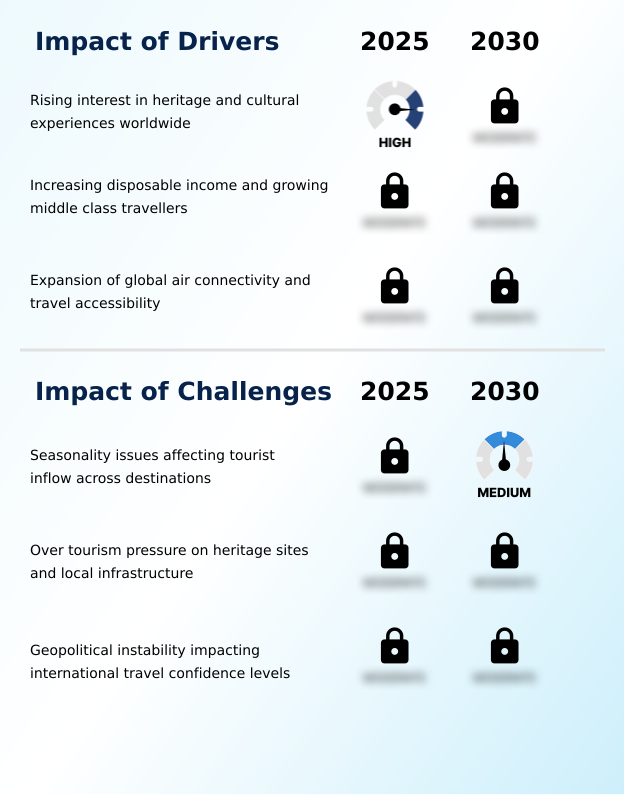
What are the key market drivers leading to the rise in the adoption of Cultural Tourism Industry?
- A key market driver is the rising global interest in heritage and cultural experiences worldwide, as travelers increasingly seek more meaningful and educational journeys.
- The market's 18.3% year-over-year growth is substantially fueled by improved travel accessibility and a rising global interest in experiential travel.
- The introduction of new flight routes by low-cost carriers, for instance, has been shown to reduce average travel costs to secondary cultural destinations by up to 25%, stimulating new demand and supporting cross-border tourism.
- This expansion in connectivity enhances access to festival tourism and community-based tourism opportunities.
- This growth is also enabled by tourism infrastructure development and the proliferation of travel and hospitality services that cater to diverse niche tourism segments, making rich cultural engagement more attainable for a broader audience.
What are the market trends shaping the Cultural Tourism Industry?
- A prominent market trend is the growing demand for authentic local cultural immersion experiences. This shift reflects travelers' increasing desire for meaningful and participatory engagement over traditional sightseeing.
- The market is rapidly evolving with a focus on sustainable travel and cultural immersion, supported by digital transformation. Digital adoption is reshaping traveler engagement, with online travel agency platforms reporting up to a 40% increase in bookings for authentic local experiences over standard packages. This shift towards responsible tourism practices is a direct response to consumer demand.
- Furthermore, virtual tours now influence physical travel decisions in 1 out of 5 cases, serving as a powerful tool for destination marketing strategies. This trend highlights the growing importance of smart tourism technologies and digital heritage interpretation in attracting modern travelers and promoting eco-cultural tourism and cultural exchange programs.
What challenges does the Cultural Tourism Industry face during its growth?
- A significant challenge impacting market growth is the issue of seasonality, which creates pronounced fluctuations in tourist inflow and places uneven strain on destination resources.
- Overtourism mitigation remains a primary operational challenge, as visitor numbers in some heritage cities surpass local infrastructure capacity by over 150% during peak seasons, necessitating advanced tourist inflow management.
- The geopolitical travel impact is also significant, with regions experiencing instability seeing drops in the travel confidence index that can depress bookings by as much as 30% almost overnight, showcasing the need for robust travel risk assessment. This volatility affects everything from art and culture tours to religious pilgrimage.
- These factors underscore the difficulty in maintaining steady visitor flow optimization and highlight the importance of tourism diversification to build resilience against external shocks.
Exclusive Technavio Analysis on Customer Landscape
The cultural tourism market forecasting report includes the adoption lifecycle of the market, covering from the innovator’s stage to the laggard’s stage. It focuses on adoption rates in different regions based on penetration. Furthermore, the cultural tourism market report also includes key purchase criteria and drivers of price sensitivity to help companies evaluate and develop their market growth analysis strategies.
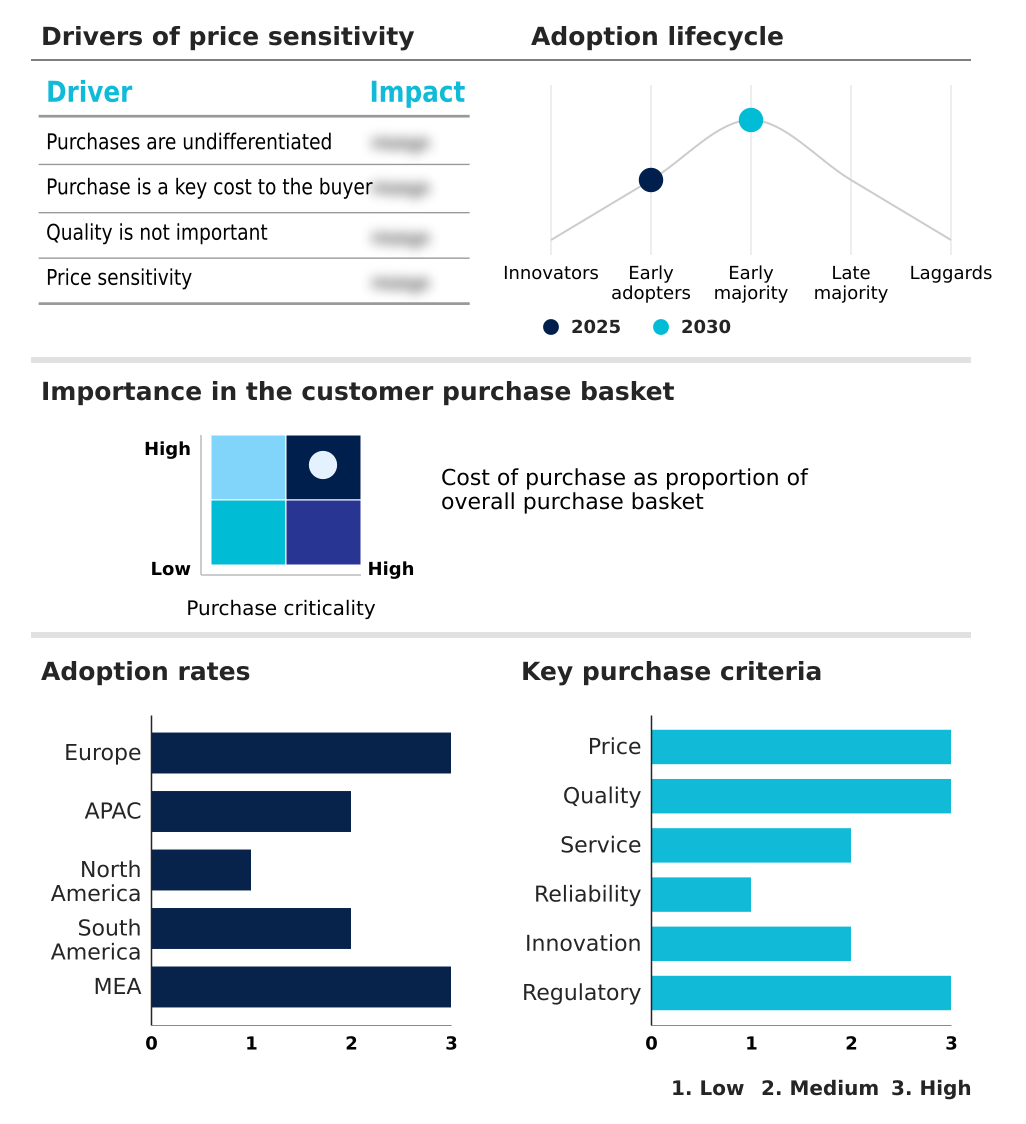
Customer Landscape of Cultural Tourism Industry
Competitive Landscape
Companies are implementing various strategies, such as strategic alliances, cultural tourism market forecast, partnerships, mergers and acquisitions, geographical expansion, and product/service launches, to enhance their presence in the industry.
Airbnb Inc. - Analysis reveals a focus on curated cultural travel, emphasizing heritage immersion and authentic destination experiences that drive market differentiation and value.
The industry research and growth report includes detailed analyses of the competitive landscape of the market and information about key companies, including:
- Airbnb Inc.
- Booking Holdings Inc.
- Butterfield and Robinson Inc.
- Collette Travel Service Inc.
- Context Travel LLC
- EF Education First Ltd.
- Exodus Travels Ltd.
- Expedia Group Inc.
- G Adventures Inc.
- GetYourGuide GmbH
- Grand Circle LLC
- Intrepid Group Pty Ltd.
- Tauck Inc.
- The Travel Corp.
- TripAdvisor Inc.
- TUI AG
- Viking Cruises
- Zicasso Inc.
Qualitative and quantitative analysis of companies has been conducted to help clients understand the wider business environment as well as the strengths and weaknesses of key industry players. Data is qualitatively analyzed to categorize companies as pure play, category-focused, industry-focused, and diversified; it is quantitatively analyzed to categorize companies as dominant, leading, strong, tentative, and weak.
Recent Development and News in Cultural tourism market
- In May 2025, Booking Holdings enhanced its cultural tourism offerings by introducing AI-powered itinerary planning tools and immersive destination previews, allowing users to explore heritage sites virtually before making travel decisions.
- In June 2025, Airbnb Experiences expanded its curated cultural immersion programs across multiple Asian and European destinations, offering travelers opportunities to engage in local workshops, heritage walks, and community-based activities.
- In August 2025, Expedia Group introduced sustainability-focused filters on its travel platform, allowing users to identify and book culturally rich destinations with verified eco-friendly and responsible tourism certifications.
- In September 2025, Emirates expanded its international route network by introducing additional flight connections to key cultural tourism destinations in Europe and Asia, improving accessibility for long-haul travellers and strengthening global tourism linkages.
Dive into Technavio’s robust research methodology, blending expert interviews, extensive data synthesis, and validated models for unparalleled Cultural Tourism Market insights. See full methodology.
| Market Scope | |
|---|---|
| Page number | 296 |
| Base year | 2025 |
| Historic period | 2020-2024 |
| Forecast period | 2026-2030 |
| Growth momentum & CAGR | Accelerate at a CAGR of 22.3% |
| Market growth 2026-2030 | USD 12878.9 million |
| Market structure | Fragmented |
| YoY growth 2025-2026(%) | 18.3% |
| Key countries | Germany, UK, France, Italy, Spain, The Netherlands, China, Japan, India, South Korea, Australia, Indonesia, US, Canada, Mexico, Brazil, Argentina, Chile, Saudi Arabia, UAE, South Africa, Israel and Turkey |
| Competitive landscape | Leading Companies, Market Positioning of Companies, Competitive Strategies, and Industry Risks |
Research Analyst Overview
- An analytical view of the market reveals a complex interplay of factors beyond simple travel logistics. While some operational metrics suggest quality has a low impact on purchasing, this belies the reality of experiential travel. The core of effective visitor experience management is a deep cultural immersion, not a transactional visit to archaeological sites or historical landmarks.
- The market is driven by a quest for authenticity, whether through indigenous tourism, culinary tourism, or festival tourism. Success hinges on sophisticated destination management and robust heritage site preservation, especially with the challenge of overtourism mitigation. Digital booking platforms and virtual tours are transforming travel accessibility, but the geopolitical travel impact remains a volatile external factor.
- Ultimately, growth depends on balancing tourist inflow management with sustainable travel and community-based tourism principles, from religious pilgrimage routes to eco-cultural tourism sites, all while delivering compelling art and culture tours.
What are the Key Data Covered in this Cultural Tourism Market Research and Growth Report?
-
What is the expected growth of the Cultural Tourism Market between 2026 and 2030?
-
USD 12.88 billion, at a CAGR of 22.3%
-
-
What segmentation does the market report cover?
-
The report is segmented by Type (Domestic cultural tourism, and International cultural tourism), Service (Cultural eco-tourism, Indigenous cultural tourism, and Socio-cultural tourism), Application (Leisure, Religious pilgrimage, Education, and Research) and Geography (Europe, APAC, North America, South America, Middle East and Africa)
-
-
Which regions are analyzed in the report?
-
Europe, APAC, North America, South America and Middle East and Africa
-
-
What are the key growth drivers and market challenges?
-
Rising interest in heritage and cultural experiences worldwide, Seasonality issues affecting tourist inflow across destinations
-
-
Who are the major players in the Cultural Tourism Market?
-
Airbnb Inc., Booking Holdings Inc., Butterfield and Robinson Inc., Collette Travel Service Inc., Context Travel LLC, EF Education First Ltd., Exodus Travels Ltd., Expedia Group Inc., G Adventures Inc., GetYourGuide GmbH, Grand Circle LLC, Intrepid Group Pty Ltd., Tauck Inc., The Travel Corp., TripAdvisor Inc., TUI AG, Viking Cruises and Zicasso Inc.
-
Market Research Insights
- The market's dynamics are increasingly shaped by the pursuit of authentic local experiences and the adoption of smart tourism technologies. Regional performance varies, with Europe's market expanding at a rate 1.3 percentage points higher than North America's, reflecting distinct destination marketing strategies and travel confidence index levels.
- The local economic impact of well-managed cultural exchange programs is a critical performance indicator; successful community-based projects have demonstrated the ability to achieve self-sufficiency rates of over 60% within three years of launch. This highlights the effectiveness of tourism diversification and responsible tourism practices in creating sustainable growth.
- Efficient visitor flow optimization is another key metric, with some destinations improving visitor satisfaction by 15% through the implementation of digital heritage interpretation tools and personalized travel itineraries.
We can help! Our analysts can customize this cultural tourism market research report to meet your requirements.
 RIA -
RIA -