


Clean Energy Technologies Market Size 2026-2030
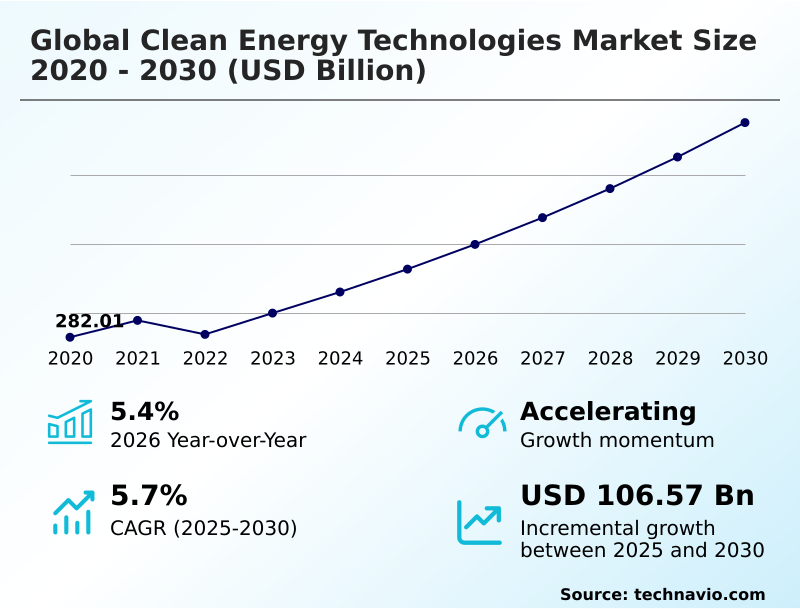
The clean energy technologies market size is valued to increase by USD 106.57 billion, at a CAGR of 5.7% from 2025 to 2030. Conducive regulatory frameworks and governmental support will drive the clean energy technologies market.
Major Market Trends & Insights
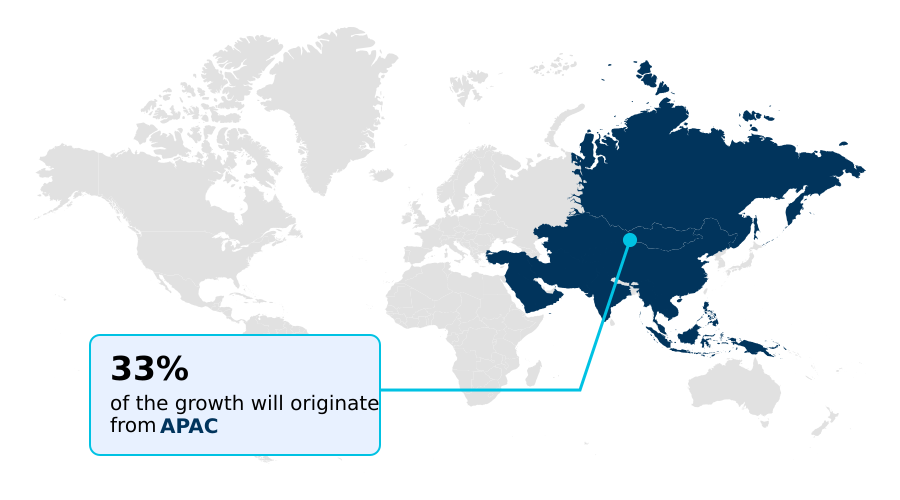
- APAC dominated the market and accounted for a 32.6% growth during the forecast period.
- By Technology - Hydropower segment was valued at USD 87.72 billion in 2024
- By End-user - Industrial segment accounted for the largest market revenue share in 2024
Market Size & Forecast
- Market Opportunities: USD 156.11 billion
- Market Future Opportunities: USD 106.57 billion
- CAGR from 2025 to 2030 : 5.7%
Market Summary
- The clean energy technologies market is undergoing a profound transformation driven by economic imperatives and environmental mandates. Beyond simple power generation, the industry is focused on creating a resilient and intelligent energy ecosystem. Technologies like photovoltaic systems, wind turbines, and advanced energy storage solutions are becoming foundational components of modern infrastructure.
- A key dynamic is the push toward decarbonization pathways, which influences everything from utility-scale project finance to corporate energy procurement strategies. For instance, a logistics company might deploy a microgrid combining rooftop solar with battery storage at its distribution center. This not only lowers electricity costs but also ensures operational continuity during grid outages, safeguarding supply chain integrity.
- This scenario highlights a broader trend: clean energy is no longer just an alternative but a strategic tool for enhancing operational efficiency, managing risk, and achieving long-term sustainability goals. The convergence of digital technologies and hardware innovation is unlocking new value streams and accelerating the energy transition on a scale.
What will be the Size of the Clean Energy Technologies Market during the forecast period?
Get Key Insights on Market Forecast (PDF) Get Free Sample
How is the Clean Energy Technologies Market Segmented?
The clean energy technologies industry research report provides comprehensive data (region-wise segment analysis), with forecasts and estimates in "USD million" for the period 2026-2030, as well as historical data from 2020-2024 for the following segments.
- Technology
- Hydropower
- Clean coal
- Wind
- Solar
- Others
- End-user
- Industrial
- Residential
- Commercial
- Deployment
- On-grid
- Off-grid
- Hybrid systems
- Geography
- APAC
- China
- Japan
- India
- Europe
- Germany
- UK
- France
- North America
- US
- Canada
- Mexico
- South America
- Brazil
- Argentina
- Middle East and Africa
- Saudi Arabia
- UAE
- South Africa
- Rest of World (ROW)
- APAC
By Technology Insights
The hydropower segment is estimated to witness significant growth during the forecast period.
The hydropower segment remains a cornerstone of clean energy, providing essential baseload power and dispatchable power crucial for grid stability.
Beyond massive legacy dams, the focus is shifting toward smaller-scale hydropower installations, including run-of-river projects, small-hydro, mini-hydro, and micro-hydro systems that minimize ecological disruption.
A key evolution in this segment is the expanding role of pumped hydro storage, which functions as a large-scale battery, enhancing energy resilience and enabling deeper integration of variable renewables.
This capability is critical for national energy security, with modern retrofits of existing facilities improving round-trip efficiency by over 15%. This dual function of generation and large-scale storage solidifies hydropower's foundational role in the evolving energy landscape.
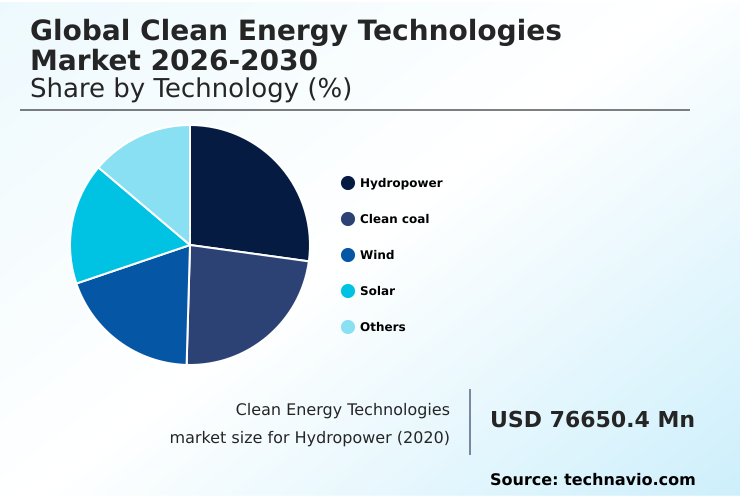
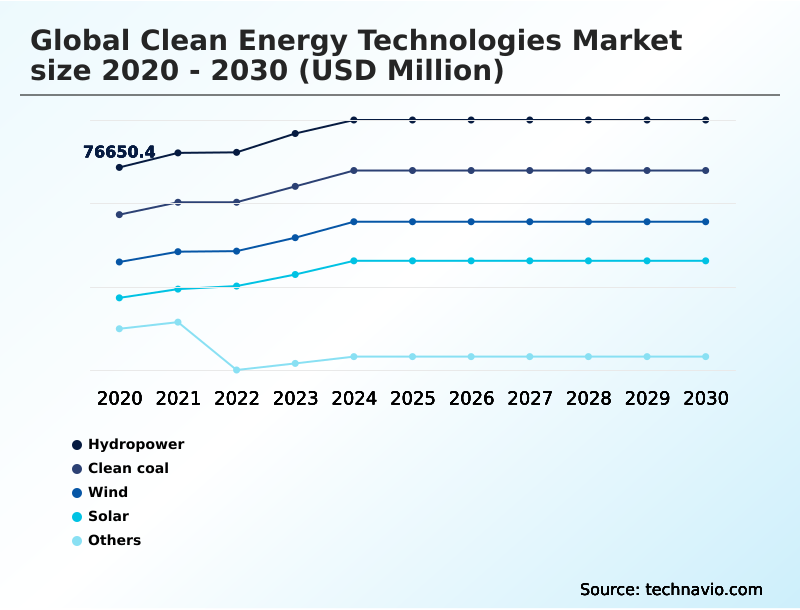
The Hydropower segment was valued at USD 87.72 billion in 2024 and showed a gradual increase during the forecast period.
Regional Analysis
APAC is estimated to contribute 32.6% to the growth of the global market during the forecast period.Technavio’s analysts have elaborately explained the regional trends and drivers that shape the market during the forecast period.
See How Clean Energy Technologies Market Demand is Rising in APAC Get Free Sample
The geographic landscape is increasingly defined by resource-specific deployments and the need for grid modernization. Regions are leveraging unique strengths, from large-scale agrivoltaics to untapped ocean/marine power, including tidal power and wave power.
A critical enabler is the deployment of diverse energy storage solutions, such as thermal energy storage and large-scale battery energy storage systems (BESS), which are vital for grid stability.
The rise of green hydrogen is creating new industrial hubs, while distributed resources like biofuels and biogas support local energy needs.
Investment in transmission infrastructure is essential, as connecting remote renewable sources to demand centers can reduce curtailment rates by as much as 25%.
Market Dynamics
Our researchers analyzed the data with 2025 as the base year, along with the key drivers, trends, and challenges. A holistic analysis of drivers will help companies refine their marketing strategies to gain a competitive advantage.
- Navigating the global clean energy technologies market 2026-2030 requires a deep understanding of specific technological and economic trade-offs. A critical consideration involves comparing solar pv and csp efficiency, where PV dominates in modularity while CSP offers inherent thermal storage capabilities.
- The cost dynamics of offshore wind energy, particularly the move toward challenges of floating offshore wind platforms, are reshaping maritime engineering and project finance. Concurrently, the grid integration challenges with high renewables are a central concern for system operators, forcing investment in smarter grid infrastructure.
- The role of green hydrogen in industrial decarbonization is emerging as a solution for hard-to-abate sectors, though its widespread adoption depends on scaling renewable electricity production. Businesses are increasingly analyzing various financing models for utility-scale solar projects to optimize returns in a competitive landscape where project bankability is paramount.
- For long-term baseload power, the technical viability of small modular reactors is being assessed against the advanced geothermal systems for baseload power, with the former offering location flexibility and the latter providing consistent output in geologically suitable areas.
- The impact of tariffs on solar supply chains has demonstrated vulnerabilities, prompting a re-evaluation of procurement strategies; some firms have mitigated this risk by diversifying suppliers, achieving a supply chain resilience score that is twice as high as their non-diversified peers.
- Finally, at the consumer level, the market for energy storage for residential solar systems is expanding rapidly, while the lifecycle analysis of wind turbine blades and understanding the regulatory frameworks for community solar are becoming key ESG considerations for investors.
- The use of solid oxide fuel cells for on-site power, sector coupling with transport electrification, and transitional solutions like carbon capture in clean coal technologies further illustrate the market's complexity.
What are the key market drivers leading to the rise in the adoption of Clean Energy Technologies Industry?
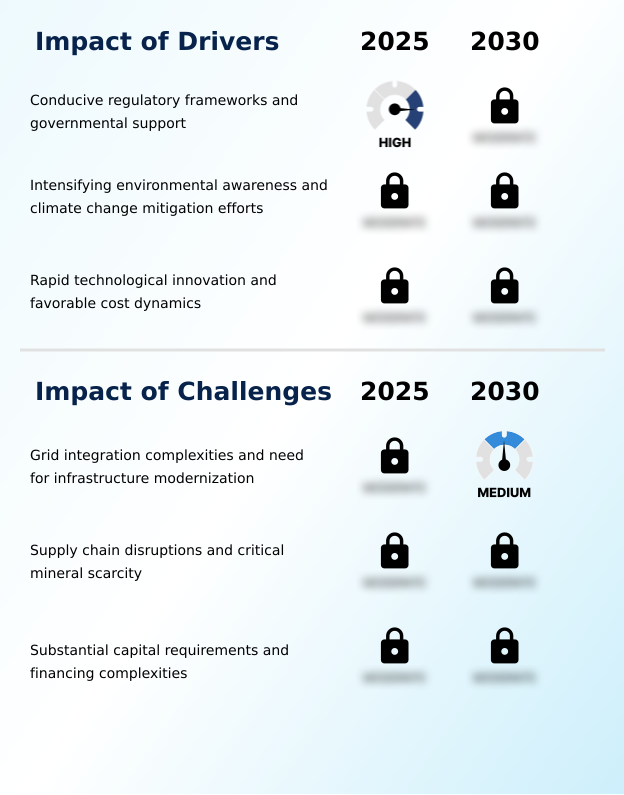
- Conducive regulatory frameworks and robust governmental support serve as a primary catalyst for market expansion.
- Supportive regulatory mechanisms are a primary driver, accelerating the energy transition. Frameworks like renewable portfolio standards and long-term financial instruments, including power purchase agreements (PPAs) and contracts for difference, provide investment certainty.
- These policies have been instrumental in driving down the levelized cost of energy (LCOE) for technologies such as wind turbines and concentrating solar power (CSP), making them economically superior for new capacity.
- This has fueled massive growth in utility-scale solar and created a viable path for capital-intensive offshore wind platforms, including next-generation floating offshore wind projects.
- The clear policy signals are foundational to the industry's decarbonization pathways, showing a 30% faster project approval time in jurisdictions with stable feed-in tariffs.
What are the market trends shaping the Clean Energy Technologies Industry?
- A transformative trend is the accelerated shift from traditional, centralized power generation models toward decentralized and digitally enabled energy grids.
- A primary trend is the shift towards decentralized energy systems, where rooftop solar systems and other distributed energy resources are orchestrated by smart grids. This move toward electrification and sector coupling is creating new business models like energy-as-a-service and community solar programs.
- These frameworks allow for greater efficiency, with some integrated systems reducing line loss by up to 8% compared to traditional centralized models. Innovations in solar photovoltaic (PV) are complemented by advancements in clean transport, where fuel cell engines and synthetic fuels like e-methanol are emerging.
- Effective demand side management becomes critical in this model, enabling a 15% reduction in peak load for commercial participants.
What challenges does the Clean Energy Technologies Industry face during its growth?
- The complexities of grid integration and the critical need for infrastructure modernization present a formidable challenge to market growth.
- Significant challenges persist, particularly around the grid integration of intermittent renewables. Accommodating technologies like concentrating photovoltaic (CPV) and various forms of biopower and biomass requires substantial grid upgrades. Transitional technologies such as carbon capture utilization and storage (CCUS) face economic and scalability hurdles.
- Furthermore, the development of advanced nuclear reactors and small modular reactors (SMRs), while promising for firm power, is constrained by the need for specialized supply chains, including high-assay low-enriched uranium.
- Innovating in niche areas like waste-to-energy technologies, solid oxide fuel cells (SOFC), and building integrated photovoltaics (BIPV) also requires overcoming unique integration complexities, with initial deployments showing that interoperability issues can increase commissioning costs by 10-15%.
Exclusive Technavio Analysis on Customer Landscape
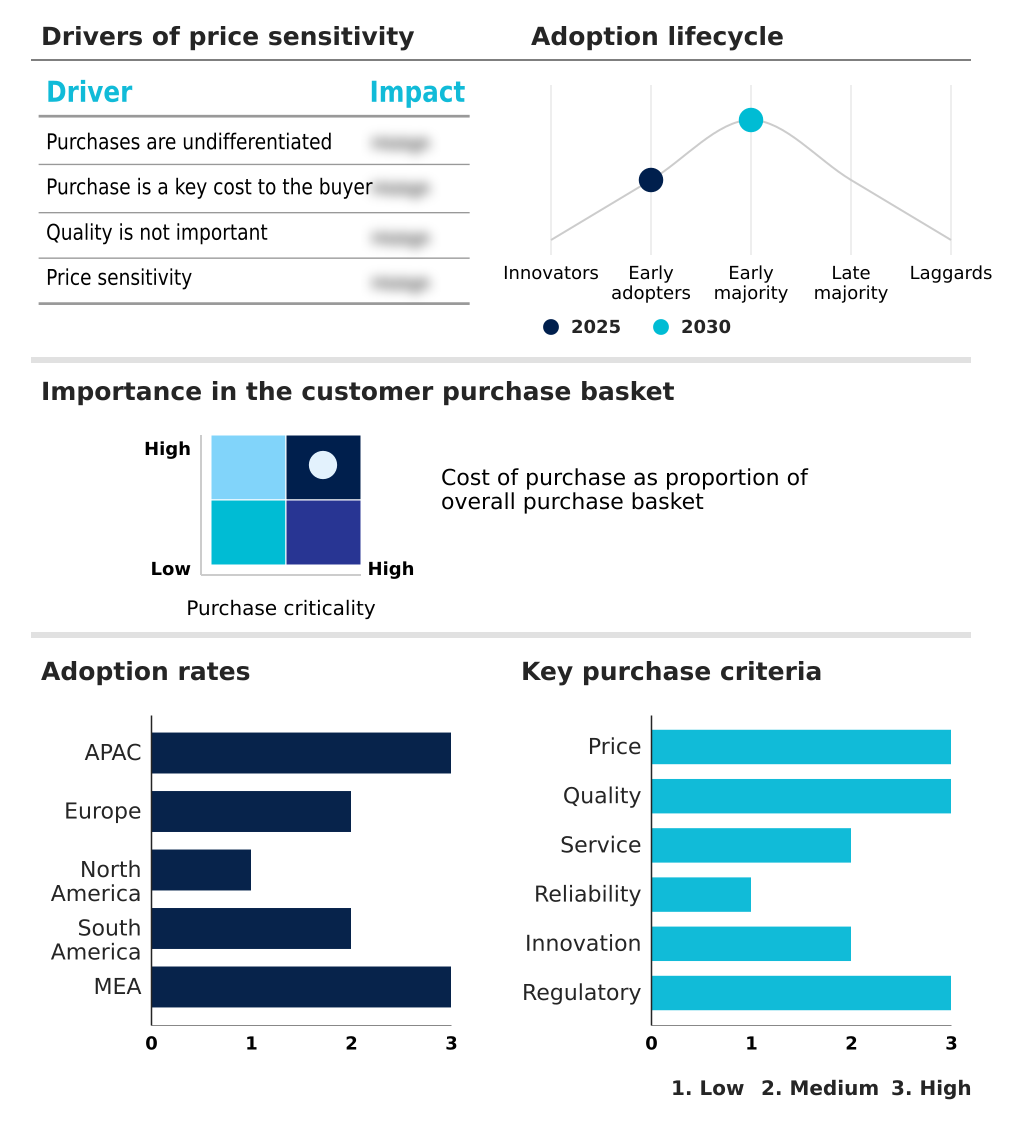
The clean energy technologies market forecasting report includes the adoption lifecycle of the market, covering from the innovator’s stage to the laggard’s stage. It focuses on adoption rates in different regions based on penetration. Furthermore, the clean energy technologies market report also includes key purchase criteria and drivers of price sensitivity to help companies evaluate and develop their market growth analysis strategies.
Customer Landscape of Clean Energy Technologies Industry
Competitive Landscape
Companies are implementing various strategies, such as strategic alliances, clean energy technologies market forecast, partnerships, mergers and acquisitions, geographical expansion, and product/service launches, to enhance their presence in the industry.
ABB Ltd. - Analysis reveals a focus on electrification, grid automation, and energy efficiency solutions, which are central to modern clean energy technology frameworks.
The industry research and growth report includes detailed analyses of the competitive landscape of the market and information about key companies, including:
- ABB Ltd.
- Adani Green Energy Ltd.
- Ballard Power Systems Inc.
- Bloom Energy Corp.
- BYD Co. Ltd.
- Canadian Solar Inc.
- Enel Spa
- Enphase Energy Inc.
- First Solar Inc.
- GE Vernova Inc.
- Iberdrola SA
- JinkoSolar Holding Co. Ltd.
- Schneider Electric SE
- Siemens Energy AG
- SolarEdge Technologies Inc.
- SunPower Corp.
- Tesla Inc.
- TotalEnergies SE
- Trina Solar Co. Ltd.
- Vestas Wind Systems AS
Qualitative and quantitative analysis of companies has been conducted to help clients understand the wider business environment as well as the strengths and weaknesses of key industry players. Data is qualitatively analyzed to categorize companies as pure play, category-focused, industry-focused, and diversified; it is quantitatively analyzed to categorize companies as dominant, leading, strong, tentative, and weak.
Recent Development and News in Clean energy technologies market
- In August, 2025, General Matter announced a landmark private investment of nearly $1.5 billion to construct a commercial uranium enrichment facility in Paducah, Kentucky, to produce High-Assay Low-Enriched Uranium for advanced nuclear reactors.
- In November, 2025, Gentari finalized a long-term power purchase agreement to supply 650 megawatts of continuous, carbon-free electricity from a hybrid portfolio of new wind, solar, and battery storage assets to a major green hydrogen and ammonia production facility in India.
- In August, 2025, ACWA Power announced the commencement of full commercial operations at three major solar power projects in Saudi Arabia—Al Kahfah, Al-Rass 2, and SAAD 2—collectively adding 2.79 gigawatts of clean energy capacity to the national grid.
- In June, 2025, EDP committed to a $7 billion investment plan for the 2025 to 2026 period to accelerate the energy transition in its South American operations, with a primary focus on expanding its solar and wind portfolio and upgrading electricity grid assets in Brazil.
Dive into Technavio’s robust research methodology, blending expert interviews, extensive data synthesis, and validated models for unparalleled Clean Energy Technologies Market insights. See full methodology.
| Market Scope | |
|---|---|
| Page number | 307 |
| Base year | 2025 |
| Historic period | 2020-2024 |
| Forecast period | 2026-2030 |
| Growth momentum & CAGR | Accelerate at a CAGR of 5.7% |
| Market growth 2026-2030 | USD 106572.8 million |
| Market structure | Fragmented |
| YoY growth 2025-2026(%) | 5.4% |
| Key countries | China, Japan, India, South Korea, Australia, Indonesia, Germany, UK, France, Italy, Spain, The Netherlands, US, Canada, Mexico, Brazil, Argentina, Chile, Saudi Arabia, UAE, South Africa, Israel and Turkey |
| Competitive landscape | Leading Companies, Market Positioning of Companies, Competitive Strategies, and Industry Risks |
Research Analyst Overview
- The clean energy technologies market is defined by a strategic diversification of assets to ensure grid reliability. Foundational sources like hydropower installations—from large-scale to small-hydro, mini-hydro, and micro-hydro—are complemented by rapidly expanding photovoltaic systems and wind turbines. Innovation is pushing into new frontiers, including geothermal plants and ocean/marine power utilizing both tidal power and wave power.
- A diverse array of biopower solutions, encompassing biomass, biofuels, and biogas, addresses niche applications. The market's financial structure relies on power purchase agreements (PPAs) and contracts for difference, shaped by renewable portfolio standards and feed-in tariffs that target a low levelized cost of energy (LCOE).
- Advanced generation technologies like concentrating solar power (CSP), concentrating photovoltaic (CPV), and solid oxide fuel cells (SOFC) are emerging alongside next-generation nuclear powered by high-assay low-enriched uranium. The transition toward decarbonization leverages green hydrogen and, where necessary, carbon capture utilization and storage (CCUS).
- System stability hinges on integrated energy storage solutions, including thermal energy storage, managed through smart grids that optimize distributed energy resources and demand side management. The integration of fuel cell engines and production of e-methanol highlight sector coupling. For corporate strategy, resolving grid integration complexities remains paramount, with successful firms using predictive analytics to improve asset availability by over 20%.
What are the Key Data Covered in this Clean Energy Technologies Market Research and Growth Report?
-
What is the expected growth of the Clean Energy Technologies Market between 2026 and 2030?
-
USD 106.57 billion, at a CAGR of 5.7%
-
-
What segmentation does the market report cover?
-
The report is segmented by Technology (Hydropower, Clean coal, Wind, Solar, and Others), End-user (Industrial, Residential, and Commercial), Deployment (On-grid, Off-grid, and Hybrid systems) and Geography (APAC, Europe, North America, South America, Middle East and Africa)
-
-
Which regions are analyzed in the report?
-
APAC, Europe, North America, South America and Middle East and Africa
-
-
What are the key growth drivers and market challenges?
-
Conducive regulatory frameworks and governmental support, Grid integration complexities and need for infrastructure modernization
-
-
Who are the major players in the Clean Energy Technologies Market?
-
ABB Ltd., Adani Green Energy Ltd., Ballard Power Systems Inc., Bloom Energy Corp., BYD Co. Ltd., Canadian Solar Inc., Enel Spa, Enphase Energy Inc., First Solar Inc., GE Vernova Inc., Iberdrola SA, JinkoSolar Holding Co. Ltd., Schneider Electric SE, Siemens Energy AG, SolarEdge Technologies Inc., SunPower Corp., Tesla Inc., TotalEnergies SE, Trina Solar Co. Ltd. and Vestas Wind Systems AS
-
Market Research Insights
- The market is characterized by a strategic pivot towards energy resilience and grid stability, driven by the adoption of decentralized energy systems. The integration of battery energy storage systems (BESS) with intermittent sources has proven to reduce local power disruptions by up to 40% in some commercial microgrids.
- This shift is enabling new energy-as-a-service models, where operational efficiency gains of 15-20% are realized through optimized energy use. The expansion of utility-scale solar and offshore wind platforms is creating a more distributed and complex grid, necessitating advanced management systems. This focus on reliability and security is redefining investment priorities across the sector.
We can help! Our analysts can customize this clean energy technologies market research report to meet your requirements.
 RIA -
RIA -