


Bamboos Market Size 2026-2030
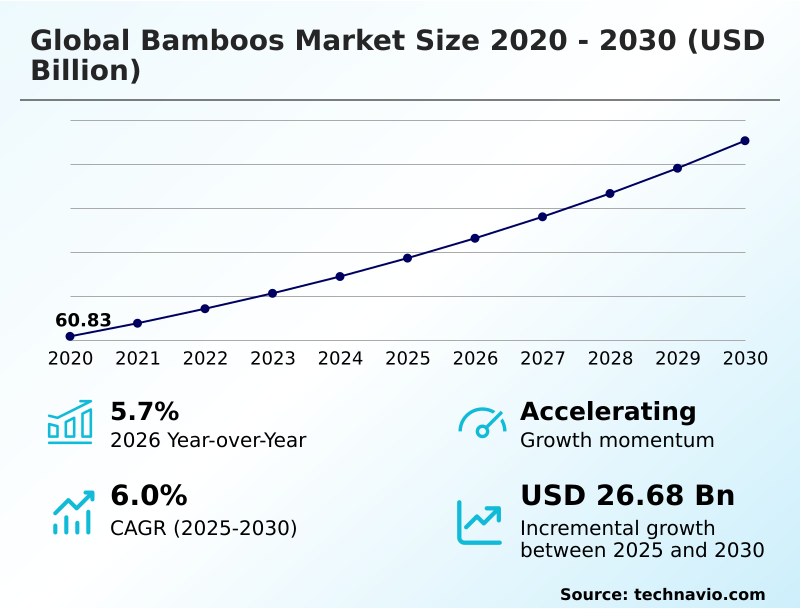
The bamboos market size is valued to increase by USD 26.68 billion, at a CAGR of 6% from 2025 to 2030. Intensifying global focus on sustainability and environmental responsibility will drive the bamboos market.
Major Market Trends & Insights
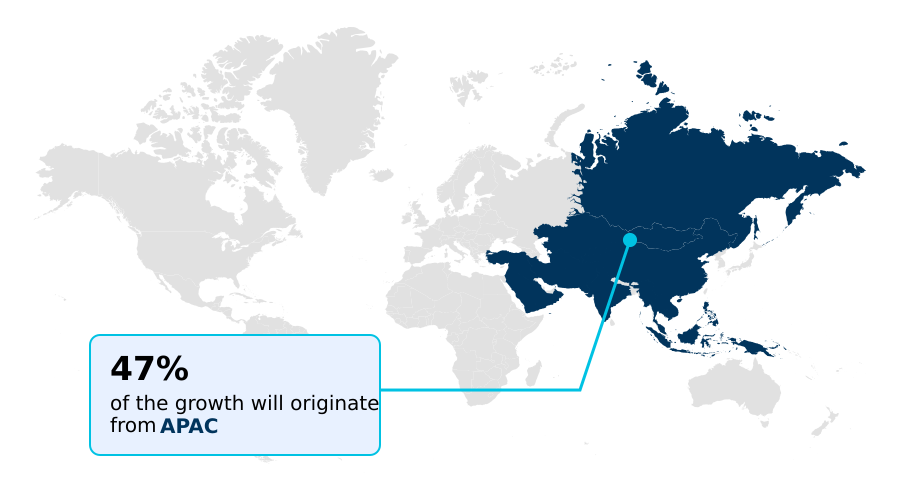
- APAC dominated the market and accounted for a 46.8% growth during the forecast period.
- By Type - Tropical segment was valued at USD 35.19 billion in 2024
- By Application - Industrial products segment accounted for the largest market revenue share in 2024
Market Size & Forecast
- Market Opportunities: USD 44.46 billion
- Market Future Opportunities: USD 26.68 billion
- CAGR from 2025 to 2030 : 6%
Market Summary
- The Bamboos Market demonstrates robust expansion driven by an urgent industrial transition toward renewable, carbon-negative materials. An intensifying focus on sustainability acts as the primary driver, compelling the construction and consumer goods sectors to replace traditional timber and plastics with rapidly renewable alternatives.
- Architectural firms are increasingly adopting engineered structural bamboo for commercial real estate developments, utilizing the material superior tensile strength and carbon-sequestering properties to meet stringent green building certifications. This strategic shift yields a 40% improvement in material replenishment rates compared to conventional hardwood sourcing, drastically lowering long-term procurement risks. However, pervasive supply chain inefficiencies pose a significant challenge.
- Fragmented rural harvesting networks and inadequate primary processing infrastructure cause irregular raw material availability, severely complicating inventory management for large-scale manufacturers. Overcoming these logistical bottlenecks requires targeted investments in automated processing and standardized curing facilities. Bridging this infrastructural gap remains essential for translating sustainable cultivation into reliable industrial output, transforming decentralized agricultural yields into high-performance architectural and manufacturing commodities.
What will be the Size of the Bamboos Market during the forecast period?
Get Key Insights on Market Forecast (PDF) Get Free Sample
How is the Bamboos Market Segmented?
The bamboos industry research report provides comprehensive data (region-wise segment analysis), with forecasts and estimates in "USD million" for the period 2026-2030, as well as historical data from 2020-2024 for the following segments.
- Type
- Tropical
- Herbaceous
- Temperate
- Application
- Industrial products
- Furniture
- Raw material
- Shoots
- Others
- End-user
- Residential
- Commercial
- Agricultural
- Others
- Geography
- APAC
- China
- India
- Japan
- Indonesia
- Vietnam
- South Korea
- North America
- US
- Canada
- Mexico
- Europe
- Germany
- UK
- France
- Italy
- The Netherlands
- Spain
- Middle East and Africa
- South Africa
- Saudi Arabia
- UAE
- Kenya
- Nigeria
- South America
- Brazil
- Colombia
- Chile
- APAC
By Type Insights
The tropical segment is estimated to witness significant growth during the forecast period.
The tropical segment of the bamboos market represents the industrial core for high-load applications, characterized by large-diameter, thick-walled clumping species found in equatorial regions.
These species support intensive sympodial bamboo cultivation networks that yield massive biomass essential for structural engineered bamboo production. Businesses increasingly rely on this rapid regeneration biomass, which outpaces traditional hardwood maturation by a 5:1 ratio.
This accelerated growth cycle delivers a 35% improvement in raw material turnover for manufacturers producing glued laminated bamboo materials. The substantial bamboo culm wall thickness allows for highly efficient automated milling, reducing material waste during the fabrication of structural components.
As commercial architecture shifts toward decarbonized supply chain materials, the integration of tropical species ensures robust mechanical performance while meeting stringent environmental compliance standards.
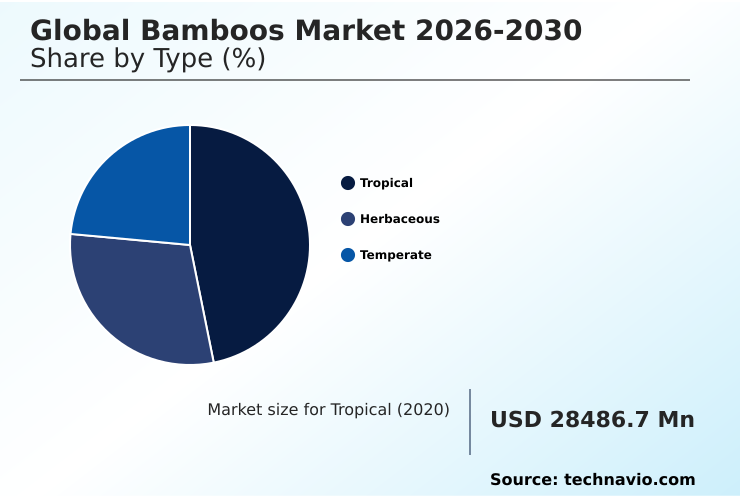
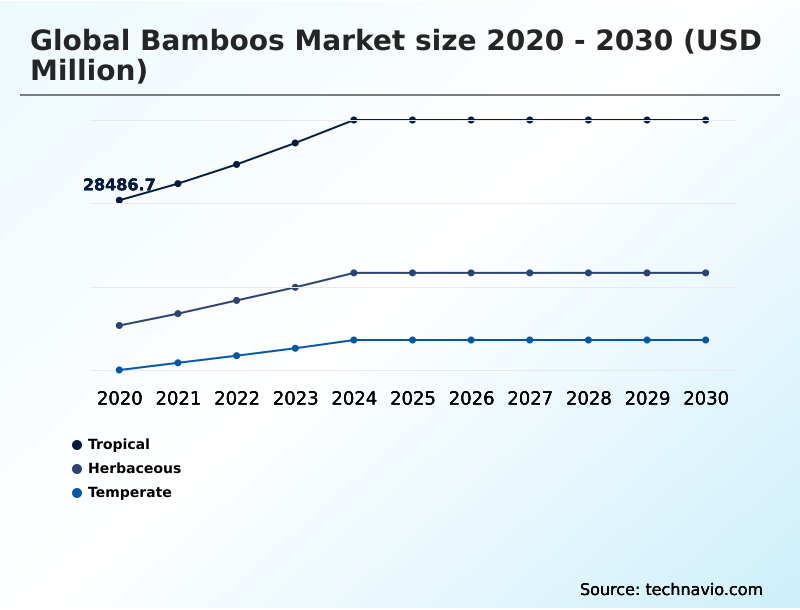
The Tropical segment was valued at USD 35.19 billion in 2024 and showed a gradual increase during the forecast period.
Regional Analysis
APAC is estimated to contribute 46.8% to the growth of the global market during the forecast period.Technavio’s analysts have elaborately explained the regional trends and drivers that shape the market during the forecast period.
See How Bamboos Market Demand is Rising in APAC Get Free Sample
The geographic landscape reveals stark contrasts in industrial maturity, with APAC dominating due to extensive cultivation and deeply integrated rural forestry cooperatives.
APAC processors achieve a 45% higher raw material conversion efficiency than their South American counterparts by heavily investing in secondary processing infrastructure and precision harvesting machinery.
In contrast, South America struggles with fragmented supply chains, resulting in a 30% higher logistical cost for transporting raw culms to urban processing centers.
To bridge this gap, businesses in emerging regions are prioritizing investments in localized primary seasoning depots to stabilize moisture content before transit.
Meanwhile, North American importers are shifting procurement strategies toward certified tree-free pulp manufacturing facilities in Asia to satisfy domestic sustainability mandates.
This cross-regional dynamic forces manufacturers to implement standardized curing treatments universally, ensuring that high-performance bamboo scaffolding panels and engineered materials meet rigorous international building codes regardless of their geographic origin.
Market Dynamics
Our researchers analyzed the data with 2025 as the base year, along with the key drivers, trends, and challenges. A holistic analysis of drivers will help companies refine their marketing strategies to gain a competitive advantage.
- The industrial evolution of the bamboos market is fundamentally reshaping sustainable construction and eco-friendly manufacturing. As regulatory pressures intensify around carbon emissions, enterprises are rapidly transitioning toward advanced materials such as heavy duty strand woven flooring, which offers superior durability and moisture resistance compared to conventional oak or maple.
- This transition supports a consistent 5.7% year-over-year market growth as commercial developers prioritize renewable resources. The architectural sector is witnessing a surge in engineered bamboo structural column fabrication, allowing construction firms to replace carbon-intensive steel and concrete in mid-rise commercial projects.
- By integrating cross laminated bamboo architectural panels into prefabricated building designs, project managers achieve a 20% faster installation turnaround, directly optimizing labor deployment and on-site operational planning. Furthermore, the consumer goods and packaging sectors are pivoting away from single-use plastics toward sustainable bamboo packaging pulp manufacturing, driven by strict biodegradable mandates.
- This shift compels supply chain executives to overhaul vendor networks, ensuring compliance with global zero-waste initiatives. Simultaneously, the deployment of high performance glued laminated timber in public infrastructure demonstrates the material immense load-bearing capabilities and structural resilience.
- By aligning procurement strategies with these advanced engineered materials, organizations not only drastically reduce their environmental footprint but also mitigate the long-term price volatility associated with traditional hardwood lumber, securing a more predictable and sustainable operational future.
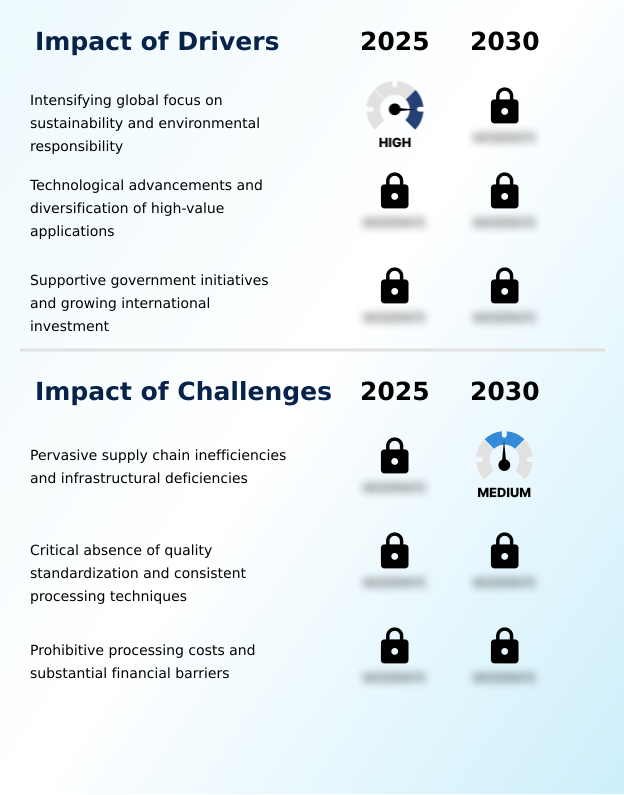
What are the key market drivers leading to the rise in the adoption of Bamboos Industry?
- An intensifying worldwide focus on sustainability and environmental responsibility serves as the primary driver propelling market expansion.
- An intensifying regulatory clampdown on deforestation and plastic pollution is forcing global supply chains to rapidly adopt rapidly renewable biomass solutions.
- This compliance pressure directly accelerates the cultivation of agroforestry carbon sequestration crops, which mature at a heavily accelerated rate compared to traditional timber.
- By utilizing micro-propagation tissue culture, agrarian operations have increased uniform seedling yields by 50%, ensuring a consistent and resilient bamboo biomass feedstock for industrial processors.
- This steady supply empowers manufacturers to scale the production of eco-friendly consumer packaging, effectively reducing corporate reliance on petroleum-based plastics by 35% in targeted retail sectors.
- Consumer goods companies achieve strict environmental, social, and governance targets while shielding themselves from volatile fossil fuel pricing, positioning cellulosic textile fibers and molded packaging as critical drivers of sustainable operational strategy.
What are the market trends shaping the Bamboos Industry?
- The integration of bamboo into the circular and bio-based economy represents a defining trend. This shift emphasizes sustainable resource utilization and closed-loop material life cycles.
- The aggressive mainstreaming of engineered bamboo into structural architecture marks a pivotal shift away from carbon-intensive building materials. This transition is driven by the refinement of bio-resin integration techniques, which substantially elevate the load-bearing capacities of engineered timber.
- By implementing advanced thermal modification processing, manufacturers have successfully improved exterior material lifespan by 40%, making it highly viable for severe weather environments. Furthermore, the adoption of low-volatile organic compound sealant formulations has reduced indoor air toxicity metrics by 65%, aligning perfectly with rigorous commercial wellness standards.
- These innovations directly impact architectural firms by reducing compliance-related project delays and lowering lifecycle replacement costs. As whole plant biorefinery technology matures, producers are also extracting high-value bamboo fiber regenerated cellulose for technical textiles alongside structural products.
- This dual-yield approach maximizes biomass utility, empowering enterprises to diversify revenue streams while establishing sustainable building structures as the new baseline for commercial real estate development.
What challenges does the Bamboos Industry face during its growth?
- Pervasive supply chain inefficiencies and critical infrastructural deficiencies remain a primary challenge restricting industrial scalability and growth.
- Deeply entrenched supply chain fragmentation and critical infrastructural deficits continue to obstruct the industrial scalability of raw biomass processing. The reliance on decentralized rural forestry cooperatives for raw material extraction creates severe inconsistencies in culm delivery, resulting in a 25% drop in operational efficiency for downstream manufacturers.
- Without standardized primary seasoning depots, moisture variations in the raw feed severely compromise the curing process for high-velocity wind load framing and bamboo scaffolding panels. This lack of initial quality control increases secondary defect rates by up to 18%, driving up overall production costs.
- Processors attempting to produce glued laminated bamboo face elevated financial barriers, as they must independently invest in expensive thermal drying and anti-fungal bamboo treatment facilities to compensate for the inadequate rural agricultural infrastructure.
Exclusive Technavio Analysis on Customer Landscape
The bamboos market forecasting report includes the adoption lifecycle of the market, covering from the innovator’s stage to the laggard’s stage. It focuses on adoption rates in different regions based on penetration. Furthermore, the bamboos market report also includes key purchase criteria and drivers of price sensitivity to help companies evaluate and develop their market growth analysis strategies.
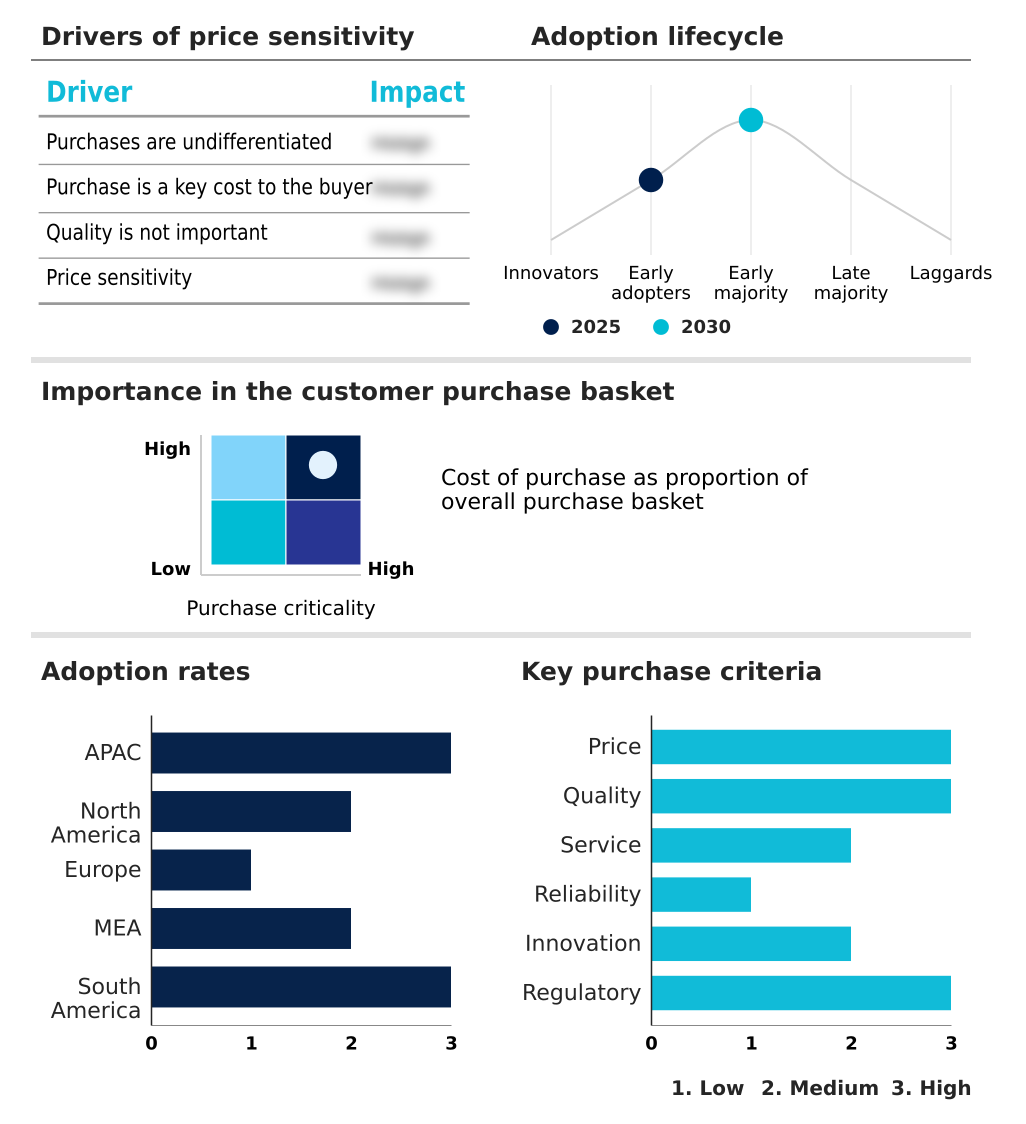
Customer Landscape of Bamboos Industry
Competitive Landscape
Companies are implementing various strategies, such as strategic alliances, bamboos market forecast, partnerships, mergers and acquisitions, geographical expansion, and product/service launches, to enhance their presence in the industry.
Anji Anjia Bamboo Industry Co - The vendor provides diverse bamboo solutions including indoor flooring, woven mats, and multi-layer structural panels, catering to sustainable construction and architectural design sectors globally.
The industry research and growth report includes detailed analyses of the competitive landscape of the market and information about key companies, including:
- Anji Anjia Bamboo Industry Co
- Anji Tianchi Bamboo and Wood
- AnJi XinShun Bamboo and Wood
- Bamboo Living Inc.
- Bambu Lab
- dasso Group
- EcoPlanet Bamboo Group
- Greenington LLC
- Hunan Liuyang River Bamboo
- Kanger International Berhad
- Kerala State Bamboo Corp Ltd
- Moso International B.V.
- Senhe Wood Industry Jiangsu Co
- Shanghai Tenbro Bamboo Textile
- Smith and Fong Co.
- Teragren
- Yixing Bamboo Products Co. Ltd.
- Yoyu Bamboo Industry Co. Ltd.
- Zhejiang Zhonghe Bamboo Wood
Qualitative and quantitative analysis of companies has been conducted to help clients understand the wider business environment as well as the strengths and weaknesses of key industry players. Data is qualitatively analyzed to categorize companies as pure play, category-focused, industry-focused, and diversified; it is quantitatively analyzed to categorize companies as dominant, leading, strong, tentative, and weak.
Recent Development and News in Bamboos market
- In the Forest Products industry, the implementation of stringent international deforestation regulations mandated strict traceability for timber and derived commodities, directly impacting bamboos demand as a low-risk, fast-renewing alternative for sustainable supply chain procurement.
- The adoption of bio-based thermosetting adhesives in engineered wood manufacturing reduced reliance on petroleum-derived phenolic resins by up to 40%, enhancing the ecological profile of cross-laminated bamboo timber in commercial architecture.
- Stricter global carbon accounting standards for building materials shifted architectural preferences toward high-yield carbon sinks, accelerating the substitution of slow-growing hardwoods with agroforestry carbon sequestration crops to meet net-zero construction targets.
- Advancements in whole plant biorefinery technology enabled the simultaneous extraction of cellulosic textile fibers and biochemicals from fibrous biomass, driving the integration of bamboo biomass feedstock into tree-free pulp manufacturing and biodegradable packaging sectors.
Dive into Technavio’s robust research methodology, blending expert interviews, extensive data synthesis, and validated models for unparalleled Bamboos Market insights. See full methodology.
| Market Scope | |
|---|---|
| Page number | 295 |
| Base year | 2025 |
| Historic period | 2020-2024 |
| Forecast period | 2026-2030 |
| Growth momentum & CAGR | Accelerate at a CAGR of 6% |
| Market growth 2026-2030 | USD 26681.6 million |
| Market structure | Fragmented |
| YoY growth 2025-2026(%) | 5.7% |
| Key countries | China, India, Japan, Indonesia, Vietnam, South Korea, US, Canada, Mexico, Germany, UK, France, Italy, The Netherlands, Spain, South Africa, Saudi Arabia, UAE, Kenya, Nigeria, Brazil, Colombia and Chile |
| Competitive landscape | Leading Companies, Market Positioning of Companies, Competitive Strategies, and Industry Risks |
Research Analyst Overview
- The bamboos market is undergoing a profound structural transformation as it integrates into the core of the global bio-based economy. Industrial demand for cross-laminated bamboo timber has accelerated as commercial real estate developers seek robust, carbon-negative substitutes for traditional construction materials.
- Manufacturers are increasingly utilizing bio-based thermosetting adhesives to produce modular bamboo architectural panels, successfully eliminating toxic emissions while meeting stringent green building certifications. This technological upgrade yields a 30% improvement in structural moisture resistance, directly reducing long-term maintenance liabilities for facility operators.
- Advancements in thermal modification processing have enhanced the durability of exterior bamboo strand woven flooring, expanding its deployment in high-traffic public infrastructure. The optimization of the culm lignification cycle allows agricultural operations to harvest mature biomass significantly faster than conventional forestry, ensuring a stable supply of bamboo biomass feedstock.
- Producers are scaling up biodegradable bamboo molded packaging operations to satisfy intense regulatory pressures against single-use plastics. By refining anti-fungal bamboo treatment protocols, the industry effectively neutralizes biological degradation risks, cementing engineered bamboo as a cornerstone of sustainable, high-performance architecture and manufacturing.
What are the Key Data Covered in this Bamboos Market Research and Growth Report?
-
What is the expected growth of the Bamboos Market between 2026 and 2030?
-
USD 26.68 billion, at a CAGR of 6%
-
-
What segmentation does the market report cover?
-
The report is segmented by Type (Tropical, Herbaceous, and Temperate), Application (Industrial products, Furniture, Raw material, Shoots, and Others), End-user (Residential, Commercial, Agricultural, and Others) and Geography (APAC, North America, Europe, Middle East and Africa, South America)
-
-
Which regions are analyzed in the report?
-
APAC, North America, Europe, Middle East and Africa and South America
-
-
What are the key growth drivers and market challenges?
-
Intensifying global focus on sustainability and environmental responsibility, Pervasive supply chain inefficiencies and infrastructural deficiencies
-
-
Who are the major players in the Bamboos Market?
-
Anji Anjia Bamboo Industry Co, Anji Tianchi Bamboo and Wood, AnJi XinShun Bamboo and Wood, Bamboo Living Inc., Bambu Lab, dasso Group, EcoPlanet Bamboo Group, Greenington LLC, Hunan Liuyang River Bamboo, Kanger International Berhad, Kerala State Bamboo Corp Ltd, Moso International B.V., Senhe Wood Industry Jiangsu Co, Shanghai Tenbro Bamboo Textile, Smith and Fong Co., Teragren, Yixing Bamboo Products Co. Ltd., Yoyu Bamboo Industry Co. Ltd. and Zhejiang Zhonghe Bamboo Wood
-
Market Research Insights
- The Bamboos Market is rapidly evolving from localized agricultural trade into a highly industrialized sector supplying advanced construction and manufacturing materials. Manufacturers are increasingly leveraging environmental remediation agroforestry to secure reliable, sustainable feedstocks. The integration of automated computer-numerical-control milling has optimized production workflows, delivering a 25% reduction in material waste during structural beam fabrication.
- Furthermore, the adoption of low-emission thermosetting binders in panel manufacturing has improved indoor air quality compliance rates by 40% across commercial projects. This operational shift empowers suppliers to scale production of heavy-duty structural composites while maintaining strict ecological standards.
- By resolving traditional bottlenecks at processing centers, industrial operators ensure consistent quality, positioning bamboo as a superior alternative in the closed-loop bio-based economy.
We can help! Our analysts can customize this bamboos market research report to meet your requirements.
 RIA -