



Augmented Reality And Virtual Reality Market Size 2026-2030
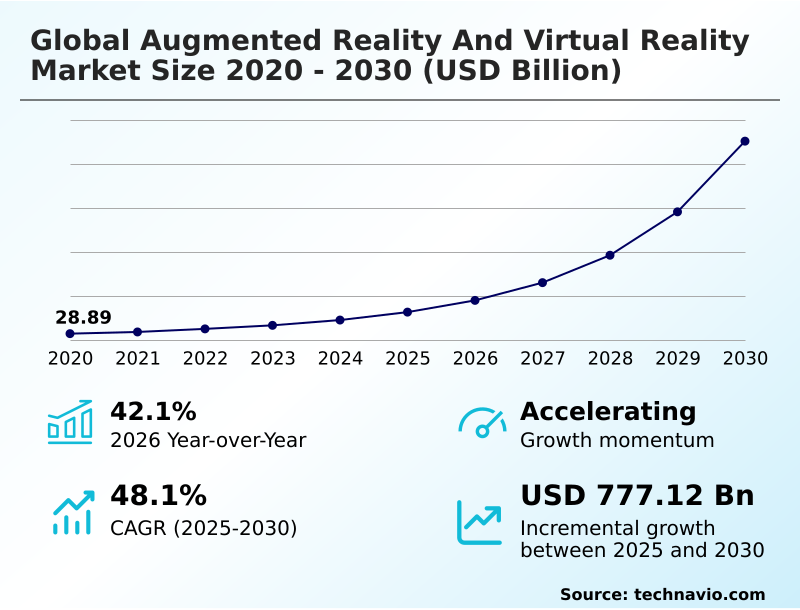
The augmented reality and virtual reality market size is valued to increase by USD 777.12 billion, at a CAGR of 48.1% from 2025 to 2030. Growing demand for AR and VR technology will drive the augmented reality and virtual reality market.
Major Market Trends & Insights
- APAC dominated the market and accounted for a 34.2% growth during the forecast period.
- By Technology - AR segment was valued at USD 60.90 billion in 2024
- By Application - Consumer segment accounted for the largest market revenue share in 2024
Market Size & Forecast
- Market Opportunities: USD 874.95 billion
- Market Future Opportunities: USD 777.12 billion
- CAGR from 2025 to 2030 : 48.1%
Market Summary
- The augmented reality and virtual reality market is experiencing strong expansion, propelled by advancements in immersive technologies and increasing adoption across diverse industries. Augmented reality enhances real-world environments by overlaying digital information, while virtual reality creates fully simulated digital worlds.
- These technologies are transforming sectors such as gaming, healthcare, education, retail, manufacturing, and defense by improving training, visualization, and customer engagement. A key driver is the rising demand for enhanced user experiences, supported by widespread smartphone penetration and improved internet connectivity.
- For instance, in manufacturing, AR overlays provide technicians with real-time, step-by-step instructions for complex assembly or maintenance tasks, significantly reducing errors and downtime. This practical application highlights the shift from consumer entertainment to critical enterprise tools.
- However, the market's trajectory is moderated by challenges such as high development costs, technical limitations like device bulkiness and battery life, and data privacy concerns. As innovation continues and hardware becomes more accessible, the diversification of applications and growing investor confidence are set to sustain momentum.
What will be the Size of the Augmented Reality And Virtual Reality Market during the forecast period?
Get Key Insights on Market Forecast (PDF) Request Free Sample
How is the Augmented Reality And Virtual Reality Market Segmented?
The augmented reality and virtual reality industry research report provides comprehensive data (region-wise segment analysis), with forecasts and estimates in "USD million" for the period 2026-2030, as well as historical data from 2020-2024 for the following segments.
- Technology
- AR
- VR
- Application
- Consumer
- Enterprise
- Component
- Hardware
- Software
- End-user
- Aerospace and defense
- Consumer
- Commercial
- Enterprise
- Others
- Geography
- APAC
- China
- Japan
- India
- North America
- US
- Canada
- Mexico
- Europe
- Germany
- UK
- France
- Middle East and Africa
- Saudi Arabia
- UAE
- South Africa
- South America
- Brazil
- Argentina
- Rest of World (ROW)
- APAC
By Technology Insights
The ar segment is estimated to witness significant growth during the forecast period.
The augmented reality and virtual reality market is segmented by technology, application, and end-user. The technology segment is led by augmented reality, driven by the adoption of AR-enabled smart glasses and applications that create an immersive digital environment.
In the application segment, enterprise use cases are expanding rapidly, with VR for industrial training and AR surgical simulation demonstrating significant efficiency gains. In fact, AR-guided industrial tasks have been shown to reduce errors by up to 25%.
The consumer segment remains robust, dominated by consumer VR gaming. Key end-user industries include healthcare, where AR in healthcare is transforming procedures, and education, where VR for education offers interactive learning.
The growth of enterprise AR solutions across various verticals underscores the market’s diversification beyond entertainment.
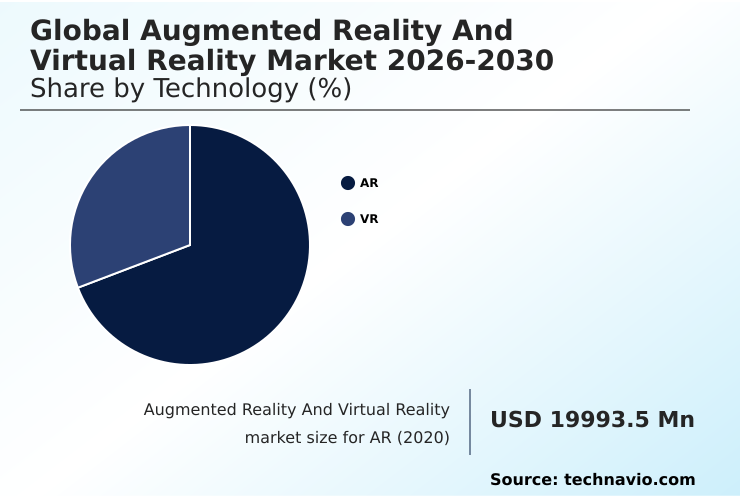
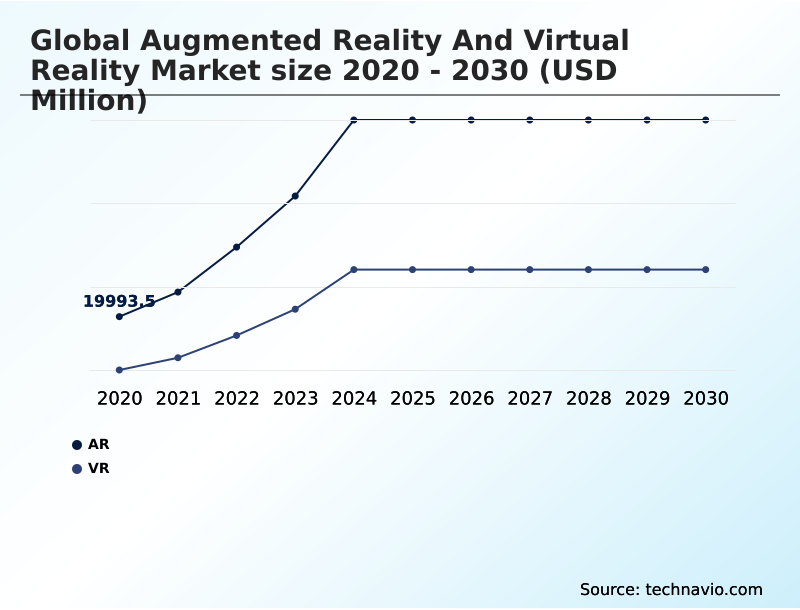
The AR segment was valued at USD 60.90 billion in 2024 and showed a gradual increase during the forecast period.
Regional Analysis
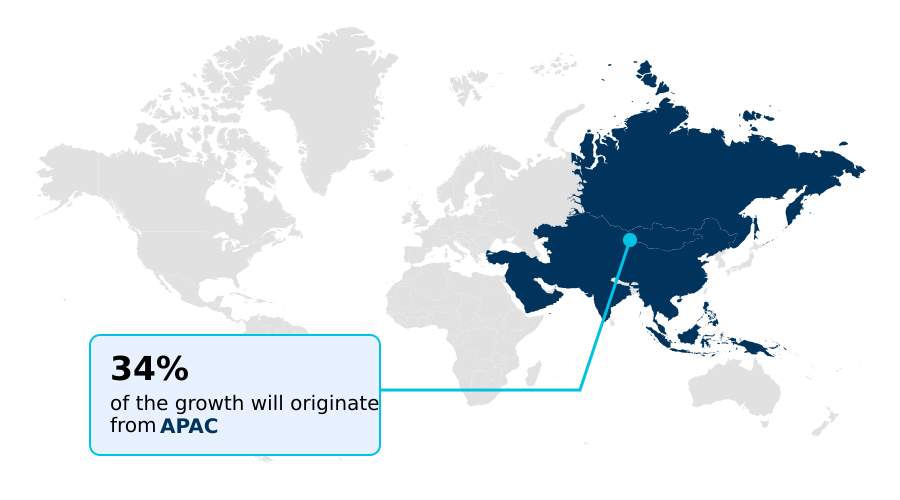
APAC is estimated to contribute 34.2% to the growth of the global market during the forecast period.Technavio’s analysts have elaborately explained the regional trends and drivers that shape the market during the forecast period.
See How Augmented Reality And Virtual Reality Market Demand is Rising in APAC Request Free Sample
The market landscape shows distinct regional dynamics. North America, representing a 32.53% growth opportunity, leads in enterprise adoption, particularly in aerospace and healthcare.
Europe excels in industrial applications, using AR overlay for manufacturing and VR for architectural design to enhance precision.
However, APAC is the fastest-growing region, projected to account for 34.15% of incremental growth, driven by a massive consumer base and manufacturing hubs in China and South Korea.
In this region, AR for logistics is optimizing supply chains, while digital twin visualization is becoming standard in smart city projects.
AR in construction and VR in real estate are gaining traction globally, but adoption is accelerating fastest in APAC's rapidly urbanizing economies, transforming how projects are planned and marketed.
Market Dynamics
Our researchers analyzed the data with 2025 as the base year, along with the key drivers, trends, and challenges. A holistic analysis of drivers will help companies refine their marketing strategies to gain a competitive advantage.
- The strategic implementation of immersive technologies is unlocking significant operational value across industries. Enterprises are increasingly using augmented reality for remote expert guidance, which has been shown to reduce machinery downtime by connecting on-site technicians with specialists, achieving resolutions faster than traditional methods by a factor of two. This is particularly impactful in complex industrial settings.
- The healthcare sector leverages virtual reality for surgical skills training, allowing surgeons to refine techniques in a risk-free environment. In manufacturing, AR-based quality control in manufacturing and deploying AR for real-time assembly instructions are minimizing production errors and enhancing throughput. A core focus is on using VR for employee safety training, especially in hazardous jobs.
- Supply chains are being optimized with AR applications for warehouse inventory management, improving pick accuracy and speed. The architecture and real estate fields are being transformed by virtual reality for architectural visualization and VR for immersive real estate tours. As a result, businesses are examining the benefits of AR in retail customer experience and implementing VR for complex data visualization.
- Other growing applications include AR for interactive museum exhibits and VR applications in cognitive rehabilitation therapy. The decision-making process now includes evaluating how AR improves field service operations, the cost of developing VR training modules, and understanding the impact of 5G on mobile AR performance.
- Key strategic considerations involve enterprise AR platform selection criteria, measuring ROI of VR training programs, and addressing data privacy concerns in AR applications. The convergence of AR integration with IoT for smart factories, the rise of collaborative VR for the future of work, and specialized use cases like AR HUD systems in automotive sector define the market's forward trajectory.
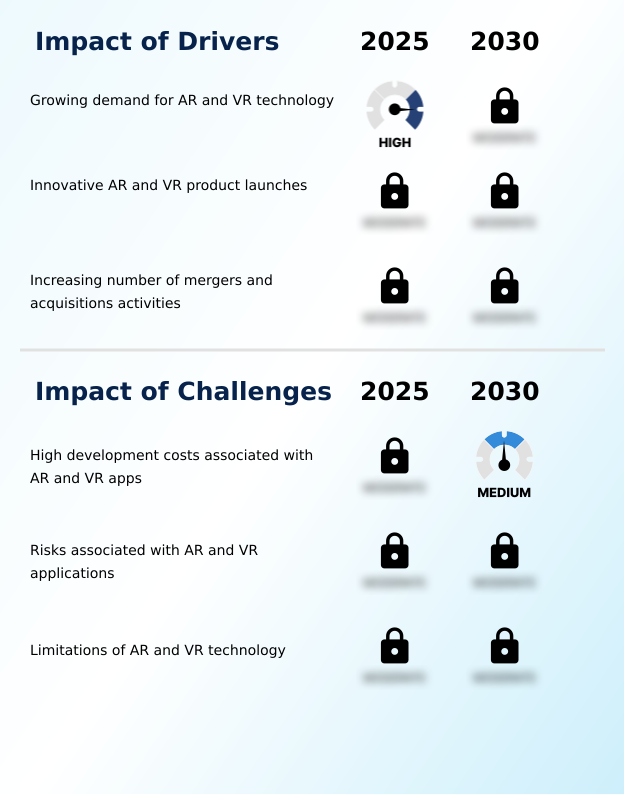
What are the key market drivers leading to the rise in the adoption of Augmented Reality And Virtual Reality Industry?
- The growing demand for augmented and virtual reality technology is the key driver of market growth.
- Market growth is driven by the increasing demand for immersive experiences in both consumer and enterprise sectors. Innovations in hardware, such as more powerful and comfortable head-mounted display (HMD) devices, are critical.
- These advancements, which have seen processing power increase by 50% year-over-year, are enhancing real-time 3D rendering capabilities. The expansion of the spatial computing platform ecosystem is supported by sophisticated 3D content creation tools.
- Enterprises are adopting these technologies for practical applications like VR design and prototyping and AR for field service.
- Concurrently, AR in retail is transforming customer engagement, with virtual try-on features proven to boost conversion rates by over 90% by allowing customers to visualize products in their own space before purchase.
What are the market trends shaping the Augmented Reality And Virtual Reality Industry?
- A significant upcoming market trend is the increasing flow of investment into startup companies specializing in augmented and virtual reality technologies.
- Key trends shaping the market include the integration of the extended reality (XR) ecosystem, which merges AR and VR into a unified mixed reality (MR) experience. This convergence is expanding spatial computing use cases beyond gaming. The proliferation of standalone VR headsets and sophisticated mobile AR applications makes immersive technology more accessible for both VR entertainment experiences and enterprise functions.
- WebAR experience development is lowering entry barriers, allowing businesses to launch interactive AR marketing campaigns that see engagement rates up to 70% higher than static ads. Moreover, enterprises leveraging XR for employee onboarding have reported a reduction in training time by as much as 40%, demonstrating a clear return on investment.
What challenges does the Augmented Reality And Virtual Reality Industry face during its growth?
- High development costs associated with augmented and virtual reality applications are a key challenge affecting industry growth.
- Despite strong growth drivers, the market faces significant challenges. The cost of developing VR training modules and other complex applications remains high, with projects often exceeding initial budgets by up to 45%. Technical limitations also persist; refining the computer vision algorithm for flawless environmental understanding and perfecting the motion tracking sensor and eye tracking technology are ongoing endeavors.
- Issues with latency and hardware bulkiness can detract from the user experience. Furthermore, data privacy concerns in AR applications are a major hurdle for enterprise adoption, with over 60% of potential users citing security as a primary barrier.
- While niche applications like VR for mental health are emerging, scaling solutions requires overcoming these technical and financial obstacles, including the complexities of haptic feedback integration.
Exclusive Technavio Analysis on Customer Landscape
The augmented reality and virtual reality market forecasting report includes the adoption lifecycle of the market, covering from the innovator’s stage to the laggard’s stage. It focuses on adoption rates in different regions based on penetration. Furthermore, the augmented reality and virtual reality market report also includes key purchase criteria and drivers of price sensitivity to help companies evaluate and develop their market growth analysis strategies.
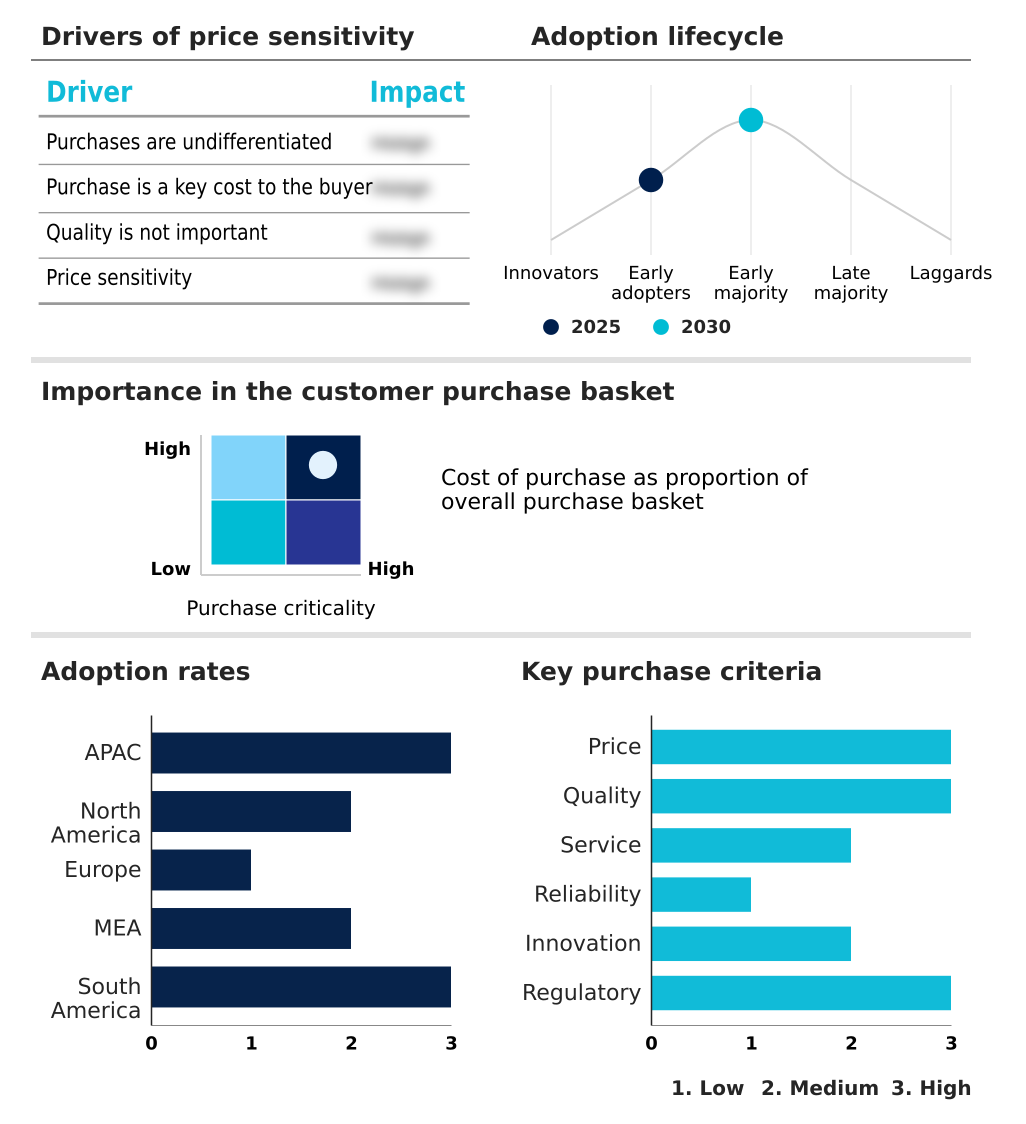
Customer Landscape of Augmented Reality And Virtual Reality Industry
Competitive Landscape
Companies are implementing various strategies, such as strategic alliances, augmented reality and virtual reality market forecast, partnerships, mergers and acquisitions, geographical expansion, and product/service launches, to enhance their presence in the industry.
Apple Inc. - Key offerings focus on advanced spatial computing platforms and development tools that enable the creation of immersive AR/VR applications for both consumer and enterprise use.
The industry research and growth report includes detailed analyses of the competitive landscape of the market and information about key companies, including:
- Apple Inc.
- Epic Games Inc.
- Google LLC
- Groove Jones LLC
- HTC Corp.
- Lenovo Group Ltd.
- Magic Leap Inc.
- Meta Platforms Inc.
- Microsoft Corp.
- Niantic Inc.
- PTC Inc.
- Samsung Electronics Co. Ltd.
- Seiko Epson Corp.
- Sony Group Corp.
- Ultraleap Ltd.
- Unity Technologies Inc.
- Varjo Technologies Oy
- VirtaMed AG
- Vuzix Corp.
- Wikitude GmbH
- Xiaomi Corp.
Qualitative and quantitative analysis of companies has been conducted to help clients understand the wider business environment as well as the strengths and weaknesses of key industry players. Data is qualitatively analyzed to categorize companies as pure play, category-focused, industry-focused, and diversified; it is quantitatively analyzed to categorize companies as dominant, leading, strong, tentative, and weak.
Recent Development and News in Augmented reality and virtual reality market
- In May 2025, Meta Platforms reported increased global demand for its virtual reality ecosystem, driven by expanding applications in gaming, social interaction, and enterprise collaboration tools.
- In June 2025, Apple Inc. expanded its spatial computing portfolio with updated immersive device capabilities, focusing on enhanced mixed reality experiences and enterprise applications.
- In July 2025, Unity Technologies announced strategic acquisition initiatives aimed at strengthening its real-time 3D and immersive content development capabilities.
- In August 2025, Magic Leap secured renewed investor backing to expand its enterprise AR solutions, reflecting continued confidence in the growth potential of immersive technologies.
Dive into Technavio’s robust research methodology, blending expert interviews, extensive data synthesis, and validated models for unparalleled Augmented Reality And Virtual Reality Market insights. See full methodology.
| Market Scope | |
|---|---|
| Page number | 317 |
| Base year | 2025 |
| Historic period | 2020-2024 |
| Forecast period | 2026-2030 |
| Growth momentum & CAGR | Accelerate at a CAGR of 48.1% |
| Market growth 2026-2030 | USD 777123.6 million |
| Market structure | Fragmented |
| YoY growth 2025-2026(%) | 42.1% |
| Key countries | China, Japan, India, South Korea, Australia, Indonesia, US, Canada, Mexico, Germany, UK, France, Italy, Spain, The Netherlands, Saudi Arabia, UAE, South Africa, Israel, Turkey, Brazil, Argentina and Chile |
| Competitive landscape | Leading Companies, Market Positioning of Companies, Competitive Strategies, and Industry Risks |
Research Analyst Overview
- The augmented reality and virtual reality market is maturing into a foundational enterprise technology. Core hardware innovation in the head-mounted display (HMD), AR-enabled smart glasses, and virtual retinal display is critical. The quality of the immersive digital environment depends on the motion tracking sensor and haptic feedback integration.
- Software is equally vital, with platforms like ARKit and realitykit, google arcore platform, and the vuforia engine ar enabling development. High-fidelity mixed reality (MR) experiences rely on real-time 3D rendering powered by the unreal engine for ar/vr and a sophisticated computer vision algorithm.
- Boardroom decisions are now influenced by demonstrated ROI, with AR surgical simulation and VR for patient treatment planning becoming standards. Industrial applications like AR overlay for manufacturing, AR for remote maintenance, and AR-based navigation system optimize workflows, reducing task errors by over 25%.
- The overarching spatial computing platform enables these uses, from digital twin visualization and VR for architectural design to battlefield simulation VR. Advanced features like eye tracking technology and hand gesture recognition, coupled with spatial audio processing, make interactions intuitive.
- From VR training simulation to interactive product visualization and virtual property tours, the scope is broadening, powered by platforms like lightship AR platform, 8th wall webar, azure mixed reality, windows mixed reality, and meta quest platform.
- Entertainment systems like playstation VR hardware also drive the ecosystem, alongside 3D content creation tools used for 3D modeling for AR, enabling real-time collaborative VR and WebAR experience development.
What are the Key Data Covered in this Augmented Reality And Virtual Reality Market Research and Growth Report?
-
What is the expected growth of the Augmented Reality And Virtual Reality Market between 2026 and 2030?
-
USD 777.12 billion, at a CAGR of 48.1%
-
-
What segmentation does the market report cover?
-
The report is segmented by Technology (AR, and VR), Application (Consumer, and Enterprise), Component (Hardware, and Software), End-user (Aerospace and defense, Consumer, Commercial, Enterprise, and Others) and Geography (APAC, North America, Europe, Middle East and Africa, South America)
-
-
Which regions are analyzed in the report?
-
APAC, North America, Europe, Middle East and Africa and South America
-
-
What are the key growth drivers and market challenges?
-
Growing demand for AR and VR technology, High development costs associated with AR and VR apps
-
-
Who are the major players in the Augmented Reality And Virtual Reality Market?
-
Apple Inc., Epic Games Inc., Google LLC, Groove Jones LLC, HTC Corp., Lenovo Group Ltd., Magic Leap Inc., Meta Platforms Inc., Microsoft Corp., Niantic Inc., PTC Inc., Samsung Electronics Co. Ltd., Seiko Epson Corp., Sony Group Corp., Ultraleap Ltd., Unity Technologies Inc., Varjo Technologies Oy, VirtaMed AG, Vuzix Corp., Wikitude GmbH and Xiaomi Corp.
-
Market Research Insights
- The immersive technology market is defined by rapid innovation and expanding applications across sectors. While consumer-facing uses like gaming are prominent, the most significant value is being unlocked in enterprise environments. Enterprise AR solutions are driving measurable efficiency gains; for instance, deploying AR for field service improves first-time fix rates by over 35%.
- Similarly, companies using VR for industrial training report up to a 60% reduction in workplace safety incidents. The distinction between use cases clarifies the AR vs VR differences, with AR enhancing real-world tasks and VR creating fully simulated environments for training and design.
- Growth is fueled by continuous AR hardware development and increasing investment in VR content creation, broadening the technology's accessibility and impact.
We can help! Our analysts can customize this augmented reality and virtual reality market research report to meet your requirements.
 RIA -
RIA -