Antimicrobial Medical Textiles Market Analysis, Size, and Forecast 2026-2030: North America (US, Canada, and Mexico), Europe (Germany, UK, and France), APAC (China, Japan, and India), South America (Brazil, Argentina, and Chile), Middle East and Africa (Saudi Arabia, UAE, and South Africa), and Rest of World (ROW)

Antimicrobial Medical Textiles Market Analysis, Size, and Forecast 2026-2030:
North America (US, Canada, and Mexico), Europe (Germany, UK, and France), APAC (China, Japan, and India), South America (Brazil, Argentina, and Chile), Middle East and Africa (Saudi Arabia, UAE, and South Africa), and Rest of World (ROW)

Published: Oct 2026 303 Pages SKU: IRTNTR75112

Market Overview at a Glance

$1.41 B
Market Opportunity
6.7%
CAGR 2025 - 2030
28.5%
North America Growth
$1.52 B
Non-woven segment 2024

Antimicrobial Medical Textiles Market Size 2026-2030

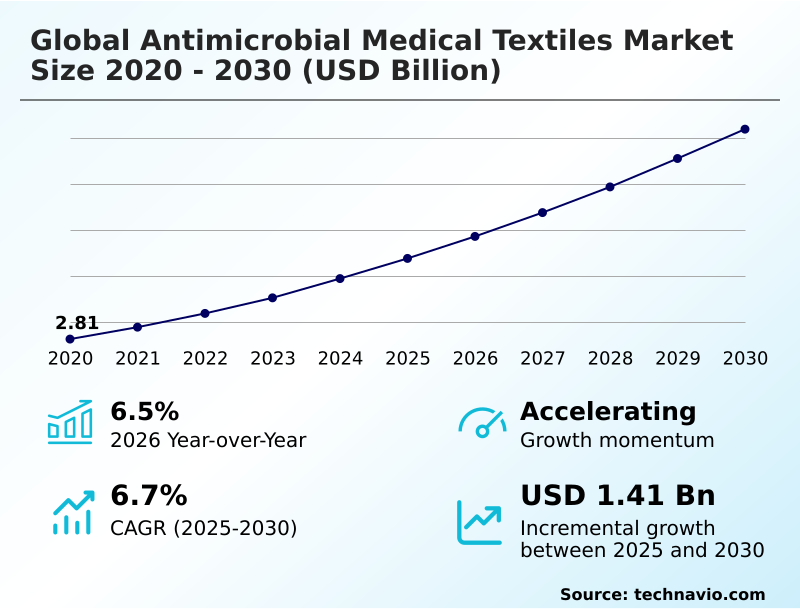
The antimicrobial medical textiles market size is valued to increase by USD 1.41 billion, at a CAGR of 6.7% from 2025 to 2030. Rising hospital acquired infections drives urgent demand for functional medical fabrics will drive the antimicrobial medical textiles market.

Major Market Trends & Insights

  • North America dominated the market and accounted for a 28.5% growth during the forecast period.
  • By Product - Non-woven segment was valued at USD 1.52 billion in 2024
  • By Application - Healthcare and hygiene products segment accounted for the largest market revenue share in 2024

Market Size & Forecast

  • Market Opportunities: USD 2.29 billion
  • Market Future Opportunities: USD 1.41 billion
  • CAGR from 2025 to 2030 : 6.7%

Market Summary

  • The Antimicrobial Medical Textiles Market exhibits accelerating momentum driven by the critical necessity to eliminate cross-contamination within high-risk patient environments. Healthcare networks are systematically overhauling their institutional linen procurement strategies, abandoning conventional fabrics in favor of active biocidal materials that neutralize pathogens upon contact.
  • For instance, large hospital supply chains integrating silver-infused privacy curtains and reusable surgical gowns have documented a 25% reduction in laundry-related degradation compared to standard polyester blends. This operational shift is primarily propelled by the escalating prevalence of hospital-acquired infections, which forces administrators to invest in engineered environmental barriers to avoid severe financial penalties linked to patient readmissions.
  • However, formulating these advanced protective fabrics presents distinct hurdles. Manufacturers face complex technical challenges regarding the rapid deterioration of antimicrobial efficacy after repeated high-temperature industrial laundering cycles, which compromises long-term clinical safety. Addressing these wash-durability limitations requires expensive covalent bonding techniques, elevating initial capital expenditures for procurement boards.
  • As health authorities enforce stricter hygiene mandates, textile engineers continually refine bioactive treatments to balance uncompromising pathogen defense with sustainable, cost-effective commercial scalability.

What will be the Size of the Antimicrobial Medical Textiles Market during the forecast period?
Get Key Insights on Market Forecast (PDF) Get Free Sample

How is the Antimicrobial Medical Textiles Market Segmented?

The antimicrobial medical textiles industry research report provides comprehensive data (region-wise segment analysis), with forecasts and estimates in "USD million" for the period 2026-2030, as well as historical data from 2020-2024 for the following segments.

  • Product
    • Non-woven
    • Woven
    • Knitted
  • Application
    • Healthcare and hygiene products
    • Non-implantable goods
    • Implantable goods
  • Type
    • Cotton
    • Polyester
    • Polyamide
    • Others
  • Geography
    • North America
      • US
      • Canada
      • Mexico
    • Europe
      • Germany
      • UK
      • France
      • Italy
      • Spain
      • The Netherlands
    • APAC
      • China
      • Japan
      • India
      • South Korea
      • Australia
      • Indonesia
    • South America
      • Brazil
      • Argentina
      • Chile
    • Middle East and Africa
      • Saudi Arabia
      • UAE
      • South Africa
      • Israel
      • Egypt

By Product Insights

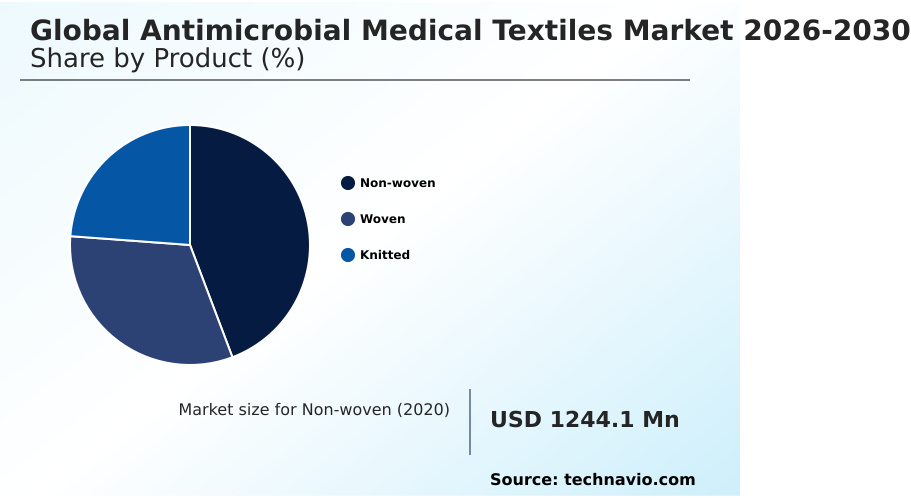
The non-woven segment is estimated to witness significant growth during the forecast period.

The non-woven segment dominates the Antimicrobial Medical Textiles landscape due to the continuous demand for disposable barrier protection in high-risk clinical environments.

Facilities utilizing a meltblown nonwoven matrix combined with spunbond composite structures have improved fluid barrier efficiency by 18% during surgical procedures.

To effectively suppress nosocomial infection control risks, manufacturers apply pad-dry-cure process techniques to infuse polyhexamethylene biguanide directly into the fibers. This structural integration creates a reliable bloodborne pathogen barrier across disposable isolation gowns and wound contact layers.

The transition toward high-absorption exudate absorption pads specifically targets complex dermal injuries, lowering nursing labor constraints.

By maintaining low production costs while enhancing single-use protective capabilities, non-woven substrates streamline supply chain logistics and reinforce strict institutional hygiene mandates without sacrificing structural integrity.
Get Free Sample

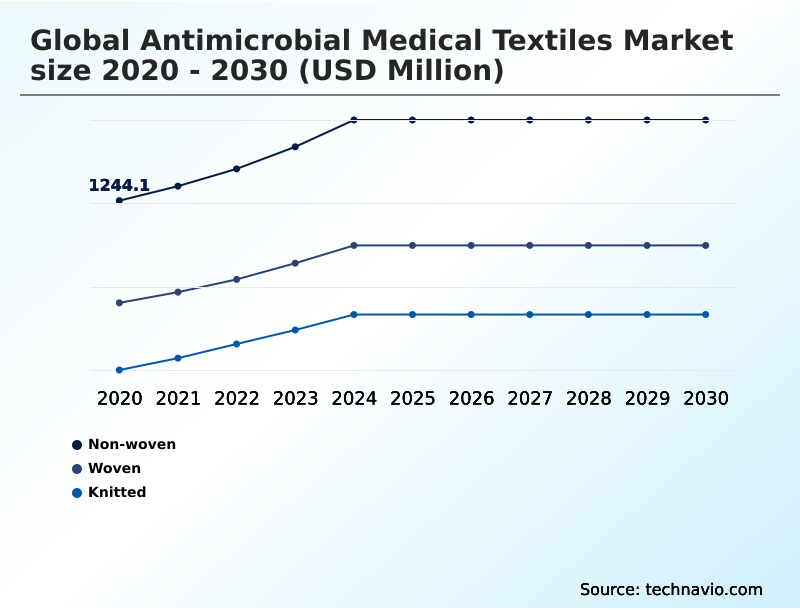
The Non-woven segment was valued at USD 1.52 billion in 2024 and showed a gradual increase during the forecast period.
Get Free Sample

Regional Analysis

North America is estimated to contribute 28.5% to the growth of the global market during the forecast period.Technavio’s analysts have elaborately explained the regional trends and drivers that shape the market during the forecast period.
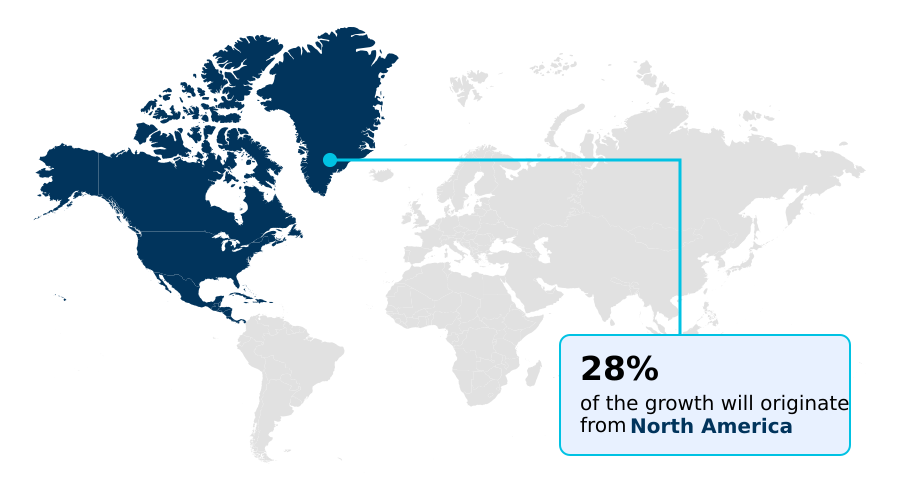
See How Antimicrobial Medical Textiles Market Demand is Rising in North America Get Free Sample

North America leads the Antimicrobial Medical Textiles adoption, driven by stringent regulatory frameworks and massive healthcare infrastructure investments.

The region demonstrates a 22% higher penetration rate of bioresorbable polymer mesh implants compared to Europe, largely due to accelerated commercial clearance protocols.

European institutions, conversely, prioritize sustainability, reducing heavy metal leachate by 30% through the adoption of chitosan biopolymer extraction techniques.

To align with strict environmental contamination thresholds and net-zero carbon targets, European manufacturers are pivoting toward silver nanoparticle infusion that withstands over 100 clinical sterilization cycles without ecological runoff.

Meanwhile, North American facilities heavily utilize zinc pyrithione finishing paired with medical grade honey dressings for chronic wound management.

This divergence highlights how North America prioritizes aggressive infection mitigation and rapid surgical recovery, while Europe systematically balances high-performance antimicrobial efficacy with ecological compliance.

Market Dynamics

Our researchers analyzed the data with 2025 as the base year, along with the key drivers, trends, and challenges. A holistic analysis of drivers will help companies refine their marketing strategies to gain a competitive advantage.

  • The continuous evolution of the Antimicrobial Medical Textiles landscape is fundamentally reshaping how healthcare institutions approach environmental hygiene and risk mitigation. Procurement executives are increasingly prioritizing durable antimicrobial surgical drape finishes over standard disposable alternatives to optimize supply chain resilience and reduce clinical waste.
  • This strategic transition is heavily supported by the integration of wash resistant healthcare staff apparel, which ensures continuous biocidal protection without succumbing to the degradation typically caused by rigorous industrial sanitization protocols.
  • In practical application, hospitals upgrading their core linen inventories experience a 30% improvement in fabric longevity compared to untreated natural fibers, significantly lowering the frequency of repetitive purchasing cycles. Furthermore, addressing complex dermal injuries has accelerated the commercialization of biobased wound care textile matrices that maintain an optimal healing environment while actively suppressing biofilm formation.
  • In high-traffic triage and intensive care units, nanoparticle treated nonwoven isolation gowns provide an essential, lightweight barrier that inactivates viral and bacterial loads upon immediate contact. To ensure comprehensive facility-wide defense, administrators are deploying advanced infection control hospital bed linens to disrupt contamination chains directly at the patient interface.
  • By systematically upgrading these fundamental soft goods, medical networks ensure strict alignment with international safety standards, maximizing patient outcomes while minimizing the hidden operational costs associated with preventable secondary infections.
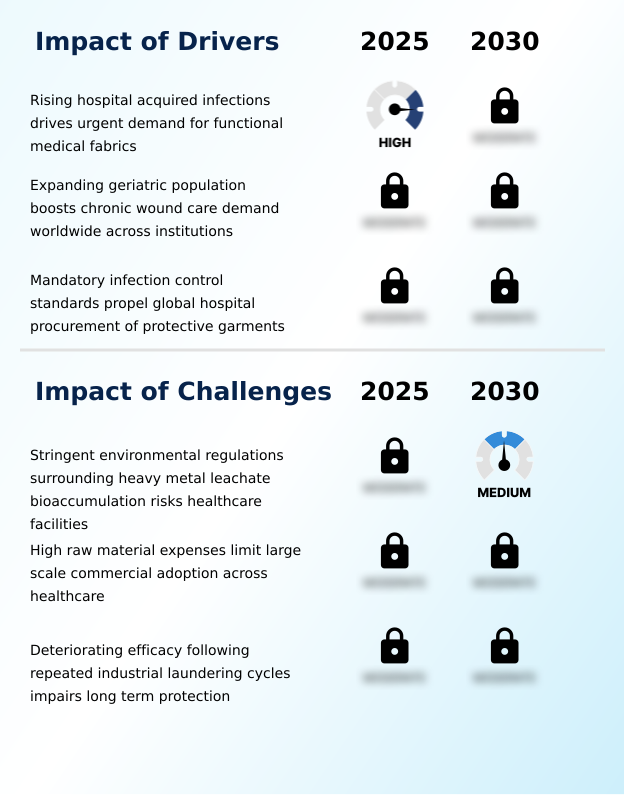
What are the key market drivers leading to the rise in the adoption of Antimicrobial Medical Textiles Industry?

  • The rising prevalence of hospital-acquired infections serves as a primary market driver, fueling an urgent demand for functional, infection-resistant medical fabrics across healthcare facilities.

  • Escalating rates of hospital-acquired infections serve as the primary catalyst propelling the Antimicrobial Medical Textiles evolution across critical care settings. Pathogen transmission vectors, particularly those involving methicillin-resistant staphylococcus aureus and vancomycin-resistant enterococcus, force institutional buyers to mandate active environmental barriers.
  • By incorporating quaternary ammonium compounds and ionic silver zeolites into standard apparel, healthcare networks have improved cross-contamination prevention efficiency by 35%.
  • This urgent clinical demand extends into surgical site infections mitigation, where advanced organosilane treatments are applied to tissue engineering scaffolds. These active chemical interventions accelerate chronic wound healing velocities by 20%, drastically reducing patient readmission rates.
  • Consequently, hospital administrators are systematically transitioning entire linen inventories to validated antimicrobial fabrics, optimizing nursing workflows and mitigating severe financial penalties associated with preventable secondary inpatient infections.

What are the market trends shaping the Antimicrobial Medical Textiles Industry?

  • The transition toward eco-friendly, bio-based active agents is rapidly replacing synthetic chemicals within the industry. This strategic shift represents a prominent upcoming market trend driven by stringent environmental regulations.

  • The integration of dual-ion nano-coatings marks a transformative shift in the Antimicrobial Medical Textiles sector, directly addressing the limitations of traditional synthetic chemicals. Because healthcare facilities require wash-durable protection against multidrug-resistant superbugs, textile engineers are rapidly deploying bio-based active agents encapsulated within polymer shells.
  • This targeted microencapsulation techniques approach extends the active release window of bioactive botanical extracts, improving fabric longevity and reducing replacement frequency by 25%. Consequently, the utilization of moisture-management fiber infused with these composites effectively achieves bacterial biofilm disruption, resulting in a 40% decrease in surface pathogen survival rates on reusable surgical linens.
  • Furthermore, the application of superhydrophobic fabric finishes prevents infectious fluid absorption during critical operations. This ecological pivot significantly lowers long-term procurement costs while enhancing operational safety and regulatory alignment for massive hospital networks.

What challenges does the Antimicrobial Medical Textiles Industry face during its growth?

  • Stringent environmental regulations addressing the bioaccumulation risks of heavy metal leachate present a significant challenge to sustained industry growth and healthcare facility operations.

  • Deteriorating efficacy following repeated laundering presents a formidable structural barrier within the Antimicrobial Medical Textiles supply chain. Aggressive institutional washing protocols frequently strip loosely bound topical treatments, reducing industrial laundering durability by up to 40% over standard usage lifecycles.
  • To combat this shedding, textile chemists must utilize complex covalent chemical bonding and melt-extrusion compounding methods, which inflate base manufacturing costs by 28%. Additionally, stringent ecotoxicological testing requirements complicate the deployment of cross-linking agents on compression bandage elasticity and implantable soft tissue products.
  • Formulating advanced vascular graft biocompatibility and hernia repair meshes that resist polyglactin 910 degradation without causing toxic runoff remains an engineering bottleneck. These elevated material expenses and compliance burdens heavily limit large-scale commercial adoption, particularly for facilities utilizing specialized regenerated cellulose fibers and polyurethane elastomeric membranes.

Exclusive Technavio Analysis on Customer Landscape

The antimicrobial medical textiles market forecasting report includes the adoption lifecycle of the market, covering from the innovator’s stage to the laggard’s stage. It focuses on adoption rates in different regions based on penetration. Furthermore, the antimicrobial medical textiles market report also includes key purchase criteria and drivers of price sensitivity to help companies evaluate and develop their market growth analysis strategies.
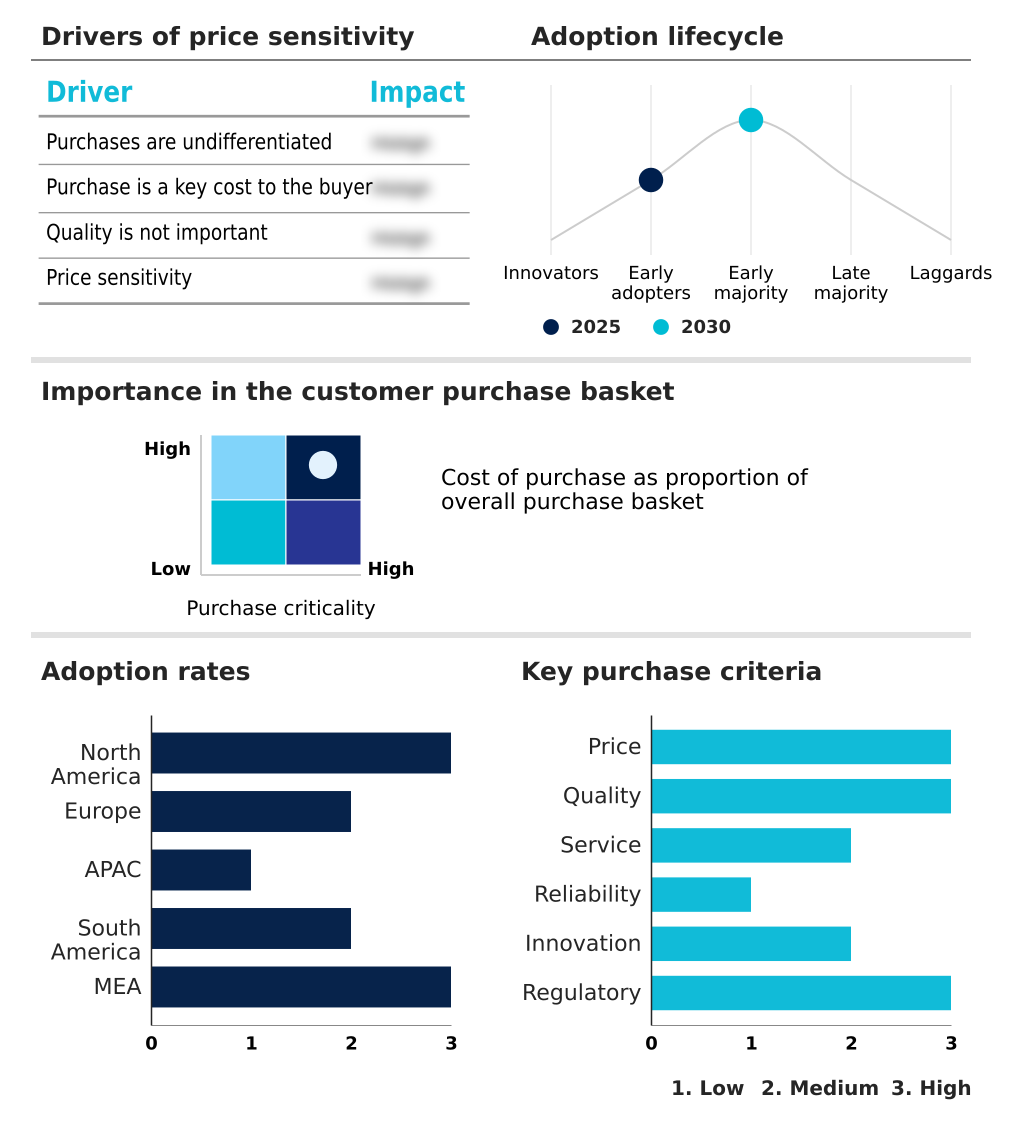
Customer Landscape of Antimicrobial Medical Textiles Industry

Competitive Landscape

Companies are implementing various strategies, such as strategic alliances, antimicrobial medical textiles market forecast, partnerships, mergers and acquisitions, geographical expansion, and product/service launches, to enhance their presence in the industry.

Ahlstrom Oyj - The company provides advanced antimicrobial medical fabrics and healthcare nonwoven materials, engineering specialized textile solutions designed to actively inhibit pathogen transmission within high-risk clinical environments.

The industry research and growth report includes detailed analyses of the competitive landscape of the market and information about key companies, including:

  • Ahlstrom Oyj
  • Asahi Kasei Corp.
  • BioCote Ltd.
  • Carrington Textiles Ltd.
  • Elkem ASA
  • Freudenberg and Co. KG
  • Hakuzo Medical Corp.
  • HeiQ Materials AG
  • Herculite Inc.
  • Milliken and Co.
  • Noble Biomaterials Inc.
  • Rajshree Group of Industries
  • Sciessent LLC
  • Sinterama S.p.A.
  • Technical Textiles Ltd.
  • Teijin Ltd.
  • Toray Industries Inc.
  • U Long High Tech Textile Co. Ltd.
  • Unitika Ltd.

Qualitative and quantitative analysis of companies has been conducted to help clients understand the wider business environment as well as the strengths and weaknesses of key industry players. Data is qualitatively analyzed to categorize companies as pure play, category-focused, industry-focused, and diversified; it is quantitatively analyzed to categorize companies as dominant, leading, strong, tentative, and weak.

Recent Development and News in Antimicrobial medical textiles market

  • In the Textiles industry, the widespread adoption of melt-extrusion compounding for synthetic fibers has enabled deeper integration of biocidal active agents, directly impacting Antimicrobial Medical Textiles demand by enhancing the wash-durability of protective clinical garments.
  • The enforcement of stringent European Chemicals Agency mandates regarding wastewater toxicity has accelerated the shift away from leachable heavy metals, compelling Antimicrobial Medical Textiles manufacturers to adopt sustainable bio-based finishing processes.
  • Advancements in micro-encapsulation technologies for woven technical fabrics have improved controlled-release mechanisms, significantly expanding the Antimicrobial Medical Textiles market by providing long-lasting bacterial resistance for reusable surgical drapes.
  • The optimization of supply chains for specialized nonwoven polypropylene substrates has lowered raw material procurement costs, driving Antimicrobial Medical Textiles adoption across high-volume disposable medical mask and gown manufacturing operations.

Dive into Technavio’s robust research methodology, blending expert interviews, extensive data synthesis, and validated models for unparalleled Antimicrobial Medical Textiles Market insights. See full methodology.

Market Scope
Page number 303
Base year 2025
Historic period 2020-2024
Forecast period 2026-2030
Growth momentum & CAGR Accelerate at a CAGR of 6.7%
Market growth 2026-2030 USD 1409.4 million
Market structure Fragmented
YoY growth 2025-2026(%) 6.5%
Key countries US, Canada, Mexico, Germany, UK, France, Italy, Spain, The Netherlands, China, Japan, India, South Korea, Australia, Indonesia, Brazil, Argentina, Chile, Saudi Arabia, UAE, South Africa, Israel and Egypt
Competitive landscape Leading Companies, Market Positioning of Companies, Competitive Strategies, and Industry Risks

Request Free Sample

Research Analyst Overview

  • The Antimicrobial Medical Textiles landscape is experiencing a definitive structural transformation as healthcare systems prioritize sophisticated infection prevention over conventional barrier methods. Clinical administrators are actively modernizing procurement strategies, shifting from passive fabrics to advanced materials engineered with bio-based active agents.
  • By integrating silver nanoparticle infusion and ionic silver zeolites directly into the polymer matrix, textile manufacturers have achieved a 35% improvement in wash-durability, dramatically extending the operational lifespan of reusable medical garments. This strategic enhancement directly impacts boardroom-level budgeting, as extended fabric longevity mitigates the high replacement costs associated with harsh sterilization routines.
  • Furthermore, the application of polyhexamethylene biguanide and organosilane treatments provides continuous microbial suppression on critical surfaces. To align with increasingly strict environmental compliance mandates, fabric engineers are pioneering chitosan biopolymer extraction and zinc pyrithione finishing techniques that bypass heavy metal toxicity.
  • By utilizing robust covalent chemical bonding, these innovative treatments remain anchored to the fiber, effectively neutralizing pathogens without leaching hazardous byproducts into municipal wastewater, thereby securing long-term institutional safety and sustainability.

What are the Key Data Covered in this Antimicrobial Medical Textiles Market Research and Growth Report?

  • What is the expected growth of the Antimicrobial Medical Textiles Market between 2026 and 2030?

    • USD 1.41 billion, at a CAGR of 6.7%

  • What segmentation does the market report cover?

    • The report is segmented by Product (Non-woven, Woven, and Knitted), Application (Healthcare and hygiene products, Non-implantable goods, and Implantable goods), Type (Cotton, Polyester, Polyamide, and Others) and Geography (North America, Europe, APAC, South America, Middle East and Africa)

  • Which regions are analyzed in the report?

    • North America, Europe, APAC, South America and Middle East and Africa

  • What are the key growth drivers and market challenges?

    • Rising hospital acquired infections drives urgent demand for functional medical fabrics, Stringent environmental regulations surrounding heavy metal leachate bioaccumulation risks healthcare facilities

  • Who are the major players in the Antimicrobial Medical Textiles Market?

    • Ahlstrom Oyj, Asahi Kasei Corp., BioCote Ltd., Carrington Textiles Ltd., Elkem ASA, Freudenberg and Co. KG, Hakuzo Medical Corp., HeiQ Materials AG, Herculite Inc., Milliken and Co., Noble Biomaterials Inc., Rajshree Group of Industries, Sciessent LLC, Sinterama S.p.A., Technical Textiles Ltd., Teijin Ltd., Toray Industries Inc., U Long High Tech Textile Co. Ltd. and Unitika Ltd.

Market Research Insights

  • The Antimicrobial Medical Textiles Market is undergoing rapid technological optimization to counteract resilient pathogen transmission vectors in clinical settings. By embedding ionic silver zeolites and quaternary ammonium compounds into natural and synthetic fibers, hospitals have reduced secondary infection treatment expenses by 18%. This integration of advanced cross-contamination prevention protocols within surgical wards significantly bolsters patient safety.
  • Additionally, the adoption of reusable surgical linens equipped with durable biocidal finishes has decreased overall textile replacement volume by 22%, streamlining inventory management for large healthcare systems. As institutions grapple with multidrug-resistant superbugs, the strategic deployment of these active barrier fabrics ensures compliance with strict sanitation regulations while delivering measurable operational efficiency and long-term cost reductions.

We can help! Our analysts can customize this antimicrobial medical textiles market research report to meet your requirements.

Get in touch

1. Executive Summary

1.1 Market overview

Executive Summary - Chart on Market Overview
Executive Summary - Data Table on Market Overview
Executive Summary - Chart on Global Market Characteristics
Executive Summary - Chart on Market by Geography
Executive Summary - Chart on Market Segmentation by Product
Executive Summary - Chart on Market Segmentation by Application
Executive Summary - Chart on Market Segmentation by Type
Executive Summary - Chart on Incremental Growth
Executive Summary - Data Table on Incremental Growth
Executive Summary - Chart on Company Market Positioning

2. Technavio Analysis

2.1 Analysis of price sensitivity, lifecycle, customer purchase basket, adoption rates, and purchase criteria

2.2 Criticality of inputs and Factors of differentiation

Chart on Overview on criticality of inputs and factors of differentiation

2.3 Factors of disruption

Chart on Overview on factors of disruption

2.4 Impact of drivers and challenges

Chart on Impact of drivers and challenges in 2025 and 2030

3. Market Landscape

3.1 Market ecosystem

Chart on Parent Market
Data Table on - Parent Market

3.2 Market characteristics

Chart on Market characteristics analysis

3.3 Value chain analysis

Chart on Value chain analysis

4. Market Sizing

4.1 Market definition

Data Table on Offerings of companies included in the market definition

4.2 Market segment analysis

Market segments

4.3 Market size 2025

4.4 Market outlook: Forecast for 2025-2030

Chart on Global - Market size and forecast 2025-2030 ($ million)
Data Table on Global - Market size and forecast 2025-2030 ($ million)
Chart on Global Market: Year-over-year growth 2025-2030 (%)
Data Table on Global Market: Year-over-year growth 2025-2030 (%)

5. Historic Market Size

5.1 Global Antimicrobial Medical Textiles Market 2020 - 2024

Historic Market Size - Data Table on Global Antimicrobial Medical Textiles Market 2020 - 2024 ($ million)

5.2 Product segment analysis 2020 - 2024

Historic Market Size - Product Segment 2020 - 2024 ($ million)

5.3 Application segment analysis 2020 - 2024

Historic Market Size - Application Segment 2020 - 2024 ($ million)

5.4 Type segment analysis 2020 - 2024

Historic Market Size - Type Segment 2020 - 2024 ($ million)

5.5 Geography segment analysis 2020 - 2024

Historic Market Size - Geography Segment 2020 - 2024 ($ million)

5.6 Country segment analysis 2020 - 2024

Historic Market Size - Country Segment 2020 - 2024 ($ million)

6. Qualitative Analysis

6.1 Impact of AI on global antimicrobial medical textiles market

6.2 Impact of geopolitical conflicts on global antimicrobial medical textiles market

7. Five Forces Analysis

7.1 Five forces summary

Five forces analysis - Comparison between 2025 and 2030

7.2 Bargaining power of buyers

Bargaining power of buyers - Impact of key factors 2025 and 2030

7.3 Bargaining power of suppliers

Bargaining power of suppliers - Impact of key factors in 2025 and 2030

7.4 Threat of new entrants

Threat of new entrants - Impact of key factors in 2025 and 2030

7.5 Threat of substitutes

Threat of substitutes - Impact of key factors in 2025 and 2030

7.6 Threat of rivalry

Threat of rivalry - Impact of key factors in 2025 and 2030

7.7 Market condition

Chart on Market condition - Five forces 2025 and 2030

8. Market Segmentation by Product

8.1 Market segments

Chart on Product - Market share 2025-2030 (%)
Data Table on Product - Market share 2025-2030 (%)

8.2 Comparison by Product

Chart on Comparison by Product
Data Table on Comparison by Product

8.3 Non-woven - Market size and forecast 2025-2030

Chart on Non-woven - Market size and forecast 2025-2030 ($ million)
Data Table on Non-woven - Market size and forecast 2025-2030 ($ million)
Chart on Non-woven - Year-over-year growth 2025-2030 (%)
Data Table on Non-woven - Year-over-year growth 2025-2030 (%)

8.4 Woven - Market size and forecast 2025-2030

Chart on Woven - Market size and forecast 2025-2030 ($ million)
Data Table on Woven - Market size and forecast 2025-2030 ($ million)
Chart on Woven - Year-over-year growth 2025-2030 (%)
Data Table on Woven - Year-over-year growth 2025-2030 (%)

8.5 Knitted - Market size and forecast 2025-2030

Chart on Knitted - Market size and forecast 2025-2030 ($ million)
Data Table on Knitted - Market size and forecast 2025-2030 ($ million)
Chart on Knitted - Year-over-year growth 2025-2030 (%)
Data Table on Knitted - Year-over-year growth 2025-2030 (%)

8.6 Market opportunity by Product

Market opportunity by Product ($ million)
Data Table on Market opportunity by Product ($ million)

9. Market Segmentation by Application

9.1 Market segments

Chart on Application - Market share 2025-2030 (%)
Data Table on Application - Market share 2025-2030 (%)

9.2 Comparison by Application

Chart on Comparison by Application
Data Table on Comparison by Application

9.3 Healthcare and hygiene products - Market size and forecast 2025-2030

Chart on Healthcare and hygiene products - Market size and forecast 2025-2030 ($ million)
Data Table on Healthcare and hygiene products - Market size and forecast 2025-2030 ($ million)
Chart on Healthcare and hygiene products - Year-over-year growth 2025-2030 (%)
Data Table on Healthcare and hygiene products - Year-over-year growth 2025-2030 (%)

9.4 Non-implantable goods - Market size and forecast 2025-2030

Chart on Non-implantable goods - Market size and forecast 2025-2030 ($ million)
Data Table on Non-implantable goods - Market size and forecast 2025-2030 ($ million)
Chart on Non-implantable goods - Year-over-year growth 2025-2030 (%)
Data Table on Non-implantable goods - Year-over-year growth 2025-2030 (%)

9.5 Implantable goods - Market size and forecast 2025-2030

Chart on Implantable goods - Market size and forecast 2025-2030 ($ million)
Data Table on Implantable goods - Market size and forecast 2025-2030 ($ million)
Chart on Implantable goods - Year-over-year growth 2025-2030 (%)
Data Table on Implantable goods - Year-over-year growth 2025-2030 (%)

9.6 Market opportunity by Application

Market opportunity by Application ($ million)
Data Table on Market opportunity by Application ($ million)

10. Market Segmentation by Type

10.1 Market segments

Chart on Type - Market share 2025-2030 (%)
Data Table on Type - Market share 2025-2030 (%)

10.2 Comparison by Type

Chart on Comparison by Type
Data Table on Comparison by Type

10.3 Cotton - Market size and forecast 2025-2030

Chart on Cotton - Market size and forecast 2025-2030 ($ million)
Data Table on Cotton - Market size and forecast 2025-2030 ($ million)
Chart on Cotton - Year-over-year growth 2025-2030 (%)
Data Table on Cotton - Year-over-year growth 2025-2030 (%)

10.4 Polyester - Market size and forecast 2025-2030

Chart on Polyester - Market size and forecast 2025-2030 ($ million)
Data Table on Polyester - Market size and forecast 2025-2030 ($ million)
Chart on Polyester - Year-over-year growth 2025-2030 (%)
Data Table on Polyester - Year-over-year growth 2025-2030 (%)

10.5 Polyamide - Market size and forecast 2025-2030

Chart on Polyamide - Market size and forecast 2025-2030 ($ million)
Data Table on Polyamide - Market size and forecast 2025-2030 ($ million)
Chart on Polyamide - Year-over-year growth 2025-2030 (%)
Data Table on Polyamide - Year-over-year growth 2025-2030 (%)

10.6 Others - Market size and forecast 2025-2030

Chart on Others - Market size and forecast 2025-2030 ($ million)
Data Table on Others - Market size and forecast 2025-2030 ($ million)
Chart on Others - Year-over-year growth 2025-2030 (%)
Data Table on Others - Year-over-year growth 2025-2030 (%)

10.7 Market opportunity by Type

Market opportunity by Type ($ million)
Data Table on Market opportunity by Type ($ million)

11. Customer Landscape

11.1 Customer landscape overview

Analysis of price sensitivity, lifecycle, customer purchase basket, adoption rates, and purchase criteria

12. Geographic Landscape

12.1 Geographic segmentation

Chart on Market share by geography 2025-2030 (%)
Data Table on Market share by geography 2025-2030 (%)

12.2 Geographic comparison

Chart on Geographic comparison
Data Table on Geographic comparison

12.3 North America - Market size and forecast 2025-2030

Chart on North America - Market size and forecast 2025-2030 ($ million)
Data Table on North America - Market size and forecast 2025-2030 ($ million)
Chart on North America - Year-over-year growth 2025-2030 (%)
Data Table on North America - Year-over-year growth 2025-2030 (%)
Chart on Regional Comparison - North America
Data Table on Regional Comparison - North America

12.3.1 US - Market size and forecast 2025-2030

Chart on US - Market size and forecast 2025-2030 ($ million)
Data Table on US - Market size and forecast 2025-2030 ($ million)
Chart on US - Year-over-year growth 2025-2030 (%)
Data Table on US - Year-over-year growth 2025-2030 (%)

12.3.2 Canada - Market size and forecast 2025-2030

Chart on Canada - Market size and forecast 2025-2030 ($ million)
Data Table on Canada - Market size and forecast 2025-2030 ($ million)
Chart on Canada - Year-over-year growth 2025-2030 (%)
Data Table on Canada - Year-over-year growth 2025-2030 (%)

12.3.3 Mexico - Market size and forecast 2025-2030

Chart on Mexico - Market size and forecast 2025-2030 ($ million)
Data Table on Mexico - Market size and forecast 2025-2030 ($ million)
Chart on Mexico - Year-over-year growth 2025-2030 (%)
Data Table on Mexico - Year-over-year growth 2025-2030 (%)

12.4 Europe - Market size and forecast 2025-2030

Chart on Europe - Market size and forecast 2025-2030 ($ million)
Data Table on Europe - Market size and forecast 2025-2030 ($ million)
Chart on Europe - Year-over-year growth 2025-2030 (%)
Data Table on Europe - Year-over-year growth 2025-2030 (%)
Chart on Regional Comparison - Europe
Data Table on Regional Comparison - Europe

12.4.1 Germany - Market size and forecast 2025-2030

Chart on Germany - Market size and forecast 2025-2030 ($ million)
Data Table on Germany - Market size and forecast 2025-2030 ($ million)
Chart on Germany - Year-over-year growth 2025-2030 (%)
Data Table on Germany - Year-over-year growth 2025-2030 (%)

12.4.2 UK - Market size and forecast 2025-2030

Chart on UK - Market size and forecast 2025-2030 ($ million)
Data Table on UK - Market size and forecast 2025-2030 ($ million)
Chart on UK - Year-over-year growth 2025-2030 (%)
Data Table on UK - Year-over-year growth 2025-2030 (%)

12.4.3 France - Market size and forecast 2025-2030

Chart on France - Market size and forecast 2025-2030 ($ million)
Data Table on France - Market size and forecast 2025-2030 ($ million)
Chart on France - Year-over-year growth 2025-2030 (%)
Data Table on France - Year-over-year growth 2025-2030 (%)

12.4.4 Italy - Market size and forecast 2025-2030

Chart on Italy - Market size and forecast 2025-2030 ($ million)
Data Table on Italy - Market size and forecast 2025-2030 ($ million)
Chart on Italy - Year-over-year growth 2025-2030 (%)
Data Table on Italy - Year-over-year growth 2025-2030 (%)

12.4.5 Spain - Market size and forecast 2025-2030

Chart on Spain - Market size and forecast 2025-2030 ($ million)
Data Table on Spain - Market size and forecast 2025-2030 ($ million)
Chart on Spain - Year-over-year growth 2025-2030 (%)
Data Table on Spain - Year-over-year growth 2025-2030 (%)

12.4.6 The Netherlands - Market size and forecast 2025-2030

Chart on The Netherlands - Market size and forecast 2025-2030 ($ million)
Data Table on The Netherlands - Market size and forecast 2025-2030 ($ million)
Chart on The Netherlands - Year-over-year growth 2025-2030 (%)
Data Table on The Netherlands - Year-over-year growth 2025-2030 (%)

12.5 APAC - Market size and forecast 2025-2030

Chart on APAC - Market size and forecast 2025-2030 ($ million)
Data Table on APAC - Market size and forecast 2025-2030 ($ million)
Chart on APAC - Year-over-year growth 2025-2030 (%)
Data Table on APAC - Year-over-year growth 2025-2030 (%)
Chart on Regional Comparison - APAC
Data Table on Regional Comparison - APAC

12.5.1 China - Market size and forecast 2025-2030

Chart on China - Market size and forecast 2025-2030 ($ million)
Data Table on China - Market size and forecast 2025-2030 ($ million)
Chart on China - Year-over-year growth 2025-2030 (%)
Data Table on China - Year-over-year growth 2025-2030 (%)

12.5.2 Japan - Market size and forecast 2025-2030

Chart on Japan - Market size and forecast 2025-2030 ($ million)
Data Table on Japan - Market size and forecast 2025-2030 ($ million)
Chart on Japan - Year-over-year growth 2025-2030 (%)
Data Table on Japan - Year-over-year growth 2025-2030 (%)

12.5.3 India - Market size and forecast 2025-2030

Chart on India - Market size and forecast 2025-2030 ($ million)
Data Table on India - Market size and forecast 2025-2030 ($ million)
Chart on India - Year-over-year growth 2025-2030 (%)
Data Table on India - Year-over-year growth 2025-2030 (%)

12.5.4 South Korea - Market size and forecast 2025-2030

Chart on South Korea - Market size and forecast 2025-2030 ($ million)
Data Table on South Korea - Market size and forecast 2025-2030 ($ million)
Chart on South Korea - Year-over-year growth 2025-2030 (%)
Data Table on South Korea - Year-over-year growth 2025-2030 (%)

12.5.5 Australia - Market size and forecast 2025-2030

Chart on Australia - Market size and forecast 2025-2030 ($ million)
Data Table on Australia - Market size and forecast 2025-2030 ($ million)
Chart on Australia - Year-over-year growth 2025-2030 (%)
Data Table on Australia - Year-over-year growth 2025-2030 (%)

12.5.6 Indonesia - Market size and forecast 2025-2030

Chart on Indonesia - Market size and forecast 2025-2030 ($ million)
Data Table on Indonesia - Market size and forecast 2025-2030 ($ million)
Chart on Indonesia - Year-over-year growth 2025-2030 (%)
Data Table on Indonesia - Year-over-year growth 2025-2030 (%)

12.6 South America - Market size and forecast 2025-2030

Chart on South America - Market size and forecast 2025-2030 ($ million)
Data Table on South America - Market size and forecast 2025-2030 ($ million)
Chart on South America - Year-over-year growth 2025-2030 (%)
Data Table on South America - Year-over-year growth 2025-2030 (%)
Chart on Regional Comparison - South America
Data Table on Regional Comparison - South America

12.6.1 Brazil - Market size and forecast 2025-2030

Chart on Brazil - Market size and forecast 2025-2030 ($ million)
Data Table on Brazil - Market size and forecast 2025-2030 ($ million)
Chart on Brazil - Year-over-year growth 2025-2030 (%)
Data Table on Brazil - Year-over-year growth 2025-2030 (%)

12.6.2 Argentina - Market size and forecast 2025-2030

Chart on Argentina - Market size and forecast 2025-2030 ($ million)
Data Table on Argentina - Market size and forecast 2025-2030 ($ million)
Chart on Argentina - Year-over-year growth 2025-2030 (%)
Data Table on Argentina - Year-over-year growth 2025-2030 (%)

12.6.3 Chile - Market size and forecast 2025-2030

Chart on Chile - Market size and forecast 2025-2030 ($ million)
Data Table on Chile - Market size and forecast 2025-2030 ($ million)
Chart on Chile - Year-over-year growth 2025-2030 (%)
Data Table on Chile - Year-over-year growth 2025-2030 (%)

12.7 Middle East and Africa - Market size and forecast 2025-2030

Chart on Middle East and Africa - Market size and forecast 2025-2030 ($ million)
Data Table on Middle East and Africa - Market size and forecast 2025-2030 ($ million)
Chart on Middle East and Africa - Year-over-year growth 2025-2030 (%)
Data Table on Middle East and Africa - Year-over-year growth 2025-2030 (%)
Chart on Regional Comparison - Middle East and Africa
Data Table on Regional Comparison - Middle East and Africa

12.7.1 Saudi Arabia - Market size and forecast 2025-2030

Chart on Saudi Arabia - Market size and forecast 2025-2030 ($ million)
Data Table on Saudi Arabia - Market size and forecast 2025-2030 ($ million)
Chart on Saudi Arabia - Year-over-year growth 2025-2030 (%)
Data Table on Saudi Arabia - Year-over-year growth 2025-2030 (%)

12.7.2 UAE - Market size and forecast 2025-2030

Chart on UAE - Market size and forecast 2025-2030 ($ million)
Data Table on UAE - Market size and forecast 2025-2030 ($ million)
Chart on UAE - Year-over-year growth 2025-2030 (%)
Data Table on UAE - Year-over-year growth 2025-2030 (%)

12.7.3 South Africa - Market size and forecast 2025-2030

Chart on South Africa - Market size and forecast 2025-2030 ($ million)
Data Table on South Africa - Market size and forecast 2025-2030 ($ million)
Chart on South Africa - Year-over-year growth 2025-2030 (%)
Data Table on South Africa - Year-over-year growth 2025-2030 (%)

12.7.4 Israel - Market size and forecast 2025-2030

Chart on Israel - Market size and forecast 2025-2030 ($ million)
Data Table on Israel - Market size and forecast 2025-2030 ($ million)
Chart on Israel - Year-over-year growth 2025-2030 (%)
Data Table on Israel - Year-over-year growth 2025-2030 (%)

12.7.5 Egypt - Market size and forecast 2025-2030

Chart on Egypt - Market size and forecast 2025-2030 ($ million)
Data Table on Egypt - Market size and forecast 2025-2030 ($ million)
Chart on Egypt - Year-over-year growth 2025-2030 (%)
Data Table on Egypt - Year-over-year growth 2025-2030 (%)

12.8 Market opportunity by geography

Market opportunity by geography ($ million)
Data Tables on Market opportunity by geography ($ million)

13. Drivers, Challenges, and Opportunity

13.1 Market drivers

Rising hospital acquired infections drives urgent demand for functional medical fabrics
Expanding geriatric population boosts chronic wound care demand worldwide across institutions
Mandatory infection control standards propel global hospital procurement of protective garments

13.2 Market challenges

Stringent environmental regulations surrounding heavy metal leachate bioaccumulation risks healthcare facilities
High raw material expenses limit large scale commercial adoption across healthcare
Deteriorating efficacy following repeated industrial laundering cycles impairs long term protection

13.3 Impact of drivers and challenges

Impact of drivers and challenges in 2025 and 2030

13.4 Market opportunities

Transition toward eco friendly bio based active agents replaces synthetic chemicals
Integration of dual ion nano technology enhances durable antimicrobial fabric efficacy
Rising adoption of reusable antimicrobial surgical linens supports hospital sustainability goals

14. Competitive Landscape

14.1 Overview

14.2

Overview on criticality of inputs and factors of differentiation

14.3 Landscape disruption

Overview on factors of disruption

14.4 Industry risks

Impact of key risks on business

15. Competitive Analysis

15.1 Companies profiled

Companies covered

15.2 Company ranking index

15.3 Market positioning of companies

Matrix on companies position and classification

15.4 Ahlstrom Oyj

Ahlstrom Oyj - Overview
Ahlstrom Oyj - Product / Service
Ahlstrom Oyj - Key offerings
SWOT

15.5 Asahi Kasei Corp.

Asahi Kasei Corp. - Overview
Asahi Kasei Corp. - Business segments
Asahi Kasei Corp. - Key news
Asahi Kasei Corp. - Key offerings
Asahi Kasei Corp. - Segment focus
SWOT

15.6 BioCote Ltd.

BioCote Ltd. - Overview
BioCote Ltd. - Product / Service
BioCote Ltd. - Key offerings
SWOT

15.7 Carrington Textiles Ltd.

Carrington Textiles Ltd. - Overview
Carrington Textiles Ltd. - Product / Service
Carrington Textiles Ltd. - Key offerings
SWOT

15.8 Elkem ASA

Elkem ASA - Overview
Elkem ASA - Business segments
Elkem ASA - Key offerings
Elkem ASA - Segment focus
SWOT

15.9 Freudenberg and Co. KG

Freudenberg and Co. KG - Overview
Freudenberg and Co. KG - Product / Service
Freudenberg and Co. KG - Key offerings
SWOT

15.10 Hakuzo Medical Corp.

Hakuzo Medical Corp. - Overview
Hakuzo Medical Corp. - Product / Service
Hakuzo Medical Corp. - Key offerings
SWOT

15.11 HeiQ Materials AG

HeiQ Materials AG - Overview
HeiQ Materials AG - Product / Service
HeiQ Materials AG - Key offerings
SWOT

15.12 Herculite Inc.

Herculite Inc. - Overview
Herculite Inc. - Product / Service
Herculite Inc. - Key offerings
SWOT

15.13 Milliken and Co.

Milliken and Co. - Overview
Milliken and Co. - Product / Service
Milliken and Co. - Key offerings
SWOT

15.14 Sinterama S.p.A.

Sinterama S.p.A. - Overview
Sinterama S.p.A. - Product / Service
Sinterama S.p.A. - Key offerings
SWOT

15.15 Teijin Ltd.

Teijin Ltd. - Overview
Teijin Ltd. - Business segments
Teijin Ltd. - Key offerings
Teijin Ltd. - Segment focus
SWOT

15.16 Toray Industries Inc.

Toray Industries Inc. - Overview
Toray Industries Inc. - Business segments
Toray Industries Inc. - Key news
Toray Industries Inc. - Key offerings
Toray Industries Inc. - Segment focus
SWOT

15.17 U Long High Tech Textile Co. Ltd.

U Long High Tech Textile Co. Ltd. - Overview
U Long High Tech Textile Co. Ltd. - Product / Service
U Long High Tech Textile Co. Ltd. - Key offerings
SWOT

15.18 Unitika Ltd.

Unitika Ltd. - Overview
Unitika Ltd. - Business segments
Unitika Ltd. - Key offerings
Unitika Ltd. - Segment focus
SWOT

16. Appendix

16.1 Scope of the report

Market definition
Objectives
Notes and caveats

16.2 Inclusions and exclusions checklist

Inclusions checklist
Exclusions checklist

16.3 Currency conversion rates for US$

16.4 Research methodology

16.5 Data procurement

Information sources

16.6 Data validation

16.7 Validation techniques employed for market sizing

16.8 Data synthesis

16.9 360 degree market analysis

16.10 List of abbreviations

Research Methodology

Technavio presents a detailed picture of the market by way of study, synthesis, and summation of data from multiple sources. The analysts have presented the various facets of the market with a particular focus on identifying the key industry influencers. The data thus presented is comprehensive, reliable, and the result of extensive research, both primary and secondary.

INFORMATION SOURCES

Primary sources

  • Manufacturers and suppliers
  • Channel partners
  • Industry experts
  • Strategic decision makers

Secondary sources

  • Industry journals and periodicals
  • Government data
  • Financial reports of key industry players
  • Historical data
  • Press releases

DATA ANALYSIS

Data Synthesis

  • Collation of data
  • Estimation of key figures
  • Analysis of derived insights

Data Validation

  • Triangulation with data models
  • Reference against proprietary databases
  • Corroboration with industry experts

REPORT WRITING

Qualitative

  • Market drivers
  • Market challenges
  • Market trends
  • Five forces analysis

Quantitative

  • Market size and forecast
  • Market segmentation
  • Geographical insights
  • Competitive landscape

Interested in this report?

Get your sample now to see our research methodology and insights!

Download Now

Frequently Asked Questions

Antimicrobial Medical Textiles market growth will increase by USD 1409.4 million during 2026-2030.

The Antimicrobial Medical Textiles market is expected to grow at a CAGR of 6.7% during 2026-2030.

Antimicrobial Medical Textiles market is segmented by Product (Non-woven, Woven, Knitted) Application (Healthcare and hygiene products, Non-implantable goods, Implantable goods) Type (Cotton, Polyester, Polyamide, Others)

Ahlstrom Oyj, Asahi Kasei Corp., BioCote Ltd., Carrington Textiles Ltd., Elkem ASA, Freudenberg and Co. KG, Hakuzo Medical Corp., HeiQ Materials AG, Herculite Inc., Milliken and Co., Noble Biomaterials Inc., Rajshree Group of Industries, Sciessent LLC, Sinterama S.p.A., Technical Textiles Ltd., Teijin Ltd., Toray Industries Inc., U Long High Tech Textile Co. Ltd., Unitika Ltd. are a few of the key vendors in the Antimicrobial Medical Textiles market.

North America will register the highest growth rate of 28.5% among the other regions. Therefore, the Antimicrobial Medical Textiles market in North America is expected to garner significant business opportunities for the vendors during the forecast period.

US, Canada, Mexico, Germany, UK, France, Italy, Spain, The Netherlands, China, Japan, India, South Korea, Australia, Indonesia, Brazil, Argentina, Chile, Saudi Arabia, UAE, South Africa, Israel, Egypt

  • Rising hospital acquired infections drives urgent demand for functional medical fabrics is the driving factor this market.

The Antimicrobial Medical Textiles market vendors should focus on grabbing business opportunities from the Product segment as it accounted for the largest market share in the base year.
RIA - Research AI Assistant
Ask RIA